Original Industrial Spare Part
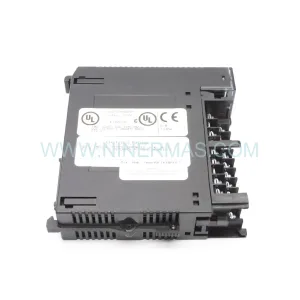
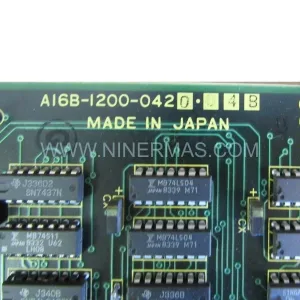
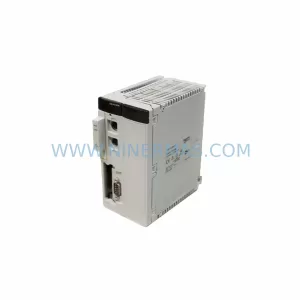
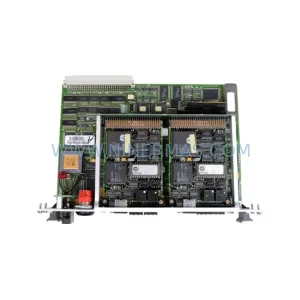
Alston CCU 132.08 590.037498 Retrofit-Compatible 32Bit Control
Verify the part, confirm the platform family, and move straight into quotation with the right commercial details.
RFQ Ready
- SKU132.08 590.037498
- CategoryPLC & Industrial Automation Modules
- BrandAlston
- SupportAvailability, lead time, condition, and shipping coordination
How Buyers Usually Use This Page
- Confirm the exact part number and platform family before sending the quote request.
- Use direct email when quantity, condition, and destination are already defined internally.
- Switch to the broader brand or category archive when you need alternates nearby.
Series Navigation
Move through the most common platform families behind this part.
Product RFQ
Send this part directly for quotation.
Include quantity, required condition, destination country, and target delivery timing. Current reference: Alston CCU 132.08 590.037498 Retrofit-Compatible 32Bit Control with SKU 132.08 590.037498.
Alston CCU 132.08 590.037498 Retrofit-Compatible 32Bit Control for Legacy Systems
The Alston CCU 132.08 590.037498 is a 32-bit central control unit engineered for seamless integration into aging automation architectures. As industrial facilities face mounting pressure to extend the operational life of legacy control platforms while managing capital expenditure, this module provides a proven, drop-in compatible solution for system engineers undertaking panel upgrades, line retrofits, and obsolete-component replacement programs. Whether you are migrating from an end-of-life DCS segment, refreshing a legacy PLC rack, or sourcing a verified replacement for a discontinued Alston CCU variant, the 132.08 590.037498 delivers the processing headroom and I/O compatibility required to maintain production continuity without a full system overhaul.
Upgrade Compatibility Table
| Parameter | Details |
|---|---|
| SKU / Part Number | 132.08 590.037498 |
| Brand / Series | Alston CCU Series |
| Processor Architecture | 32-Bit Control |
| Typical Replacement For | Discontinued Alston CCU legacy variants; equivalent 32-bit central processing modules |
| Backplane / Rack Interface | Compatible with standard Alston CCU-series backplane slots; verify slot pitch and connector type before installation |
| Communication Compatibility | Supports legacy serial and fieldbus protocols common to Alston CCU platforms; confirm protocol mapping during commissioning |
| Power Supply Requirement | Verify existing PSU capacity against module rated draw; upgrade power supply module if margin is insufficient |
| Installation Footprint | Standard DIN-rail / rack-mount; confirm panel depth and clearance for cable management |
| Programming / Configuration | Compatible with existing ladder logic and function block programs; validate address mapping after swap |
| Warranty | 12 Months — covers manufacturing defects; each unit ships after outgoing functional test |
Retrofit Planning for Existing Automation Systems
A successful retrofit around the Alston CCU 132.08 590.037498 begins well before the maintenance window opens. Field engineers should start by auditing the existing control cabinet to document every module currently installed in the rack. In a typical Alston CCU-series installation, the central control unit shares the backplane with dedicated I/O modules — both digital input/output cards and analog signal modules — as well as a separate power supply module that feeds the entire rack. Before ordering, confirm that the installed power supply module can sustain the combined current draw of the replacement CCU and all co-resident I/O cards; undersized power rails are a leading cause of intermittent faults after a module swap.
Communication architecture deserves equal attention. Many legacy Alston CCU installations rely on RS-232 or RS-485 serial links to connect the controller to remote I/O stations, operator panels, or SCADA hosts. If the retrofit scope includes a protocol migration — for example, moving from a proprietary serial link to Modbus RTU or PROFIBUS DP — a communication gateway or protocol converter module will need to be added to the panel alongside the replacement CCU. Engineers should map every node address and baud-rate setting before the cutover and verify that the HMI screen database reflects the new tag structure, since address offsets can shift when moving between controller generations.
For facilities running multi-rack configurations, the backplane interface between the primary CCU rack and any expansion racks carrying additional I/O modules must be validated. Ribbon cable connectors, rack termination resistors, and inter-rack communication cables are frequently overlooked during planning but can cause bus errors that are difficult to diagnose under time pressure. Similarly, if the installation includes a remote I/O adapter or distributed I/O drop connected over a fieldbus segment, the module address assignments must be re-confirmed after the CCU replacement to prevent duplicate-address conflicts.
Signal isolation is another consideration in older panels where analog input signals from thermocouples, pressure transmitters, or flow meters pass through signal isolator modules before reaching the controller. These isolators should be inspected and, where necessary, replaced alongside the CCU to ensure measurement accuracy is maintained after the upgrade. Programming cables and handheld programmer units compatible with the Alston CCU platform should be on-site during commissioning to allow direct program upload, online monitoring, and forced-output testing without relying on remote connectivity.
Finally, document the physical installation space. Confirm that the replacement module’s depth does not conflict with existing cable trays, that the front-panel indicators are accessible for status monitoring, and that the module locking mechanism engages correctly with the rack guides. A pre-installation checklist covering power capacity, terminal wiring, backplane interface, module addressing, program compatibility, HMI tag mapping, communication links, installation clearance, and on-site commissioning tools will compress the actual downtime window significantly.
Downtime Control During System Migration
Minimizing production interruption during a CCU replacement requires a structured cutover plan. Begin by creating a full backup of the existing program — including all data blocks, retentive memory values, and PID tuning parameters — using a compatible programming cable and software before any hardware is disturbed. If the control system supports online program transfer or memory card backup, use that capability to create a secondary copy stored independently of the module being replaced.
Where process conditions allow, perform a staged migration: bring the replacement Alston CCU 132.08 590.037498 online in a parallel bench-test configuration first, loading the backed-up program and simulating I/O signals to verify correct execution before the live swap. This approach catches address-mapping errors, timer preset mismatches, and communication configuration issues in a zero-risk environment, reducing the probability of extended downtime during the actual cutover.
During the live swap, follow a defined sequence: isolate power to the rack, remove the failed or obsolete module, seat the replacement unit, restore power, and immediately verify that the program loads correctly and that all I/O channels report expected states. Keep the original module on the bench — do not return it to storage or ship it out — until the replacement has completed at least one full production cycle without fault. This preserves the option to revert quickly if an unexpected compatibility issue surfaces. With proper pre-staging, most Alston CCU 132.08 590.037498 replacements can be completed within a planned maintenance window of two to four hours, including commissioning verification and sign-off.
Retrofit Support FAQ
Q1: Is the Alston CCU 132.08 590.037498 a direct drop-in replacement for my existing CCU module?
In most cases, yes — the 132.08 590.037498 is designed to be compatible with standard Alston CCU-series backplane slots and wiring configurations. However, we recommend verifying the connector type, slot pitch, and firmware revision of your existing installation before ordering. Our technical team can assist with compatibility confirmation if you provide the existing module’s full part number and installation details.
Q2: What commissioning steps are required after installation?
After seating the module and restoring power, upload the backed-up program, verify all I/O channel states against the process, confirm communication link status to any connected HMI or SCADA system, and run a forced-output test on critical outputs before returning the system to automatic mode. Document all address assignments and retain a copy of the commissioned program for future reference.
Q3: Do you perform outgoing functional testing before shipment?
Yes. Every Alston CCU 132.08 590.037498 unit is tested prior to dispatch to verify basic operational integrity. Units are shipped with a 12-month warranty covering manufacturing defects. If a fault is identified within the warranty period, we will arrange replacement or repair at no additional cost.
Q4: What is your stock availability and lead time?
We maintain inventory of the Alston CCU 132.08 590.037498 to support urgent retrofit and breakdown-replacement requirements. Standard orders are processed and dispatched promptly. Contact our team at sale@ninermas.com or +0086 187 5021 5667 to confirm current stock levels and delivery timelines for your location.
| Product Series | Other series |
|---|
Catalog Continuation
More Alston modules in the catalog.
Use the brand lane to compare nearby part numbers, platform-adjacent modules, and other inquiry-ready listings before sending your final RFQ.
Catalog Continuation
Alternative parts within PLC & Industrial Automation Modules.
Stay inside the same system family when you need substitutes, adjacent modules, or a broader shortlist for procurement review.
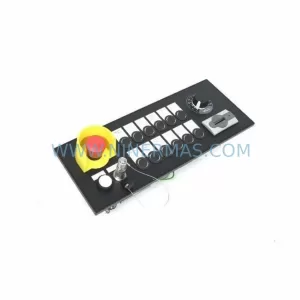
SKU: MPP1500D 6FC5303-1AF30-0AA0
Siemens MPP1500D 6FC5303-1AF30-0AA0 Retrofit Operator Panel
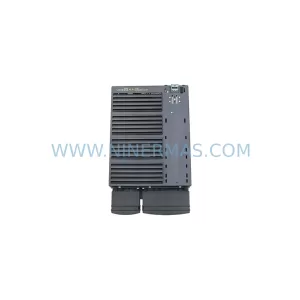
SKU: 6SL3224-0BE31-5UA0
Siemens 6SL3224-0BE31-5UA0 Service-Ready Spare Part