Original Industrial Spare Part
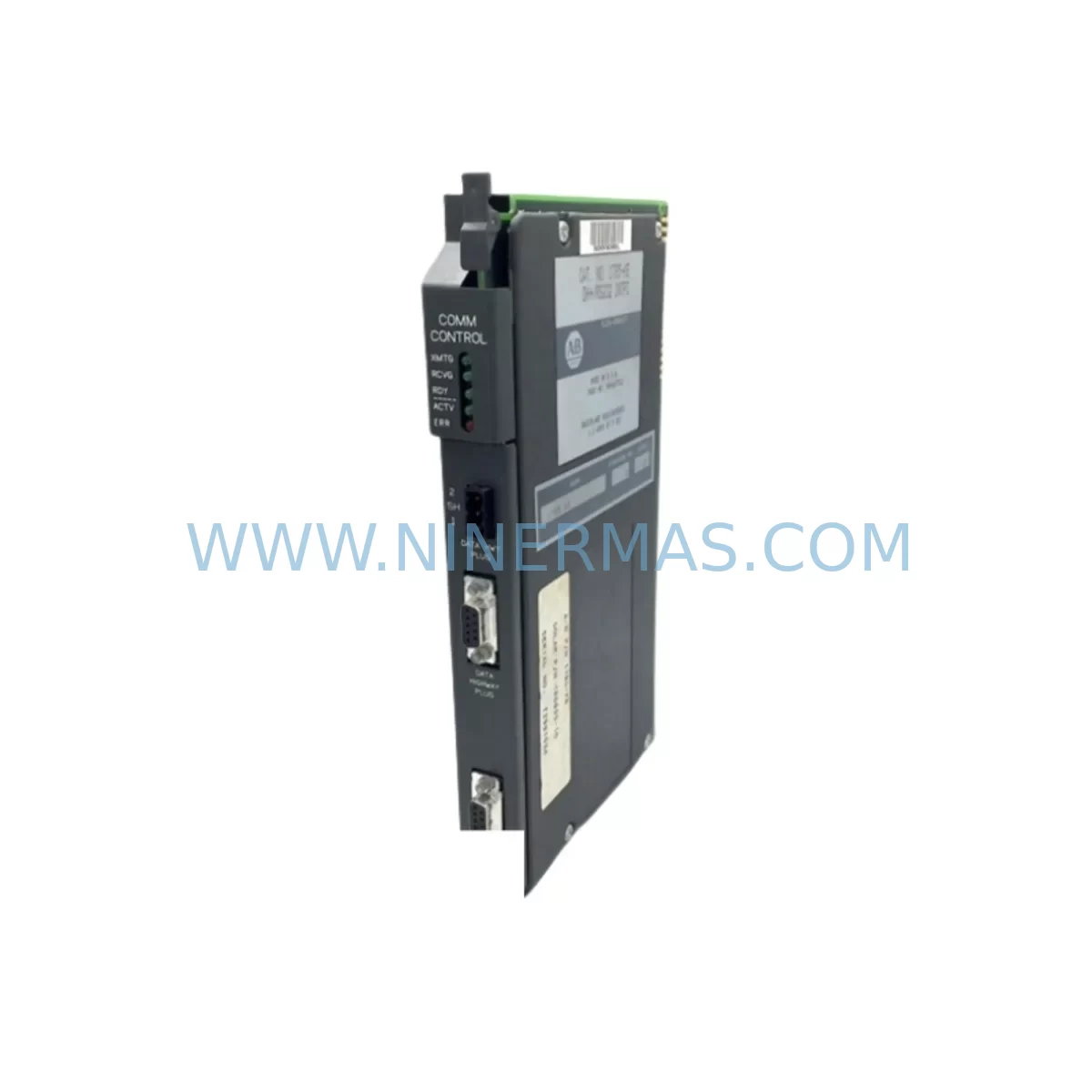
Allen-Bradley 1785-KE Retrofit-Compatible Key Module for Legacy Systems
Verify the part, confirm the platform family, and move straight into quotation with the right commercial details.
RFQ Ready
- SKU1785-KE
- CategoryPLC & Industrial Automation Modules
- BrandAllen-Bradley
- SupportAvailability, lead time, condition, and shipping coordination
How Buyers Usually Use This Page
- Confirm the exact part number and platform family before sending the quote request.
- Use direct email when quantity, condition, and destination are already defined internally.
- Switch to the broader brand or category archive when you need alternates nearby.
Series Navigation
Move through the most common platform families behind this part.
Product RFQ
Send this part directly for quotation.
Include quantity, required condition, destination country, and target delivery timing. Current reference: Allen-Bradley 1785-KE Retrofit-Compatible Key Module for Legacy Systems with SKU 1785-KE.
Allen-Bradley 1785-KE Retrofit-Compatible Key Module for Legacy Systems
The Allen-Bradley 1785-KE is a key module designed for the PLC-5 programmable controller family — one of the most widely deployed legacy control platforms in discrete manufacturing, process automation, and utilities infrastructure. As original equipment manufacturers discontinue support for PLC-5 series hardware, maintenance engineers and automation integrators face increasing pressure to source reliable retrofit-compatible spare parts that preserve existing control logic, minimize downtime, and extend the operational life of installed systems. NINERMAS supplies the 1785-KE as a verified retrofit-compatible replacement, backed by a 12-month warranty and pre-shipment functional testing.
The 1785-KE key module serves a critical role in PLC-5 processor security and operating mode control. It physically locks the processor into RUN, PROGRAM, or REMOTE mode, preventing unauthorized program modifications during live production. In retrofit and upgrade scenarios — particularly where a facility is migrating from a PLC-5/20, PLC-5/30, PLC-5/40, or PLC-5/60 processor to a newer ControlLogix or CompactLogix platform — the 1785-KE is often required to maintain the legacy system in a stable RUN state during parallel operation and cutover testing. Facilities running phased migrations depend on this component to keep the original control system online while the replacement platform is commissioned and validated.
When planning a retrofit around the 1785-KE, engineers must account for several interdependent system elements. The PLC-5 processor chassis — typically a 1771-A1B, 1771-A2B, 1771-A3B, or 1771-A4B backplane — must be confirmed compatible with the installed processor module. Slot addressing and I/O module configuration must be verified against the existing ladder logic program to ensure that any replacement processor or supplementary I/O modules, such as 1771-OBD digital output modules or 1771-IFE analog input modules, are addressed correctly. Power supply capacity — commonly provided by a 1771-P4S or 1771-P7 power supply — must be recalculated if additional I/O or communication modules are added during the upgrade.
Communication protocol migration is one of the most complex aspects of PLC-5 system modernization. Many legacy PLC-5 installations rely on Data Highway Plus (DH+) networks using 1785-KA5 or 1784-KTX communication adapters to connect to SCADA systems, HMI panels, and remote I/O drops. During a retrofit, engineers must decide whether to retain DH+ infrastructure using protocol bridges such as the 1761-NET-AIC or transition to EtherNet/IP using a 1756-ENBT or 1756-EN2T communication module in a new ControlLogix rack. Either path requires careful mapping of existing PLC-5 data table addresses (N, F, B, T, C, R files) to the tag-based memory structure of Logix5000 controllers, typically using Rockwell’s RSLogix 5 to RSLogix 5000 conversion utilities.
HMI compatibility is another key consideration. Legacy PanelView 550, PanelView 900, or PanelView 1000 terminals connected via DH+ to the PLC-5 processor will require screen-by-screen tag remapping or full replacement with PanelView Plus or PanelView 800 units if the underlying controller is changed. Retaining the 1785-KE in the original PLC-5 processor during the transition period allows the existing HMI to remain fully functional, reducing operator retraining requirements and preserving production continuity during the cutover window.
Installation space and mounting configuration must also be confirmed before ordering. The 1785-KE is a compact key-switch module that inserts directly into the PLC-5 processor front panel. No additional DIN rail or panel space is required. However, if the retrofit plan involves replacing the processor module itself — for example, substituting a PLC-5/40E with Ethernet capability — the physical dimensions of the new processor and any associated 1784-PKTX or 1784-U2DHP programming cables must be verified against the existing control cabinet layout.
Field commissioning after installation of a replacement 1785-KE should include verification of processor operating mode transitions (RUN → PROGRAM → REMOTE), confirmation that the key switch position is recognized correctly by the processor status indicators, and a full I/O force test to validate that all output modules respond correctly to program commands. Pre-shipment testing at NINERMAS includes functional mode-switch verification and visual inspection for contact wear or mechanical damage.
Upgrade Compatibility Table
| Parameter | Details |
|---|---|
| Compatible Processors | PLC-5/10, PLC-5/15, PLC-5/20, PLC-5/25, PLC-5/30, PLC-5/40, PLC-5/40L, PLC-5/60, PLC-5/60L, PLC-5/80 |
| Compatible Chassis | 1771-A1B, 1771-A2B, 1771-A3B, 1771-A4B |
| Operating Modes | RUN / PROGRAM / REMOTE (key-selectable) |
| Communication Compatibility | DH+, DH-485, Remote I/O (RIO), EtherNet (PLC-5/40E, PLC-5/80E variants) |
| Installation Requirement | Direct front-panel insertion; no tools required |
| Replacement Recommendation | Drop-in replacement for worn or missing OEM key modules; verify processor model before ordering |
| Commissioning Check | Mode-switch transition test, I/O force validation, status LED confirmation |
| Warranty | 12 months from date of shipment — covers manufacturing defects and functional failure |
Retrofit Planning for Existing Automation Systems
A successful PLC-5 retrofit begins with a complete system audit. Before the 1785-KE or any associated hardware is replaced, the engineering team should document the existing processor model, firmware revision, I/O module inventory, chassis slot assignments, and communication network topology. This baseline is essential for identifying compatibility risks and planning the cutover sequence.
In many facilities, the PLC-5 processor operates alongside legacy remote I/O racks connected via 1771-ASB adapter modules. These remote racks may house 1771-OW relay output modules, 1771-IXE thermocouple input modules, or 1771-NBR BASIC modules for local data processing. Each of these modules must be accounted for in the retrofit plan, as their slot addresses and I/O data table mappings directly affect program execution. If the retrofit involves adding new I/O capacity — for example, integrating a 1756-IF16 analog input module in a new ControlLogix rack — the program must be updated to reference the new tag addresses while the legacy PLC-5 system remains in service.
Power budget analysis is a non-negotiable step. The 1771-P4S power supply, for example, provides a defined backplane current capacity. Adding communication modules such as a 1785-KA5 DH+ interface or a 1784-PKTX programming adapter increases the backplane load. Engineers must verify that the existing power supply can support the full module complement, including any new modules added during the retrofit phase. If capacity is insufficient, a 1771-P7 or external supplementary supply must be specified.
Signal isolation is frequently overlooked during PLC-5 retrofits. Analog signals from field instruments — pressure transmitters, flow meters, temperature sensors — may require signal isolators or conditioners when transitioning between legacy and modern I/O modules with different input impedance or signal range specifications. Incorporating signal isolators at the terminal block level protects both the legacy and new hardware during the parallel operation phase and reduces the risk of ground loop interference that can cause erratic analog readings.
Programming cable compatibility must also be confirmed. Legacy PLC-5 programming typically uses a 1784-KTX ISA card or a 1784-U2DHP USB-to-DH+ adapter connected to RSLogix 5 on a Windows-compatible engineering workstation. During the retrofit, the programming cable must remain accessible for online monitoring, program backup, and forced I/O testing. Ensure the engineering laptop has the correct RSLogix 5 license and that the DH+ node address of the programming connection does not conflict with other network nodes.
Downtime Control During System Migration
Minimizing unplanned downtime is the primary operational constraint in any PLC-5 retrofit. The 1785-KE key module plays a direct role in downtime control by enabling the legacy processor to remain in a locked RUN state during the migration period, preventing accidental program modification by unauthorized personnel or inadvertent mode changes during maintenance activities.
A phased cutover strategy is strongly recommended. In Phase 1, the replacement hardware — whether a new ControlLogix 1756-L73 processor, a 1756-EN2T EtherNet/IP module, or a new 1771-A4B chassis — is installed and powered in parallel with the existing PLC-5 system. The new program is loaded, tested offline, and validated against the existing I/O data table mappings. In Phase 2, individual I/O circuits are transferred from the legacy chassis to the new system one section at a time, with the 1785-KE keeping the original processor in RUN mode to maintain control of any circuits not yet migrated. In Phase 3, the final cutover is executed during a planned maintenance window, with the legacy PLC-5 placed in PROGRAM mode using the 1785-KE and the new controller assuming full control.
Program logic protection is critical throughout this process. Before any hardware changes are made, a full program backup must be performed using RSLogix 5 and stored on a secure engineering workstation and an offline backup medium. The backup should include all data table files, program files, force tables, and communication configuration. This backup serves as the recovery baseline if the cutover encounters unexpected issues and a rollback to the legacy system is required.
Field control continuity is maintained by ensuring that all safety interlocks, permissive logic, and critical output states are verified at each phase transition. A pre-cutover checklist should include confirmation of E-stop circuit integrity, verification of analog loop scaling in the new controller, and a full scan-time analysis to ensure the new processor can execute the migrated program within the required cycle time. NINERMAS recommends that all replacement hardware — including the 1785-KE — be functionally tested prior to shipment to reduce the risk of commissioning delays caused by defective components.
Retrofit Support FAQ
Q1: Is the 1785-KE a direct drop-in replacement for the original Allen-Bradley key module?
Yes. The 1785-KE is a direct mechanical and functional replacement for the OEM key module used in PLC-5 series processors. No wiring changes, firmware updates, or configuration modifications are required. Simply insert the replacement key module into the processor front panel and verify mode-switch operation before returning the system to service.
Q2: Can the 1785-KE be used during a parallel migration to a ControlLogix platform?
Yes. The 1785-KE is specifically suited for parallel migration scenarios. By locking the PLC-5 processor in RUN mode during the migration period, it prevents accidental program modification and maintains control of all I/O circuits that have not yet been transferred to the new ControlLogix system. This is a standard practice in phased PLC-5 to Logix5000 migrations.
Q3: What pre-shipment testing does NINERMAS perform on the 1785-KE?
Each 1785-KE unit undergoes functional mode-switch verification (RUN / PROGRAM / REMOTE positions), mechanical inspection for key-cylinder wear and contact integrity, and visual inspection for physical damage. Units that do not pass all test criteria are not shipped. All shipped units are covered by a 12-month warranty from the date of delivery.
Q4: What is the typical lead time and stock availability for the 1785-KE?
NINERMAS maintains stock inventory of the 1785-KE to support urgent maintenance and retrofit requirements. Standard orders are processed within 1–3 business days. For large-quantity orders or projects requiring multiple PLC-5 spare parts — including processors, I/O modules, power supplies, and communication adapters — contact our sales team for a consolidated quotation and confirmed delivery schedule.
| Product Series | PLC-5 |
|---|---|
| Country of Origin | US |
Catalog Continuation
More Allen-Bradley modules in the catalog.
Use the brand lane to compare nearby part numbers, platform-adjacent modules, and other inquiry-ready listings before sending your final RFQ.
Catalog Continuation
Alternative parts within PLC & Industrial Automation Modules.
Stay inside the same system family when you need substitutes, adjacent modules, or a broader shortlist for procurement review.
SKU: ACU-01B 3HNA024871-001
ICH ACU-01B 3HNA024871-001 Service-Ready Spare Part
SKU: RCN 223 16384 03S17-0D
HEIDENHAIN RCN 223 16384 03S17-0D Retrofit Absolute Angle Encoder