Original Industrial Spare Part
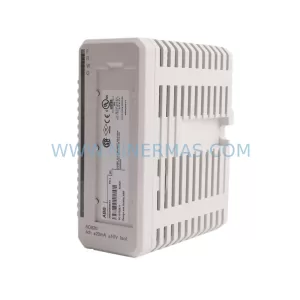
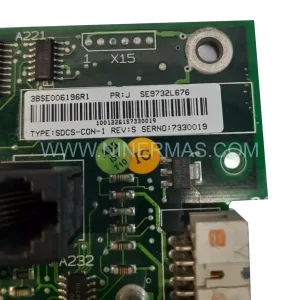
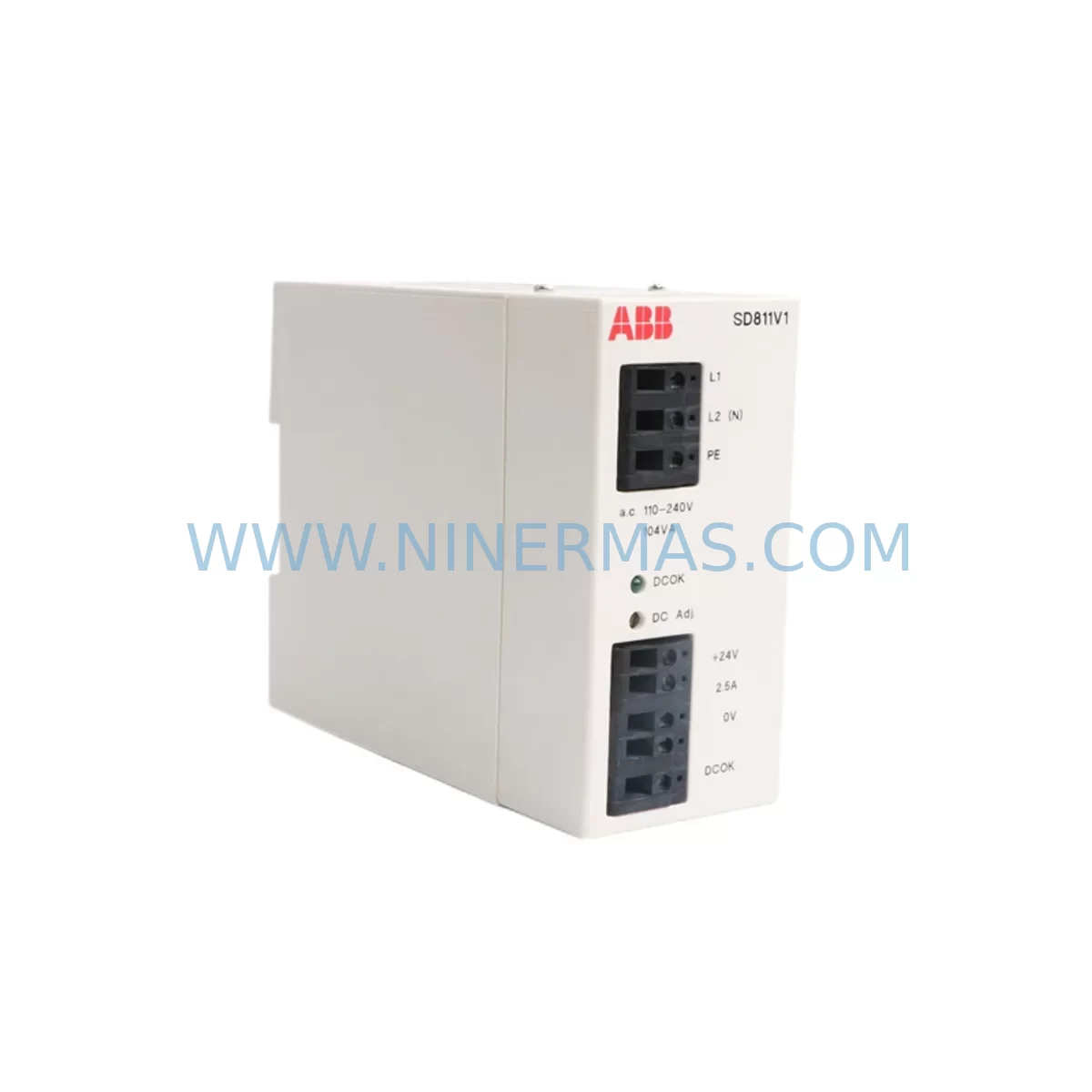
ABB SD811V1 3BSC610044R1 Retrofit-Compatible I/O for Legacy
Verify the part, confirm the platform family, and move straight into quotation with the right commercial details.
RFQ Ready
- SKUSD811V1 3BSC610044R1
- CategoryPLC & Industrial Automation Modules
- BrandABB
- SupportAvailability, lead time, condition, and shipping coordination
How Buyers Usually Use This Page
- Confirm the exact part number and platform family before sending the quote request.
- Use direct email when quantity, condition, and destination are already defined internally.
- Switch to the broader brand or category archive when you need alternates nearby.
Series Navigation
Move through the most common platform families behind this part.
Product RFQ
Send this part directly for quotation.
Include quantity, required condition, destination country, and target delivery timing. Current reference: ABB SD811V1 3BSC610044R1 Retrofit-Compatible I/O for Legacy with SKU SD811V1 3BSC610044R1.
ABB SD811V1 3BSC610044R1 Retrofit-Compatible I/O Module for Legacy S800 Systems
The ABB SD811V1 (catalog reference 3BSC610044R1) is a digital output module designed for the ABB S800 I/O series, widely deployed in process automation, power generation, and continuous manufacturing environments. As legacy control architectures age and original spare parts become increasingly difficult to source, the SD811V1 has become a critical component in retrofit projects, discontinued-model replacements, and control cabinet upgrades across industries. NINERMAS maintains verified stock of the SD811V1 to support engineers and maintenance teams who need a reliable, tested replacement with a 12-month warranty and fast global shipping.
When planning a retrofit or spare-part replacement involving the SD811V1, engineers must carefully verify several key parameters before installation. Power supply capacity is the first checkpoint: the S800 I/O station draws power through the ModuleBus, and adding or replacing modules requires confirming that the existing CI801 or CI810B communication interface and the associated TB807 or TB820 termination unit can support the updated load. Terminal wiring must be cross-referenced against the original loop drawings, as field wiring connected to the termination board must match the channel assignments of the replacement module exactly. Any mismatch in terminal polarity or signal type will require rewiring at the marshalling cabinet level.
Backplane interface compatibility is equally important. The SD811V1 connects to the S800 I/O station via the ModuleBus backplane, and the physical slot assignment must be confirmed against the hardware configuration stored in the AC800M controller project. If the original module occupied a specific slot address, the replacement must be installed in the same position to avoid address conflicts that would require a controller download and potential process interruption. Engineers working with ABB Freelance or AC800M platforms should verify the hardware configuration in Control Builder M before proceeding with physical installation.
Program compatibility is another area that requires attention. The SD811V1 operates as a standard digital output module, and its channel mapping is referenced in the application program through I/O variable assignments. If the replacement module is installed in the same slot with the same hardware configuration, no program changes are required. However, if the retrofit involves migrating from an older S800 variant or from a third-party I/O system, the I/O variable list must be reviewed and updated accordingly. HMI screens that display output status for channels served by the SD811V1 should also be verified to ensure that the tag references remain valid after the hardware change.
Upgrade Compatibility Table
| Parameter | SD811V1 (3BSC610044R1) | Retrofit Notes |
|---|---|---|
| Module Type | Digital Output, S800 I/O | Direct slot replacement in S800 station |
| Communication Interface | ModuleBus (via CI801 / CI810B) | Confirm CI module firmware version compatibility |
| Termination Unit | TB807 / TB820 | Existing termination board reusable; verify wiring |
| Controller Compatibility | AC800M, Freelance 800F | No program change if slot address unchanged |
| Power Supply | Powered via ModuleBus backplane | Verify total station load against PS800 capacity |
| Installation Space | Standard S800 module footprint | Direct fit; no mechanical modification required |
| Commissioning | Auto-recognized by AC800M on power-up | Confirm hardware scan in Control Builder M |
| Warranty | 12-Month Warranty — Covered by NINERMAS from date of shipment | |
Retrofit Planning for Existing Automation Systems
A successful retrofit involving the SD811V1 typically begins with a full audit of the existing S800 I/O station. Maintenance teams should document the current module population, including the CI801 or CI810B communication interface module, all installed SD800-series digital and analog I/O modules, and the TB807 or TB820 termination units connected to each slot. This inventory forms the baseline for the replacement plan and helps identify whether any adjacent modules — such as the AI810 analog input module or the AO810V2 analog output module — are also approaching end-of-life and should be replaced in the same maintenance window to minimize future downtime.
The PS800 power supply module feeding the I/O station must be evaluated for available headroom. If the station is already operating near its rated output current, adding a replacement module with slightly different power characteristics may require upgrading the power supply or redistributing modules across stations. This is particularly relevant in older installations where the original power budget was calculated with no margin for expansion.
Communication link integrity should be verified before and after the module swap. The ModuleBus connecting the CI810B to the S800 modules uses a proprietary protocol, and any degradation in the optical or electrical link — caused by aging connectors, cable damage, or contamination — can cause intermittent module faults that are difficult to distinguish from hardware failures. Cleaning or replacing the ModuleBus connectors during the retrofit is a low-cost step that significantly reduces the risk of post-installation communication errors.
For sites migrating from older control platforms to AC800M, the SD811V1 can serve as the I/O layer in the new architecture while retaining the existing field wiring and termination boards. This approach reduces the scope of the retrofit to the control layer — replacing the legacy controller, communication modules, and programming environment — while leaving the field wiring, junction boxes, and marshalling cabinets intact. Engineers should also account for the DP820 PROFIBUS interface or the AF100 fieldbus adapter if the existing plant network uses protocols other than ModuleBus, as these communication modules will need to be included in the migration plan.
Signal isolators installed between the field devices and the termination boards should be inspected during the retrofit. If the original system used passive isolators matched to the output characteristics of the legacy module, the SD811V1’s output specifications must be confirmed to be compatible with the isolator input range. In most cases, the SD811V1’s standard 24 VDC digital output is fully compatible with common signal isolators, but this should be verified on a channel-by-channel basis for critical control loops.
Programming cables and engineering workstations used to download updated hardware configurations to the AC800M controller should be prepared in advance. The USB or Ethernet connection to the controller must be tested before the maintenance window begins, and a backup of the current controller project — including all I/O variable assignments, function block programs, and HMI tag databases — must be archived before any hardware changes are made. This backup is the primary recovery tool if the retrofit encounters unexpected compatibility issues.
Downtime Control During System Migration
Minimizing downtime during a module replacement or retrofit is a primary concern for any production facility. For the SD811V1, the most effective strategy is to pre-configure the replacement module offline before the maintenance window begins. Because the AC800M controller automatically recognizes S800 modules by their slot position and hardware type, no special initialization procedure is required — the replacement module is installed in the same slot, and the controller resumes normal operation after a brief hardware scan.
Where process conditions allow, a hot-swap approach can be used if the I/O station supports it. Engineers should consult the AC800M hardware documentation to confirm whether the specific station configuration supports online module replacement without a full station restart. If a station restart is required, the impact on connected field devices must be assessed in advance, and operators must be informed of the expected output state during the restart sequence to prevent unintended actuator movement.
Protecting the original program logic is essential. The controller project backup taken before the retrofit should be stored on a separate engineering workstation and on removable media, ensuring that the original program can be restored within minutes if the retrofit encounters a critical issue. The HMI system — whether running on a dedicated panel PC or on a SCADA server — should be placed in manual override mode for the affected control loops during the hardware swap to prevent automatic control actions from responding to transient I/O states during the module replacement.
After the SD811V1 is installed and the station has completed its hardware scan, each output channel should be tested individually using the force function in Control Builder M before returning the loops to automatic control. This channel-by-channel verification confirms that the field wiring is correctly connected, that the output signals reach the intended actuators, and that the HMI displays reflect the correct output states. The entire commissioning sequence for a single module replacement can typically be completed within one to two hours, making the SD811V1 retrofit one of the lower-risk maintenance activities in an S800-based control system.
Retrofit Support FAQ
Q: Is the SD811V1 (3BSC610044R1) a direct drop-in replacement for other S800 digital output modules?
A: The SD811V1 is designed for the ABB S800 I/O platform and occupies a standard module slot. Compatibility with other S800 digital output variants depends on the channel count, output type, and termination board used in the original installation. NINERMAS recommends confirming the original module’s catalog number and termination unit before ordering to ensure a direct replacement.
Q: What commissioning steps are required after installing the SD811V1?
A: After physical installation, the AC800M controller will perform an automatic hardware scan and recognize the module in its assigned slot. Engineers should verify the hardware configuration in Control Builder M, confirm that all I/O variable assignments are intact, and perform a channel-by-channel output test using the force function before returning the system to automatic operation.
Q: Does NINERMAS test the SD811V1 before shipment?
A: Yes. All SD811V1 modules supplied by NINERMAS undergo functional testing prior to shipment. Each unit is verified for output channel integrity and communication interface functionality. A 12-month warranty is provided from the date of shipment, covering manufacturing defects and functional failures under normal operating conditions.
Q: What is the typical lead time and availability for the SD811V1 (3BSC610044R1)?
A: NINERMAS maintains inventory of the SD811V1 to support urgent retrofit and breakdown replacement requirements. Standard orders are processed within one to two business days, with express shipping options available for critical applications. Contact our team at sale@ninermas.com or +0086 187 5021 5667 to confirm current stock levels and delivery timelines.
| Product Series | S800 |
|---|---|
| Country of Origin | SE |
Catalog Continuation
More ABB modules in the catalog.
Use the brand lane to compare nearby part numbers, platform-adjacent modules, and other inquiry-ready listings before sending your final RFQ.
SKU: 3HAC033388-001
ABB 3HAC033388-001 Safety-Reliable Robot Harness Module
SKU: DSTA001B 3BSE018316R1
ABB DSTA001B 3BSE018316R1 Retrofit-Compatible Interface for Legacy Systems
SKU: 3BHE028915R0101 PCD237 A101
ABB 3BHE028915R0101 PCD237 A101 Retrofit Safety Controller
Catalog Continuation
Alternative parts within PLC & Industrial Automation Modules.
Stay inside the same system family when you need substitutes, adjacent modules, or a broader shortlist for procurement review.
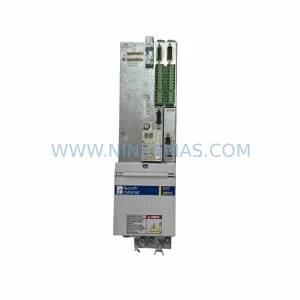
SKU: HDD02.2-W040N-HS12-01-FW FWA-DIAX04-ELS-05VRS-MS
Rexroth HDD02.2-W040N-HS12-01-FW Service-Ready Spare Part
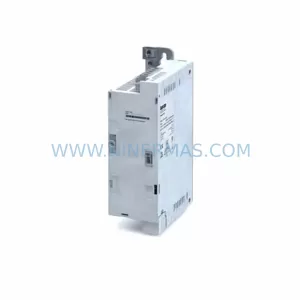
SKU: I5DAE375F10010000S
Lenze I5DAE375F10010000S Service-Ready Spare Part for Industrial Maintenance