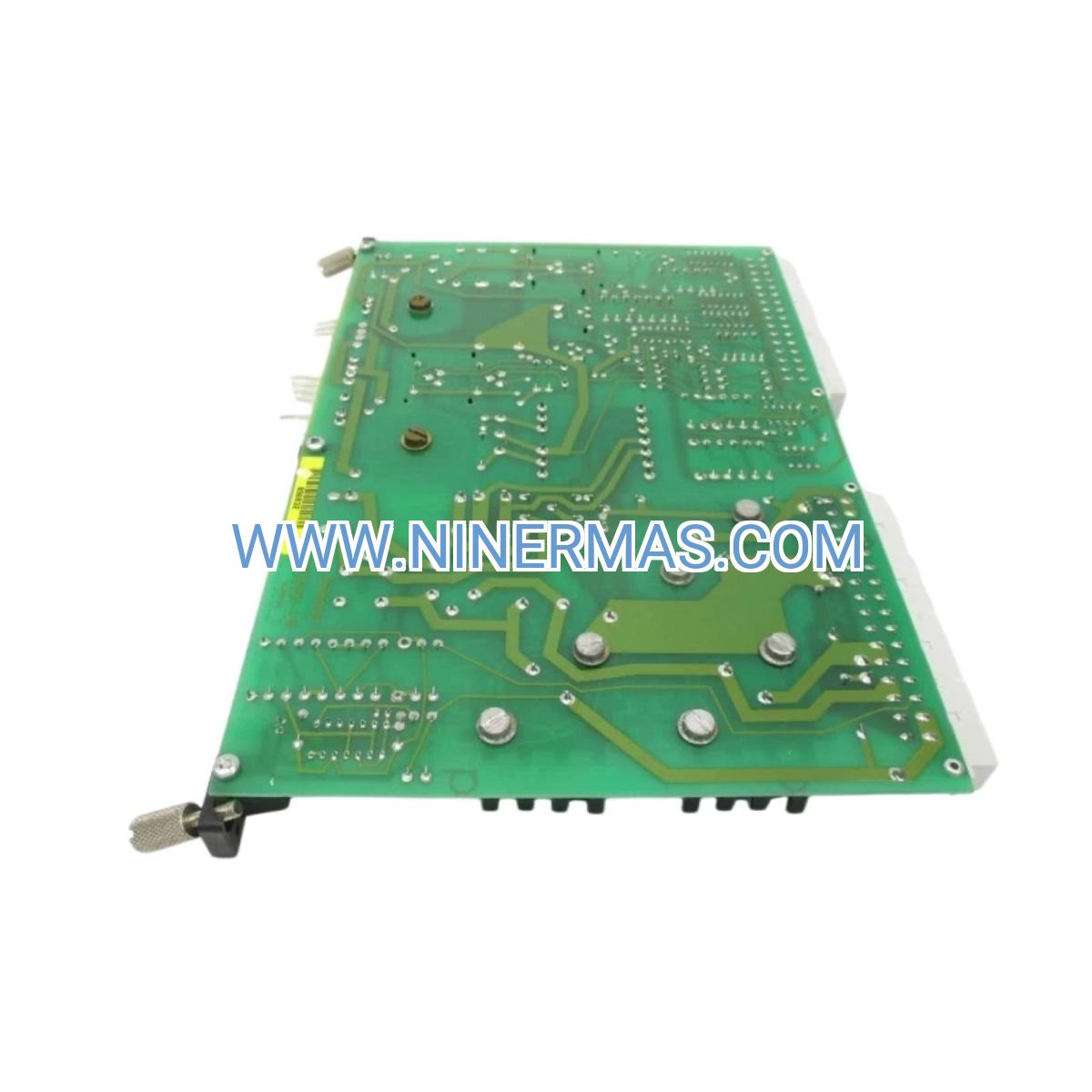
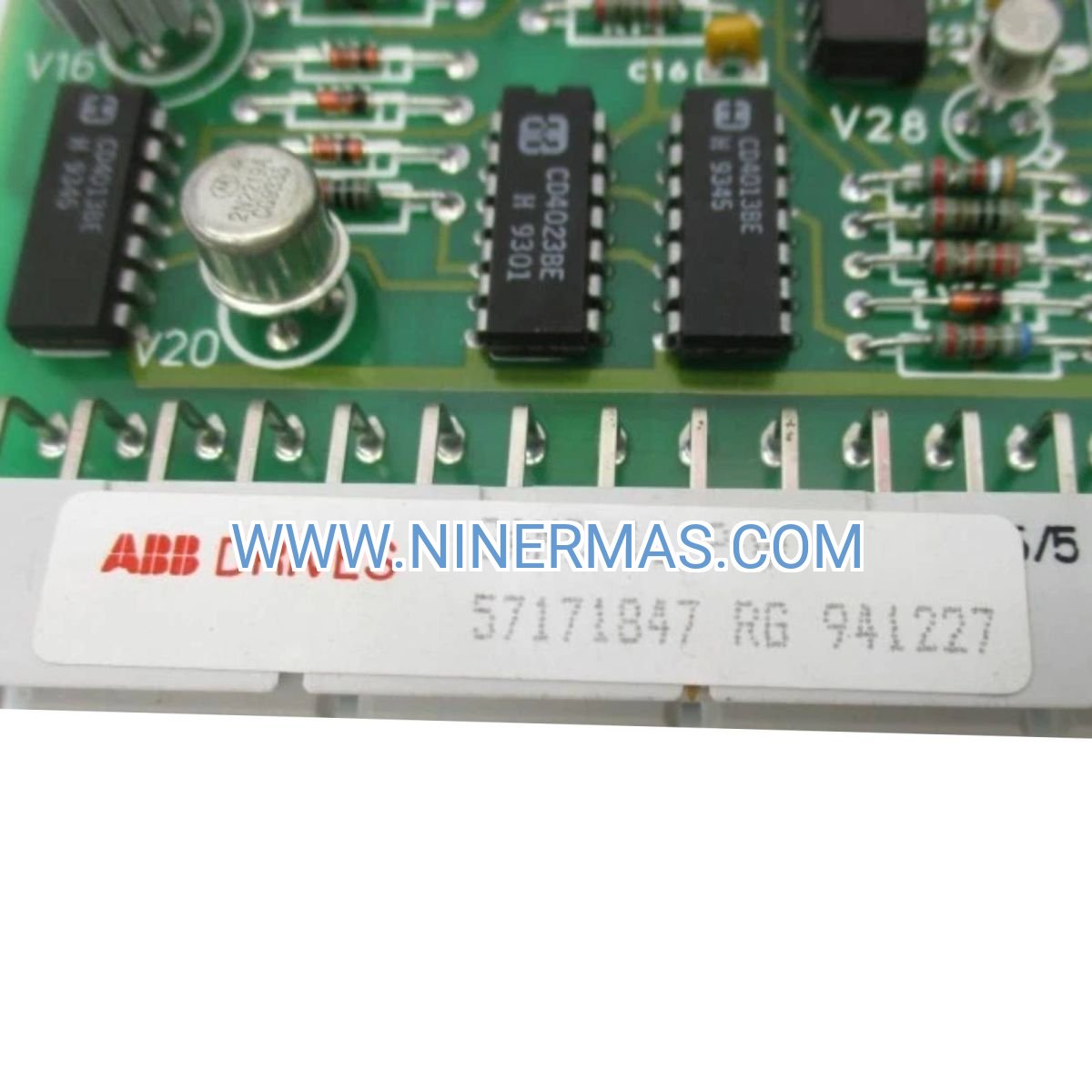
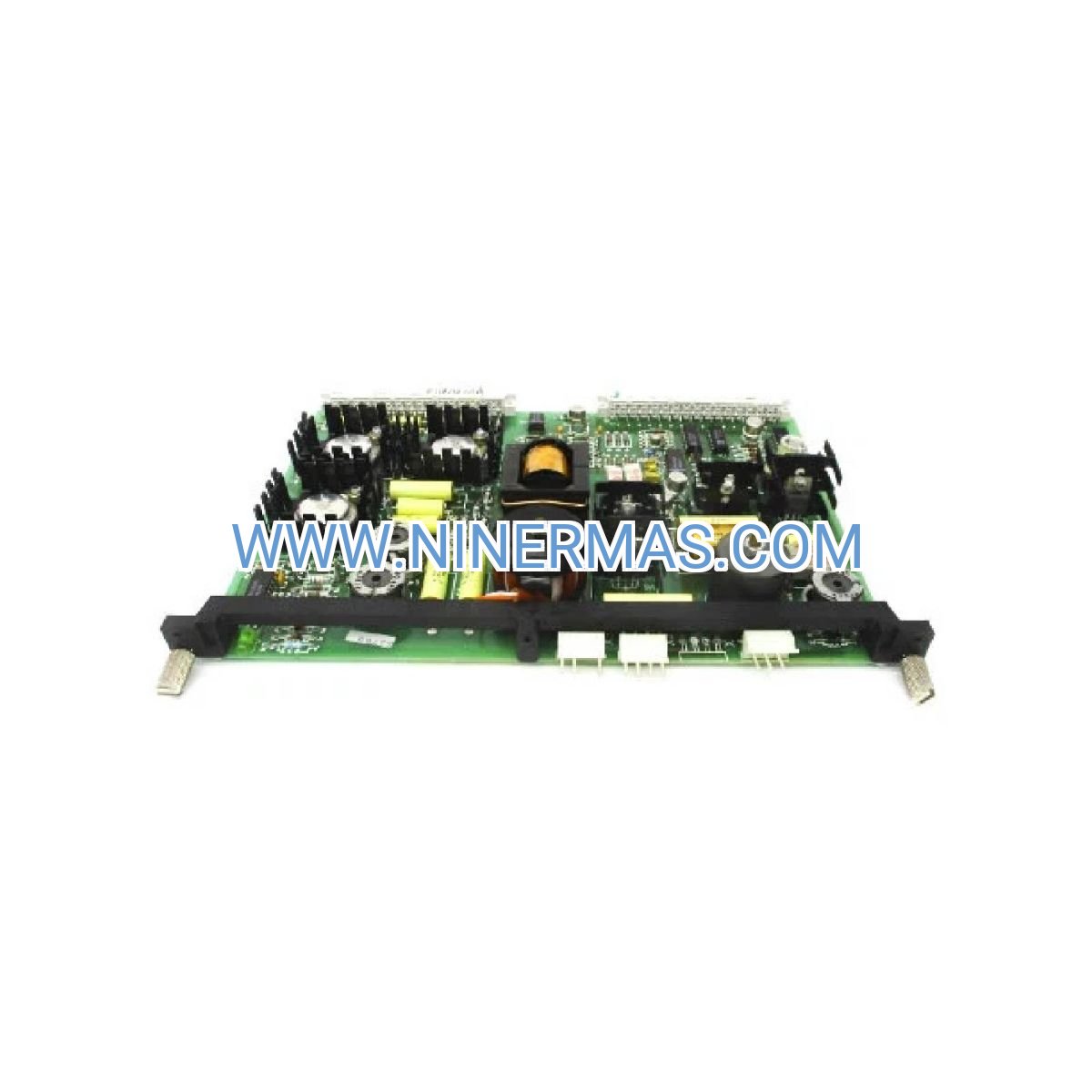
ABB SAFT185TBC Safety Field Transmitter | SIL2 RTD Temperature & Binary Contact Monitor
Description
ABB SAFT185TBC Safety Field Transmitter (SIL2-Certified Temperature & Binary Contact Monitoring System)
The ABB SAFT185TBC is an industrial-grade safety field transmitter designed for critical temperature measurement and binary contact monitoring in Safety Instrumented Systems (SIS). Utilizing SIL2-certified technology with HART 7 digital communication, this transmitter delivers precise RTD/thermocouple temperature sensing combined with binary contact status monitoring through a single 4-20mA loop-powered output. Its advanced diagnostics and fail-safe design ensure reliable operation in process safety applications where equipment failure could lead to hazardous conditions.
Engineered for demanding environments including oil & gas facilities, chemical processing plants, power generation stations, and pharmaceutical manufacturing, the SAFT185TBC addresses critical challenges such as unreliable temperature monitoring in safety loops, lack of real-time diagnostics for contact-based safety devices, and the complexity of integrating multiple sensor types into SIS architectures. The transmitter's dual-input capability eliminates the need for separate devices, reducing installation costs and system complexity.
Through standardized configuration and field-proven reliability, this safety transmitter offers SIL2/SIL3-capable performance, comprehensive self-diagnostics with predictive maintenance alerts, ATEX/IECEx Zone 1 hazardous area certification, and seamless integration with leading DCS/PLC safety controllers. Ideal for safety engineers, instrumentation designers, EPC contractors, and plant maintenance teams requiring certified safety solutions. Contact our application engineers for SIL verification calculations, loop diagrams, and project-specific configuration assistance.
Core Features & Technical Advantages
- Dual SIL2-Certified Input Channels
Simultaneously processes one RTD/thermocouple temperature input (Pt100, Pt1000, Type J/K/T/E/N/R/S) and one binary contact input (volt-free or wet contact), with independent diagnostics for each channel, enabling consolidated safety loop architecture and reducing field wiring complexity. - Advanced HART 7 Diagnostics
Provides real-time sensor health monitoring, drift detection, contact bounce analysis, and predictive failure alerts via HART digital communication, reducing unplanned shutdowns by up to 35% and enabling condition-based maintenance strategies. - Intrinsically Safe & Explosion-Proof Design
ATEX II 2G Ex d IIC T6 Gb and IECEx Zone 1 certified for use in explosive atmospheres (gas groups IIA/IIB/IIC), with IP66/IP67 ingress protection and corrosion-resistant 316L stainless steel housing suitable for offshore and coastal installations. - Fail-Safe Operation with Configurable Outputs
Supports high/low/hold output modes upon sensor failure, with user-definable alarm thresholds and namur-compliant fault signaling (3.6mA/22.5mA), ensuring predictable system behavior during abnormal conditions and meeting IEC 61508 functional safety requirements. - Wide Operating Range & Environmental Resilience
Functions reliably from -40°C to +85°C ambient temperature with ±0.1°C measurement accuracy (RTD), withstands vibration up to 4g (10-150Hz), and maintains calibration stability over 5-year intervals, minimizing lifecycle costs in harsh industrial environments. - Simplified Integration & Configuration
Pre-configured DTM (Device Type Manager) files for major asset management platforms (AMS, PACTware, FieldCare), supports loop-powered operation (10.5-30VDC), and offers DIN rail or field-mount installation options with quick-disconnect terminal blocks for rapid commissioning.
Typical Application Scenarios
The SAFT185TBC is specifically engineered for safety-critical applications requiring certified temperature and contact monitoring with high availability:
- Emergency Shutdown Systems (ESD) in Oil & Gas
Monitors bearing temperatures and vibration switch contacts on critical rotating equipment (compressors, turbines, pumps), triggering automated shutdowns when temperature exceeds safe limits or mechanical failure is detected, preventing catastrophic equipment damage and hydrocarbon releases. - Burner Management Systems (BMS)
Supervises flame detector contact status and furnace temperature in boilers and process heaters, ensuring safe ignition sequences and continuous flame monitoring per NFPA 85/86 standards, with SIL2-rated reliability for personnel protection and asset preservation. - Chemical Reactor Safety Interlocks
Tracks exothermic reaction temperatures via thermocouples while monitoring high-temperature limit switch contacts, providing redundant protection against thermal runaway conditions in batch reactors, polymerization vessels, and distillation columns. - Cryogenic & High-Temperature Process Monitoring
Handles extreme temperature ranges (-200°C to +1200°C with appropriate sensors) in LNG facilities, hydrogen production units, and metallurgical processes, with binary contact inputs for level switches or pressure relief valve position confirmation. - Pharmaceutical Clean Room Environmental Monitoring
Ensures GMP-compliant temperature control in autoclaves, lyophilizers, and storage chambers, with contact inputs for door interlock switches and HEPA filter differential pressure alarms, supporting FDA 21 CFR Part 11 audit trail requirements via HART data logging.
Technical Specifications & Selection Guide
To facilitate engineering design and procurement, we provide comprehensive technical parameters for the SAFT185TBC safety transmitter, with customization available for project-specific requirements:
| Parameter | Specification |
|---|---|
| Safety Certification | SIL2 per IEC 61508, SIL3-capable in 1oo2 configuration |
| Temperature Input Types | RTD: Pt100/Pt1000 (2/3/4-wire), TC: J/K/T/E/N/R/S/B |
| Binary Contact Input | Volt-free or wet contact, 0-30VDC, 5mA max |
| Measurement Range | -200°C to +1200°C (sensor-dependent) |
| Accuracy | ±0.1°C (RTD), ±0.5°C (TC) at 25°C ambient |
| Output Signal | 4-20mA HART 7, loop-powered |
| Power Supply | 10.5-30VDC via loop (2-wire) |
| Response Time | T90 < 10 seconds (temperature), < 100ms (contact) |
| Hazardous Area Rating | ATEX/IECEx Zone 1, Ex d IIC T6 Gb |
| Enclosure Protection | IP66/IP67, NEMA 4X |
| Housing Material | 316L stainless steel, polyester-coated aluminum option |
| Ambient Temperature | -40°C to +85°C operation, -50°C to +90°C storage |
| Humidity | 5-95% RH non-condensing |
| Vibration Resistance | 4g (10-150Hz) per IEC 60068-2-6 |
| EMC Compliance | EN 61326-1, industrial immunity |
| Mounting Options | DIN rail (35mm), pipe mount (2-inch), wall bracket |
| Dimensions (H×W×D) | 120mm × 80mm × 65mm (typical DIN rail version) |
| Weight | Approximately 1.0 kg |
| Certifications | CE, ATEX, IECEx, SIL2, NEPSI, EAC |
Selection Considerations: When specifying the SAFT185TBC, engineers should evaluate: (1) sensor type compatibility with process temperature range and media, (2) binary contact voltage/current characteristics, (3) required SIL level and proof test interval, (4) hazardous area classification and T-rating, (5) ambient temperature extremes and vibration exposure, (6) DCS/PLC HART integration capabilities, and (7) installation space constraints. For complex safety loop architectures or SIL verification support, our certified functional safety engineers can provide FTA/FMEDA analysis, loop drawings, and configuration files. Submit your P&ID excerpts and SRS (Safety Requirements Specification) for tailored recommendations.
Advanced Configuration & Integration Capabilities
- Flexible Alarm & Trip Point Configuration: Supports up to 4 independent alarm thresholds (2 per input channel) with adjustable hysteresis, time delays (0.1-999s), and latching/non-latching behavior, programmable via HART or local configuration buttons.
- Redundancy & Voting Logic: Compatible with 1oo1, 1oo2, and 2oo3 safety architectures when deployed with ABB System 800xA Safety or third-party SIS controllers, with built-in partial stroke test (PST) support for valve diagnostics.
- Multi-Protocol Communication: Primary HART 7 digital overlay on 4-20mA analog, with optional Modbus RTU/TCP gateway integration for legacy DCS systems, enabling simultaneous process control and asset management data streams.
- Cybersecurity Features: Password-protected configuration access, write-protection modes, and audit trail logging compliant with IEC 62443 industrial cybersecurity standards, preventing unauthorized parameter changes in critical safety applications.
Delivery, Service & Quality Assurance
Lead Time: Standard SAFT185TBC models ship within 3-5 business days from regional stock (Asia-Pacific, EMEA, Americas). Custom-configured units with specific sensor ranges, hazardous area certifications, or special housing materials require 4-6 weeks for factory programming and testing.
Warranty & Support: All units include a 24-month manufacturer warranty covering materials and workmanship defects. Extended warranty programs (up to 5 years) available for high-criticality installations. Technical support includes remote HART diagnostics assistance, on-site commissioning services (subject to location and project scope), and access to ABB's global service network for calibration and repair.
Documentation Package: Each transmitter ships with: (1) IEC 61508 SIL certificate and FMEDA report, (2) ATEX/IECEx certificate of conformity, (3) detailed installation manual with wiring diagrams, (4) HART DTM files and quick-start configuration guide, (5) material certificates (3.1 per EN 10204), and (6) factory acceptance test (FAT) report with calibration data. Loop drawings and SIL verification calculations provided upon request for integrated safety systems.
Compliance & Traceability: Manufactured in ISO 9001:2015 certified facilities with full material traceability. Meets ATEX Directive 2014/34/EU, IECEx Scheme, and PED 2014/68/EU (where applicable). RoHS and REACH compliant. Conflict minerals declaration available per Dodd-Frank Act requirements.
Frequently Asked Questions (FAQ)
Q: How does the ABB SAFT185TBC safety field transmitter integrate with existing DCS or PLC systems?
A: The SAFT185TBC uses a standard 4-20mA analog output with HART 7 digital communication overlay, making it compatible with virtually all modern DCS/PLC analog input cards. The analog signal carries the primary process variable (temperature or contact status), while HART provides access to secondary variables, diagnostics, and configuration parameters. For systems without native HART support, a HART multiplexer or gateway can extract digital data. Wiring follows standard 2-wire loop-powered topology (10.5-30VDC supply), with polarity-protected terminals and intrinsic safety barriers if required for Zone 0 sensor connections.
Q: What is the maximum number of safety transmitters that can be connected in a single safety loop?
A: In a typical 1oo1 (single-channel) safety architecture, one SAFT185TBC connects to one safety PLC/DCS analog input. For redundant configurations (1oo2 or 2oo3), multiple transmitters monitor the same process point with separate field sensors, each wiring to independent safety system input channels. The practical limit depends on your safety controller's I/O capacity—most SIS controllers support 16-128 analog inputs per chassis. For SIL3 applications, ABB recommends 1oo2D (one-out-of-two with diagnostics) architecture, requiring two SAFT185TBC units with diverse sensor types (e.g., one RTD + one thermocouple) to achieve the necessary risk reduction.
Q: What energy savings or efficiency improvements can be expected from using this safety transmitter?
A: While the SAFT185TBC itself is a monitoring device (not a control actuator), its advanced diagnostics enable predictive maintenance strategies that reduce energy waste. For example: (1) Early detection of sensor drift prevents false trips that cause unnecessary process shutdowns, saving restart energy costs (typically 15-25% of daily production energy in continuous processes). (2) HART-based condition monitoring identifies failing temperature sensors before they cause safety system bypasses, maintaining optimal process efficiency. (3) Consolidated dual-input design eliminates one redundant transmitter per safety loop, reducing panel space, wiring, and commissioning time by approximately 30% compared to separate single-input devices.
Q: What are the installation environment requirements and ingress protection ratings?
A: The SAFT185TBC is rated IP66/IP67 (dust-tight and protected against powerful water jets/temporary immersion), suitable for outdoor installation, washdown areas, and marine environments. Ambient operating temperature range is -40°C to +85°C, with optional sunshade kits for direct sunlight exposure above 60°C. The 316L stainless steel housing resists corrosion in coastal/offshore locations (C5-M corrosivity class per ISO 12944). Vibration tolerance is 4g (10-150Hz), adequate for mounting near reciprocating compressors or on pipe racks subject to flow-induced vibration. For extreme conditions (e.g., subsea, cryogenic insulation penetrations), consult factory for special housing materials or purged enclosure options. Hazardous area installation requires compliance with ATEX/IECEx Zone 1 installation practices, including certified cable glands and proper earthing.
Q: Can the transmitter support remote monitoring and data acquisition via industrial IoT protocols?
A: Yes, the SAFT185TBC's HART 7 protocol enables remote monitoring through HART-IP gateways or wireless HART adapters, allowing integration with cloud-based asset management platforms (e.g., ABB Ability™, Emerson AMS). The transmitter exposes over 50 HART variables including process values, diagnostic status codes, sensor health indicators, and configuration parameters. For legacy systems, Modbus RTU/TCP gateways can poll HART data and present it via OPC UA or MQTT for SCADA/historian integration. Cybersecurity features include password-protected write access and audit logging to prevent unauthorized changes. Note that safety-critical trip functions always rely on the hardwired 4-20mA analog output per IEC 61508 requirements—digital communication is supplementary for diagnostics and non-safety monitoring.
Q: What technical information is needed to request a detailed selection proposal or quotation?
A: To provide an accurate recommendation and pricing, please supply: (1) Process parameters: temperature range, process media, pressure rating; (2) Sensor details: RTD/TC type, insertion length, process connection (thermowell spec); (3) Binary contact specifications: voltage/current, normally open/closed, switching frequency; (4) Safety requirements: target SIL level, proof test interval, redundancy architecture (1oo1/1oo2); (5) Hazardous area classification: Zone/Division, gas group, T-class; (6) Environmental conditions: ambient temperature extremes, vibration, corrosive atmosphere; (7) System integration: DCS/PLC model, HART infrastructure, preferred mounting method; (8) Project scope: quantity, delivery timeline, commissioning support needs. Our application engineers will respond within 24 hours with a technical datasheet, SIL capability statement, wiring diagrams, and budget quotation.
Request Engineering Support & Quotation
For detailed selection assistance, SIL verification calculations, loop integration drawings, or project-specific pricing, please provide the following information to our technical sales team:
- Project name and application description (e.g., "Offshore platform ESD system upgrade")
- Process temperature range and media characteristics
- Sensor type and installation details (RTD/TC model, thermowell material/length)
- Binary contact specifications (voltage, current, switching logic)
- Required SIL level and safety system architecture (1oo1, 1oo2, 2oo3)
- Hazardous area classification (ATEX Zone, IECEx, NEC Division)
- Ambient conditions (temperature, humidity, vibration, corrosive atmosphere)
- DCS/PLC platform and HART integration requirements
- Quantity, delivery schedule, and commissioning support needs
Our certified functional safety engineers will provide one-on-one consultation including application feasibility analysis, SIL capability verification, installation best practices, and total cost of ownership assessment. Typical response time: 24-48 hours for standard inquiries, 3-5 business days for complex safety loop designs requiring FMEDA analysis.
© 2026 NINERMAS COMPANY LIMITED. All rights reserved. Original Source: https://ninermas.com Contact: sale@ninermas.com | +0086 187 5021 5667
Related products

Contact Info
-
Address:22 / F, South Wo Hang building, 148 Wing Lok Street, Sheung Wan, Western District, Hong Kong
-
Phone:+8618750215667
-
Email: