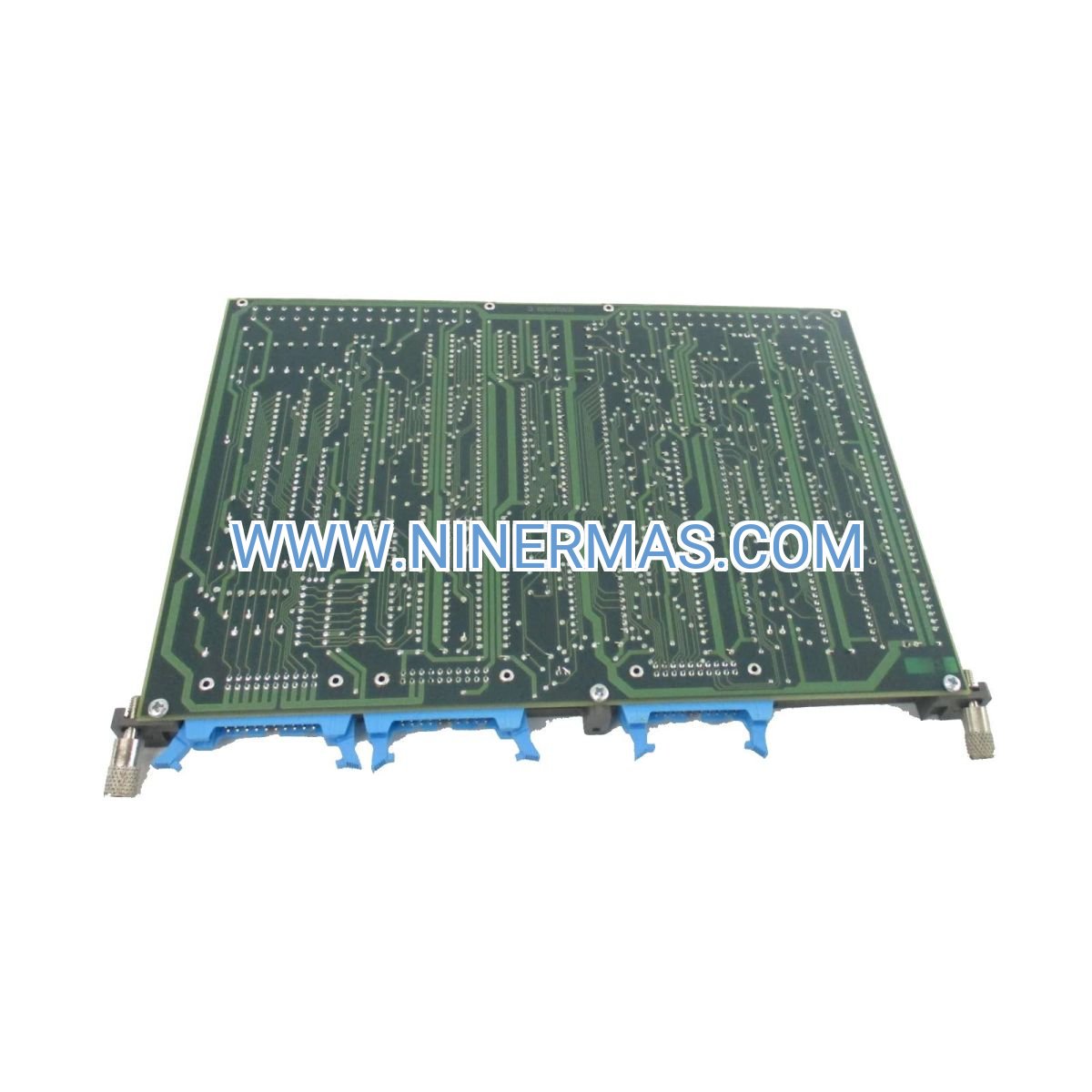
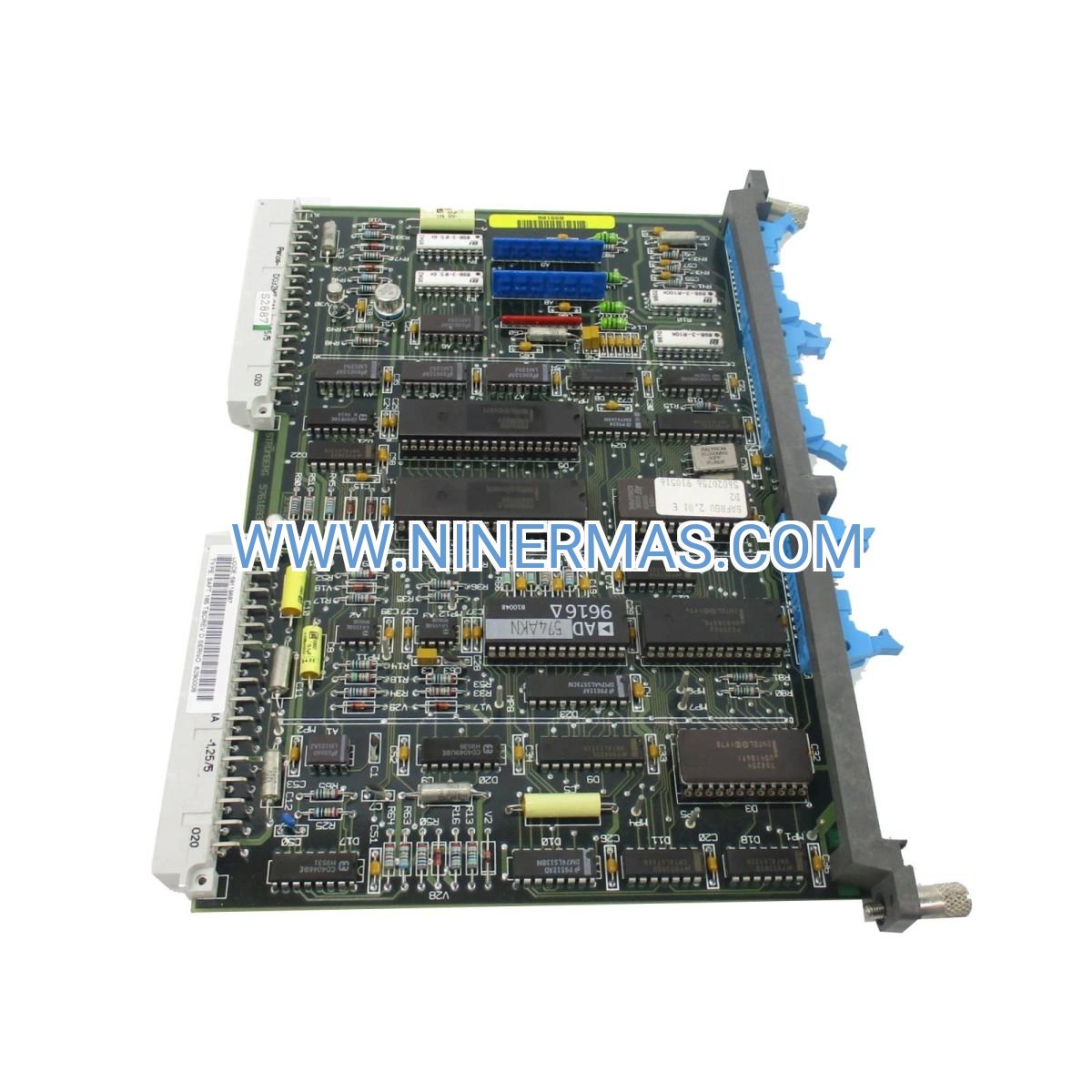
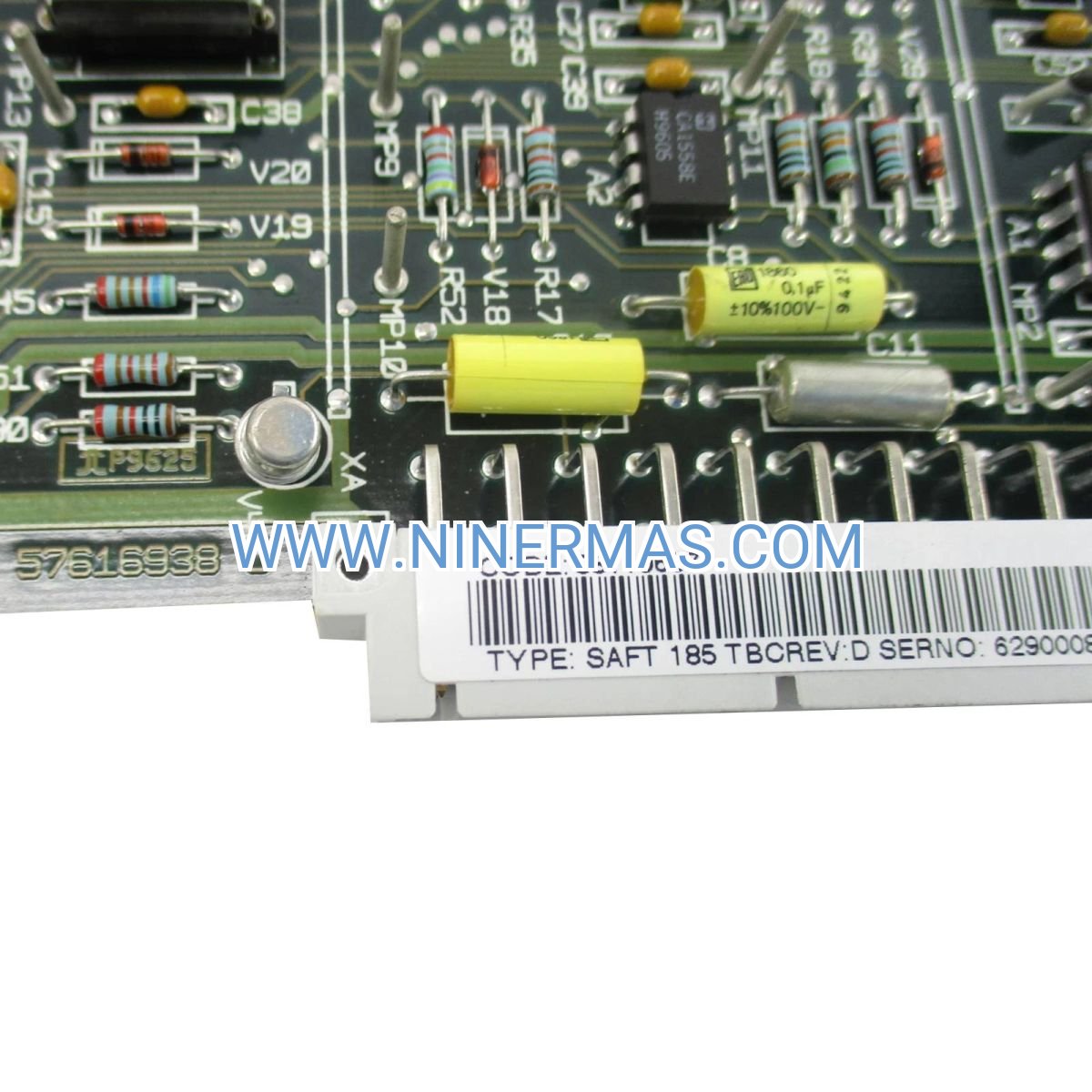
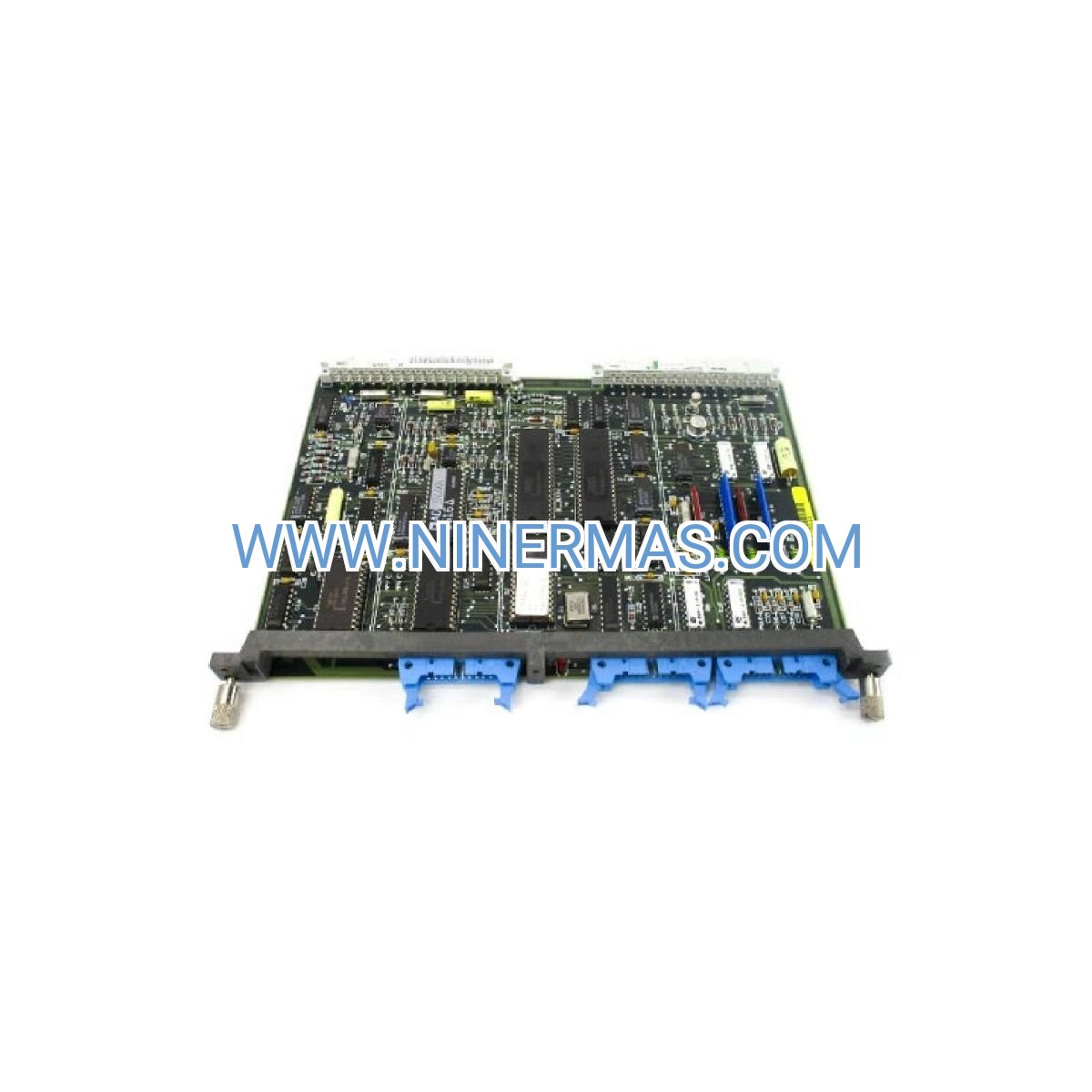
ABB SAFT185TBC Safety Field Transmitter | SIL2 RTD/TC Temperature & Binary Contact Monitor | HART 7
Description
ABB SAFT185TBC Safety Field Transmitter (SIL2-Certified Temperature & Binary Contact Monitoring System)
The ABB SAFT185TBC is an industrial-grade safety field transmitter designed for critical temperature monitoring and binary contact supervision in process safety applications. Through SIL2-certified dual-channel architecture and HART 7 digital communication, this device delivers reliable temperature measurement (RTD/TC) combined with binary contact monitoring, ensuring continuous process integrity and personnel protection in hazardous environments.
Engineered for high-risk industrial installations including oil & gas facilities, chemical processing plants, power generation stations, pharmaceutical manufacturing, and offshore platforms, the SAFT185TBC addresses critical challenges such as sensor failure detection, signal drift compensation, unsafe temperature excursions, communication loss, and inadequate diagnostic coverage in safety-instrumented systems (SIS).
Featuring standardized configuration with field-customizable parameters, this transmitter offers SIL2/SIL3 capability (depending on architecture), intrinsic safety certification (ATEX/IECEx), advanced self-diagnostics with predictive alerts, universal RTD/TC input compatibility, and IP66/IP67 environmental protection. Ideal for safety engineers, instrumentation designers, EPC contractors, and plant maintenance teams requiring certified safety solutions with comprehensive technical documentation and global support infrastructure.
Core Functions & Technical Advantages
SIL2-Certified Dual-Channel Safety Architecture
Implements redundant measurement channels with continuous cross-comparison and voting logic, automatically detecting sensor failures, wiring faults, and signal anomalies. Complies with IEC 61508 functional safety standards, reducing spurious trip rates while maintaining high diagnostic coverage (DC >90%).
Universal RTD & Thermocouple Input Flexibility
Supports Pt100/Pt1000 RTDs (2/3/4-wire), Type J/K/T/E/N/R/S thermocouples, and mV input signals with software-selectable configuration. Automatic cold junction compensation and linearization ensure ±0.1% measurement accuracy across -200°C to +850°C range, eliminating the need for multiple transmitter models.
Integrated Binary Contact Monitoring
Simultaneously monitors discrete safety contacts (limit switches, pressure switches, emergency stops) with configurable normally-open/normally-closed logic. Detects contact welding, wire breaks, and short circuits, providing comprehensive input supervision beyond simple on/off status.
HART 7 Digital Communication & Diagnostics
Enables remote configuration, real-time diagnostics, and asset management through industry-standard HART protocol. Provides detailed device health information including sensor drift trends, environmental stress indicators, and predictive maintenance alerts, reducing unplanned downtime by up to 40%.
Hazardous Area Certification & Rugged Construction
ATEX Zone 0/1/2 and IECEx intrinsic safety approvals (Ex ia) permit installation in explosive atmospheres. IP66/IP67-rated aluminum enclosure with conformal-coated electronics withstands -40°C to +85°C ambient temperatures, 95% humidity, vibration (IEC 60068-2-6), and corrosive industrial environments.
Fail-Safe Output & Configurable Trip Logic
4-20mA analog output with configurable upscale/downscale failure modes ensures safe plant shutdown during fault conditions. Programmable alarm thresholds, time delays, and hysteresis parameters allow precise adaptation to specific process safety requirements without hardware modifications.
Typical Application Scenarios
This transmitter is specifically designed for installations demanding high reliability, continuous availability, and certified safety performance:
Oil & Gas Production and Refining
Monitors critical temperature points in distillation columns, reactor vessels, and pipeline heating systems. Binary contact inputs supervise flame detectors, high-temperature switches, and emergency shutdown valves, ensuring coordinated safety responses during abnormal conditions.
Chemical Processing & Petrochemical Plants
Provides SIL-rated temperature monitoring for exothermic reactions, polymerization processes, and thermal runaway prevention. Integrated contact monitoring tracks reactor pressure relief devices and cooling system status, enabling multi-parameter safety interlocks.
Power Generation & Turbine Protection
Safeguards gas turbines, steam generators, and bearing systems through precision temperature measurement combined with vibration switch monitoring. Supports both fossil fuel and renewable energy installations requiring IEC 61511-compliant safety instrumented functions.
Pharmaceutical & Food Processing (Hygienic Applications)
Ensures sterile processing temperature control in autoclaves, fermentation vessels, and clean-in-place (CIP) systems. Sanitary sensor connections and FDA-compliant materials documentation support validation requirements for regulated industries.
Offshore Platforms & Marine Installations
Withstands harsh marine environments with salt fog resistance and extended temperature range. Compact design and simplified wiring reduce installation costs in space-constrained offshore modules while meeting DNV-GL and ABS certification requirements.
Technical Parameters & Selection Guide
To facilitate engineering design and procurement, we provide standardized specifications with field-configurable options:
Key Technical Specifications:
- Safety Certification: SIL2 per IEC 61508, suitable for SIL3 in 1oo2 architecture
- Input Types: RTD (Pt100/Pt1000, 2/3/4-wire), TC (J/K/T/E/N/R/S), mV, Binary Contact (NAMUR/Dry Contact)
- Measurement Range: -200°C to +850°C (sensor-dependent)
- Accuracy: ±0.1% of span (RTD), ±0.2% (TC)
- Output Signal: 4-20mA HART (2-wire loop-powered)
- Communication: HART 7 protocol, DD/DTM available
- Power Supply: 10.5-30 VDC (loop-powered), <4V voltage drop
- Hazardous Area: ATEX II 1G Ex ia IIC T4-T6, IECEx, FM/CSA Class I Div 1
- Environmental Protection: IP66/IP67, NEMA 4X
- Ambient Temperature: -40°C to +85°C operation, -50°C to +90°C storage
- Housing Material: Aluminum alloy with polyester powder coating
- Electrical Connection: M20×1.5 or ½" NPT cable glands
- Mounting: 2-inch pipe mount or wall bracket
- Response Time: <10 seconds (90% step response, sensor-dependent)
- Diagnostic Coverage: >90% (SFF >95%)
Selection Considerations:
When specifying the SAFT185TBC, consider: process temperature range and sensor type compatibility, required safety integrity level (SIL2/SIL3), hazardous area classification and certification requirements, available loop power supply voltage, environmental conditions (temperature, humidity, vibration), mounting location and accessibility for maintenance, integration with existing DCS/PLC systems via HART, and documentation needs for functional safety validation.
For application-specific configuration assistance, provide: process fluid and temperature range, sensor type and connection (RTD/TC model), binary contact specifications (voltage/current), hazardous area zone classification, ambient temperature extremes, and any special certifications required. Our safety instrumentation engineers will recommend the optimal configuration and provide SIL calculation support.
Advanced Features & Integration Capabilities
- Predictive Diagnostics: NAMUR NE107-compliant status reporting with failure, function check, out-of-specification, and maintenance required indicators
- Sensor Backup Mode: Automatic switchover to redundant sensor input upon primary sensor failure, maintaining process continuity
- Configurable Damping: Adjustable time constants (0-60 seconds) filter process noise while preserving fast fault detection
- Simulation Mode: Built-in loop testing function for commissioning and periodic proof testing without process interruption
- Multi-Drop HART: Supports up to 15 devices on a single 4-20mA loop for distributed monitoring architectures
- Asset Management Integration: Compatible with AMS, PDM, and FDT/DTM platforms for centralized device configuration and lifecycle management
Delivery, Service & Quality Assurance
Standard catalog models ship within 3-5 business days; custom-configured units with special certifications require 2-3 weeks lead time. Each transmitter includes a minimum 2-year manufacturer warranty covering materials and workmanship defects. Comprehensive technical support encompasses remote configuration assistance, on-site commissioning services (region-dependent), and periodic proof test procedure development.
Complete documentation package includes: certified calibration certificate traceable to national standards, functional safety manual with SIL calculation data (FMEDA report), installation and operating instructions with wiring diagrams, HART DD/DTM files for device integration, ATEX/IECEx certificate copies, and material traceability documentation for critical applications. Extended warranty, spare parts kits, and annual calibration services available upon request.
Frequently Asked Questions (FAQ)
Q: How does the SAFT185TBC safety field transmitter integrate with existing non-safety DCS systems?
A: The transmitter provides a standard 4-20mA output compatible with any analog input card, while HART communication enables advanced diagnostics without affecting the safety function. For SIL-rated applications, the analog signal connects to certified safety PLC/DCS input modules; diagnostic data routes to the maintenance system via HART multiplexers or wireless gateways.
Q: Can one SAFT185TBC unit monitor both temperature and binary contact simultaneously?
A: Yes, the dual-input architecture allows concurrent monitoring of one temperature sensor (RTD or TC) and one binary contact input. The 4-20mA output represents the temperature value, while contact status and diagnostics are accessible via HART communication or configurable as alarm thresholds affecting the analog output.
Q: What is the typical energy savings or reliability improvement compared to conventional transmitters?
A: While energy consumption is comparable (loop-powered design), the SIL2 certification and >90% diagnostic coverage reduce safety system spurious trip rates by 30-50%, preventing costly unplanned shutdowns. Predictive diagnostics extend sensor life by 20-30% through early drift detection, and the dual-input capability eliminates one transmitter per monitoring point, reducing installation and maintenance costs.
Q: What are the environmental installation requirements and protection class specifications?
A: The IP66/IP67-rated enclosure permits outdoor installation in direct weather exposure, with operating temperature range of -40°C to +85°C. For extreme environments, optional sunshields and heating elements are available. The transmitter must be mounted in a vibration-dampened location per IEC 60068-2-6 specifications; cable glands must be properly sealed to maintain ingress protection.
Q: Does the device support remote monitoring, data logging, and which industrial protocols are compatible?
A: HART 7 protocol enables remote configuration, real-time diagnostics, and trend data access through HART multiplexers, wireless gateways (WirelessHART), or direct connection to asset management systems (AMS, PDM). For integration with Modbus, Profibus, or Foundation Fieldbus networks, HART-to-fieldbus gateways provide protocol conversion while preserving diagnostic information.
Q: What is the recommended proof test interval and how is it performed without process shutdown?
A: Per IEC 61511, proof test intervals depend on target SIL and system architecture (typically 1-3 years for SIL2). The SAFT185TBC supports partial stroke testing via HART commands, allowing functional verification of electronics and output circuitry without removing the device. Full proof tests requiring sensor simulation can be performed using the built-in simulation mode or by temporarily connecting a calibrated signal source.
Request Technical Support & Custom Configuration
To obtain detailed application engineering support, certified SIL calculations, or project-specific quotations, please provide the following information: project name and industry sector, process application and temperature monitoring requirements, sensor type and connection specifications (RTD/TC model, wire configuration), binary contact input specifications (voltage, current, logic), hazardous area classification (Zone/Division, gas group), ambient temperature range and environmental conditions, required safety integrity level (SIL2/SIL3), quantity and delivery schedule. Our certified functional safety engineers will provide one-on-one selection guidance, SIL verification documentation, and turnkey integration support.
© 2026 NINERMAS COMPANY LIMITED. All rights reserved. Original Source: https://ninermas.com Contact: sale@ninermas.com | +0086 187 5021 5667
Related products

Contact Info
-
Address:22 / F, South Wo Hang building, 148 Wing Lok Street, Sheung Wan, Western District, Hong Kong
-
Phone:+8618750215667
-
Email: