
A new hydrogen power package can arrive with a clear service agreement while the plant signals around it remain nobody’s explicit responsibility. The rectifier supplier covers its equipment. The control-system contractor covers a defined software scope. Maintenance inherits the cooling permissives, utility alarms and interface wiring between them. That gap matters more to recovery time than whether the new cabinet looks modern.
ABB’s trade release index dated October 19, 2026 lists a new high-efficiency rectifier for green hydrogen production. Its UNIREC H2 product information describes a water-cooled thyristor rectifier supplying DC power to electrolyzers. The announcement is timely; the maintenance lesson below is our analysis, not ABB’s description of a particular customer’s installation.
Put the interface on the purchase order
Before accepting a modernization package, draw a boundary around each maintenance responsibility. Separate the rectifier’s internal controls, the plant’s process I/O, the communications gateway and any independently engineered safety system. A shared manufacturer name does not make these one replaceable system. Equally, a project service contract does not automatically include the legacy modules in an adjacent cabinet.
For every signal crossing that boundary, record its owner, signal form, normal state, loss-of-signal response and approved restoration test. Include who holds the drawings and who can authorize a replacement. The useful document is not a generic equipment list: it is a signal responsibility schedule that an on-call engineer can understand without contacting the original project team.
Consider a cooling-package ready signal as a hypothetical example. Its absence might originate in the package, an interface relay, field supply, cable, input channel or control logic. Ordering an expensive rectifier assembly because the operator screen says unavailable skips several different ownership boundaries. The fault description should identify the evidence already collected and the responsible team, without encouraging live probing of high-energy equipment.
Keep plant-side I/O separate from rectifier spares
Some existing plants use ABB S800 I/O for utility and process signals. Where the installed drawings specify it, an ABB DI810 3BSE008508R1 digital input spare belongs in the plant-control inventory, not automatically in the new rectifier’s bill of materials. ABB identifies DI810 as a 16-channel, 24 V DC input module. That basic identity does not establish its suitability for a particular hydrogen installation or safety function.
Likewise, an existing analog measurement may lead the maintenance team to an AI810 3BSE008516R1 analog input module. ABB’s AI810 hardware data describes eight voltage/current input channels and does not classify the module as intrinsically safe or high-integrity. Those limits are important when separating ordinary process indication from protective functions.
Neither link means these modules are installed inside UNIREC H2, supplied with it, or approved for every electrolyzer project. Their relevance is to the documented legacy plant-side equipment that may remain in service during a broader upgrade. The exact installed architecture, termination hardware and engineering approval govern any replacement.
Buy recovery coverage, not duplicate ownership
A practical spare review starts with four columns: equipment boundary, failure consequence, recovery route and responsible organization. Add the equipment reference only after these are clear. This often exposes both missing coverage and double purchasing. Two departments may reserve the same process module while neither has a plan for the interface assembly that connects their systems.
Classify recovery routes separately. A local shelf spare can address a defined hardware failure. A supplier exchange arrangement may address a different assembly. Remote software assistance depends on access and available personnel. None should be treated as interchangeable simply because each appears under support in a contract. Ask what starts the response clock and what evidence the supplier needs before accepting a case.
Do not calculate stock from the value of the new hydrogen equipment alone. A modest interface component can prevent restart, while a costly assembly may have an acceptable service route. Use the plant’s own consequence assessment, approved redundancy design and demonstrated replacement time. Where those inputs are unknown, record uncertainty rather than inventing a failure rate or a delivery promise.
The handover test should cross organizational boundaries
During an approved commissioning window, the project team should demonstrate how an interface fault is recognized, assigned and cleared. Maintenance needs to see that the documents lead to the right equipment and that the recovery procedure restores the correct signal meaning. A successful factory test of the rectifier alone does not close this plant-level handover obligation.
The test record should distinguish simulation from physical verification. Mark which alarms were simulated, which installed channels were checked and which protective actions were outside scope. Preserve the accepted baseline and unresolved exceptions together. Otherwise, a simulated permissive can later be mistaken for evidence that the complete field circuit was proven.
Hydrogen and high-energy electrical equipment require competent personnel, approved isolation and project-specific safety procedures. A spare-parts article cannot authorize changes to interlocks, hazardous-area interfaces or protective logic. If the proposed spare changes any of those assumptions, stop the ordinary replacement process and obtain the required engineering review.
Questions from maintenance and procurement
Does a new ABB rectifier eliminate our old S800 spare requirement?
Not by itself. Review the as-built plant-control scope. Any legacy I/O retained outside the package still needs a recovery plan until its associated function is formally removed or migrated.
Can we assume the rectifier service contract covers interface modules?
No. Request the covered equipment schedule and exclusions. Identify responsibility for wiring, signal conversion, process modules and configuration before using the contract as a reason to reduce stock.
Are DI810 and AI810 suitable for a safety shutdown?
Do not infer that from their ordinary input functions. Safety duties require the approved safety architecture and applicable device documentation. These references are not universal substitutes for safety-rated or intrinsically safe equipment.
What should we send when requesting plant-side I/O spares?
Provide the installed module and assembly references, readable labels, termination details, required condition, quantity and destination. Explain whether the inquiry concerns an existing process channel or a proposed project change.
For a scoped NINERMAS inquiry, send those details to sale@NINERMAS.com. We can quote the identified plant-side spare separately from the project package, with condition and supply scope stated explicitly. Availability and compatibility remain subject to confirmation.
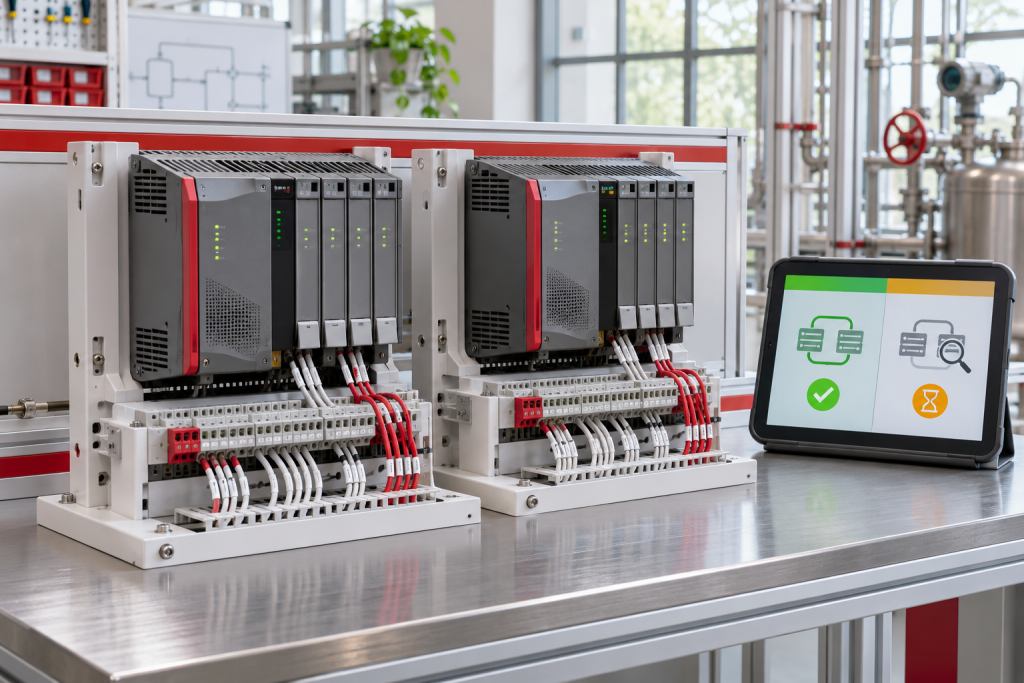
Image: AI-generated editorial illustration, not an exact product photograph or installation reference.
© 2026 NINERMAS. All rights reserved. Official Website: https://ninermas.com Inquiry: sale@NINERMAS.com | WhatsApp/Tel: +86 187 5021 5667
Next Step
Move the research into a cleaner RFQ.
Send the part number, quantity, condition expectation, destination, and timing details so the sourcing team can reply with better availability and lead-time context.