A DeltaV data gap can be harder to diagnose than a failed controller. The operator sees stale values, missing package-unit data, intermittent serial polls, or a fieldbus segment that clears after a restart and then returns under load. In that situation, an Emerson DeltaV interface spare should be selected around the communication role it restores, not around the shortest module name in the store room.
NINERMAS readers usually support plants where a mature DCS still has years of useful life if communication spares are documented carefully. New automation platforms and digital integration projects increase pressure on old serial, Modbus, Fieldbus H1, and package-unit links; they do not remove the need to recover them during the next outage.
Map The Communication Role Before Buying
Start with the controller or node, port use, connected device, protocol, terminal block, cable route, power path, diagnostics, firmware or revision evidence, and the unit consequence of losing the data.
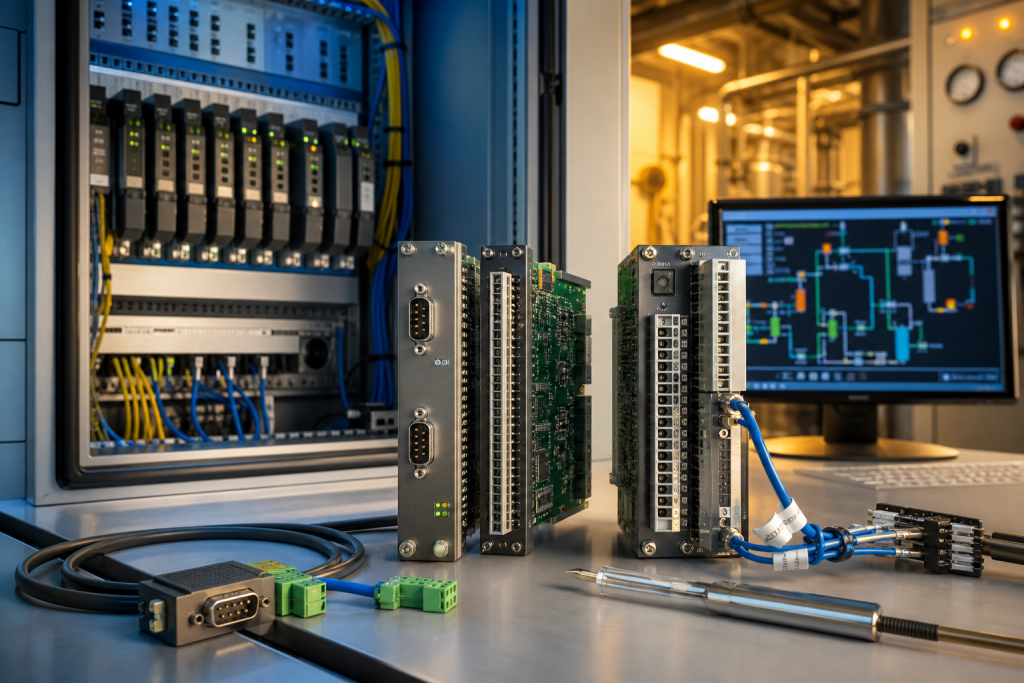
The live Emerson KJ3241X1-BA1 serial interface module is a useful RFQ anchor when the installed issue involves serial polling, package-unit integration, or gateway communication.
Photograph the module label, port face, side label, terminal strip, cable tag, node location, diagnostic LEDs, and any workstation alarm that proves the communication symptom.
Fieldbus And Serial Evidence Should Not Be Mixed
A serial interface and a Fieldbus H1 card may sit in the same DeltaV cabinet, but the acceptance test is different. Serial recovery needs polling, device response, and port settings. Fieldbus recovery needs segment power, device visibility, terminators, and channel diagnostics.
The related Emerson KJ3242X1-BK1 Fieldbus H1 card shows why the RFQ should name the actual communication layer instead of saying only DeltaV I/O.
Ask suppliers to separate exact replacement, repaired exchange, refurbished stock, and substitute. The answer should include actual photos, included terminal scope, test method, condition, and dispatch timing.
Acceptance Means Credible Data, Not Just LEDs
After replacement, verify module recognition, communication status, device response, bad-value flags, alarm behavior, historian trend, package-unit handshake, and a controlled restart or simulation test.
If the fault remains, review cable shield, grounding, protocol settings, device power, terminal seating, controller configuration, and adjacent gateway hardware before rejecting the spare.
Store photos, port map, configuration notes, diagnostics, acceptance result, and the engineer who approved the communication return.
Procurement Evidence That Should Travel With The Spare
Send exact labels, cabinet and port photos, connected-device list, protocol evidence, symptom history, condition expectation, test scope, and outage deadline.
A strong RFQ states whether the spare must include terminals, connector kits, cable adapters, or only the base module. Those details decide whether the part can be installed immediately.
For a substitute, require a clear review of port behavior, firmware, configuration impact, and rollback path before purchase approval.
The practical discipline is to keep identity, function, and acceptance separate. Identity proves what the item is. Function proves what the plant expects it to restore. Acceptance proves the maintenance team has a credible way to put the asset back into service.
This matters most on older PLC, DCS, SIS, HMI, drive, and protection systems because the same family name can hide different firmware, terminals, power paths, suffixes, accessories, or configuration assumptions. A correct purchase starts with the installed evidence, not with a copied description.
Ask for actual-item photographs when the outage window is short. Front labels, side labels, connector faces, terminal assemblies, memory devices, latches, and LED panels often reveal details that a catalog title misses.
Condition language should be explicit. New surplus, factory sealed, refurbished, repaired exchange, tested used, and untested used items carry different risks. Procurement should compare condition and test scope before comparing price or lead time.
Accessory scope is another common failure point. Terminal blocks, cables, mounting brackets, memory cards, connector kits, batteries, license media, and parameter backups may not be included with the base hardware. Name those items before the purchase order is approved.
A useful RFQ also names the fallback. If the item fails bench checks or field acceptance, the plant should know whether it will reinstall the old part, use a repaired exchange, isolate a noncritical function, or escalate the case to a migration review.
The best spare records are boring in the right way. They contain enough photos, model evidence, wiring notes, configuration references, and acceptance criteria that a night-shift engineer can understand the decision without calling everyone who attended the original meeting.
For global plants, this also reduces avoidable back-and-forth with procurement. A supplier can respond faster when the request separates the mandatory match points from the nice-to-have preferences and states which uncertainty requires engineering approval.
Do not let a successful bench power-up become the whole acceptance plan. Bench checks are useful, but the real question is whether the item restores the installed function in the rack, cabinet, loop, axis, network, or safety channel where it will be used.
When lifecycle pressure is building, a spare purchase can also become a migration signal. If exact replacements are scarce, test evidence is weak, or substitutes require heavy engineering review, record that fact so the next budget discussion is based on maintenance reality rather than surprise downtime. Evidence compounds.
FAQ
What must match on a DeltaV serial interface spare?
Match module identity, port role, protocol, terminal scope, firmware or revision, connected device, node path, and communication test method.
Can a Fieldbus card be treated like a serial spare?
No. Fieldbus and serial interfaces need different wiring evidence, diagnostics, and acceptance tests.
What should procurement send with the RFQ?
Send labels, port photos, connected-device details, protocol notes, condition requirement, test expectation, and outage deadline.
What proves recovery?
Stable device communication, credible values, cleared diagnostics, restored alarms, historian continuity, and approved restart or simulation testing.
Send NINERMAS the Emerson module labels, port photos, communication symptoms, connected-device list, condition requirement, and outage deadline. We can help prepare a traceable DeltaV interface RFQ.
© 2026 NINERMAS. All rights reserved. Official Website: https://NINERMAS.com Inquiry: sale@NINERMAS.com | WhatsApp/Tel: +86 187 5021 5667
Next Step
Move the research into a cleaner RFQ.
Send the part number, quantity, condition expectation, destination, and timing details so the sourcing team can reply with better availability and lead-time context.