Original Industrial Spare Part
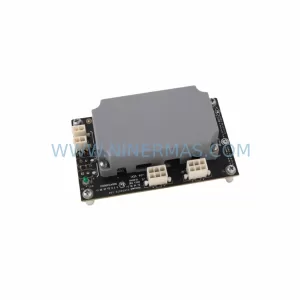
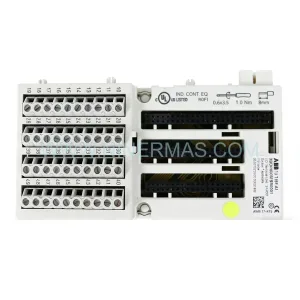
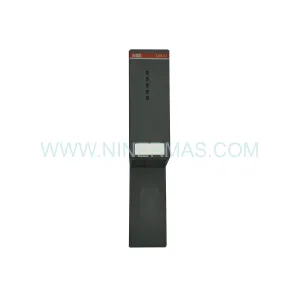
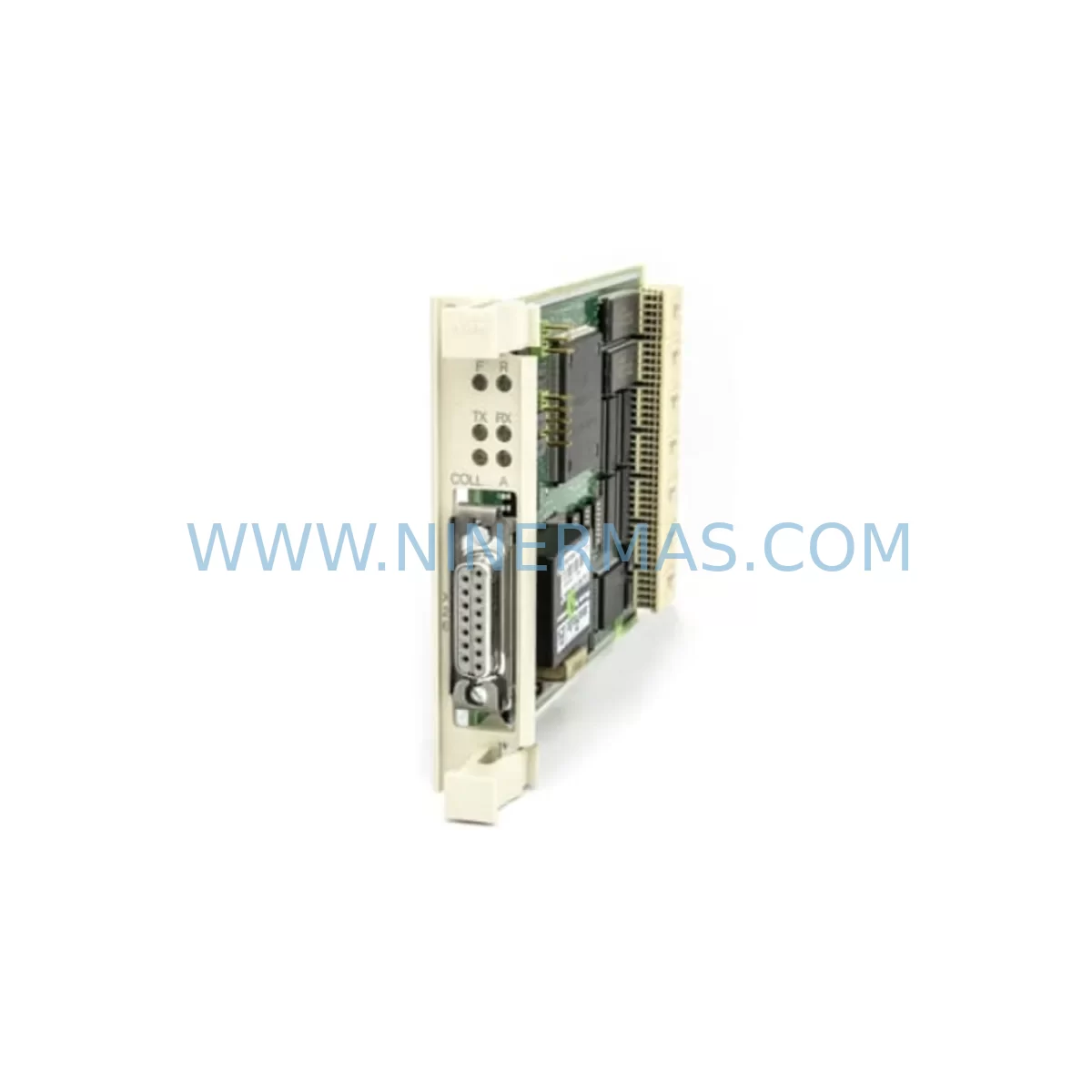
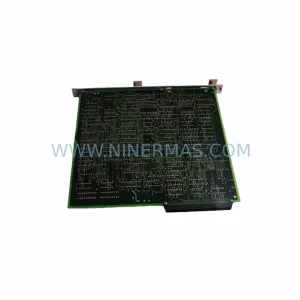
ABB CI546 3BSE012545R1 Retrofit Interface for Legacy DCS
Verify the part, confirm the platform family, and move straight into quotation with the right commercial details.
RFQ Ready
- SKUCI546 3BSE012545R1
- CategoryDCS Distributed Control Systems
- BrandABB
- SupportAvailability, lead time, condition, and shipping coordination
How Buyers Usually Use This Page
- Confirm the exact part number and platform family before sending the quote request.
- Use direct email when quantity, condition, and destination are already defined internally.
- Switch to the broader brand or category archive when you need alternates nearby.
Series Navigation
Move through the most common platform families behind this part.
Product RFQ
Send this part directly for quotation.
Include quantity, required condition, destination country, and target delivery timing. Current reference: ABB CI546 3BSE012545R1 Retrofit Interface for Legacy DCS with SKU CI546 3BSE012545R1.
ABB CI546 3BSE012545R1 Retrofit Interface for Legacy DCS: Retrofit-Compatible Communication Interface for AC 800M Legacy Systems
The ABB CI546 3BSE012545R1 is a high-performance communication interface module designed for the ABB AC 800M Distributed Control System (DCS) platform. As legacy automation infrastructure ages and original equipment manufacturers discontinue support for older communication modules, the CI546 3BSE012545R1 has become a critical retrofit and replacement component for process industries worldwide. Whether you are managing a petrochemical plant, a power generation facility, or a large-scale manufacturing operation, the CI546 provides a reliable, field-proven pathway to extend the operational life of your existing AC 800M control architecture without requiring a full system overhaul.
The CI546 module supports PROFIBUS DP communication, enabling seamless integration between the AC 800M controller and field devices such as variable frequency drives, intelligent valve positioners, remote I/O stations, and third-party instrumentation. Its compatibility with the AC 800M S800 I/O system and Modulebus architecture makes it an essential component in retrofit projects where maintaining existing field wiring and device addressing is a priority. Engineers planning a control system upgrade must verify the module’s slot assignment, PROFIBUS node address configuration, and DP master class settings before commissioning to ensure uninterrupted process control.
Upgrade Compatibility Table
| Specification | Details |
|---|---|
| Module Type | PROFIBUS DP Communication Interface |
| Compatible Platform | ABB AC 800M DCS (PM591, PM554, PM595 series controllers) |
| Backplane Interface | AC 800M Modulebus; compatible with TB521 Modulebus Cluster Modem |
| Communication Protocol | PROFIBUS DP V0/V1; DP Master Class 1 and Class 2 |
| Power Supply Requirement | Supplied via AC 800M backplane; verify rack power budget before installation |
| Mounting | Standard AC 800M rack slot; confirm slot availability in existing cabinet layout |
| Replacement Compatibility | Direct replacement for CI541, CI543, CI532 in equivalent PROFIBUS DP applications |
| Firmware Compatibility | Verify AC 800M firmware version; update controller firmware if required before module swap |
| Commissioning Requirement | PROFIBUS node address must match original configuration; GSD file required for DP slave devices |
| Warranty | 12-Month Warranty; pre-shipment functional testing included |
Retrofit Planning for Existing Automation Systems
Successful integration of the CI546 3BSE012545R1 into an existing AC 800M system requires a structured retrofit plan that addresses hardware compatibility, software configuration, and field commissioning in sequence. Before removing the legacy communication module, engineers should document the current PROFIBUS network topology, including all slave device addresses, baud rate settings, and cable termination points. This documentation serves as the baseline for post-installation verification and significantly reduces the risk of communication faults during startup.
In most retrofit scenarios, the CI546 is installed alongside or in replacement of earlier communication interface variants such as the CI541 or CI543, which may have reached end-of-life or are no longer available through standard distribution channels. The CI546 maintains backward compatibility with the AC 800M Modulebus architecture, allowing it to coexist with existing S800 I/O modules including AI531 analog input modules, AO531 analog output modules, DI524 digital input modules, and DO524 digital output modules without requiring changes to field wiring or I/O channel assignments.
Power budget verification is a mandatory step in any AC 800M retrofit. The CI546 draws power from the rack backplane, and adding a new communication module to an existing rack may push total power consumption beyond the rated capacity of the installed power supply unit. Engineers should calculate the combined power draw of all installed modules — including the PM591 or PM554 processor module, all I/O modules, and any additional communication interfaces — and compare this against the rack power supply rating before proceeding with installation.
Cabinet space and physical installation constraints must also be assessed. In legacy control cabinets where rack slots are fully occupied, a slot must be freed by relocating or consolidating existing modules. The CI546 occupies a single AC 800M rack slot, and its PROFIBUS DB9 connector must have unobstructed access for cable connection. Where the existing PROFIBUS cable uses a different connector type or shielding standard, a cable adapter or replacement segment may be required. The TB521 Modulebus Cluster Modem is often present in larger AC 800M installations and should be verified for compatibility with the updated rack configuration.
For systems that include HMI integration via ABB’s 800xA platform or third-party SCADA systems, the CI546 replacement must be reflected in the control system database. PROFIBUS slave device GSD files must be re-imported if the DP master configuration is rebuilt, and HMI faceplates linked to PROFIBUS device status tags should be tested after commissioning to confirm that alarm and status signals are correctly mapped. Where the legacy system used a CI532 S100 I/O Communication Interface for parallel I/O expansion, the migration path to CI546-based PROFIBUS communication should be validated against the existing program logic to avoid unintended changes in I/O scan rates or data consistency.
Downtime Control During System Migration
Minimizing unplanned downtime is the primary operational concern during any communication module replacement in a live production environment. A structured hot-swap or planned maintenance window approach is recommended for CI546 installations. Where the AC 800M system supports redundant communication paths, the PROFIBUS network can be temporarily rerouted through an alternate interface while the CI546 is installed and configured, allowing the process to continue running without interruption.
Before initiating the physical module swap, the original control program should be backed up from the PM591 or PM554 processor module using ABB’s Control Builder M engineering tool. This backup preserves all application logic, PROFIBUS configuration data, and I/O signal assignments, providing a recovery point in the event of an unexpected fault during the replacement procedure. The backup file should be stored on an offline engineering workstation and verified for completeness before the maintenance window begins.
During the module replacement, the PROFIBUS network should be placed in a safe state by disabling DP master polling or switching affected process loops to manual control at the DCS operator station. After the CI546 is physically installed and the PROFIBUS cable is reconnected, the module should be powered up and its diagnostic LEDs verified before re-enabling DP master communication. Any PROFIBUS slave devices that report communication errors after startup should be individually diagnosed using a PROFIBUS analyzer or the diagnostic functions available in Control Builder M.
Post-installation verification should include a full I/O checkout for all PROFIBUS-connected field devices, confirmation that all analog and digital signals are within expected ranges, and a review of the DCS alarm log for any new faults introduced during the migration. Where the system includes safety-rated I/O or SIL-certified loops, the safety function must be re-validated in accordance with the applicable functional safety standard before returning the system to automatic operation. All retrofit activities should be documented in the plant maintenance management system, including the module serial number, installation date, and test results, to support future maintenance planning and warranty claims.
Retrofit Support FAQ
Q1: Is the CI546 3BSE012545R1 a direct replacement for the CI541 and CI543 communication interface modules?
The CI546 3BSE012545R1 is functionally compatible with the CI541 and CI543 in PROFIBUS DP master applications on the AC 800M platform. However, the physical connector layout and firmware configuration parameters may differ between module generations. Engineers should verify the PROFIBUS baud rate, DP master class settings, and slave device GSD file compatibility before completing the replacement. A pre-shipment functional test is performed on all CI546 units to confirm module operability prior to dispatch.
Q2: What commissioning steps are required after installing the CI546 in an existing AC 800M rack?
After physical installation, the CI546 must be recognized by the AC 800M controller through Control Builder M. The PROFIBUS DP configuration, including slave device addresses and GSD files, must be downloaded to the module. The PROFIBUS network should then be scanned to confirm that all slave devices are communicating correctly. Any devices reporting diagnostic errors should be individually addressed before returning the system to automatic control. Where the system includes HMI integration, tag mapping and alarm configuration should be verified as part of the commissioning checklist.
Q3: How is field wiring and terminal compatibility managed during a CI546 retrofit?
The CI546 connects to the PROFIBUS network via a standard DB9 connector. Existing PROFIBUS cable assemblies that use the same connector type can be reconnected directly without modification. Where the legacy installation used a different cable termination or shielding arrangement, a cable adapter or replacement cable segment may be required. Terminal blocks and field wiring connected to S800 I/O modules such as the AI531, AO531, DI524, and DO524 are not affected by the CI546 replacement, as these modules communicate with the AC 800M controller via the Modulebus backplane independently of the PROFIBUS interface.
Q4: What inventory availability and warranty terms apply to the CI546 3BSE012545R1?
The CI546 3BSE012545R1 is maintained in reserved stock to support urgent retrofit and emergency replacement requirements. All units are subject to pre-shipment functional testing to verify communication interface operability and module integrity before dispatch. A 12-month warranty is provided from the date of shipment, covering manufacturing defects and module failure under normal operating conditions. Long-term supply commitments and reserved inventory programs are available for customers with ongoing retrofit projects or multi-site maintenance contracts requiring predictable lead times.
| Product Series | AC 800M |
|---|---|
| Country of Origin | SE |
Catalog Continuation
More ABB modules in the catalog.
Use the brand lane to compare nearby part numbers, platform-adjacent modules, and other inquiry-ready listings before sending your final RFQ.
SKU: IO DSQC1032 3HAC058665-001
ABB DSQC1032 3HAC058665-001 Safety-Reliable Analog I/O Module
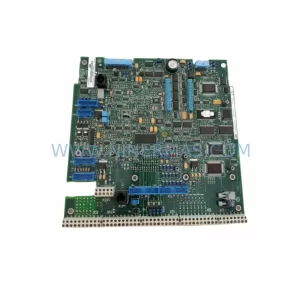
SKU: DSAO110 57120001-AT/2
ABB DSAO110 57120001-AT/2 Retrofit-Compatible Analog Output for Legacy Systems
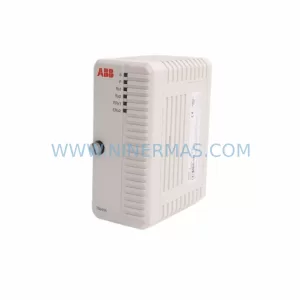
SKU: TB840A 3BSE037760R1
ABB TB840A 3BSE037760R1 Retrofit-Compatible Battery for AC800M
Catalog Continuation
Alternative parts within DCS Distributed Control Systems.
Stay inside the same system family when you need substitutes, adjacent modules, or a broader shortlist for procurement review.
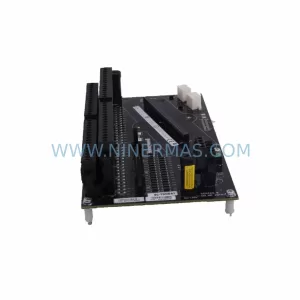
SKU: 8C-TAIDB1/51307133-175
Honeywell 8C-TAIDB1 51307133-175 Retrofit-Compatible Terminal Assembly
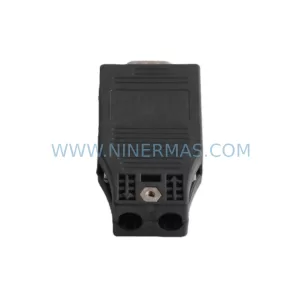
SKU: 01984-4282-0001
Fisher 01984-4282-0001 Retrofit-Compatible Control Module