Original Industrial Spare Part
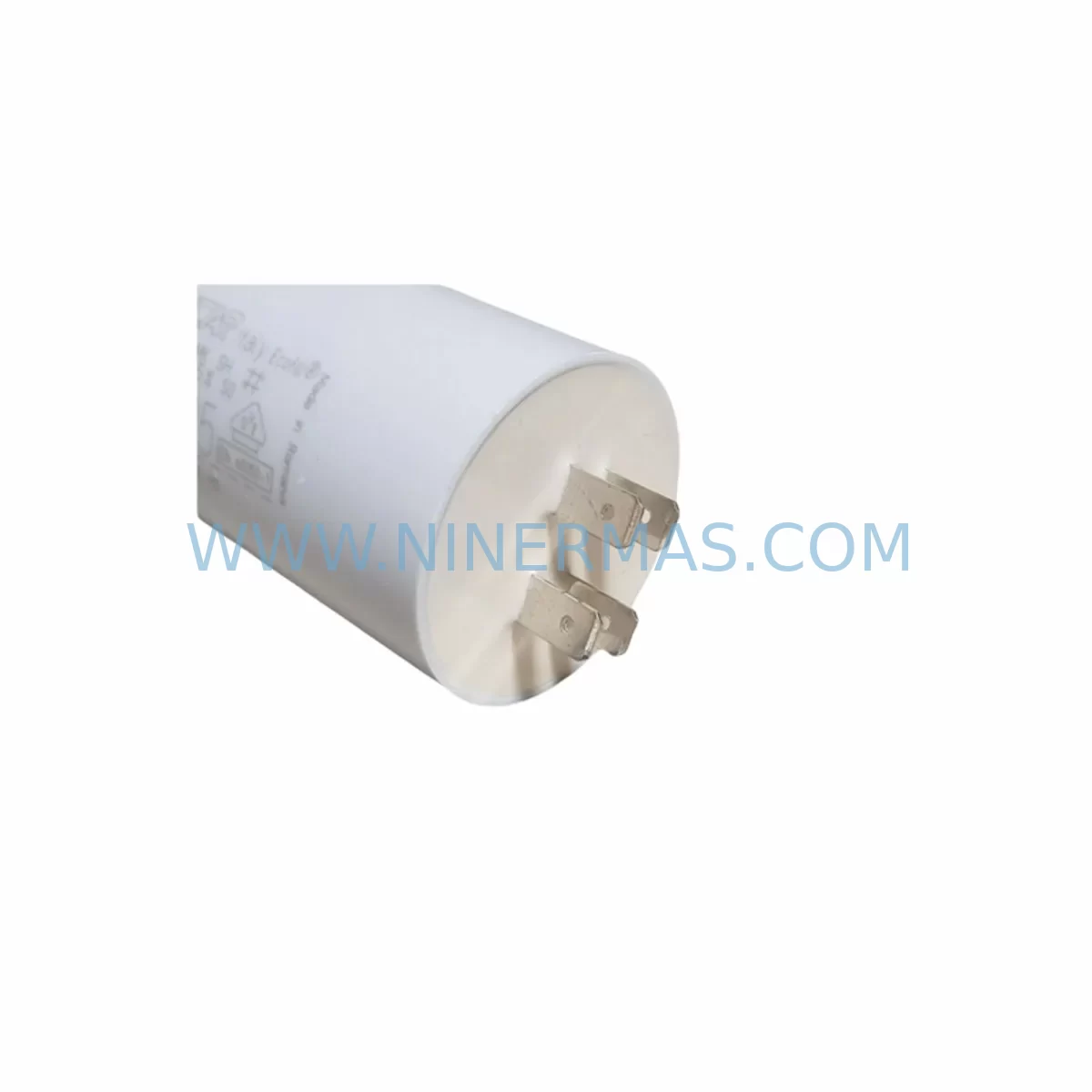
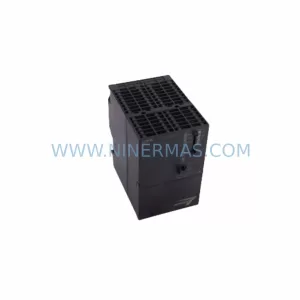
Nippon P0SITIVE 400V 2700UF Retrofit-Compatible Electrolytic Capacitor
Verify the part, confirm the platform family, and move straight into quotation with the right commercial details.
RFQ Ready
- SKUP0SITIVE 400V 2700UF
- CategoryPLC & Industrial Automation Modules
- BrandNippon
- SupportAvailability, lead time, condition, and shipping coordination
How Buyers Usually Use This Page
- Confirm the exact part number and platform family before sending the quote request.
- Use direct email when quantity, condition, and destination are already defined internally.
- Switch to the broader brand or category archive when you need alternates nearby.
Series Navigation
Move through the most common platform families behind this part.
Product RFQ
Send this part directly for quotation.
Include quantity, required condition, destination country, and target delivery timing. Current reference: Nippon P0SITIVE 400V 2700UF Retrofit-Compatible Electrolytic Capacitor with SKU P0SITIVE 400V 2700UF.
Nippon P0SITIVE 400V 2700UF Retrofit-Compatible Electrolytic Capacitor: Legacy System Compatibility and Smooth Upgrade
The Nippon P0SITIVE 400V 2700UF electrolytic capacitor is a field-proven, high-reliability component widely used in industrial power supply units, servo drive DC bus circuits, variable frequency drives (VFDs), and legacy automation control panels. As original equipment manufacturers discontinue older capacitor series, maintenance engineers and system integrators increasingly rely on retrofit-compatible replacements that match the original electrical specifications while fitting within existing enclosure constraints. This Nippon P0SITIVE series capacitor delivers exactly that: a direct-fit, electrically compatible solution for aging automation infrastructure.
Rated at 400V DC with a capacitance of 2700µF, this unit is designed to replace end-of-life capacitors in Siemens SINAMICS, ABB ACS series, Schneider Electric Altivar, YOKOGAWA CENTUM, and Honeywell Experion-based power conditioning modules. Whether you are restoring a legacy servo amplifier, refurbishing a DC bus bank in a multi-axis motion controller, or replacing a failed bulk capacitor in a DCS power supply rack, the P0SITIVE 400V 2700UF provides the capacitance, voltage headroom, and physical form factor required for a reliable retrofit.
Upgrade Compatibility Table
| Parameter | Specification / Retrofit Guidance |
|---|---|
| Rated Voltage | 400V DC — suitable for 380V AC input rectified bus applications |
| Capacitance | 2700µF ±20% — direct replacement for 2500–3000µF legacy units |
| Series | Nippon P0SITIVE — long-life, low-ESR industrial grade |
| Terminal Interface | Snap-in / screw terminal — confirm pitch and lead diameter before installation |
| Physical Dimensions | Verify can diameter and height against original mounting bracket and PCB footprint |
| Communication Compatibility | Passive component — no protocol dependency; compatible with all control platforms |
| Installation Requirement | Observe polarity markings; discharge bus before replacement; torque terminals to spec |
| Commissioning Note | Pre-charge bus gradually if drive supports soft-start; verify ripple current rating |
| Replacement Recommendation | Replace in matched pairs or full bank for balanced aging in multi-capacitor arrays |
| Warranty | 12-Month Warranty — covers manufacturing defects under normal operating conditions |
Retrofit Planning for Existing Automation Systems
When planning a capacitor bank retrofit in an existing automation system, the scope extends well beyond the capacitor itself. A thorough retrofit assessment begins with the power supply module feeding the DC bus — units such as the Siemens 6SL3100 Active Line Module or ABB ACS880 DC bus supply must be evaluated for output ripple tolerance before selecting a replacement capacitor. If the original capacitor bank was part of a Schneider Electric Altivar 71 or Altivar 61 drive, the bus capacitance directly affects ride-through time during momentary power dips, and undersizing the replacement will trigger undervoltage faults.
In YOKOGAWA CENTUM VP or CS3000 DCS environments, the power supply cards — such as the Yokogawa PW481 or PW482 power supply unit — contain bulk electrolytic capacitors on their internal DC rails. Replacing these with the Nippon P0SITIVE 400V 2700UF requires confirming the PCB footprint, lead pitch, and maximum can height against the card’s internal clearance. Similarly, in Honeywell Experion PKS controller cabinets, the C300 Controller Power Supply and associated I/O link power conditioners use high-voltage electrolytic capacitors that must be matched precisely to avoid thermal runaway or reduced hold-up time.
For servo drive applications — particularly legacy Mitsubishi MR-J2S or MR-J3 series servo amplifiers — the DC bus capacitor bank is a known wear item. The P0SITIVE 400V 2700UF is frequently used as a retrofit replacement in these amplifiers, restoring full regenerative braking capacity and eliminating the overvoltage faults caused by degraded capacitance. When retrofitting multi-axis systems, it is advisable to replace capacitors across all axes simultaneously to prevent imbalanced aging.
In control cabinet upgrades involving GE Fanuc Series 90-30 or Series 90-70 PLC power supply modules, the DC bus capacitors in the power supply backplane are often the first components to fail after 10–15 years of continuous operation. The Nippon P0SITIVE series is a recognized replacement in these applications. Technicians should also inspect the backplane bus connector and I/O module seating during the same maintenance window to avoid repeat call-outs.
Where the retrofit involves a communications protocol migration — for example, transitioning from legacy RS-485 Modbus RTU to PROFIBUS DP or EtherNet/IP — the power supply stability provided by a healthy capacitor bank is critical. Protocol gateway modules such as the Anybus X-gateway or HMS IXXAT series are sensitive to bus voltage fluctuations, and a degraded capacitor bank can introduce intermittent communication faults that are difficult to diagnose. Replacing the bulk capacitors as part of the protocol migration project eliminates this variable.
All units are pre-shipment tested for capacitance, ESR, and leakage current before dispatch. Stock is maintained for immediate shipment, supporting both emergency breakdown replacements and planned maintenance schedules.
Downtime Control During System Migration
Minimizing unplanned downtime during a capacitor retrofit requires a structured approach. Begin by documenting the existing bus voltage waveform under load using a power quality analyzer before any components are removed — this establishes a baseline for post-retrofit verification. If the drive or power supply supports a soft pre-charge sequence, enable it during commissioning to limit inrush current to the new capacitor bank and protect both the capacitor and the rectifier bridge.
Where the control system includes a UPS or ride-through module — such as a Siemens SITOP or Phoenix Contact QUINT series power supply with buffer module — verify that the hold-up time specification is recalculated after the capacitor replacement, as the new unit’s capacitance tolerance may shift the ride-through window slightly. This is particularly important in continuous process environments where even a 20ms power interruption can trigger a full process shutdown.
To protect the original PLC program logic during the retrofit, ensure the CPU module — whether a Siemens S7-300, Allen-Bradley ControlLogix, or Schneider Electric Modicon M340 — remains powered via an independent UPS circuit throughout the capacitor replacement. This prevents accidental program loss or memory corruption during the bus discharge and recharge cycle. HMI screens connected via PROFIBUS DP or EtherNet/IP should be placed in manual override mode to prevent spurious alarms from triggering automated safety responses during the maintenance window.
After installation, perform a full load test at rated current for a minimum of 30 minutes before returning the system to production. Monitor bus voltage ripple, capacitor surface temperature, and drive fault logs to confirm the retrofit has restored the system to specification. Document the replacement with the capacitor’s date code, lot number, and measured capacitance value for the maintenance record.
Retrofit Support FAQ
Q1: Is the Nippon P0SITIVE 400V 2700UF a direct replacement for my existing capacitor?
In most cases, yes — provided the voltage rating (400V), capacitance (2700µF), terminal type, and physical dimensions match your original unit. Always verify the can diameter, height, lead pitch, and ripple current rating against your drive or power supply’s service manual before installation. If your original unit is rated at 350V or 450V, the 400V P0SITIVE is typically acceptable as a cross-reference, but confirm with your system’s design margin.
Q2: Has this unit been tested before shipment?
Yes. Every Nippon P0SITIVE 400V 2700UF unit is individually tested for capacitance value, equivalent series resistance (ESR), and leakage current prior to dispatch. Test results are available upon request. Units are packaged to prevent mechanical damage and electrostatic discharge during transit.
Q3: What is the warranty coverage and how do I make a claim?
All units carry a 12-month warranty from the date of shipment, covering manufacturing defects under normal operating conditions. Warranty claims require the original invoice, a description of the failure mode, and — where possible — the failed unit returned for inspection. Contact sale@ninermas.com to initiate a warranty claim.
Q4: Can you supply multiple units for a full capacitor bank replacement?
Yes. NINERMAS maintains stock of the Nippon P0SITIVE 400V 2700UF for both single-unit emergency replacements and bulk orders for planned maintenance programs. Lead time for standard quantities is typically ex-stock. For large-volume or long-term supply commitments, contact our team to discuss a scheduled delivery program with fixed pricing and reserved inventory allocation.
| Product Series | Other series |
|---|
Catalog Continuation
Alternative parts within PLC & Industrial Automation Modules.
Stay inside the same system family when you need substitutes, adjacent modules, or a broader shortlist for procurement review.
SKU: 2711P-B10C15A2/A
Allen-Bradley 2711P-B10C15A2 Service-Ready Spare Part
SKU: 6ES7234-4HE32-0XB0
Siemens 6ES7234-4HE32-0XB0 Service-Ready Spare Part
SKU: ACS880-104LC-0860A-7
ABB ACS880-104LC-0860A-7 Retrofit-Compatible Inverter
SKU: MVME2304 64-W5206C01B
Motorola MVME2304 64-W5206C01B Retrofit-Compatible Processor