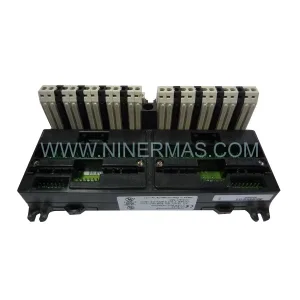
Original Industrial Spare Part
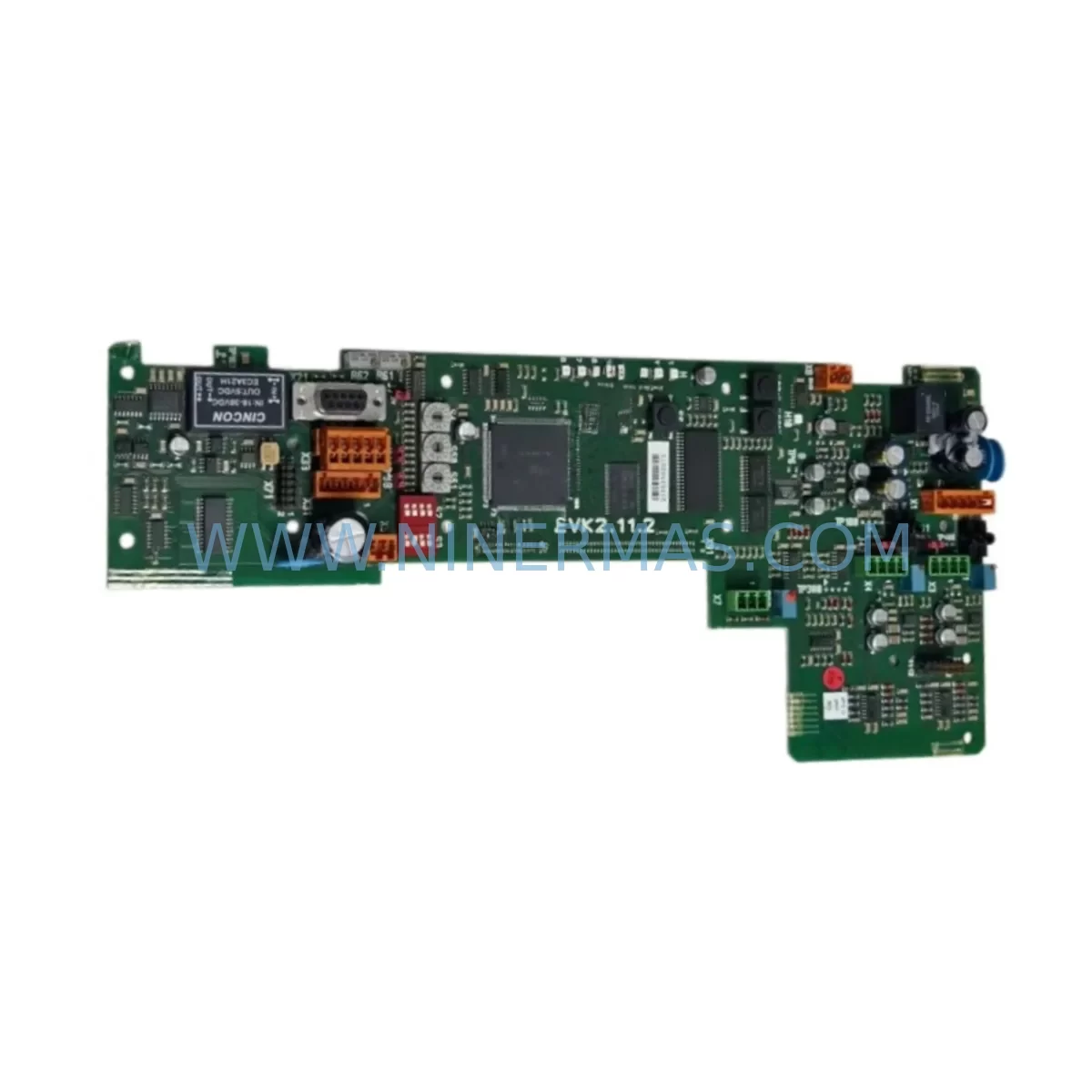
EMG EVK2.11.2 Retrofit-Compatible Signal Isolator
Verify the part, confirm the platform family, and move straight into quotation with the right commercial details.
RFQ Ready
- SKUEVK2.11.2
- CategoryPLC & Industrial Automation Modules
- BrandEMG
- SupportAvailability, lead time, condition, and shipping coordination
How Buyers Usually Use This Page
- Confirm the exact part number and platform family before sending the quote request.
- Use direct email when quantity, condition, and destination are already defined internally.
- Switch to the broader brand or category archive when you need alternates nearby.
Series Navigation
Move through the most common platform families behind this part.
Product RFQ
Send this part directly for quotation.
Include quantity, required condition, destination country, and target delivery timing. Current reference: EMG EVK2.11.2 Retrofit-Compatible Signal Isolator with SKU EVK2.11.2.
EMG EVK2.11.2 Retrofit-Compatible Signal Isolator: Seamless Legacy System Upgrade
The EMG EVK2.11.2 is a DIN-rail mounted signal isolator designed for industrial control environments where legacy field instrumentation must be integrated with modern distributed control systems (DCS), programmable logic controllers (PLC), or safety instrumented systems (SIS). As a direct retrofit-compatible replacement within the EMG EVK series, the EVK2.11.2 addresses the growing demand for reliable, drop-in solutions that allow plant engineers to modernize aging control infrastructure without triggering full-scale system redesigns or extended production shutdowns.
In facilities where original EVK series modules have reached end-of-life or have been discontinued by the manufacturer, the EVK2.11.2 provides a validated upgrade path. Its signal conditioning architecture supports 4–20 mA analog loops, passive and active transmitter inputs, and galvanic isolation barriers that protect sensitive control hardware from ground loops, transient surges, and common-mode interference — all critical concerns in petrochemical, power generation, water treatment, and heavy manufacturing environments.
Upgrade Compatibility Table
| Parameter | Details |
|---|---|
| SKU / Model | EVK2.11.2 |
| Series | EMG EVK Series |
| Module Type | Signal Isolator / Galvanic Barrier |
| Mounting | DIN Rail (35 mm), compatible with standard control cabinet backplanes |
| Signal Interface | 4–20 mA analog input/output; passive/active transmitter compatible |
| Communication Compatibility | Analog signal loop; compatible with HART-transparent installations |
| Power Supply | 24 V DC (verify existing rail capacity before installation) |
| Isolation Voltage | Galvanic isolation; verify against existing EVK module datasheet |
| Terminal Wiring | Screw-type terminals; confirm pitch compatibility with existing field wiring |
| Replacement Recommendation | Direct retrofit for discontinued EVK series isolator modules |
| Commissioning Notes | Verify loop calibration, zero/span settings, and address mapping after swap |
| Warranty | 12 Months — all units ship with full functional test documentation |
Retrofit Planning for Existing Automation Systems
Successful integration of the EMG EVK2.11.2 into an existing control architecture begins well before the module arrives on site. Engineers should start by auditing the current control cabinet layout to confirm available DIN rail space, 24 V DC bus capacity, and the number of active field loops routed through the legacy EVK isolator bank. In many retrofit scenarios, the EVK2.11.2 slots directly into the position vacated by an older EVK2 variant, but terminal block pitch and wiring color conventions should be verified against the original as-built drawings.
Where the plant runs a Siemens S7-300 or S7-400 PLC platform, the analog input modules — such as the SM 331 or SM 334 — will continue to receive conditioned 4–20 mA signals from the EVK2.11.2 without requiring any changes to the PLC program or I/O address table, provided the signal range and scaling remain consistent. Similarly, facilities using Rockwell Automation ControlLogix or CompactLogix controllers with 1756-IF16 or 1769-IF4 analog input cards will find the EVK2.11.2 transparent to the control layer, as the isolator sits between the field device and the I/O card without altering the signal protocol.
For installations where HART communication is used for remote diagnostics or valve positioner configuration, the EVK2.11.2’s HART-transparent design ensures that handheld communicators — such as the Emerson 475 Field Communicator — can still pass HART signals through the isolator to field instruments like pressure transmitters, flow meters, or temperature sensors. This is particularly valuable during the commissioning phase, when technicians need to verify device tags, range settings, and diagnostic status without disconnecting field wiring.
In control cabinets where multiple EVK modules are being replaced simultaneously, it is advisable to document the existing terminal assignments for each channel before removal. Power distribution within the cabinet — typically managed through a Phoenix Contact or Weidmüller power supply rail — should be checked to confirm that the aggregate current draw of the new isolator bank does not exceed the rated output of the 24 V DC supply. If the cabinet also houses a Profibus DP or Modbus RTU communication module for remote I/O, the EVK2.11.2 replacement does not affect the communication bus, as the isolator operates entirely within the analog signal domain.
For plants migrating from older pneumatic or electromechanical relay-based control panels to modern PLC-based architectures, the EVK2.11.2 serves as a critical bridge component. It conditions legacy 4–20 mA transmitter outputs — from instruments that may have been installed decades ago — into clean, isolated signals suitable for modern analog input modules. This approach avoids the cost and risk of replacing field instruments prematurely, extending the useful life of existing sensors and actuators while the control backbone is modernized.
Where HMI screens built on Wonderware InTouch, Ignition SCADA, or Siemens WinCC are configured to display process values from specific I/O tags, the retrofit of the EVK2.11.2 should not require any HMI tag remapping, provided the I/O card addresses and signal scaling are preserved. However, it is good practice to verify live readings on the HMI against a calibrated reference instrument immediately after the module swap to confirm end-to-end signal integrity.
Downtime Control During System Migration
Minimizing production downtime during an EVK2.11.2 retrofit requires a structured hot-swap or planned-outage strategy. For non-critical loops — such as secondary temperature monitoring or tank level indication — a live swap may be feasible if the control system is configured to hold the last good value during a brief signal interruption. For safety-critical loops, a planned maintenance window should be scheduled, with the affected control loop placed in manual mode at the DCS or PLC operator station before the module is removed.
Prior to the swap, the original program logic should be backed up from the PLC — whether a Siemens S7, Allen-Bradley ControlLogix, or Mitsubishi MELSEC platform — to a secure offline location. This ensures that if any unexpected behavior occurs during commissioning of the new module, the original configuration can be restored without delay. Field wiring should be photographed and labeled before disconnection, and terminal assignments should be cross-referenced against the loop diagram to prevent miswiring during reinstallation.
Once the EVK2.11.2 is installed and field wiring reconnected, the loop should be brought back online gradually. A 4 mA (0%) and 20 mA (100%) injection test using a loop calibrator confirms that the isolator is passing the correct signal range to the analog input card. If the control system uses a watchdog or fault detection routine that monitors signal validity, the loop should be verified to be within the expected range before returning the control loop to automatic mode. This staged recommissioning approach keeps the risk of process upsets to a minimum and ensures that the retrofit is validated before full production resumes.
For large-scale retrofit projects involving multiple EVK modules across several control cabinets, a phased replacement schedule — replacing one cabinet or one process unit at a time — allows the maintenance team to build confidence with the EVK2.11.2 installation procedure before tackling more complex or critical loops. All replaced modules should be retained for a defined period as emergency spares, in case a field issue requires rapid reversal while the root cause is investigated.
Retrofit Support FAQ
Q: Is the EMG EVK2.11.2 a direct drop-in replacement for other EVK series isolator modules?
A: The EVK2.11.2 is designed as a retrofit-compatible replacement within the EMG EVK series. Before installation, confirm that the terminal pitch, signal range (4–20 mA), power supply voltage (24 V DC), and isolation class match the module being replaced. In most EVK series applications, the EVK2.11.2 can be installed without modifications to field wiring or PLC programming.
Q: What commissioning steps are required after installing the EVK2.11.2?
A: After installation, perform a full loop calibration check using a loop calibrator to verify 4 mA and 20 mA output accuracy. Confirm that the HMI or SCADA system displays the correct process value. If HART communication is used, verify that the HART signal passes through the isolator correctly using a field communicator. Document all commissioning results for the plant maintenance record.
Q: Does NINERMAS provide pre-shipment testing for the EVK2.11.2?
A: Yes. All EMG EVK2.11.2 units supplied by NINERMAS are functionally tested before dispatch. Each unit ships with test documentation confirming signal accuracy, isolation integrity, and power consumption within specification. Units are covered by a 12-month warranty from the date of shipment.
Q: What is the typical lead time and stock availability for the EMG EVK2.11.2?
A: NINERMAS maintains inventory of the EMG EVK2.11.2 to support urgent retrofit and breakdown replacement requirements. Lead times vary depending on order volume and destination. Contact our team at sale@ninermas.com or +0086 187 5021 5667 for current stock status and delivery schedules.
| Product Series | Other series |
|---|
Catalog Continuation
More EMG modules in the catalog.
Use the brand lane to compare nearby part numbers, platform-adjacent modules, and other inquiry-ready listings before sending your final RFQ.
Catalog Continuation
Alternative parts within PLC & Industrial Automation Modules.
Stay inside the same system family when you need substitutes, adjacent modules, or a broader shortlist for procurement review.
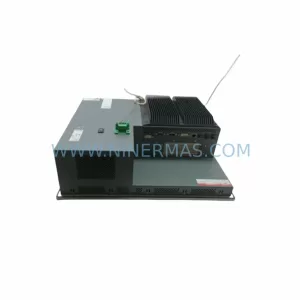
SKU: PFXPP170CA66K00N00
Pro-face PFXPP170CA66K00N00 Service-Ready Spare Part
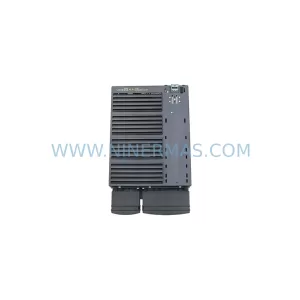
SKU: 6SL3224-0BE32-2UA0
Siemens 6SL3224-0BE32-2UA0 Retrofit PM240 Power Module