Original Industrial Spare Part
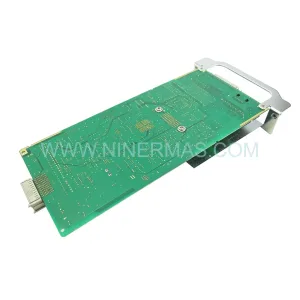
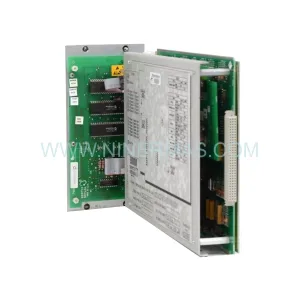
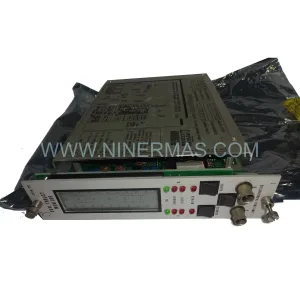
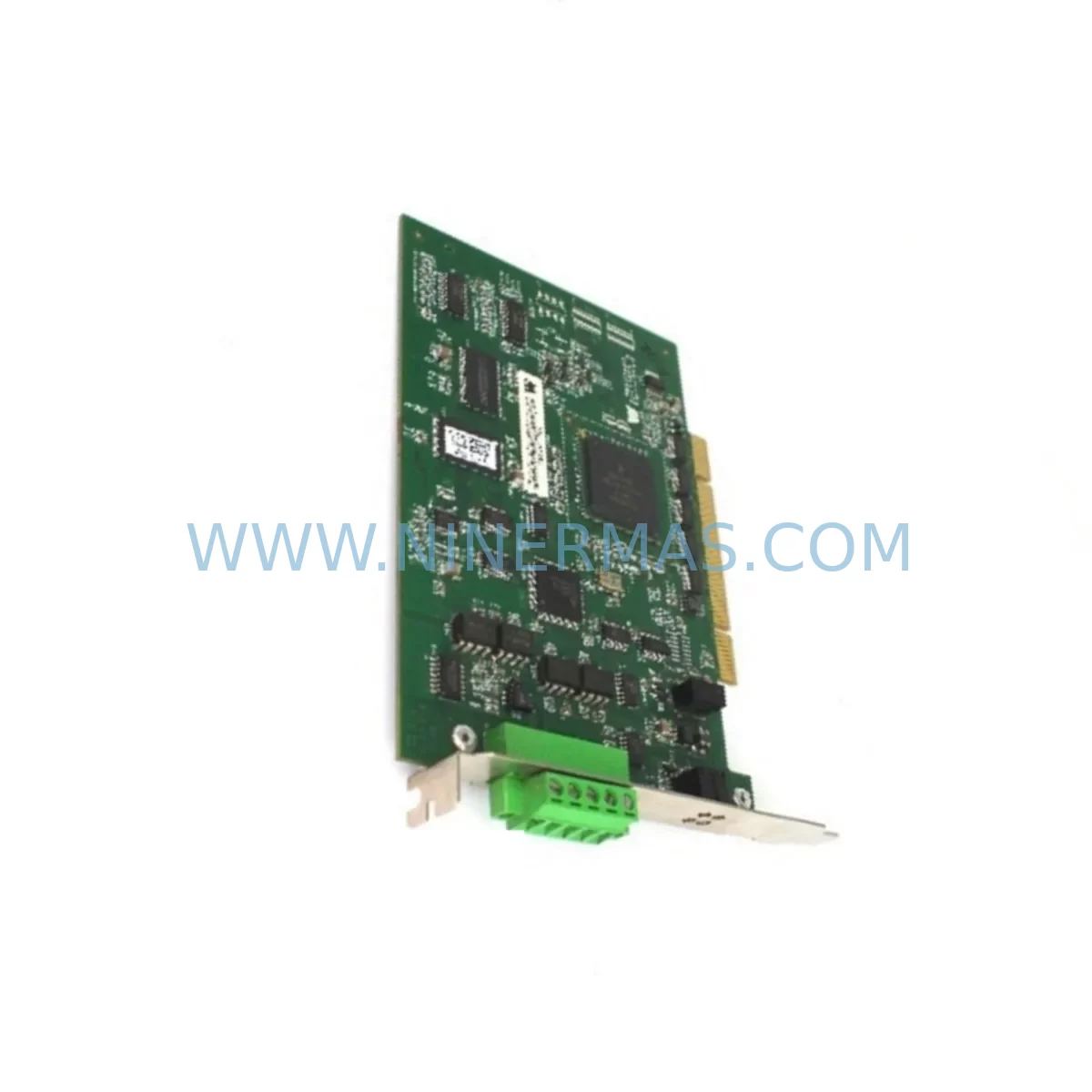
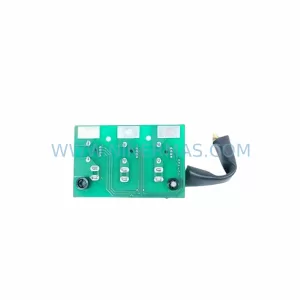
Yaskawa SGDR-SDA710A01BY32 Retrofit Servo PCB for Legacy Systems
Verify the part, confirm the platform family, and move straight into quotation with the right commercial details.
RFQ Ready
- SKUSGDR-SDA710A01BY32 DX100SRDA-C0A30A01A-E JANCD-NTU01-1 NX100JANCD-NTU01-1
- CategoryPLC & Industrial Automation Modules
- BrandYASKAWA
- SupportAvailability, lead time, condition, and shipping coordination
How Buyers Usually Use This Page
- Confirm the exact part number and platform family before sending the quote request.
- Use direct email when quantity, condition, and destination are already defined internally.
- Switch to the broader brand or category archive when you need alternates nearby.
Series Navigation
Move through the most common platform families behind this part.
Product RFQ
Send this part directly for quotation.
Include quantity, required condition, destination country, and target delivery timing. Current reference: Yaskawa SGDR-SDA710A01BY32 Retrofit Servo PCB for Legacy Systems with SKU SGDR-SDA710A01BY32 DX100SRDA-C0A30A01A-E JANCD-NTU01-1 NX100JANCD-NTU01-1.
Yaskawa SGDR-SDA710A01BY32 Retrofit Servo PCB for Legacy Systems
The Yaskawa SGDR-SDA710A01BY32 is a ruggedized PC board module engineered for demanding industrial environments where servo drive reliability is non-negotiable. As legacy Sigma series servo amplifiers approach end-of-life and original spare parts become increasingly difficult to source, the SGDR-SDA710A01BY32 serves as a critical retrofit-compatible replacement for facilities operating aging motion control infrastructure. This board module is designed to restore full servo drive functionality in legacy control cabinets without requiring a complete system overhaul, making it an essential component for maintenance engineers focused on minimizing downtime and protecting existing capital investments.
Industrial facilities running Yaskawa Sigma series servo systems — including those built around SGDM-series and SGDH-series servo amplifiers — frequently encounter situations where a single failed PCB board can halt an entire production line. The SGDR-SDA710A01BY32 addresses this challenge directly by providing a tested, warranty-backed replacement that integrates into existing servo drive housings and control architectures. Before installation, engineers must verify power supply capacity at the servo amplifier input terminals, confirm backplane connector pinout compatibility, and validate that the module address configuration matches the original drive’s axis assignment within the motion controller.
Upgrade Compatibility Table
| Parameter | Details |
|---|---|
| SKU / Part Number | SGDR-SDA710A01BY32 |
| Brand / Manufacturer | Yaskawa Electric Corporation |
| Series | SGDR / Sigma Series Servo Drive |
| Module Type | Ruggedized PC Board Module |
| Compatible Platforms | DX100, NX100, Sigma series servo amplifiers (SGDM, SGDH, SGDS) |
| Backplane Interface | Verify connector type and slot position against original drive documentation |
| Communication Compatibility | Compatible with MECHATROLINK-II and legacy serial communication protocols used in DX100 and NX100 controllers |
| Installation Requirement | Confirm available rack space, terminal wiring layout, and module address before installation |
| Retrofit Recommendation | Direct replacement for failed SGDR-series boards in legacy servo drive assemblies |
| Commissioning Notes | Restore original parameter settings; verify HMI screen mapping and axis feedback signals post-installation |
| Warranty | 12-Month Warranty — all units pre-shipment tested |
Retrofit Planning for Existing Automation Systems
Successful integration of the SGDR-SDA710A01BY32 into a legacy servo system requires a structured retrofit plan that accounts for every layer of the control architecture. Engineers should begin by auditing the existing control cabinet layout to confirm that the replacement board fits within the available installation space and that the servo amplifier housing — typically a SGDM-series or SGDH-series unit — can accept the new module without mechanical modification.
Power supply integrity is the first critical checkpoint. The servo drive’s DC bus voltage and control power rail must be within specification before the new board is energized. In systems where the power supply module — such as a JUSP-series power unit — has aged alongside the failed board, it is advisable to test the power supply output under load conditions before committing to the board replacement. Inadequate power supply capacity is a common cause of premature board failure in retrofit scenarios.
Terminal wiring must be mapped carefully. The SGDR-SDA710A01BY32 connects to the servo amplifier’s internal signal bus, and any deviation from the original wiring diagram can result in axis faults or communication errors. Engineers working on DX100 or NX100 robot controller platforms should cross-reference the JANCD-NTU01-1 and NX100 JANCD-NTU01-1 communication interface boards to ensure that the servo axis data link remains intact after the board swap. The JUSP-NS100 network interface module, where present, should also be verified for firmware compatibility with the replacement board.
For facilities migrating from older CACR-series servo drives to current Sigma series platforms, the SGDR-SDA710A01BY32 can serve as an intermediate solution that extends the operational life of existing servo amplifiers while a full platform migration is planned. During this transition period, I/O signal mapping between the legacy servo drive and the plant’s distributed I/O system — often managed through a CP-9200SH or similar programmable controller — must be preserved to avoid disrupting process interlocks and safety circuits.
Communication protocol continuity is equally important. Systems using MECHATROLINK-II for servo axis coordination must maintain the correct node address and baud rate settings after the board replacement. The JZSP-CMS02 programming cable and associated configuration software should be used to verify axis parameters and restore the original motion profile data. HMI screens linked to servo axis status registers must be tested after commissioning to confirm that position feedback, alarm codes, and speed references are displayed correctly.
Signal isolation between the servo drive and adjacent I/O modules should be checked using appropriate test equipment. In high-noise industrial environments, signal isolators installed between the SGDR-SDA710A01BY32 and the plant’s analog I/O channels help prevent ground loop interference that can cause erratic servo behavior. Where SGDS-series compact servo drives share a common control cabinet with the replaced board, their parameter settings and communication links should be verified as part of the overall commissioning process to ensure system-wide motion coordination is maintained.
Downtime Control During System Migration
Minimizing production downtime during a servo board replacement requires advance preparation and a disciplined commissioning sequence. Before the maintenance window begins, engineers should back up all servo drive parameters using the appropriate Yaskawa configuration tool, document the existing terminal wiring with photographs and written records, and confirm that a tested replacement SGDR-SDA710A01BY32 unit is on-site and ready for installation. Pre-shipment testing performed by the supplier provides an additional layer of assurance that the replacement board will power up correctly and pass initial diagnostics without delay.
During the replacement procedure, the original program logic stored in the motion controller — whether a DX100, NX100, or CP-9200SH platform — must not be altered. The servo board swap is a hardware-level operation; no changes to ladder logic, motion programs, or safety interlock configurations should be made unless specifically required by the retrofit plan. This discipline protects the integrity of the control system and reduces the risk of introducing new faults during the maintenance window.
After the new board is installed and wired, a controlled power-up sequence should be followed: energize the control power first, verify that the board initializes without fault codes, then apply the servo drive’s main power and confirm that the axis responds correctly to jog commands before returning the system to automatic operation. Field commissioning time for a straightforward board replacement on a Sigma series servo drive is typically two to four hours when all preparatory steps have been completed in advance. Maintaining a reserved inventory of critical spare parts — including SGDR-series boards and associated communication modules — is the most effective strategy for reducing mean time to repair across a multi-axis servo system.
Retrofit Support FAQ
Q: Is the SGDR-SDA710A01BY32 a direct replacement for the original board in my Sigma series servo amplifier?
A: The SGDR-SDA710A01BY32 is designed as a retrofit-compatible replacement for legacy Sigma series servo drive assemblies. Before installation, verify the connector type, slot position, and module address against your original drive documentation to confirm compatibility with your specific servo amplifier model.
Q: What commissioning steps are required after installing the replacement board?
A: After installation, restore the original servo drive parameters using the Yaskawa configuration tool and JZSP-CMS02 programming cable. Verify axis feedback signals, confirm HMI screen mapping, and test communication links to the DX100 or NX100 controller before returning the system to automatic operation. A controlled jog test should be performed on each affected axis prior to full production restart.
Q: How is the SGDR-SDA710A01BY32 tested before shipment?
A: All units undergo pre-shipment functional testing to verify board initialization, signal integrity, and communication interface operation. This testing process is designed to identify latent defects before the unit reaches the customer site, reducing the risk of a failed installation during a planned maintenance window.
Q: What warranty coverage is provided, and what does it include?
A: The SGDR-SDA710A01BY32 is covered by a 12-month warranty from the date of shipment. The warranty covers manufacturing defects and functional failures under normal operating conditions. Long-term spare parts supply and reserved inventory programs are available for facilities requiring guaranteed stock availability to support ongoing maintenance schedules.
| Product Series | Legacy |
|---|---|
| Country of Origin | JP |
Catalog Continuation
More YASKAWA modules in the catalog.
Use the brand lane to compare nearby part numbers, platform-adjacent modules, and other inquiry-ready listings before sending your final RFQ.
SKU: SGM7G-30APK-YR11 SGDR-SDA140A01B \SGDR-SDA140A01B HW0270541-C-T
Yaskawa SGM7G-30APK-YR11 Retrofit Servo Motor for Legacy Systems
SKU: SGMAH-04A1A61D-0Y 23HS24 15-01 23S21-0506-8A5L7-52(200) AKM21C-ANB2R-00 AC
Yaskawa SGMAH-04A1A61D-0Y Retrofit Servo Motor for Legacy Systems
Catalog Continuation
Alternative parts within PLC & Industrial Automation Modules.
Stay inside the same system family when you need substitutes, adjacent modules, or a broader shortlist for procurement review.
SKU: 6SE7022-6TP50/60/70 A5E00110983
Siemens 6SE7022-6TP50 A5E00110983 Service-Ready Spare Part
SKU: BFK458-25 (400 N.M) 180VDC
Lenze BFK458-25 400NM 180VDC Service-Ready Spare Part