Original Industrial Spare Part
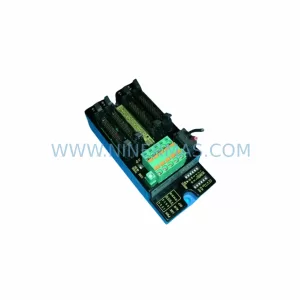
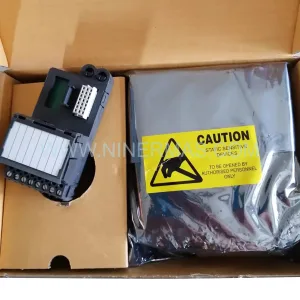
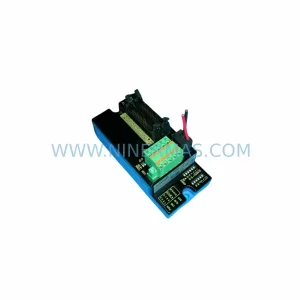
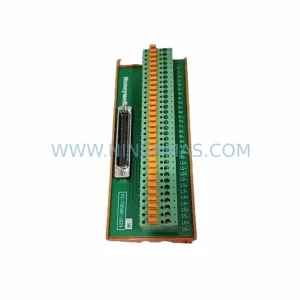
HONEYWELL MC-TAOY22 51204172-175 Retrofit Analog Output
Verify the part, confirm the platform family, and move straight into quotation with the right commercial details.
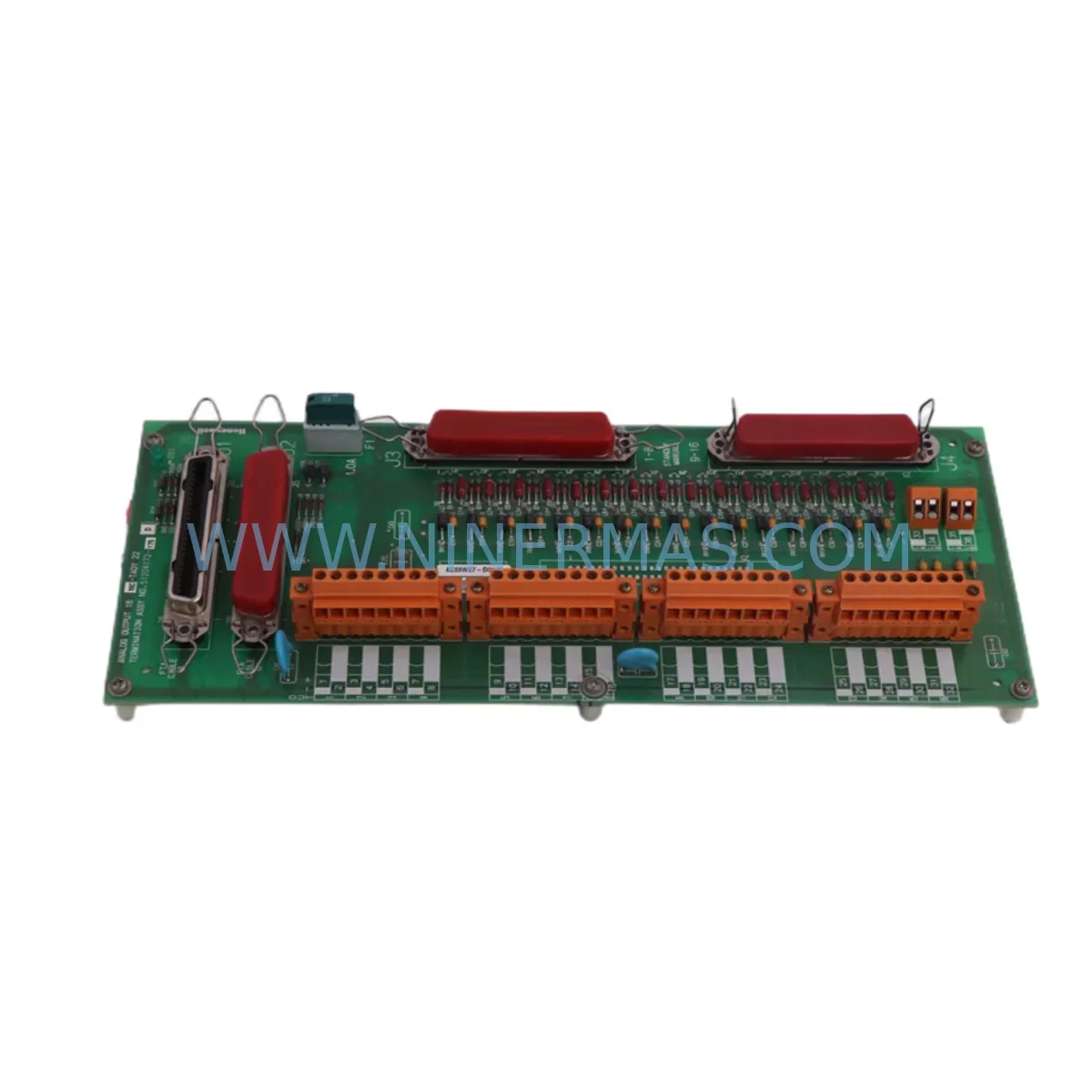
RFQ Ready
- SKUMC-TAOY22 51204172-175
- CategoryDCS Distributed Control Systems
- BrandHoneywell
- SupportAvailability, lead time, condition, and shipping coordination
How Buyers Usually Use This Page
- Confirm the exact part number and platform family before sending the quote request.
- Use direct email when quantity, condition, and destination are already defined internally.
- Switch to the broader brand or category archive when you need alternates nearby.
Series Navigation
Move through the most common platform families behind this part.
Product RFQ
Send this part directly for quotation.
Include quantity, required condition, destination country, and target delivery timing. Current reference: HONEYWELL MC-TAOY22 51204172-175 Retrofit Analog Output with SKU MC-TAOY22 51204172-175.
HONEYWELL MC-TAOY22 51204172-175 Retrofit-Compatible UCN Analog Output for Legacy Systems
The HONEYWELL MC-TAOY22 (P/N 51204172-175) is a UCN-based analog output module engineered for Honeywell TotalPlant Solution (TPS) and TDC 3000 distributed control systems. As legacy automation infrastructure ages and original spare parts become increasingly scarce, the MC-TAOY22 serves as a critical retrofit-compatible replacement for facilities seeking to extend the operational life of their existing control architecture without committing to a full platform migration. Whether you are managing a refinery, chemical plant, power generation facility, or continuous process operation, this module delivers the signal conditioning and output fidelity required to maintain precise field device control across 4–20 mA analog loops.
NINERMAS maintains verified inventory of the MC-TAOY22 51204172-175, with each unit subject to pre-shipment functional testing, covering output channel accuracy, loop integrity, and UCN communication handshake verification. All units are supplied with a 12-month warranty and are available for immediate dispatch to support urgent maintenance windows and unplanned outages.
Upgrade Compatibility Table
| Parameter | MC-TAOY22 (51204172-175) | Retrofit Notes |
|---|---|---|
| Module Type | UCN Analog Output | Direct replacement for same-slot UCN AO modules in TPS/TDC 3000 cabinets |
| Output Channels | 8 x 4–20 mA isolated | Verify field wiring polarity and loop resistance before hot-swap |
| Communication Interface | UCN (Universal Control Network) | Compatible with existing UCN coax trunk; no protocol converter required |
| Backplane / Rack | TPS IOP Carrier / MC-TSTIM | Confirm carrier slot assignment and module address in NIM configuration |
| Power Requirement | 24 VDC via backplane | Verify PSU capacity before adding module; check MC-PSIM or equivalent power supply loading |
| Installation Space | Standard TPS IOP form factor | No mechanical modification required for same-generation cabinets |
| Program Compatibility | Fully compatible with existing CL/APB logic | No re-download required if slot address is preserved; verify tag database mapping |
| HMI Integration | Compatible with GUS / Station displays | Confirm faceplate assignments in HMIWeb or legacy GUS after module swap |
| Commissioning | UCN NIM auto-detection | Use CE Tools or NIM Configurator to confirm module recognition post-installation |
| Warranty | 12 Months — Covers manufacturing defects, output channel failure, and UCN communication faults | |
Retrofit Planning for Existing Automation Systems
Integrating the MC-TAOY22 51204172-175 into an aging TPS or TDC 3000 system requires a structured approach that accounts for both hardware compatibility and software continuity. Before scheduling a replacement window, maintenance engineers should audit the existing MC-TSTIM carrier for slot availability and confirm that the backplane bus is free of corrosion or connector fatigue. The UCN trunk segment serving the target cabinet should be tested for signal integrity using a UCN analyzer, as degraded coaxial cable or failing UCN Network Interface Module (NIM) terminations can cause intermittent communication faults that are incorrectly attributed to the output module itself.
Power budget verification is equally critical. The facility’s MC-PSIM power supply module or equivalent 24 VDC rail must have sufficient headroom to support the MC-TAOY22 alongside co-resident modules such as analog input cards (e.g., MC-TAIX11 or MC-TAIX22) and digital output modules. Overloaded power rails are a common root cause of intermittent module faults in retrofit scenarios and should be ruled out before the new module is energized.
Terminal wiring adaptation is another area requiring careful attention. Field cables connected to the legacy module’s marshalling panel or MC-TDIY22 or MC-TDOY22 terminal assemblies must be mapped against the MC-TAOY22’s channel assignments. Where the original module used a different terminal block pitch or screw torque specification, adapters or re-termination may be necessary. Document all field loop IDs and their corresponding output channel numbers before disconnecting any wiring to avoid loop identification errors during recommissioning.
For facilities running Honeywell Control Language (CL) or Application Program Builder (APB) logic, the MC-TAOY22 replacement does not require a program re-download provided the module occupies the same slot address as its predecessor. However, engineers should verify that the tag database in the Honeywell History Module (HM) or equivalent historian correctly references the output point addresses. Any discrepancy between the physical slot address and the configured tag address will result in failed writes and potential process upsets.
HMI continuity is a frequently overlooked aspect of analog output module replacement. Operators relying on GUS (Global User Station) or HMIWeb Station displays should confirm that faceplate assignments and trend displays for the affected output loops remain intact after the module swap. In some configurations, a manual faceplate reassignment may be required if the system does not automatically re-associate the output tag with the new module instance.
Where the retrofit scope extends beyond a single module replacement — for example, when upgrading an entire IOP cabinet or migrating from TDC 3000 to a hybrid TPS/Experion PKS architecture — the MC-TAOY22 can serve as an interim solution that preserves UCN-based field I/O while higher-level controller and communication infrastructure is progressively modernized. In such scenarios, the module is often deployed alongside Experion C300 controllers and EHPM (Experion Hybrid Process Manager) gateways that bridge legacy UCN segments to the modern FTE (Fault Tolerant Ethernet) backbone, allowing phased migration without a full process shutdown.
Downtime Control During System Migration
Minimizing unplanned downtime during an analog output module replacement is achievable through disciplined pre-outage preparation. The recommended approach begins with a shadow mode verification: before removing the failed or end-of-life MC-TAOY22, engineers should document all active output values, loop setpoints, and manual/auto states for each of the module’s eight channels. This snapshot serves as the baseline for post-installation verification and allows operators to detect any output drift introduced during the swap.
Where process conditions permit, output loops should be placed in manual mode at the controller level before the module is physically removed. This prevents the control system from attempting to write to a disconnected output channel and triggering downstream process alarms or safety system responses. For loops connected to critical final control elements — such as control valves, variable speed drives, or steam flow regulators — coordination with the process operations team is essential to ensure that manual setpoints are held within safe operating limits throughout the maintenance window.
The physical swap of the MC-TAOY22 in a TPS IOP carrier is designed to be straightforward: the module is extracted from its slot, the replacement unit is inserted, and the UCN NIM will typically auto-detect the new module within seconds. However, engineers should allow a stabilization period of 2–5 minutes before returning loops to automatic mode, during which the module’s internal diagnostics complete their self-test cycle and UCN communication is confirmed stable via the NIM status display or CE Tools diagnostic interface.
Post-installation, each output channel should be verified against its field device using a calibrated loop calibrator or HART communicator where applicable. Output accuracy should be confirmed at 4 mA (0%), 12 mA (50%), and 20 mA (100%) to validate the full-scale response of the replacement module. Any deviation beyond the module’s specified ±0.1% accuracy should be investigated before the loop is returned to automatic control.
For facilities with redundant control paths, the migration can be further de-risked by scheduling the replacement during a period when the redundant controller or I/O path is confirmed healthy, ensuring that a fallback control path remains available throughout the maintenance window. This approach is particularly relevant in TPS configurations where redundant UCN NIM pairs or dual-redundant IOP carriers are deployed.
Retrofit Support FAQ
Q1: Is the MC-TAOY22 51204172-175 a direct drop-in replacement for other Honeywell UCN analog output modules?
The MC-TAOY22 51204172-175 is designed for use in Honeywell TPS and TDC 3000 IOP carriers that support UCN-based analog output modules. It is compatible with the same carrier slots as other 8-channel UCN AO modules of the same generation. Before installation, confirm the carrier type (MC-TSTIM or equivalent), slot address configuration, and UCN segment assignment to ensure seamless recognition by the NIM without requiring manual reconfiguration.
Q2: What pre-shipment testing does NINERMAS perform on the MC-TAOY22?
Each MC-TAOY22 unit supplied by NINERMAS undergoes functional testing that includes output channel accuracy verification across the full 4–20 mA range, UCN communication handshake simulation, and visual inspection for connector integrity and component condition. Units that do not meet Honeywell’s original performance specifications are quarantined and not offered for sale. A test report is available upon request for critical applications.
Q3: Can the MC-TAOY22 be used in a system that is being partially migrated to Experion PKS?
Yes. The MC-TAOY22 is commonly deployed as part of a phased migration strategy where legacy UCN I/O is retained while higher-level control infrastructure is upgraded to Experion PKS. In this configuration, the module continues to operate on the UCN segment, which is bridged to the Experion system via an EHPM or equivalent gateway. This approach allows facilities to preserve existing field wiring and calibration while progressively modernizing the control platform, significantly reducing migration risk and capital expenditure.
Q4: What is the warranty coverage and what does it include?
All MC-TAOY22 51204172-175 units supplied by NINERMAS are covered by a 12-month warranty from the date of shipment. The warranty covers manufacturing defects, output channel failure, UCN communication faults, and component failures under normal operating conditions. It does not cover damage resulting from incorrect installation, overvoltage conditions, or physical mishandling. Warranty claims are processed promptly, with replacement units dispatched within 3–5 business days of fault confirmation.
| Product Series | MC- |
|---|---|
| Country of Origin | US |
Catalog Continuation
More Honeywell modules in the catalog.
Use the brand lane to compare nearby part numbers, platform-adjacent modules, and other inquiry-ready listings before sending your final RFQ.
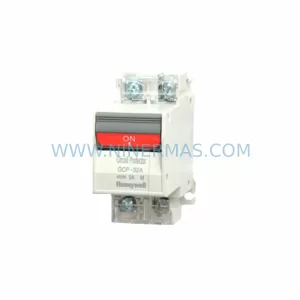
SKU: GCP-32AN 1A 2A 3A 4A 5A 7A 10A 15A 20A 25A 30A
Honeywell GCP-32AN Safety-Reliable Power Supply for Critical Sites
Catalog Continuation
Alternative parts within DCS Distributed Control Systems.
Stay inside the same system family when you need substitutes, adjacent modules, or a broader shortlist for procurement review.