Original Industrial Spare Part
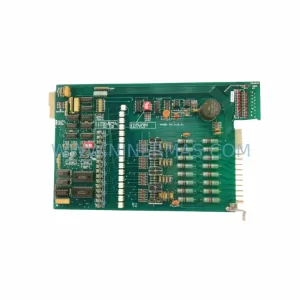
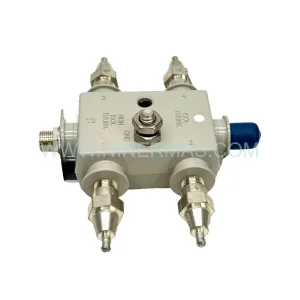
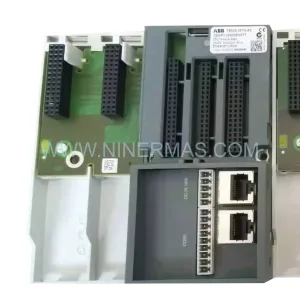
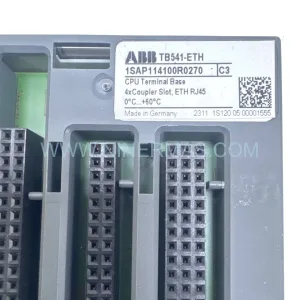
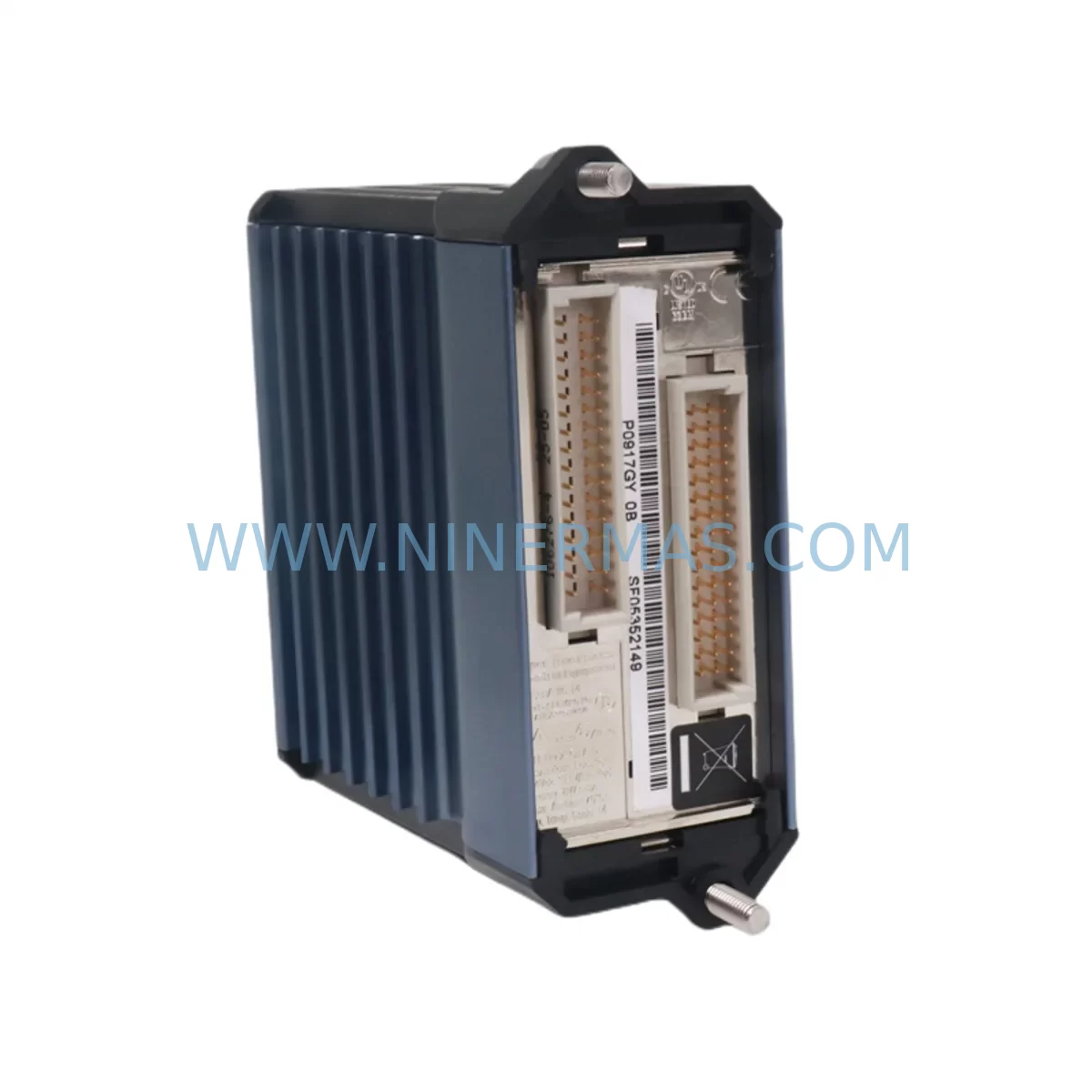
FOXBORO FBM207C Retrofit-Compatible I/O Module for Legacy Systems
Verify the part, confirm the platform family, and move straight into quotation with the right commercial details.
RFQ Ready
- SKUFBM207C
- CategoryDCS Distributed Control Systems
- BrandFOXBORO
- SupportAvailability, lead time, condition, and shipping coordination
How Buyers Usually Use This Page
- Confirm the exact part number and platform family before sending the quote request.
- Use direct email when quantity, condition, and destination are already defined internally.
- Switch to the broader brand or category archive when you need alternates nearby.
Series Navigation
Move through the most common platform families behind this part.
Product RFQ
Send this part directly for quotation.
Include quantity, required condition, destination country, and target delivery timing. Current reference: FOXBORO FBM207C Retrofit-Compatible I/O Module for Legacy Systems with SKU FBM207C.
FOXBORO FBM207C Retrofit-Compatible I/O Module: Seamless Legacy System Upgrade for I/A Series Platforms
The FOXBORO FBM207C is a high-reliability fieldbus module designed for use within the FOXBORO I/A Series Distributed Control System (DCS). As aging process automation infrastructure reaches end-of-life, the FBM207C has become one of the most sought-after retrofit and replacement components for facilities operating legacy control architectures. Whether you are managing a planned system migration, responding to an unexpected module failure, or executing a phased control cabinet upgrade, the FBM207C provides a proven, drop-in compatible solution that minimizes engineering risk and reduces unplanned downtime.
Originally engineered to interface with FOXBORO’s I/A Series control processors — including the CP60, CP270, and CP40B — the FBM207C handles analog and digital I/O signal conditioning within the fieldbus module bay. Its compatibility with the standard I/A Series nodebus and fieldbus communication architecture means that replacement units can be installed without requiring changes to the existing control network topology, provided the firmware revision and module address configuration are correctly matched to the original installation.
Upgrade Compatibility Table
| Parameter | Details |
|---|---|
| Compatible Platform | FOXBORO I/A Series DCS |
| Replaces / Substitutes | FBM207C (direct), compatible with FBM207 family variants |
| Communication Protocol | FOXBORO Nodebus / Fieldbus |
| Backplane Interface | Standard I/A Series FBM Bay — no mechanical modification required |
| Terminal Wiring | Retain existing field wiring; verify terminal block torque spec before re-seating |
| Module Address | Must match original module letter address; confirm via I/A Series configuration database |
| Firmware Compatibility | Verify firmware revision against site-specific CP processor version |
| Power Supply Requirement | Supplied via FBM bay backplane; confirm bay power budget with FPS (Field Power Supply) rating |
| Installation Space | Standard FBM bay slot — single-width module |
| Commissioning Requirement | Module swap requires CP download confirmation; verify block status in FOXBORO AIM*AT or equivalent |
| Warranty | 12 Months from date of shipment |
Retrofit Planning for Existing Automation Systems
Successful integration of the FBM207C into an existing I/A Series installation requires careful pre-engineering. Before the replacement module arrives on site, the maintenance team should extract the current module configuration from the FOXBORO Integrated Control Configurator (ICC) or the site’s AIM*AT database. This ensures that the module letter address, block assignments, and I/O channel mappings are documented and ready for re-application after the swap.
Power capacity is a critical first checkpoint. The FBM207C draws its operating power from the FBM bay’s backplane, which is fed by the Field Power Supply (FPS). If the existing FPS — such as an FPS4 or FPS8 — is already operating near its rated capacity due to the addition of other modules like the FBM242 (HART I/O module) or FBM220 (analog output module), the engineering team must verify that sufficient headroom exists before installing the replacement unit. Overloading the FPS can cause intermittent faults across multiple modules simultaneously, complicating fault diagnosis.
Terminal wiring should be inspected and documented prior to module removal. In legacy installations, field wiring connected to the FBM207C’s terminal assembly may have been in service for ten to twenty years. This is an appropriate time to inspect for insulation degradation, terminal corrosion, and loose connections. The terminal block itself — typically a removable plug-in type on I/A Series FBMs — should be carefully extracted and re-seated on the replacement module, with all terminal screws re-torqued to specification.
Backplane interface integrity is another area requiring attention. In older FBM bays, the backplane connector pins may show signs of oxidation or mechanical wear. Before inserting the FBM207C, inspect the bay slot for bent pins or debris. If the bay is shared with other active modules such as the FBM201 (digital input module) or FBM204 (digital output module), ensure that the bay remains powered during the swap only if the control system supports hot-swap operation for this module type — otherwise, a controlled shutdown of the affected bay is required.
Module address configuration must be verified before the replacement FBM207C is brought online. The I/A Series uses a letter-based addressing scheme for FBMs within each bay. If the address switches on the replacement module are not set to match the original, the CP processor will not recognize the module, and the associated control blocks will go to a fault state. This is one of the most common commissioning errors during FBM replacement and can be avoided by photographing the original module’s address switch settings before removal.
For sites that are simultaneously upgrading their HMI infrastructure — for example, migrating from legacy FOXBORO WORKSTATION displays to a modern SCADA platform — the FBM207C replacement provides an opportunity to verify that all associated display faceplates and alarm configurations correctly reference the module’s I/O channels. HMI screen updates should be tested in simulation mode before the replacement module is brought into service.
Communication link integrity should be confirmed after module installation. The I/A Series nodebus is a deterministic communication network, and any disruption to the bus caused by a faulty module or incorrect installation can affect other stations on the same nodebus segment. After installing the FBM207C, monitor the nodebus status from the CP processor’s diagnostic display to confirm that the module is communicating correctly and that no other modules on the segment are reporting errors.
Downtime Control During System Migration
Minimizing production downtime during an FBM207C replacement is achievable with disciplined pre-planning. The most effective approach is to complete all pre-engineering work — configuration backup, wiring documentation, address verification, and spare parts staging — before the maintenance window begins. This reduces the active replacement time to the physical swap, address switch setting, module re-seating, and CP download confirmation, which can typically be completed within a two-hour maintenance window for a single module replacement.
Where the process cannot tolerate even a brief interruption, consider whether the affected control loops can be placed in manual mode at the DCS operator station prior to the swap. This preserves field device positions while the module is offline and allows the operator to maintain process stability manually during the replacement. Once the FBM207C is back online and the CP has confirmed module recognition, the loops can be returned to automatic control in a controlled sequence.
Original program logic does not need to be rewritten for a like-for-like FBM207C replacement. The control database resides in the CP processor, not in the FBM itself. However, if the replacement is part of a broader migration — for example, moving from an I/A Series CP60 to a CP270 or integrating a new FCP270 Fieldbus Control Processor — then a full control strategy review and re-download will be required. In these cases, the FBM207C replacement should be coordinated with the CP migration schedule to avoid multiple separate outages.
All replacement FBM207C units supplied by NINERMAS are subject to pre-shipment functional testing, including power-on verification, communication interface check, and I/O channel continuity testing. Each unit ships with a test report and is covered by a 12-month warranty from the date of shipment, providing assurance that the replacement module will perform reliably from the moment it is installed.
Retrofit Support FAQ
Q1: Is the FBM207C a direct drop-in replacement for the original module in my I/A Series system?
A: In most cases, yes. The FBM207C is designed for direct installation into the standard I/A Series FBM bay without mechanical modification. However, you must verify that the module address switches are set to match the original configuration and that the firmware revision is compatible with your site’s CP processor version. NINERMAS can provide technical guidance on firmware compatibility based on your system’s software baseline.
Q2: What commissioning steps are required after installing the replacement FBM207C?
A: After physical installation and terminal block re-seating, the CP processor must recognize the new module. This typically requires a CP download or a module re-initialization command from the FOXBORO AIM*AT or ICC environment. Monitor the module status display to confirm that all I/O blocks return to their normal operating state before returning associated control loops to automatic mode.
Q3: Can the FBM207C be used in a system that is being upgraded from nodebus to fieldbus communication?
A: The FBM207C operates on the FOXBORO nodebus architecture. If your migration plan involves transitioning to a FOUNDATION Fieldbus or PROFIBUS-based architecture, the FBM207C would not be the terminal module in the new network segment. However, it can continue to serve legacy nodebus segments during a phased migration, allowing you to upgrade sections of the plant incrementally without a full cutover.
Q4: What is the warranty coverage and what does pre-shipment testing include?
A: All FBM207C units supplied by NINERMAS carry a 12-month warranty from the date of shipment. Pre-shipment testing includes power-on functional verification, backplane communication interface check, and I/O channel continuity testing. A test report is included with each shipment. In-stock units are available for immediate dispatch to support urgent replacement requirements.
| Product Series | I/A Series |
|---|---|
| Country of Origin | FR |
Catalog Continuation
Likely Foxboro I/A platform matches.
These parts are closer to the same platform family signaled by the current SKU and title, so buyers can validate continuity before sending a final RFQ.
SKU: P0961BS-OD P0961BS-0D
Foxboro P0961BS-OD Safety-Reliable Bus Connector
SKU: FBM203 P0916AE0C P0916AEOC
Foxboro FBM203 P0916AE0C Service-Ready Spare Part
Catalog Continuation
More FOXBORO modules in the catalog.
Use the brand lane to compare nearby part numbers, platform-adjacent modules, and other inquiry-ready listings before sending your final RFQ.
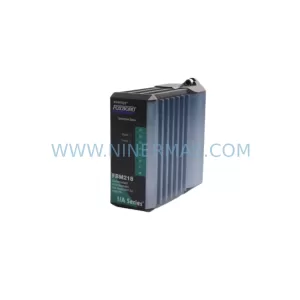
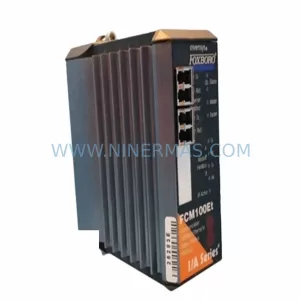
Catalog Continuation
Alternative parts within DCS Distributed Control Systems.
Stay inside the same system family when you need substitutes, adjacent modules, or a broader shortlist for procurement review.
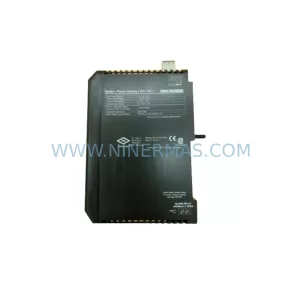
SKU: KJ1501X1-BB1 12P0678X042 VE5002
Emerson KJ1501X1-BB1 Retrofit Power Supply for Legacy DeltaV
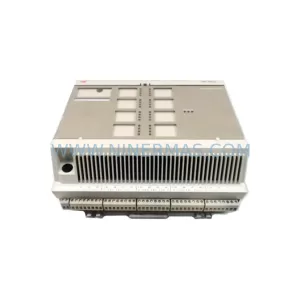
SKU: 8C-TCNT02 8U-TCNT02 8C-TCNTA1 8U-TCNTA1
Honeywell 8C-TCNT02 Service-Ready Spare Part for Industrial Maintenance