Original Industrial Spare Part
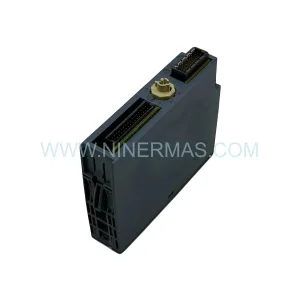
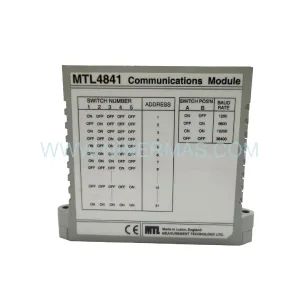
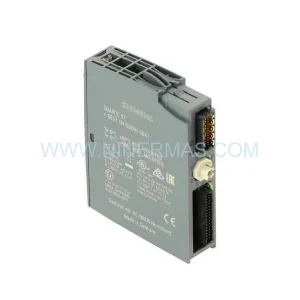
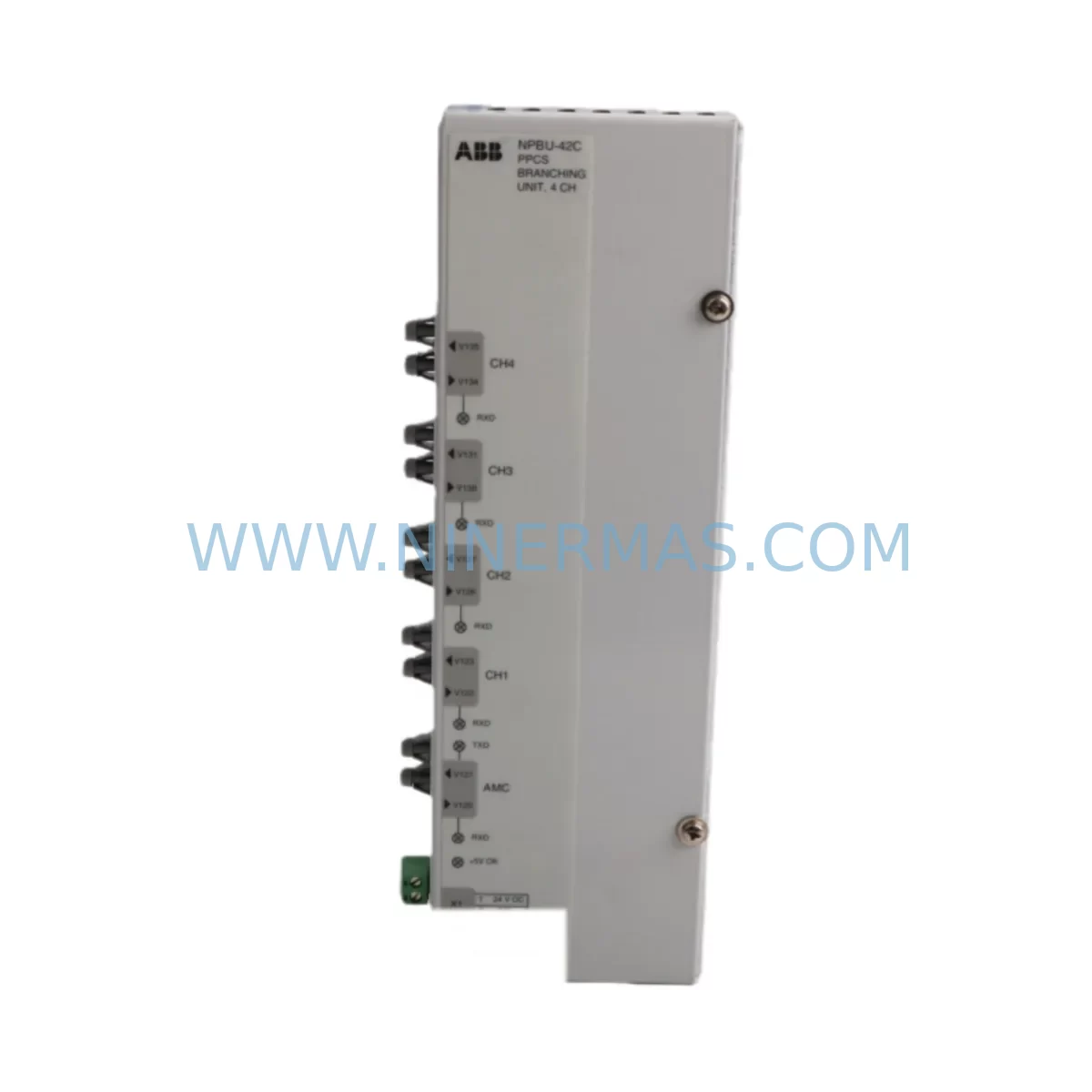
ABB NPBU-42C 64011821D Retrofit-Compatible Branching Unit
Verify the part, confirm the platform family, and move straight into quotation with the right commercial details.
RFQ Ready
- SKUNPBU-42C 64011821D
- CategoryPLC & Industrial Automation Modules
- BrandABB
- SupportAvailability, lead time, condition, and shipping coordination
How Buyers Usually Use This Page
- Confirm the exact part number and platform family before sending the quote request.
- Use direct email when quantity, condition, and destination are already defined internally.
- Switch to the broader brand or category archive when you need alternates nearby.
Series Navigation
Move through the most common platform families behind this part.
Product RFQ
Send this part directly for quotation.
Include quantity, required condition, destination country, and target delivery timing. Current reference: ABB NPBU-42C 64011821D Retrofit-Compatible Branching Unit with SKU NPBU-42C 64011821D.
ABB NPBU-42C 64011821D Retrofit-Compatible Branching Unit: Legacy System Compatibility & Smooth Upgrade
The ABB NPBU-42C (part number 64011821D) is a branching unit designed for use within ABB’s AC500 PLC platform and related industrial control architectures. As legacy automation systems age and original spare parts become increasingly difficult to source, the NPBU-42C has emerged as a critical component in retrofit projects, discontinued-model replacements, and control cabinet modernization programs across manufacturing, process control, and infrastructure industries. NINERMAS maintains verified stock of the NPBU-42C 64011821D with full functional testing and a 12-month warranty, ensuring your retrofit project proceeds without supply-chain delays.
Upgrade Compatibility Table
| Parameter | Details |
|---|---|
| SKU / Part Number | NPBU-42C / 64011821D |
| Brand / Series | ABB / AC500 |
| Unit Function | Branching Unit for I/O Bus Extension |
| Backplane Interface | Compatible with AC500 S500 I/O bus backplane |
| Communication Compatibility | PROFIBUS-DP, CS31, internal I/O bus |
| Installation Requirement | DIN rail mount; verify cabinet depth and rail spacing before installation |
| Replacement Recommendation | Direct replacement for legacy NPBU-42C units; verify firmware version on CPU module (e.g., PM571, PM581, PM591) before swapping |
| Commissioning Notes | Re-address I/O modules after installation; validate HMI tag mapping and PROFIBUS node addresses |
| Warranty | 12 Months — Covered by NINERMAS from date of shipment |
| Outgoing Test | Full functional test performed prior to shipment |
Retrofit Planning for Existing Automation Systems
When integrating the NPBU-42C 64011821D into an existing or aging control system, a structured retrofit plan is essential to avoid unplanned downtime and configuration errors. The branching unit serves as the physical and electrical bridge between the AC500 CPU rack and distributed I/O stations, making it a foundational element in any I/O expansion or system recovery scenario.
Before beginning the retrofit, engineers should audit the existing backplane and rack configuration. In many legacy installations, the NPBU-42C is paired with S500 I/O modules such as the DC532, DI524, or AI523, which connect via the internal I/O bus. If the existing rack uses an older TB511-ETH or TB521-ETH terminal base, confirm that the branching unit’s bus connector pinout is compatible with the installed base before ordering. In cases where the original rack is damaged or obsolete, a full rack replacement using the TA526 or TA527 terminal base may be required alongside the NPBU-42C.
Power supply capacity is a frequent oversight in retrofit projects. The NPBU-42C draws power from the system bus; however, the total load of all connected I/O modules — including analog input modules like the AI531 and analog output modules like the AO523 — must be calculated against the capacity of the installed power supply module (e.g., CP502 or CP503). If the existing power supply is undersized for the expanded I/O count, a supplementary PS501 or PS502 power supply module should be added to the cabinet before commissioning.
Terminal wiring is another critical checkpoint. Field wiring connected to the original I/O modules must be documented and verified against the new module’s terminal assignment. In many legacy systems, wiring documentation is incomplete or outdated; a physical point-to-point check is strongly recommended before energizing the new configuration. Where signal isolation is required — particularly for analog loops or thermocouple inputs — inline signal isolators should be inserted between field devices and the new I/O terminals to protect the module and maintain measurement accuracy.
Communication link integrity must be validated after the NPBU-42C is installed. If the system uses PROFIBUS-DP for communication between the CPU (such as the PM591-ETH) and remote I/O stations, the PROFIBUS segment must be re-terminated and node addresses re-confirmed. Any change in the physical topology — including the addition of the branching unit — can affect bus timing and require adjustment of the GSD file configuration in the engineering tool (e.g., Automation Builder or PS501 Control Builder). Similarly, if the system uses a CI590-CS31-HA communication interface for CS31 bus connectivity, the CS31 segment parameters should be reviewed after the retrofit.
HMI screen mapping is often overlooked during hardware retrofits. If the plant uses an ABB CP600 or CP620 operator panel, or a third-party SCADA system connected via OPC-UA or Modbus TCP, all I/O tag addresses that reference the replaced or relocated modules must be updated in the HMI project and re-downloaded to the panel. Failure to update tag mappings is one of the most common causes of post-retrofit alarm floods and process upsets.
Finally, installation space must be confirmed before the retrofit begins. The NPBU-42C has specific DIN rail mounting requirements, and the control cabinet must have sufficient depth, width, and ventilation clearance to accommodate the branching unit alongside existing components. In compact cabinets, a physical mock-up or 3D layout review is advisable before committing to the retrofit design.
Downtime Control During System Migration
Minimizing production downtime is the primary concern for any plant engineer undertaking a control system retrofit. When replacing the NPBU-42C in a live production environment, the following approach is recommended to protect program logic, maintain field control continuity, and reduce migration risk.
Begin by creating a full backup of the existing CPU program using Automation Builder or the applicable ABB programming environment. Store the backup on at least two separate media (e.g., USB and network share) before any hardware is disturbed. If the CPU supports online program backup via the SD card slot (available on PM571 and later models), use this feature to create a hardware-level snapshot of the current configuration.
Where possible, schedule the physical swap during a planned maintenance window or shift changeover. Coordinate with the operations team to place the affected process section in manual mode or safe state before de-energizing the cabinet. Label all field wiring before disconnection, and photograph the existing terminal layout as a reference for re-wiring the new unit.
After installing the NPBU-42C 64011821D and reconnecting field wiring, power up the system in stages: energize the power supply first, then the CPU, and finally the I/O bus. Monitor the CPU diagnostic LEDs and the I/O module status indicators for any fault codes before transferring control back to automatic mode. Use the Automation Builder online monitoring function to verify that all I/O points are reading correctly and that no module configuration errors are present.
If the system uses a redundant CPU configuration (e.g., PM591 with redundancy module), the retrofit can be performed on the standby CPU first, with a controlled switchover to validate the new hardware before the primary CPU is touched — effectively reducing the risk window to a single switchover event rather than a full system outage.
Retrofit Support FAQ
Q1: Is the NPBU-42C 64011821D a direct drop-in replacement for my existing branching unit?
In most AC500 S500 I/O bus applications, yes. However, you should verify the firmware version of your CPU module (PM571, PM581, or PM591 series) and confirm that the backplane connector type matches. NINERMAS technical support can assist with compatibility verification before your order is placed.
Q2: What commissioning steps are required after installing the NPBU-42C?
After physical installation and wiring, you should re-confirm I/O module addresses on the bus, validate PROFIBUS or CS31 node assignments, update HMI tag mappings if any I/O addresses have changed, and perform a full I/O loop check before returning the system to automatic operation. NINERMAS provides a commissioning checklist upon request.
Q3: Does NINERMAS test the NPBU-42C before shipment?
Yes. Every NPBU-42C 64011821D unit shipped by NINERMAS undergoes a full functional test prior to dispatch. Units are verified for bus communication integrity, connector condition, and electrical performance. A 12-month warranty is included from the date of shipment.
Q4: What is the typical lead time and stock availability?
NINERMAS maintains ready stock of the NPBU-42C 64011821D to support urgent retrofit and breakdown recovery requirements. Standard orders are processed within 1–2 business days. For large-quantity or project-based requirements, contact our sales team to confirm availability and arrange priority allocation.
| Product Series | AC500 |
|---|---|
| Country of Origin | SE |
Catalog Continuation
More ABB modules in the catalog.
Use the brand lane to compare nearby part numbers, platform-adjacent modules, and other inquiry-ready listings before sending your final RFQ.
SKU: DSQC664 3HAC030923-001
ABB DSQC664 3HAC030923-001 Service-Ready Spare Part
SKU: CI532V02 3BSE003827R1
ABB CI532V02 3BSE003827R1 Safety-Reliable MODBUS Module
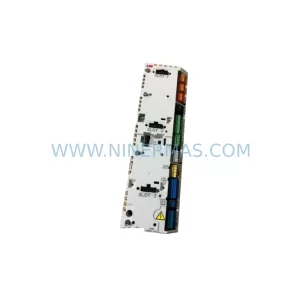
SKU: ZCU-14 3AXD50000005164
ABB ZCU-14 3AXD50000005164 Safety-Reliable Drive Control Unit
Catalog Continuation
Alternative parts within PLC & Industrial Automation Modules.
Stay inside the same system family when you need substitutes, adjacent modules, or a broader shortlist for procurement review.
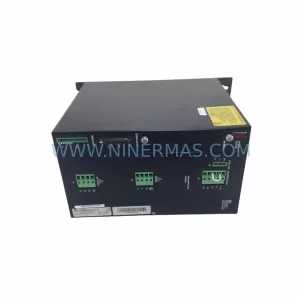
SKU: SCE906A2-002-01 SCE906A200201
Pacific Scientific SCE906A2-002-01 Retrofit Servo Amplifier
SKU: EPC500 3183062451
Alfa Laval EPC500 3183062451 Service-Ready Spare Part