Original Industrial Spare Part
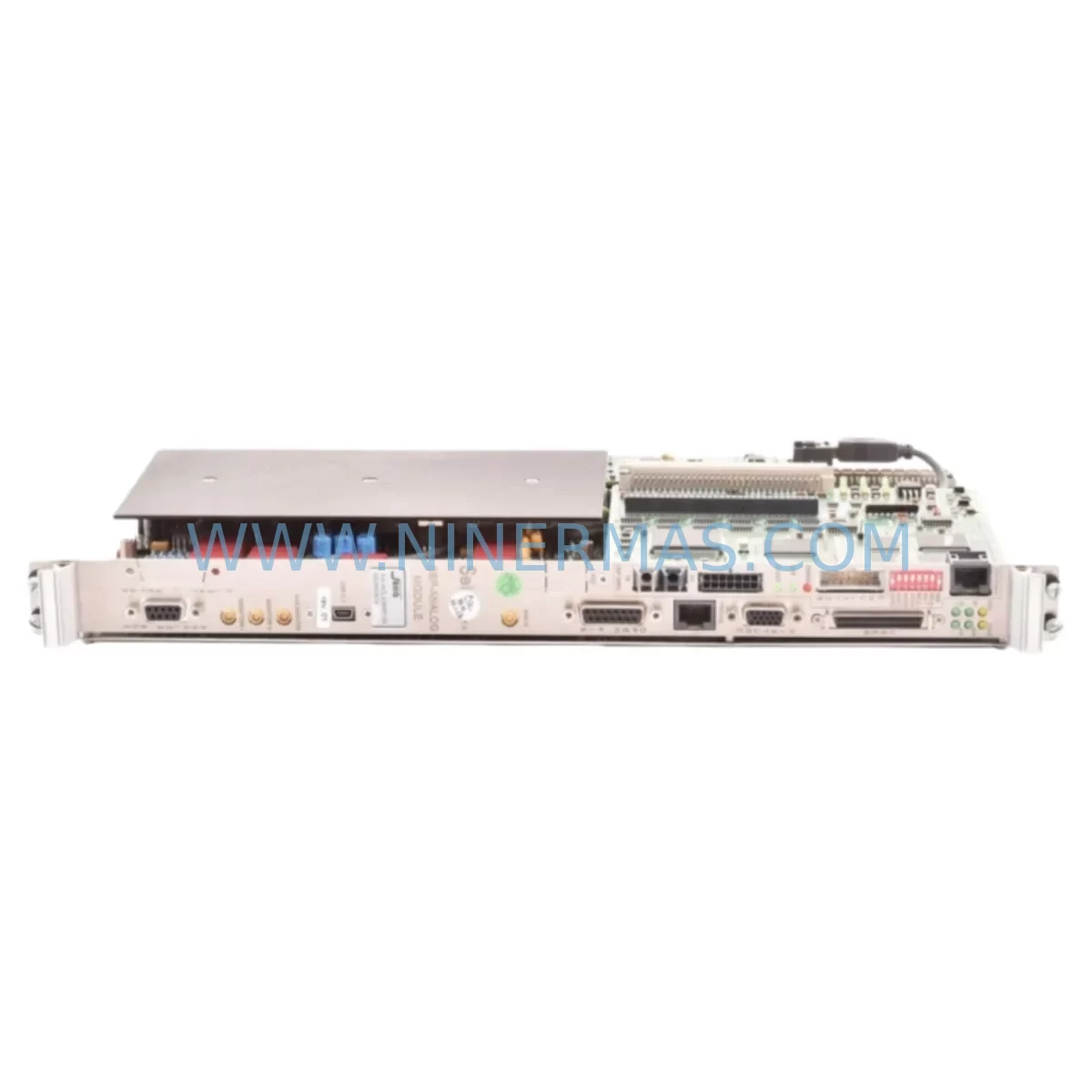
Seica AA-ACLAM007-00 Retrofit-Compatible DSP Analog Module
Verify the part, confirm the platform family, and move straight into quotation with the right commercial details.
RFQ Ready
- SKUAA-ACLAM007-00
- CategoryPLC & Industrial Automation Modules
- BrandSeica
- SupportAvailability, lead time, condition, and shipping coordination
How Buyers Usually Use This Page
- Confirm the exact part number and platform family before sending the quote request.
- Use direct email when quantity, condition, and destination are already defined internally.
- Switch to the broader brand or category archive when you need alternates nearby.
Series Navigation
Move through the most common platform families behind this part.
Product RFQ
Send this part directly for quotation.
Include quantity, required condition, destination country, and target delivery timing. Current reference: Seica AA-ACLAM007-00 Retrofit-Compatible DSP Analog Module with SKU AA-ACLAM007-00.
Seica AA-ACLAM007-00 Retrofit-Compatible DSP Analog Module: Legacy System Compatibility & Smooth Upgrade Path
The Seica AA-ACLAM007-00 is a ruggedized DSP analog module engineered for demanding industrial environments and designed to serve as a direct retrofit replacement for aging or discontinued analog signal processing modules within Seica automated test equipment (ATE) platforms and compatible industrial control architectures. Whether you are managing a planned system upgrade, responding to an end-of-life parts notification, or recovering from an unexpected module failure on a legacy production line, the AA-ACLAM007-00 provides a reliable, field-proven solution that minimizes engineering rework and reduces total downtime.
This module is particularly relevant for facilities operating older Seica Flying Probe or Vectorial test systems where original analog conditioning boards have reached obsolescence. The AA-ACLAM007-00 maintains signal integrity across a wide analog input/output range, supports the DSP-based processing architecture common to Seica’s modular backplane systems, and is built to withstand the thermal cycling, vibration, and EMI exposure typical of factory floor and control cabinet installations.
Upgrade Compatibility Table
| Parameter | AA-ACLAM007-00 (This Module) | Retrofit Notes |
|---|---|---|
| Module Type | DSP Analog Conditioning Module | Direct replacement for legacy Seica analog boards |
| Interface / Backplane | Seica proprietary modular backplane connector | Verify backplane slot pitch and connector keying before installation |
| Signal Range | Multi-range analog I/O (voltage & current) | Confirm channel mapping matches legacy wiring diagram |
| Communication Compatibility | DSP internal bus; compatible with Seica ATE control software | Software version alignment required; check firmware revision |
| Installation Space | Standard Seica module form factor | Confirm rack slot availability; no mechanical modification required |
| Power Requirements | Supplied via backplane (no external PSU required) | Verify backplane power budget; check total module load |
| Replacement Recommendation | Suitable for 1:1 swap of obsolete AA-ACLAM series modules | Review test program calibration after swap |
| Commissioning Focus | Analog channel calibration, offset verification | Run full self-test and signal verification post-installation |
| Warranty | 12-Month Warranty | Covered from date of shipment; includes DOA replacement |
Retrofit Planning for Existing Automation Systems
Integrating the Seica AA-ACLAM007-00 into an existing production environment requires a structured approach to ensure continuity of test coverage and process control. Before beginning the physical swap, engineers should audit the full module inventory within the affected Seica test system. This typically involves documenting all installed boards across the backplane, including the analog input modules, digital I/O boards, and any relay matrix cards that interact with the analog signal chain. In many legacy Seica systems, the AA-ACLAM007-00 works in conjunction with companion modules such as the AA-DIGIO series digital interface boards and the AA-PWRSUP backplane power distribution module, both of which should be inspected for wear or degradation during the same maintenance window.
Terminal wiring is a critical checkpoint. The analog signal lines feeding the AA-ACLAM007-00 must be verified against the original wiring harness documentation. In older installations, field wiring may have been modified over time, and the as-built condition may differ from the original schematic. Technicians should use a calibrated multimeter to verify signal levels at each terminal before powering the new module. Where shielded cable is used for low-level analog signals, confirm that shield grounding is maintained at one end only to prevent ground loop interference.
For systems that include an HMI panel — such as a Seica operator interface terminal or a third-party touchscreen running the test executive software — the analog channel labels and alarm thresholds displayed on screen should be reviewed after module replacement. In some configurations, the HMI reads calibration coefficients stored on the module itself; if the replacement module ships with factory-default calibration, a full recalibration procedure will be necessary before production resumption. This is especially important in applications where the analog module feeds measurement data to a SCADA layer or MES integration point.
Communication link integrity should also be confirmed. In Seica ATE platforms, the DSP analog module communicates over the internal system bus to the main controller board. After installation, the system diagnostic utility should be used to confirm that the AA-ACLAM007-00 is correctly enumerated at its expected module address. If the system uses a PC-based test executive with a proprietary communication protocol, ensure that the driver version supports the hardware revision of the replacement module. In multi-rack configurations, also verify that the module address does not conflict with other installed cards such as the AA-RFGEN signal generator module or the AA-MEASUR precision measurement board.
Finally, confirm that the installation space within the control cabinet or test rack is adequate. The AA-ACLAM007-00 follows the standard Seica module form factor, but technicians should verify that adjacent modules — including any signal isolation barriers or I/O expansion cards — do not obstruct airflow or create mechanical interference. Adequate ventilation is essential for long-term reliability in high-duty-cycle test environments.
Downtime Control During System Migration
Minimizing production downtime during an analog module replacement is achievable with proper pre-staging and a disciplined changeover procedure. The recommended approach is to pre-configure and bench-test the AA-ACLAM007-00 before the scheduled maintenance window. This includes powering the module in a test fixture, running the Seica self-diagnostic routine, and verifying that all analog channels respond correctly to known reference signals. Having a pre-verified spare module ready to install eliminates the risk of discovering a configuration issue during a live production stoppage.
Before removing the legacy module, capture a full backup of the test program and any module-specific calibration data stored in the system controller. In Seica ATE environments, this data is typically accessible through the test executive software and should be exported to a secure network location. If the system uses a programmable logic controller as part of the broader automation cell — for example, to manage part handling, fixture clamping, or conveyor sequencing — ensure that the PLC program is also backed up and that the PLC is placed in a safe hold state before any wiring is disturbed.
The physical swap of the AA-ACLAM007-00 should be performed with the system fully de-energized and locked out. After installation, power the system in stages: first confirm backplane power distribution is stable, then enable the DSP subsystem, and finally load the test program. Run a verification test using a known-good reference board or golden unit before releasing the system back to production. This staged power-up sequence protects both the new module and any connected fixtures or DUTs from transient damage.
By following this structured migration approach, most AA-ACLAM007-00 replacements can be completed within a single planned maintenance shift, keeping unplanned downtime to an absolute minimum and preserving the integrity of the original test program logic without requiring software modifications.
Retrofit Support FAQ
Q1: Is the AA-ACLAM007-00 a direct drop-in replacement for older Seica analog modules in the same series?
A: In most cases, yes. The AA-ACLAM007-00 is designed to be compatible with the standard Seica modular backplane and follows the same form factor as earlier AA-ACLAM series boards. However, customers should verify the backplane connector revision and confirm that their test executive software version supports the module’s hardware revision. A brief recalibration of analog channels is recommended after any module swap.
Q2: What commissioning steps are required after installing the AA-ACLAM007-00?
A: After physical installation, run the Seica system diagnostic to confirm the module is correctly detected at its assigned address. Perform a full analog channel calibration using the system’s built-in calibration routine or an external calibration source. Verify signal levels at all active terminals, check HMI channel labels, and run a test cycle with a reference unit before returning the system to production.
Q3: Does NINERMAS test the AA-ACLAM007-00 before shipment?
A: Yes. All modules supplied by NINERMAS undergo outgoing quality inspection and functional verification prior to shipment. Each unit is checked for physical integrity and basic electrical function. A 12-month warranty is provided from the date of shipment, covering manufacturing defects and DOA (dead on arrival) conditions. Expedited replacement is available for warranty claims.
Q4: What is the typical lead time and stock availability for the AA-ACLAM007-00?
A: NINERMAS maintains inventory of the AA-ACLAM007-00 to support urgent retrofit and breakdown recovery requirements. Standard orders are typically processed and shipped within 3–5 business days. For large quantity requirements or time-critical projects, please contact our sales team directly to confirm current stock levels and arrange priority dispatch.
—
| Product Series | Other series |
|---|
Catalog Continuation
Alternative parts within PLC & Industrial Automation Modules.
Stay inside the same system family when you need substitutes, adjacent modules, or a broader shortlist for procurement review.
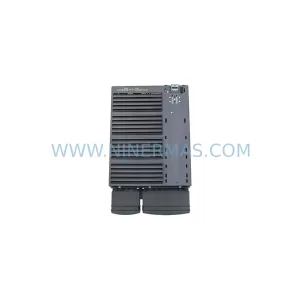
SKU: 6SL3224-0BE33-7UA0
Siemens 6SL3224-0BE33-7UA0 Service-Ready Spare Part
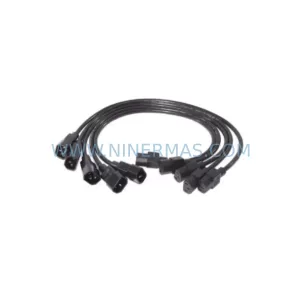
SKU: HENF331395R0001 P4LDA
ABB HENF331395R0001 Service-Ready Industrial Spare Part