Original Industrial Spare Part
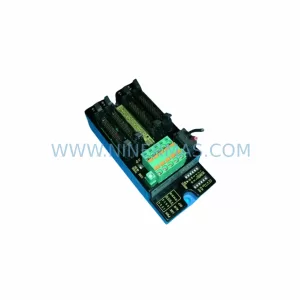
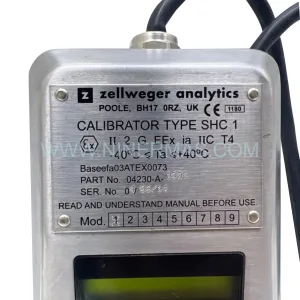
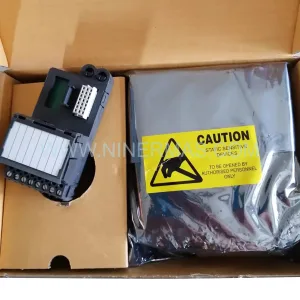
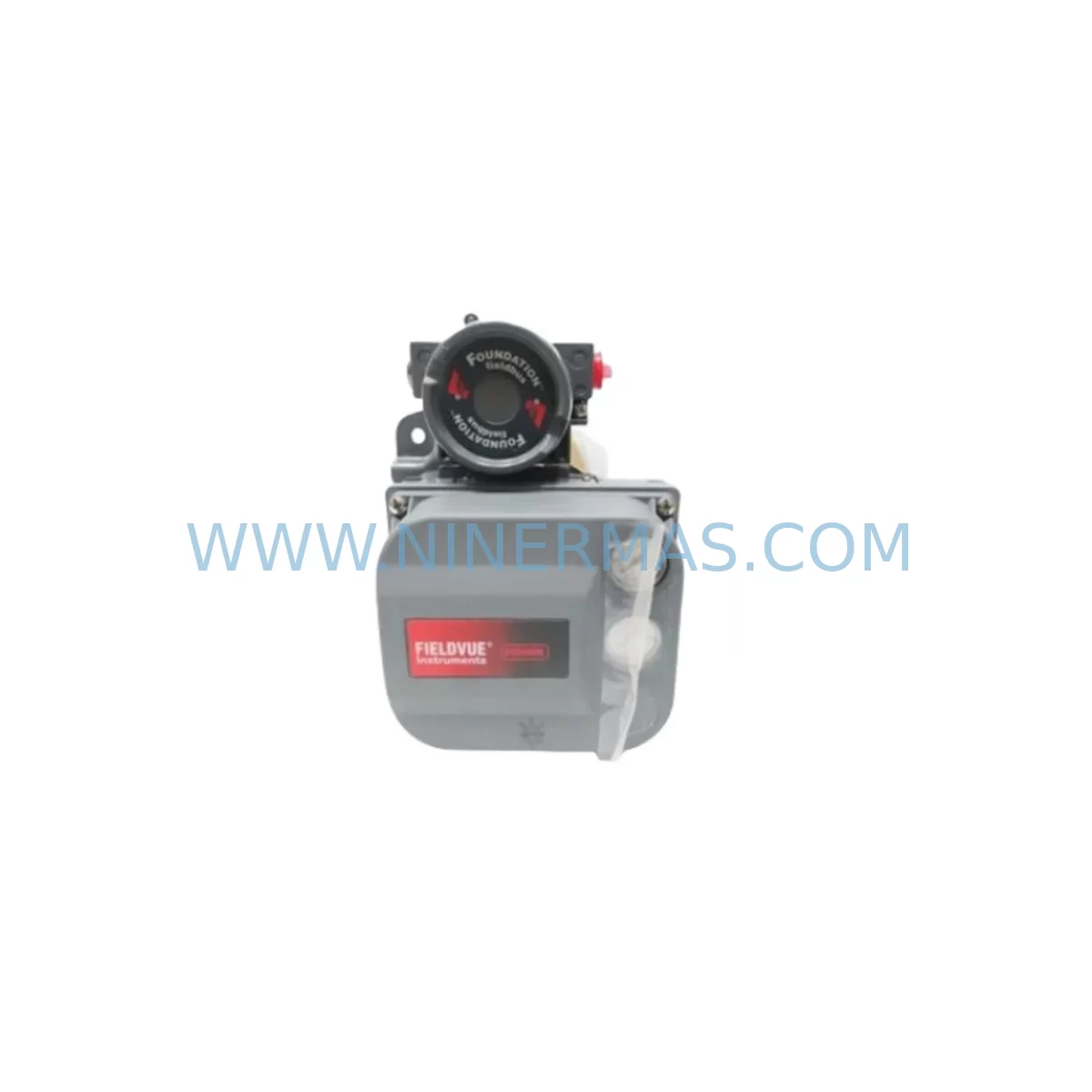
Emerson Fisher DVC6010 Retrofit Digital Valve Controller
Verify the part, confirm the platform family, and move straight into quotation with the right commercial details.
RFQ Ready
- SKUDVC6010
- CategoryDCS Distributed Control Systems
- BrandEmerson Fisher
- SupportAvailability, lead time, condition, and shipping coordination
How Buyers Usually Use This Page
- Confirm the exact part number and platform family before sending the quote request.
- Use direct email when quantity, condition, and destination are already defined internally.
- Switch to the broader brand or category archive when you need alternates nearby.
Series Navigation
Move through the most common platform families behind this part.
Product RFQ
Send this part directly for quotation.
Include quantity, required condition, destination country, and target delivery timing. Current reference: Emerson Fisher DVC6010 Retrofit Digital Valve Controller with SKU DVC6010.
Emerson Fisher DVC6010 Retrofit Digital Valve Controller: Legacy-Compatible Upgrade for FIELDVUE DVC Series
The Emerson Fisher DVC6010 is a HART-communicating digital valve controller designed for direct mounting on sliding-stem control valves. As a retrofit-ready replacement within the FIELDVUE DVC Series platform, the DVC6010 addresses the growing demand for drop-in upgrades in aging process control systems where the original DVC5000 Series, DVC2000, or early DVC6000 units have reached end-of-life or are no longer supported under active spare parts programs. Each unit supplied by NINERMAS COMPANY LIMITED undergoes pre-shipment functional testing and is backed by a 12-month warranty, ensuring reliable performance from day one of installation.
For facilities managing legacy control loops across compressor stations, refinery skids, chemical dosing systems, or power generation auxiliaries, the DVC6010 provides a validated migration path that preserves existing valve body hardware, actuator assemblies, and positioner mounting brackets. The unit accepts a 4–20 mA input signal with superimposed HART communication, making it fully compatible with existing DCS and PLC infrastructure without requiring signal converter modules or protocol gateways. Engineers planning a retrofit should confirm the instrument supply voltage range (typically 12–30 VDC at the instrument terminals), verify that the existing I/P supply tubing and pneumatic connections match the DVC6010 port configuration, and check that the control valve travel range is within the positioner’s calibrated span.
Upgrade Compatibility Table
| Parameter | DVC6010 (This Unit) | Typical Legacy Units (DVC5000 / DVC2000) | Retrofit Notes |
|---|---|---|---|
| Communication Protocol | HART (rev 5/6/7) | HART (rev 5/6) | Compatible with existing HART multiplexers and AMS Device Manager |
| Input Signal | 4–20 mA analog | 4–20 mA analog | No signal wiring changes required |
| Mounting Interface | Direct mount, sliding-stem | Direct mount, sliding-stem | Verify actuator yoke boss dimensions; adapter kits available for rotary conversion |
| Supply Pressure Range | 1.4–10.3 bar (20–150 psi) | 1.4–8.6 bar (20–125 psi) | Confirm regulator set point; no re-piping typically required |
| Enclosure Rating | IP66 / NEMA 4X | IP54–IP65 | Improved ingress protection; suitable for outdoor and washdown environments |
| Hazardous Area Certification | ATEX / IECEx / FM / CSA | FM / CSA (older certs) | Verify local authority approval; updated certifications may simplify compliance |
| Calibration Method | Auto-calibration via HART or 475/375 Communicator | Manual bench calibration | Reduces commissioning time; FIELDVUE DVC6010 supports ValveLink software |
| Diagnostic Capability | Advanced valve diagnostics (partial stroke, friction, travel deviation) | Basic or none | Enables predictive maintenance without additional hardware |
| Warranty | 12-Month Warranty | Pre-Shipment Tested | NINERMAS COMPANY LIMITED | ||
Retrofit Planning for Existing Automation Systems
A successful DVC6010 retrofit begins well before the maintenance window opens. The first step is a loop audit: identify every control loop that currently uses a DVC5000, DVC2000, or first-generation DVC6000 positioner, and cross-reference the valve body tag numbers against the plant’s instrument index. For each loop, record the actuator type (spring-and-diaphragm or piston), the existing supply pressure regulator model, and the pneumatic tubing size. The DVC6010 uses standard 1/4-inch NPT pneumatic connections, which are compatible with the majority of Fisher GX, ET, and EZ valve bodies already installed in the field.
On the electrical side, the DVC6010 draws its operating power directly from the 4–20 mA loop, eliminating the need for a separate 24 VDC instrument power supply at the valve. However, engineers should verify that the existing loop power supply—often a Rosemount 333 HART Tri-Loop or a dedicated DCS analog output card—can sustain the minimum loop compliance voltage under worst-case cable resistance conditions. If the plant uses a Yokogawa CENTUM VP or Honeywell Experion PKS DCS, the existing HART pass-through configuration on the analog output modules is typically sufficient without any card replacement.
For facilities that have already migrated portions of their control architecture to a Siemens S7-300 or Allen-Bradley ControlLogix PLC platform, the DVC6010 integrates cleanly via HART-over-4–20 mA using a HART interface module such as the Pepperl+Fuchs HiC2025 or the MTL5051 signal conditioner. This approach avoids the need to re-terminate field wiring at the marshalling cabinet and preserves the existing cable schedule. Where the plant uses a Foundation Fieldbus segment, the DVC6010 is not the correct model—the DVC6020 or DVC6030 should be specified instead, and the segment coupler, power conditioner, and H1 card assignments must be reviewed before ordering.
Control cabinet space is another practical consideration. The DVC6010 mounts directly on the valve actuator and does not occupy panel space, but the associated HART multiplexer—if one is being added to support remote diagnostics—will require a DIN rail slot in the local junction box or the main instrument cabinet. A typical HART multiplexer card such as the Emerson AMS Trex companion module or a third-party HART modem connected to a laptop running ValveLink software can be used for initial commissioning without permanent panel modifications. Technicians should also confirm that the existing cable gland size on the DVC6010 junction box matches the installed conduit or cable tray entry, as the DVC6010 accepts M20 or 1/2-inch NPT conduit entries depending on the variant ordered.
Where the legacy positioner was connected to a Fisher DPR or a pneumatic controller rather than an electronic DCS, the retrofit scope expands to include an I/P converter removal, a new 4–20 mA signal source from the DCS or a standalone PID controller such as the Yokogawa YS1700, and a loop check against the existing P&ID. In these cases, the DVC6010’s auto-travel calibration feature significantly reduces the time required to set up the positioner span and zero, as the unit self-characterizes against the installed valve travel without requiring manual bench adjustments or a separate calibration rig.
Downtime Control During System Migration
Minimizing process interruption during a DVC6010 swap-out requires a structured pre-outage preparation sequence. Before the maintenance window, the existing DVC positioner should be interrogated via a HART 475 Field Communicator or a laptop running ValveLink software to export the current device configuration, including the input range, travel limits, cutoffs, and any custom characterization curves. This configuration file serves as the baseline for the replacement unit and eliminates the need to re-derive positioner parameters from scratch during the outage.
During the outage, the recommended sequence is: isolate the control valve from the process using the upstream and downstream block valves, depressurize the actuator supply, disconnect the pneumatic tubing at the positioner output ports, remove the legacy positioner from the actuator yoke, mount the DVC6010 using the existing bracket hardware where compatible, reconnect the pneumatic supply and output tubing, re-terminate the 4–20 mA signal wires at the DVC6010 terminal block, and perform an auto-calibration stroke. The entire mechanical swap typically takes 45–90 minutes per valve for an experienced instrument technician, and the auto-calibration adds approximately 10–15 minutes per loop.
To protect the original program logic in the DCS or PLC, the associated analog output channel should be placed in manual mode before the positioner is disconnected, and the setpoint should be held at the last known stable operating position. This prevents the control loop from hunting or driving the valve to a limit position during the swap. After the DVC6010 is installed and calibrated, the loop should be returned to automatic mode gradually, with the technician monitoring the process variable response to confirm that the valve travel and control response match the pre-outage baseline. Any deviation in valve gain or hysteresis should be investigated before the block valves are reopened to the process.
For critical loops where zero unplanned downtime is acceptable, a hot-swap approach using a bypass valve or a parallel valve assembly can be considered, allowing the positioner replacement to proceed while the process remains online. In this scenario, the DVC6010 can be pre-configured and bench-tested against a simulated 4–20 mA signal before it is brought to the field, further reducing the time the loop spends in manual mode.
Retrofit Support FAQ
Q1: Is the DVC6010 a direct drop-in replacement for the DVC5000 Series positioner?
In most sliding-stem valve applications, yes. The DVC6010 uses the same direct-mount bracket interface as the DVC5000 Series and accepts the same 4–20 mA HART input signal. However, the pneumatic port orientation and the conduit entry location differ between generations, so technicians should verify the tubing and conduit routing before the outage. Adapter kits are available for applications where the mounting geometry does not align directly.
Q2: What commissioning tools are required to calibrate the DVC6010 on-site?
The DVC6010 can be calibrated using a Fisher HART 475 Field Communicator, a HART 375 Communicator, or a laptop running Emerson ValveLink software with a HART modem. The auto-travel calibration routine requires only a stable 4–20 mA signal source and a pressurized pneumatic supply at the correct set point. No external calibration rig or reference standard is required for standard installations.
Q3: How is the 12-month warranty applied, and what does pre-shipment testing cover?
Every DVC6010 unit supplied by NINERMAS COMPANY LIMITED is functionally tested prior to dispatch. Pre-shipment testing includes loop current response verification, HART communication handshake confirmation, pneumatic output linearity check, and enclosure integrity inspection. The 12-month warranty covers manufacturing defects and functional failures under normal operating conditions from the date of shipment. Units showing signs of field damage, unauthorized modification, or operation outside the published specification range are excluded from warranty coverage.
Q4: What is the typical lead time, and is stock available for urgent requirements?
NINERMAS COMPANY LIMITED maintains buffer stock of the DVC6010 and related FIELDVUE DVC Series components to support urgent retrofit and emergency replacement requirements. Standard lead time for in-stock units is 3–7 business days to most destinations. For time-critical shutdowns or unplanned outages, please contact the sales team directly to confirm current availability and expedited shipping options.
| Product Series | Fisher |
|---|---|
| Country of Origin | US |
Catalog Continuation
Alternative parts within DCS Distributed Control Systems.
Stay inside the same system family when you need substitutes, adjacent modules, or a broader shortlist for procurement review.