Original Industrial Spare Part
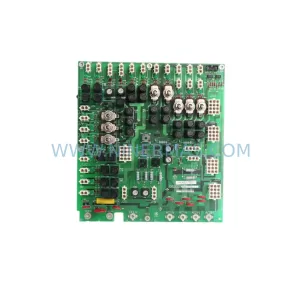
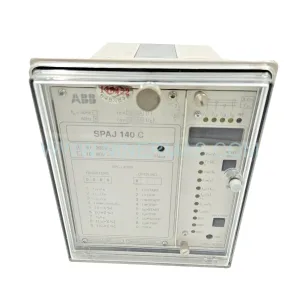
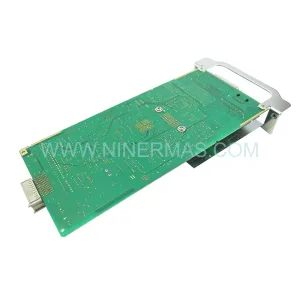
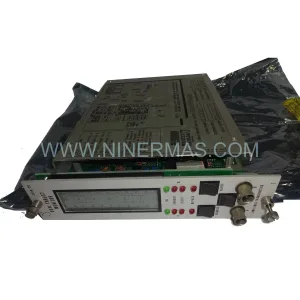
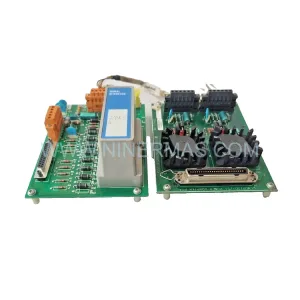
Honeywell TK-IAH161 TK-OAV081 TK-PPD011 Retrofit I/O for TPS
Verify the part, confirm the platform family, and move straight into quotation with the right commercial details.
RFQ Ready
- SKUTK-IAH161 TK-OAV081 TK-PPD011
- CategoryDCS Distributed Control Systems
- BrandHoneywell
- SupportAvailability, lead time, condition, and shipping coordination
How Buyers Usually Use This Page
- Confirm the exact part number and platform family before sending the quote request.
- Use direct email when quantity, condition, and destination are already defined internally.
- Switch to the broader brand or category archive when you need alternates nearby.
Series Navigation
Move through the most common platform families behind this part.
Product RFQ
Send this part directly for quotation.
Include quantity, required condition, destination country, and target delivery timing. Current reference: Honeywell TK-IAH161 TK-OAV081 TK-PPD011 Retrofit I/O for TPS with SKU TK-IAH161 TK-OAV081 TK-PPD011.
Honeywell TK-IAH161 TK-OAV081 TK-PPD011 Retrofit I/O for TPS Legacy Systems
When a Honeywell TPS (Total Plant Solution) control system reaches end-of-life or its I/O modules become unavailable through standard channels, production continuity depends on sourcing verified retrofit-compatible replacements. The Honeywell TK-IAH161 (Analog Input High-Level Module), TK-OAV081 (Analog Output Voltage Module), and TK-PPD011 (Pulse/Frequency Input Module) are critical field I/O components used across process industries including oil & gas, chemical, power generation, and pulp & paper. These modules interface directly with the TPS Field Control Processor (FCP) and High-Performance Process Manager (HPM) backplanes, and their discontinuation has created significant retrofit planning challenges for maintenance engineers and system integrators worldwide.
NINERMAS maintains verified stock of these modules, pre-shipment tested and backed by a 12-month warranty, to support legacy TPS installations that cannot yet migrate to Honeywell Experion PKS or require a phased upgrade strategy. Each unit is inspected for firmware revision compatibility, terminal block integrity, and backplane connector condition before dispatch.
Upgrade Compatibility Table
| Parameter | TK-IAH161 | TK-OAV081 | TK-PPD011 |
|---|---|---|---|
| Module Function | Analog Input (High-Level) | Analog Output (Voltage) | Pulse / Frequency Input |
| Compatible Platform | TPS FCP / HPM | TPS FCP / HPM | TPS FCP / HPM |
| Backplane Interface | TPS I/O Link | TPS I/O Link | TPS I/O Link |
| Installation Requirement | Slot-compatible with TPS I/O carrier | Slot-compatible with TPS I/O carrier | Slot-compatible with TPS I/O carrier |
| Communication Compatibility | TPS proprietary I/O bus | TPS proprietary I/O bus | TPS proprietary I/O bus |
| Replacement Suggestion | Direct drop-in for same slot position | Direct drop-in for same slot position | Direct drop-in for same slot position |
| Commissioning Focus | Channel scaling, HART pass-through check | Output range calibration, loop check | Pulse rate scaling, frequency range verify |
| 12-Month Warranty | ✓ Included | ✓ Included | ✓ Included |
Retrofit Planning for Existing Automation Systems
A successful TPS I/O module retrofit begins well before the replacement unit arrives on site. Engineers must first audit the existing cabinet layout to confirm available slot positions in the I/O carrier, verify that the local power supply — typically a Honeywell MC-PDPY22 or equivalent TPS power conditioner — can sustain the additional load introduced by the replacement module, and document the current terminal block wiring against the original loop drawings. For sites running mixed I/O types, it is common to find the TK-IAH161 installed alongside analog output modules such as the TK-OAV161 or discrete I/O modules like the TK-IDY081 and TK-ODY081, all sharing the same backplane segment.
When the control strategy involves HART-enabled field instruments, engineers should confirm whether the existing FCP firmware revision supports HART pass-through on the TK-IAH161 channel. Older HPM configurations may require a firmware patch or a supplementary Honeywell HART Multiplexer to maintain instrument diagnostics after the swap. Similarly, if the site uses a TK-PRS021 redundancy switch module in the same I/O nest, the redundancy configuration must be re-validated after module replacement to ensure seamless failover behavior is preserved.
For pulse and frequency measurement applications using the TK-PPD011, the replacement workflow must include verification of the input signal conditioning parameters — particularly the pulse threshold voltage and debounce filter settings stored in the FCP database. These parameters are not automatically transferred during a hot-swap and must be manually re-entered or restored from a database backup. Sites that have migrated portions of their control strategy to Honeywell Experion PKS C300 controllers may also need to verify that the legacy TPS I/O link gateway, such as the TC-FPCXX2 FCP interface module, correctly maps the TK-PPD011 channel addresses to the new control strategy tags.
Analog output retrofits using the TK-OAV081 require particular attention to the output range configuration and the downstream actuator’s input impedance. If the original module was configured for a 0–10 V output range and the replacement is initialized to factory defaults (typically 4–20 mA equivalent voltage), the actuator may respond incorrectly during the first commissioning loop check. A pre-configured module — with output range, fail-safe state, and ramp rate settings pre-loaded — significantly reduces commissioning time and the risk of process upsets during the cutover window. NINERMAS can supply pre-tested units with customer-specified configuration parameters upon request.
Cabinet space and thermal management are often overlooked in retrofit planning. The TPS I/O carrier accommodates a fixed number of module slots, and adding a replacement module in a previously empty slot may increase the aggregate heat dissipation within the enclosure. Engineers should verify that the cabinet’s cooling capacity — whether convection-cooled or fan-assisted — remains within the thermal envelope specified for the installed module count. Where space is constrained, signal isolators such as the Honeywell STT850 smart temperature transmitter or third-party DIN-rail isolators may be used to extend the I/O reach without occupying additional backplane slots.
Downtime Control During System Migration
Minimizing unplanned downtime during a TPS I/O module replacement requires a structured cutover plan that protects the existing control logic and maintains field control continuity throughout the swap. The recommended approach is to perform the replacement during a scheduled maintenance window, with the affected control loops placed in manual mode at the operator station before the module is removed. This prevents the FCP from generating spurious alarms or driving actuators to fail-safe positions during the brief period when the I/O channel is offline.
Before removing the TK-IAH161, TK-OAV081, or TK-PPD011, the maintenance team should capture a full snapshot of the current FCP database, including all channel configuration parameters, alarm limits, and engineering unit conversions. This snapshot serves as the restoration baseline if the replacement module requires re-commissioning from scratch. For sites using Honeywell’s Control Builder or legacy Engineer’s Console software, the database export function provides a structured XML or proprietary backup file that can be re-imported after the module swap.
Once the replacement module is seated and the I/O carrier latch is secured, the FCP will typically perform an automatic module recognition sequence. Engineers should monitor the system status display for any module fault codes — particularly I/O Link communication errors or channel configuration mismatch alarms — before returning the affected loops to automatic control. A systematic loop check, starting with the most critical process variables, ensures that each channel is reading correctly and that the output modules are driving actuators within the expected range before the maintenance window closes.
For sites where a full hot-swap is not feasible due to process criticality, a parallel installation strategy — where the replacement module is pre-wired in a temporary carrier and validated offline before the final cutover — can reduce the live cutover time to under 15 minutes. This approach is particularly effective for TK-PPD011 pulse input applications where the frequency scaling parameters must be verified against a known reference signal before the module is placed in service.
Retrofit Support FAQ
Q1: Are the TK-IAH161, TK-OAV081, and TK-PPD011 direct drop-in replacements for the original Honeywell TPS modules?
Yes. These modules are designed for direct slot-for-slot replacement within the TPS I/O carrier. No hardware modifications to the backplane or terminal block wiring are required, provided the replacement unit carries the same firmware revision as the original. NINERMAS verifies firmware compatibility as part of the pre-shipment inspection process.
Q2: What commissioning steps are required after installing a replacement TK-IAH161 or TK-OAV081?
After seating the replacement module, engineers should perform a channel-by-channel loop check to verify signal scaling, alarm limits, and engineering unit conversions. For the TK-OAV081, the output range and fail-safe state must be confirmed against the original configuration. For the TK-IAH161, HART pass-through functionality should be verified if HART-enabled field instruments are connected. Full commissioning typically takes 30–90 minutes per module depending on the number of active channels.
Q3: Does NINERMAS provide pre-shipment testing for these modules, and what does the 12-month warranty cover?
Yes. Every TK-IAH161, TK-OAV081, and TK-PPD011 unit shipped by NINERMAS undergoes functional testing under simulated I/O load conditions before dispatch. The 12-month warranty covers manufacturing defects and functional failures under normal operating conditions. It does not cover damage resulting from incorrect installation, overvoltage events, or environmental exposure beyond the module’s rated operating range.
Q4: What is the typical lead time, and does NINERMAS maintain ongoing inventory of these discontinued modules?
NINERMAS maintains a standing inventory of TPS-series I/O modules, including the TK-IAH161, TK-OAV081, and TK-PPD011, to support urgent maintenance requirements. Standard lead time for in-stock units is 3–7 business days for international shipments. For customers with recurring demand, NINERMAS offers reserved inventory agreements to guarantee availability over a 12–24 month horizon, reducing the risk of production stoppages caused by spare parts shortages.
| Product Series | Experion PKS |
|---|---|
| Country of Origin | US |
Catalog Continuation
More Honeywell modules in the catalog.
Use the brand lane to compare nearby part numbers, platform-adjacent modules, and other inquiry-ready listings before sending your final RFQ.
SKU: CC-TD0R01 51308376-175
Honeywell CC-TD0R01 51308376-175 Spare Part for Maintenance
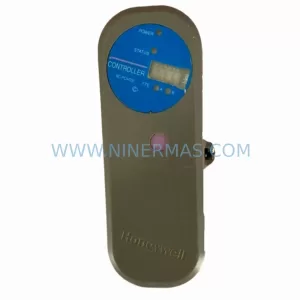
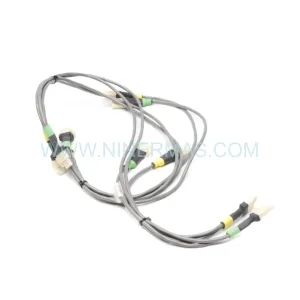
SKU: 8C-PCNT02 51454363-275
Honeywell 8C-PCNT02 51454363-275 Spare Part for Maintenance
Catalog Continuation
Alternative parts within DCS Distributed Control Systems.
Stay inside the same system family when you need substitutes, adjacent modules, or a broader shortlist for procurement review.
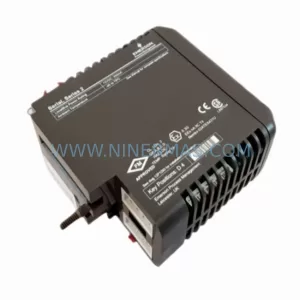
SKU: CE4006P2 KJ3241X1-BA1 12P2506X102
EMERSON CE4006P2 KJ3241X1-BA1 12P2506X102 DeltaV I/O
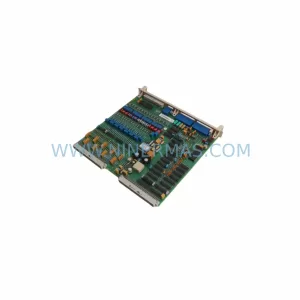
SKU: 3BSE003127R1 DSAI130D
ABB 3BSE003127R1 DSAI130D Retrofit-Compatible Analog Input Module
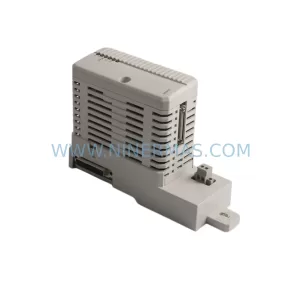
SKU: BC810K02 3BSE031155R1
ABB BC810K02 3BSE031155R1 Retrofit CEX-Bus Unit Legacy