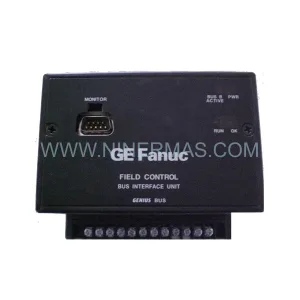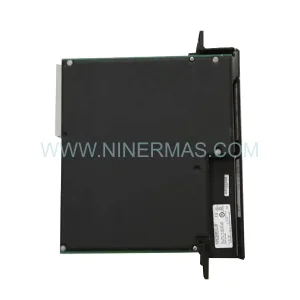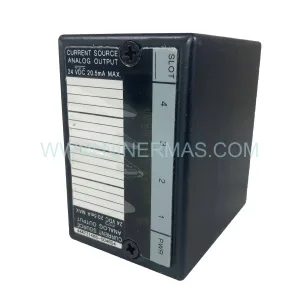
Original Industrial Spare Part
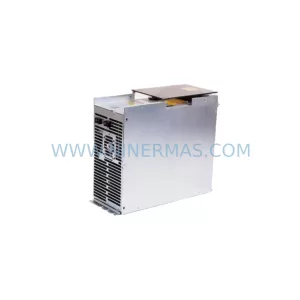
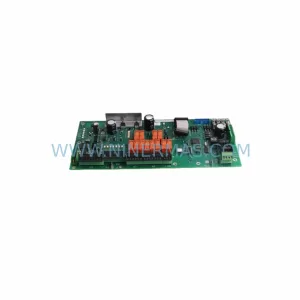
Bosch 47961-103401 Retrofit-Compatible Control Module
Verify the part, confirm the platform family, and move straight into quotation with the right commercial details.
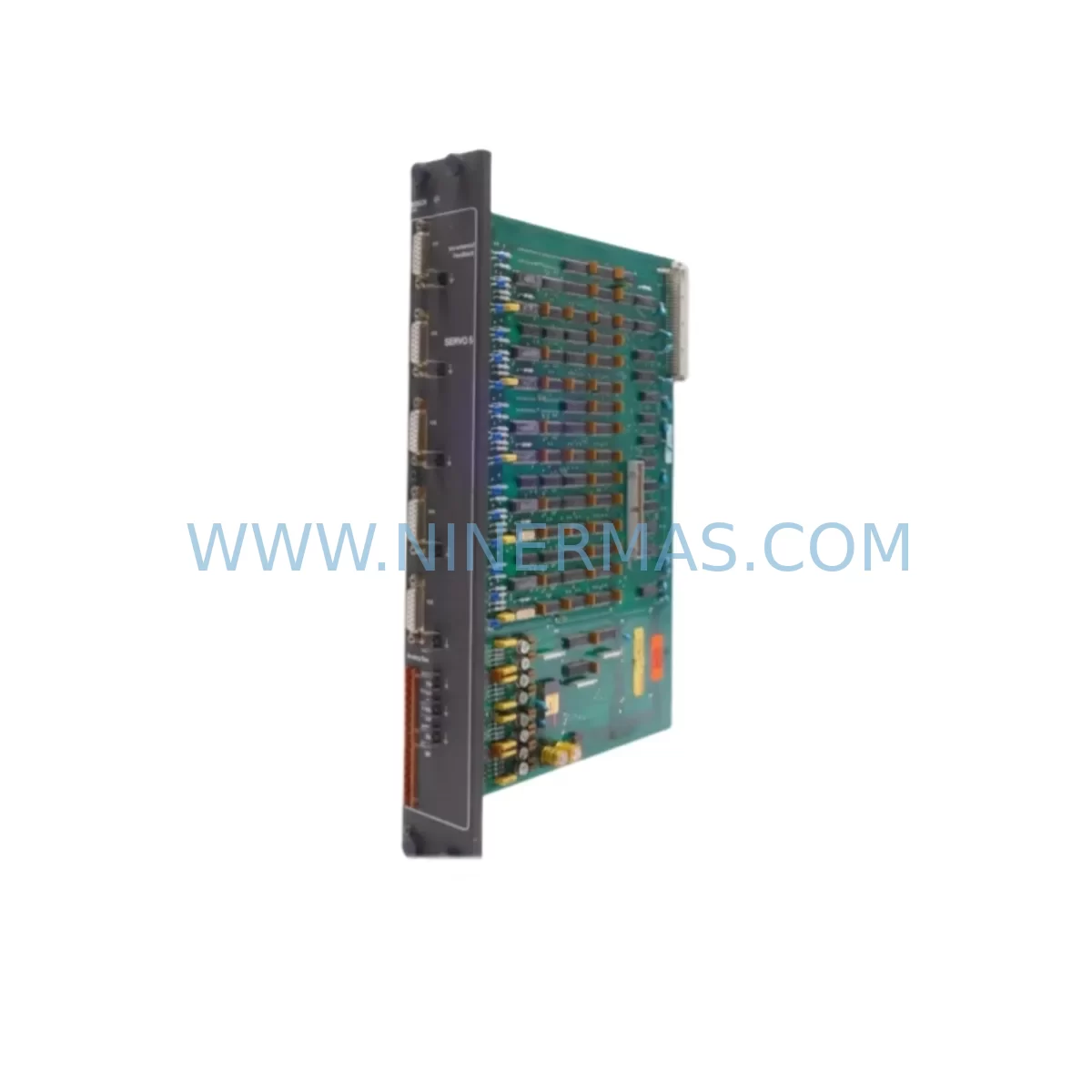
RFQ Ready
- SKU47961-103401
- CategoryPLC & Industrial Automation Modules
- BrandBosch
- SupportAvailability, lead time, condition, and shipping coordination
How Buyers Usually Use This Page
- Confirm the exact part number and platform family before sending the quote request.
- Use direct email when quantity, condition, and destination are already defined internally.
- Switch to the broader brand or category archive when you need alternates nearby.
Series Navigation
Move through the most common platform families behind this part.
Product RFQ
Send this part directly for quotation.
Include quantity, required condition, destination country, and target delivery timing. Current reference: Bosch 47961-103401 Retrofit-Compatible Control Module with SKU 47961-103401.
Bosch 47961-103401 Retrofit-Compatible Control Module: Legacy System Upgrade & Smooth Migration
The Bosch 47961-103401 is a retrofit-compatible industrial control module engineered to serve as a direct replacement for discontinued and end-of-life Bosch automation components. Designed for integration into legacy control cabinets, aging production lines, and multi-generation automation architectures, this module enables engineers and maintenance teams to extend the operational life of existing systems without committing to a full platform overhaul. Whether you are managing a brownfield retrofit, a phased control cabinet upgrade, or an emergency spare-part replacement, the Bosch 47961-103401 delivers the dimensional, electrical, and functional compatibility required to restore system continuity with minimal downtime.
In industrial environments where production continuity is paramount, sourcing a verified replacement for a discontinued Bosch module is a critical procurement challenge. The 47961-103401 addresses this directly — it is stocked, tested, and shipped with a 12-month warranty from NINERMAS, ensuring that your retrofit project is backed by a reliable supply chain partner committed to long-lifecycle spare-parts programs.
Upgrade Compatibility Table
| Parameter | Details / Specification |
|---|---|
| SKU / Part Number | 47961-103401 |
| Brand / Manufacturer | Bosch |
| Product Series | Bosch Industrial Control Series |
| Product Type | Industrial Control Module |
| Country of Origin | Germany |
| Retrofit Application | Legacy Bosch control cabinet, PLC rack, and automation panel integration |
| Interface Compatibility | Compatible with standard Bosch backplane and rack mounting systems; verify slot pitch and connector type before installation |
| Communication Protocol | Confirm compatibility with existing PROFIBUS, PROFINET, or serial communication links in the target system |
| Power Supply Requirement | Verify DC bus voltage and current draw against existing Bosch power supply module (e.g., PS series) capacity before installation |
| Installation Footprint | Confirm DIN rail or rack slot dimensions match existing cabinet layout; check module width and depth clearance |
| Replacement Recommendation | Direct replacement for discontinued Bosch 47961-series modules; cross-reference with OEM documentation for pin-for-pin compatibility |
| Commissioning Notes | Re-address module in PLC configuration tool; verify I/O mapping and HMI tag references after swap |
| Warranty | 12 Months — NINERMAS Company Limited |
| Stock Status | In Stock — Ready to Ship |
| Supplier | NINERMAS COMPANY LIMITED | sale@ninermas.com | +0086 187 5021 5667 |
Retrofit Planning for Existing Automation Systems
A successful retrofit of the Bosch 47961-103401 into a legacy automation system requires systematic pre-installation planning. The first step is a thorough audit of the existing control cabinet to confirm available rack slots, backplane connector compatibility, and the current power budget of the installed Bosch power supply module. In many aging systems, the original PS-series power supply is already operating near its rated output capacity, and adding a replacement module without verifying the load balance can introduce instability into the entire control rack.
Terminal wiring is the next critical checkpoint. Engineers should document all field wiring connections — including analog input channels, digital output terminals, and shield grounding points — before removing the legacy module. In systems where the original Bosch I/O module has been in service for more than a decade, terminal screws may be corroded or torqued beyond specification, and wiring labels may have faded. A full wiring diagram review against the as-built documentation is strongly recommended before any physical swap is attempted.
For systems running on PROFIBUS DP networks, the replacement module must be assigned the correct station address to match the GSD file configuration in the PLC project. If the legacy system uses a Bosch CL series controller or a third-party PROFIBUS master, the network topology scan should be performed after module installation to confirm that the 47961-103401 is recognized at the correct node address. In environments that have already migrated to PROFINET, an additional protocol gateway or communication module may be required to bridge the legacy PROFIBUS segment — components such as a PROFIBUS-to-PROFINET coupler or a dedicated communication processor are commonly used in this transition path.
I/O expansion considerations are equally important. If the retrofit is part of a broader control cabinet upgrade that includes adding new I/O channels — for example, integrating additional analog input modules for temperature or pressure monitoring, or expanding digital output capacity for new actuator circuits — the rack and backplane must have sufficient free slots. In Bosch modular rack systems, the backplane bus bandwidth and the controller’s I/O table size both impose limits on how many modules can be addressed simultaneously. Confirming these limits before ordering additional I/O expansion modules prevents costly rework during commissioning.
HMI screen validation is a step that is frequently underestimated in retrofit projects. After the physical module swap, all HMI tag references that point to the replaced module’s I/O addresses must be verified. In systems using Bosch or third-party HMI panels connected via serial RS-232 or RS-485 links, the communication parameters — baud rate, parity, stop bits — must be confirmed to match the new module’s port configuration. If the HMI project was developed for an older Bosch controller generation, a screen-by-screen review of all dynamic data displays, alarm setpoints, and trend historian tags is necessary to ensure that no broken references remain after the retrofit.
Signal isolation is another consideration for installations in electrically noisy environments. Where the legacy system relied on signal isolators or galvanic separation modules between field devices and the control module’s input channels, these components should be retained or replaced with equivalent units during the retrofit. Removing signal isolation without a full EMC assessment can introduce ground loops or common-mode noise that degrades measurement accuracy or triggers spurious alarms.
Programming cable access and backup procedures must be completed before the retrofit begins. A full backup of the PLC program, including all data blocks, function blocks, and hardware configuration files, should be archived to a secure location. If the legacy Bosch controller uses a proprietary programming interface — such as a serial programming cable or a dedicated PC adapter — ensure that the programming tool and cable are available on-site during the retrofit window. Having a verified program backup eliminates the risk of permanent data loss if the controller requires a cold restart after the module swap.
Downtime Control During System Migration
Minimizing production downtime during a control module replacement is a primary concern for any maintenance or engineering team. For the Bosch 47961-103401 retrofit, the recommended approach is to complete all pre-installation verification steps — power budget confirmation, wiring documentation, program backup, and module address planning — during scheduled maintenance windows or off-shift periods, so that the physical swap can be executed as a single, rapid intervention.
Where the production process permits, a hot-standby or parallel-run strategy can be employed. In this approach, the replacement module is pre-configured and address-verified in a bench test environment before being brought to the production floor. The bench test should replicate the target system’s rack configuration, power supply voltage, and communication network parameters as closely as possible. This pre-commissioning step allows the engineering team to identify and resolve any compatibility issues — such as firmware version mismatches, GSD file discrepancies, or I/O mapping conflicts — before the production system is taken offline.
During the actual swap, the sequence of operations should follow a defined procedure: isolate the affected rack segment, de-energize the module slot, remove the legacy module, install the 47961-103401, re-energize, and perform a controlled PLC restart. After restart, the first priority is to confirm that all I/O channels are reporting correctly and that no diagnostic alarms are active in the controller’s fault log. If the system includes a safety PLC or safety relay module — such as a Bosch or third-party safety controller managing emergency stop circuits or light curtain inputs — the safety function validation must be completed and documented before the system is returned to production.
Communication link restoration is the final step before returning the system to automatic mode. All PROFIBUS or PROFINET connections should be verified using the network diagnostic tools available in the PLC programming environment. Any communication errors or timeout alarms should be resolved before the HMI operator is notified that the system is ready to resume production. Maintaining a detailed retrofit log — including the start time, completion time, technician names, and any deviations from the planned procedure — provides a valuable audit trail for quality management and future maintenance planning.
Retrofit Support FAQ
Q1: Is the Bosch 47961-103401 a direct drop-in replacement for the discontinued original module?
The 47961-103401 is designed as a retrofit-compatible replacement for legacy Bosch control modules in the same series. Before installation, verify the backplane connector pinout, module slot width, power supply voltage, and communication protocol configuration against your existing system documentation. NINERMAS provides pre-shipment functional testing on all units to confirm operational readiness.
Q2: What commissioning steps are required after installing the replacement module?
After physical installation, re-address the module in your PLC configuration tool to match the original station or slot address. Perform a full I/O channel check to confirm that all field signals are mapped correctly. Validate HMI tag references and communication link status. If the system uses PROFIBUS, run a network scan to confirm the module is recognized at the correct node address. Document all commissioning steps and retain the records for your quality management system.
Q3: How does NINERMAS ensure the quality and compatibility of the 47961-103401 before shipment?
All Bosch 47961-103401 units supplied by NINERMAS undergo pre-shipment functional testing to verify electrical integrity and operational performance. Each unit is shipped with a 12-month warranty covering manufacturing defects and functional failures under normal operating conditions. NINERMAS maintains dedicated stock of this SKU to support urgent retrofit and emergency replacement requirements with short lead times.
Q4: Can NINERMAS support long-term spare-parts programs for the Bosch 47961-103401?
Yes. NINERMAS offers long-term inventory commitment programs for critical spare parts, including the Bosch 47961-103401. These programs are designed for customers managing multi-site automation fleets or extended production lifecycles where consistent spare-parts availability is essential. Contact our team to discuss stock reservation, annual supply agreements, and priority fulfillment arrangements.
| Product Series | Other series |
|---|
Catalog Continuation
More Bosch modules in the catalog.
Use the brand lane to compare nearby part numbers, platform-adjacent modules, and other inquiry-ready listings before sending your final RFQ.
Catalog Continuation
Alternative parts within PLC & Industrial Automation Modules.
Stay inside the same system family when you need substitutes, adjacent modules, or a broader shortlist for procurement review.
SKU: WS 5-9.081-00 WS5908100
BERGER LAHR WS5908100 Retrofit-Compatible Stepper Drive
SKU: 3183045486 EPC50
Alfa Laval 3183045486 EPC50 Retrofit-Compatible I/O Board