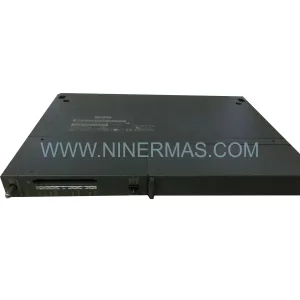
Original Industrial Spare Part
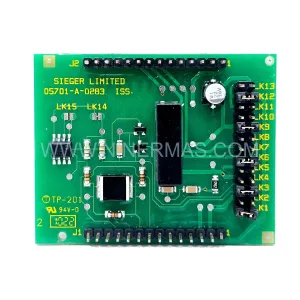
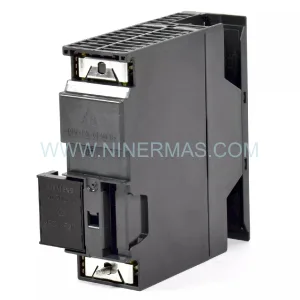
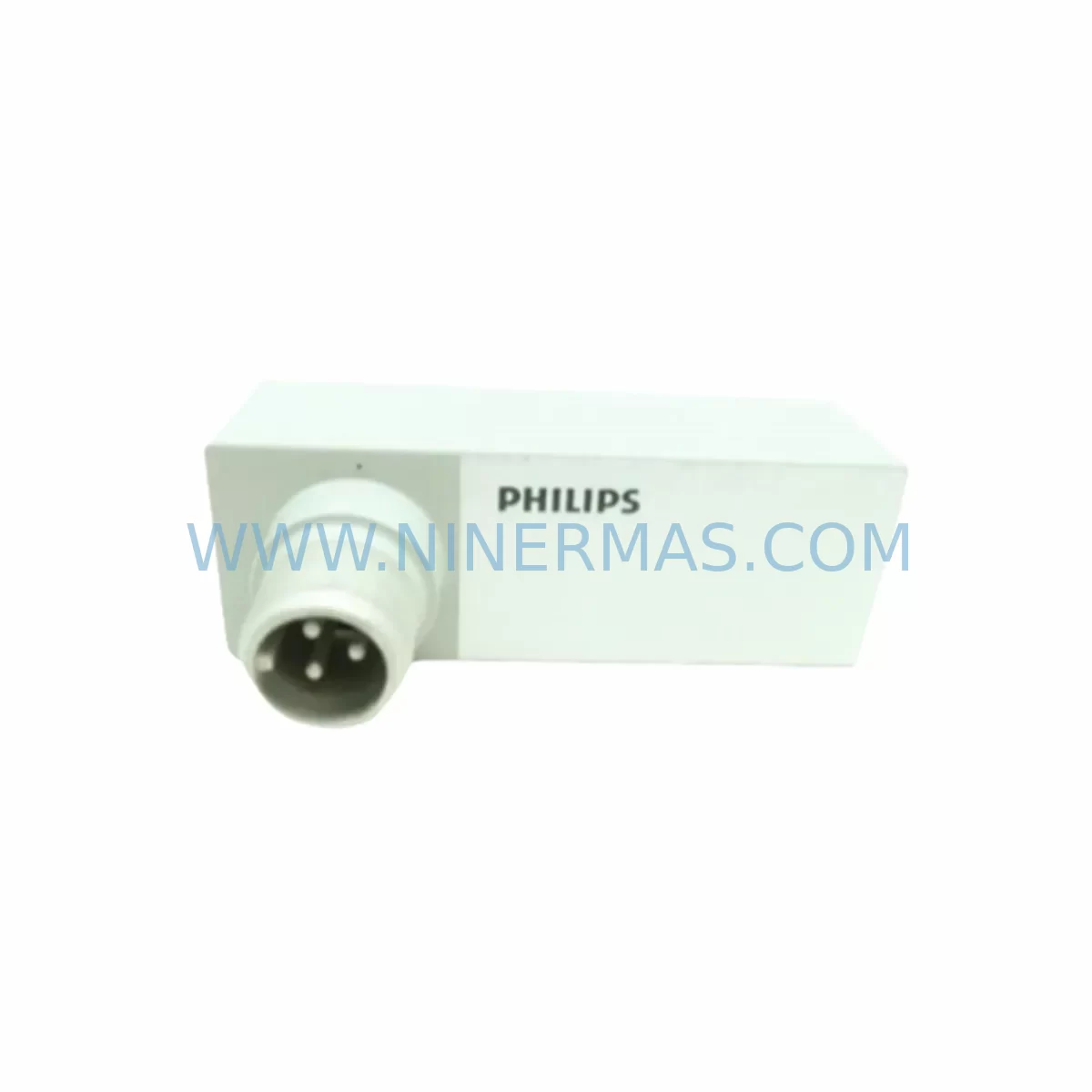
PHILIPS LD5001M Retrofit-Compatible Displacement Transducer
Verify the part, confirm the platform family, and move straight into quotation with the right commercial details.
RFQ Ready
- SKULD5001M
- CategoryTSI & Rotating Machinery Monitoring
- BrandPhilips
- SupportAvailability, lead time, condition, and shipping coordination
How Buyers Usually Use This Page
- Confirm the exact part number and platform family before sending the quote request.
- Use direct email when quantity, condition, and destination are already defined internally.
- Switch to the broader brand or category archive when you need alternates nearby.
Series Navigation
Move through the most common platform families behind this part.
Product RFQ
Send this part directly for quotation.
Include quantity, required condition, destination country, and target delivery timing. Current reference: PHILIPS LD5001M Retrofit-Compatible Displacement Transducer with SKU LD5001M.
PHILIPS LD5001M Retrofit-Compatible Displacement Transducer: Legacy System Upgrade & Smooth Migration
The PHILIPS LD5001M is a precision linear variable differential transformer (LVDT) displacement transducer engineered for demanding industrial measurement and control applications. As legacy automation systems age and original PHILIPS LD-series components reach end-of-life, the LD5001M remains a critical spare for facilities operating continuous process lines, turbine monitoring systems, hydraulic press controls, and precision machine tool platforms. NINERMAS maintains verified stock of the LD5001M to support planned maintenance windows, emergency replacements, and phased system modernization programs.
Facilities running aging distributed control systems (DCS) or programmable logic controller (PLC) platforms frequently encounter the challenge of sourcing discontinued LVDT transducers that interface with legacy signal conditioning modules. The LD5001M delivers a reliable retrofit path, preserving existing wiring harnesses, terminal block layouts, and analog input card configurations without requiring full panel redesign. Its compatibility with standard ±15 VDC excitation and differential AC output makes it interoperable with a wide range of legacy signal conditioners and analog input modules still in service across process industries.
Upgrade Compatibility Table
| Parameter | Details / Retrofit Notes |
|---|---|
| Transducer Type | LVDT (Linear Variable Differential Transformer) |
| SKU / Part Number | LD5001M |
| Brand / Series | PHILIPS LD Series |
| Excitation Voltage | ±15 VDC (verify against existing signal conditioner spec) |
| Output Signal | Differential AC; confirm compatibility with installed analog input card |
| Mechanical Interface | Confirm thread pitch, stroke length, and mounting flange dimensions before installation |
| Connector / Terminal | Match existing wiring harness pin-out; label and photograph before disconnection |
| Replacement Scope | Direct replacement for LD5001M; cross-reference LD5000M, LD5002M for adjacent stroke variants |
| Signal Conditioner Compatibility | Compatible with PHILIPS PR9266, Bently Nevada 3300 XL series, and equivalent LVDT conditioners |
| Installation Space | Verify body length and rod extension clearance in existing mounting bracket |
| Communication Protocol | Analog (4–20 mA or ±10 V via conditioner); no protocol migration required |
| Commissioning Requirement | Null balance adjustment and span calibration required after installation |
| Pre-Shipment Testing | Yes — electrical continuity, insulation resistance, and output linearity verified |
| Warranty | 12 months from date of shipment |
Retrofit Planning for Existing Automation Systems
Replacing the PHILIPS LD5001M within a live automation environment requires careful pre-work to avoid extended downtime and signal integrity issues. Before scheduling the maintenance window, engineers should audit the existing signal conditioning chain. In many legacy installations, the LD5001M is paired with a PHILIPS PR9266 signal conditioner or equivalent LVDT demodulator module mounted in a DIN-rail enclosure or control cabinet sub-panel. Confirm that the conditioner’s excitation frequency and amplitude match the LD5001M’s rated input before proceeding.
Terminal block wiring is a common source of commissioning errors during LVDT replacement. The LD5001M uses a multi-conductor cable with primary excitation and secondary output leads. Technicians should photograph and label all terminal connections before disconnection, particularly in cabinets where Phoenix Contact MKDS or Weidmüller WDU terminal blocks are used for signal distribution. Incorrect polarity on the secondary winding will produce an inverted output that may not be immediately obvious during initial loop checks.
For facilities integrating the LD5001M output into a Siemens S7-300 or S7-400 analog input module (such as the SM 331 or SM 334), verify the input range configuration in the hardware configuration tool (HW Config / TIA Portal). If the conditioner outputs a 4–20 mA signal, the AI channel must be set to the corresponding current input range. Similarly, installations feeding into a GE Fanuc Series 90-30 analog input module or an ABB AC500 AI523 module should confirm channel scaling parameters in the PLC program before live commissioning.
Where the LD5001M feeds position data to an HMI panel — such as a Siemens TP700 Comfort or Schneider Electric Magelis HMIGTO — verify that the engineering unit scaling on the HMI tag matches the recalibrated transducer span. A mismatch between the physical stroke and the HMI display range will cause incorrect position readouts and may trigger spurious alarms in the SCADA layer.
In turbine and rotating machinery applications, the LD5001M is frequently used alongside Bently Nevada 3300 XL proximity probes and 3500 series vibration monitoring modules to provide a complete shaft position and vibration measurement suite. When replacing the LD5001M in this context, coordinate the replacement with the vibration monitoring system shutdown sequence to avoid false trip signals during the maintenance window.
Rack and backplane integrity should also be assessed during the replacement process. If the LD5001M signal conditioner is housed in a modular rack alongside PHILIPS PR9268 or PR9270 series modules, inspect the backplane connectors for oxidation or mechanical wear that could introduce noise into the measurement chain after reinstallation.
For facilities planning a broader I/O modernization, the LD5001M retrofit can be executed in parallel with migration of adjacent discrete I/O points to a Siemens ET 200SP distributed I/O station or an ABB S800 I/O module cluster, minimizing total cabinet downtime across multiple work orders.
Downtime Control During System Migration
Minimizing production interruption during an LD5001M replacement requires a structured pre-outage preparation protocol. NINERMAS recommends the following approach for facilities where the transducer is installed in a critical control loop:
Program Logic Preservation: Before any hardware disconnection, upload and archive the current PLC program from the controller — whether a Siemens S7-400, GE PACSystems RX3i, or Rockwell Automation ControlLogix platform. Confirm the archived version matches the running program checksum. This protects against accidental program loss if a controller power cycle is required during the replacement.
Loop Isolation and Bypass: Where process safety permits, place the affected control loop in manual mode at the DCS or PLC level before disconnecting the transducer. This prevents the controller from responding to the open-circuit or zero-signal condition that occurs when the LD5001M is physically removed. Document the manual setpoint and confirm with the control room operator before proceeding.
Mechanical Alignment and Null Setting: After installing the replacement LD5001M, perform a mechanical null alignment by positioning the core at the electrical zero point before energizing the signal conditioner. Use a calibrated millivoltmeter or the conditioner’s built-in null indicator to confirm the null position. This step is critical for applications where the transducer monitors valve stem position or hydraulic actuator travel, as an offset null will introduce a steady-state control error.
Span Calibration and Loop Check: Apply a known mechanical displacement across the full stroke range and verify the conditioner output against the expected engineering unit range at the PLC analog input. Document the as-found and as-left calibration records for maintenance history and regulatory compliance.
Return to Automatic Control: After confirming stable and accurate signal output, transfer the control loop from manual back to automatic mode in a controlled ramp sequence. Monitor the process variable trend for the first 15–30 minutes of automatic operation to confirm stable control response before closing the work order.
Retrofit Support FAQ
Q1: Is the PHILIPS LD5001M a direct drop-in replacement for the original installed unit?
In most cases, yes — provided the replacement unit matches the original stroke length, body dimensions, and electrical specification. NINERMAS verifies part numbers and specifications before shipment. Customers are advised to confirm the mechanical mounting dimensions and connector pin-out against the original installation drawing before ordering.
Q2: What commissioning steps are required after installing the LD5001M?
After mechanical installation, a null balance adjustment and full-stroke span calibration are required. The signal conditioner’s excitation frequency and amplitude should be confirmed against the LD5001M datasheet. A loop check from the transducer output through to the PLC analog input channel should be completed and documented before returning the loop to automatic control.
Q3: Does NINERMAS provide pre-shipment testing for the LD5001M?
Yes. Every LD5001M unit shipped by NINERMAS undergoes electrical continuity testing, insulation resistance measurement, and output linearity verification prior to dispatch. A test report is available upon request. All units are covered by a 12-month warranty from the date of shipment.
Q4: What is the typical lead time and stock availability for the PHILIPS LD5001M?
NINERMAS maintains stock of the LD5001M to support urgent maintenance requirements. Standard lead time for in-stock units is 3–7 business days for international shipment. For planned maintenance programs requiring multiple units or long-term supply agreements, contact our sales team to discuss inventory reservation and scheduled delivery arrangements.
| Product Series | Other series |
|---|
Catalog Continuation
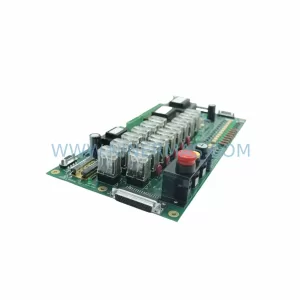
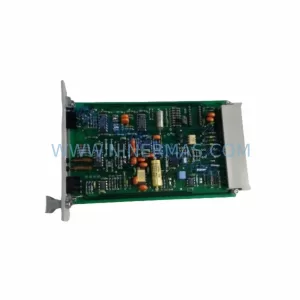
More Philips modules in the catalog.
Use the brand lane to compare nearby part numbers, platform-adjacent modules, and other inquiry-ready listings before sending your final RFQ.
Catalog Continuation
Alternative parts within TSI & Rotating Machinery Monitoring.
Stay inside the same system family when you need substitutes, adjacent modules, or a broader shortlist for procurement review.
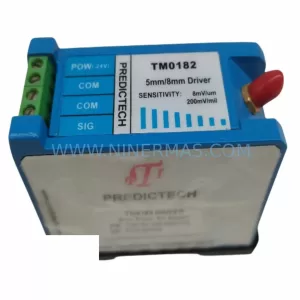
SKU: TM0181-A40-B01
PROVIBTECH TM0181-A40-B01 Safety-Reliable Vibration Monitor
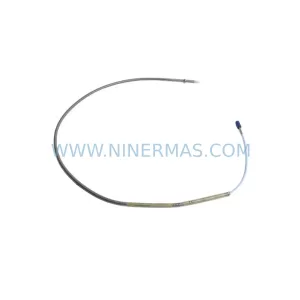
SKU: 330904-00-08-10-01-00
Bently Nevada 330904-00-08-10-01-00 Safety-Reliable Proximity Transducer
SKU: 330881-16-00-200-06-02
Bently Nevada 330881-16-00-200-06-02 Service-Ready Spare Part