Original Industrial Spare Part
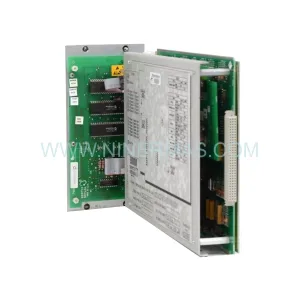
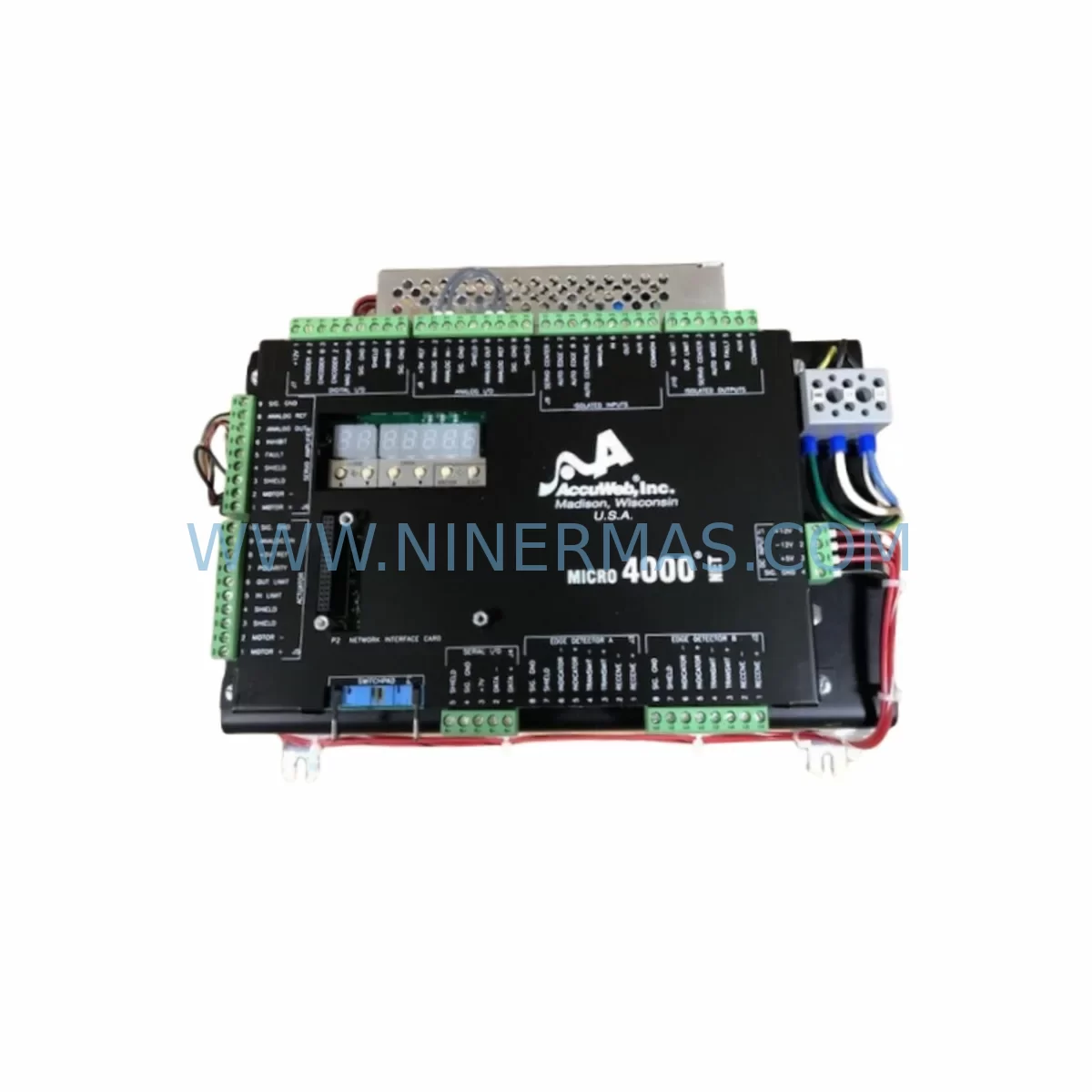
ACCUWEB MICRO CTL4100-01 Retrofit-Compatible Controller for Legacy Systems
Verify the part, confirm the platform family, and move straight into quotation with the right commercial details.
RFQ Ready
- SKUCTL4100-01
- CategoryPLC & Industrial Automation Modules
- BrandACCUWEB MICRO
- SupportAvailability, lead time, condition, and shipping coordination
How Buyers Usually Use This Page
- Confirm the exact part number and platform family before sending the quote request.
- Use direct email when quantity, condition, and destination are already defined internally.
- Switch to the broader brand or category archive when you need alternates nearby.
Series Navigation
Move through the most common platform families behind this part.
Product RFQ
Send this part directly for quotation.
Include quantity, required condition, destination country, and target delivery timing. Current reference: ACCUWEB MICRO CTL4100-01 Retrofit-Compatible Controller for Legacy Systems with SKU CTL4100-01.
ACCUWEB MICRO CTL4100-01 Retrofit-Compatible Controller for Legacy Systems
The ACCUWEB MICRO CTL4100-01 is a retrofit-compatible industrial controller engineered to serve as a reliable drop-in replacement for aging and discontinued control system components. Designed for system integrators, maintenance engineers, and plant automation teams managing legacy infrastructure, the CTL4100-01 delivers seamless compatibility with existing backplane architectures, terminal wiring layouts, and communication protocols — minimizing engineering rework and dramatically reducing planned downtime during system migration.
As industrial facilities face increasing pressure to extend the operational life of legacy control platforms while managing obsolescence risk, the CTL4100-01 provides a proven upgrade path. Whether you are replacing a failed controller in a continuous production line, modernizing a control cabinet in a petrochemical plant, or restoring a decommissioned automation cell, this unit is pre-tested, in-stock, and backed by a 12-month warranty.
Upgrade Compatibility Table
| Parameter | Specification / Notes |
|---|---|
| Model | CTL4100-01 |
| Brand | ACCUWEB MICRO |
| Product Type | Industrial Controller / Retrofit Module |
| Backplane Interface | Compatible with ACCUWEB MICRO CTL-series rack and backplane systems |
| Communication Compatibility | RS-232, RS-485; legacy serial protocol support for existing HMI and SCADA links |
| Power Supply Requirement | 24 VDC nominal; verify existing PSU capacity before installation |
| I/O Compatibility | Compatible with existing discrete and analog I/O modules in CTL4100-series racks |
| Installation Footprint | Direct slot replacement; confirm rack slot width and depth before ordering |
| Program Compatibility | Supports existing ladder logic and function block programs; verify firmware revision |
| Operating Temperature | 0°C to 55°C |
| Protection Rating | IP20 (panel-mount installation) |
| Condition | Original, new or refurbished; fully tested prior to shipment |
| Warranty | 12 Months from date of shipment |
| Origin | USA |
Retrofit Planning for Existing Automation Systems
Successful retrofit of the CTL4100-01 into an existing control system requires a structured pre-installation review. Before removing the legacy controller, engineers should document the current rack slot assignment, terminal block wiring, and module address configuration. The CTL4100-01 is designed to occupy the same physical slot as its predecessor, but confirming the backplane connector pinout against the original wiring diagram is essential to avoid signal mismatches.
Power supply capacity is a critical checkpoint. The existing ACCUWEB MICRO PSU4100 or equivalent 24 VDC power supply module should be verified to deliver sufficient current for the replacement controller plus all connected I/O modules. If the original PSU is operating near its rated capacity, consider upgrading to a higher-rated unit before commissioning the CTL4100-01.
Communication continuity is equally important. If the legacy system uses an ACCUWEB MICRO COM4100 serial communication module or a third-party RS-485 gateway to link the controller to an HMI or SCADA system, the replacement CTL4100-01 must be configured with matching baud rate, parity, and station address settings. Failure to replicate these parameters will result in communication loss between the controller and upstream supervisory systems.
For facilities using ACCUWEB MICRO AI4100 analog input modules or DI4100 discrete input modules, the I/O module addresses must be re-confirmed after controller replacement. Some legacy platforms auto-assign addresses based on slot position; others require manual configuration via DIP switches or software tools. Verify the address map against the original program before energizing the system.
If the control cabinet includes a signal isolator or surge protection device on field wiring terminals, inspect these components during the retrofit. Aging surge suppressors on 4–20 mA loops or digital I/O lines may have degraded protection capacity and should be replaced alongside the controller to ensure long-term signal integrity. Similarly, any terminal block assemblies showing signs of corrosion or loose connections should be refurbished during the planned outage window.
For systems with an integrated ACCUWEB MICRO HMI panel or third-party operator interface, the HMI screen database and tag address mapping must be validated against the replacement controller’s register layout. In many legacy retrofit projects, minor tag address offsets between controller revisions require HMI screen updates before the system can be returned to normal operation.
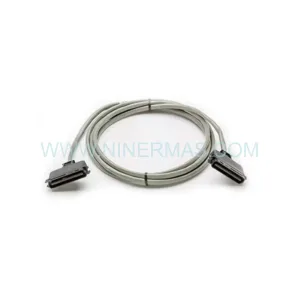
Where the original system includes a programming cable or USB-to-serial adapter for on-site program upload, confirm compatibility with the CTL4100-01 firmware before the maintenance window. Having a verified backup of the original program on a dedicated engineering laptop — with the correct programming software version installed — is a non-negotiable prerequisite for any controller swap.
Downtime Control During System Migration
Minimizing unplanned downtime is the primary objective of any legacy controller replacement project. For the CTL4100-01 retrofit, a structured migration plan should include a pre-outage simulation phase, a controlled switchover window, and a post-commissioning verification checklist.
During the pre-outage phase, the replacement CTL4100-01 should be bench-tested with a copy of the production program loaded and all I/O modules simulated. This confirms that the unit powers up correctly, communicates with the programming tool, and executes the control logic without faults before it enters the plant environment.
The controlled switchover window should be scheduled during a planned maintenance period or low-production interval. The sequence should follow a defined procedure: de-energize the control cabinet, remove the legacy controller, install the CTL4100-01, restore power, verify communication links, confirm I/O status, and execute a controlled program start. Each step should be signed off by the responsible engineer before proceeding to the next.
Post-commissioning verification should include a full I/O scan, a communication link test to all connected HMI and SCADA nodes, and a timed observation period under normal production load. Any anomalies in scan time, output response, or communication latency should be investigated before the system is released to full production. With proper preparation, the CTL4100-01 retrofit can be completed within a single planned maintenance shift, protecting production continuity and reducing the risk of extended unplanned outages.
Retrofit Support FAQ
Q1: Is the CTL4100-01 a direct replacement for the original ACCUWEB MICRO CTL4100-01?
Yes. The CTL4100-01 is sourced as an original ACCUWEB MICRO component and is designed for direct slot replacement in compatible CTL4100-series racks. Physical dimensions, backplane connector, and firmware architecture are consistent with the original specification. Minor firmware revision differences may exist; confirm the revision level with our technical team before ordering if your application has strict firmware dependencies.
Q2: What pre-installation checks are required before swapping the controller?
Before installation, verify: (1) rack slot compatibility and physical clearance, (2) power supply current capacity, (3) communication port settings (baud rate, parity, station address), (4) I/O module address map, and (5) program backup availability. Our technical team can provide a pre-installation checklist specific to your system configuration upon request.
Q3: Does the CTL4100-01 ship with an outgoing quality test report?
Yes. Every CTL4100-01 unit undergoes functional testing prior to shipment. A test report confirming power-on, communication, and I/O response is available upon request. Units are shipped in anti-static packaging with protective end caps to prevent transit damage.
Q4: What warranty and long-term supply support is available?
The CTL4100-01 is covered by a 12-month warranty from the date of shipment, covering manufacturing defects and functional failures under normal operating conditions. NINERMAS maintains ongoing inventory of CTL4100-series components to support long-term spare parts programs. Contact our team to discuss blanket order arrangements or consignment stock agreements for high-criticality applications.
| Product Series | Legacy |
|---|
Catalog Continuation
Alternative parts within PLC & Industrial Automation Modules.
Stay inside the same system family when you need substitutes, adjacent modules, or a broader shortlist for procurement review.
SKU: SCE906A2-002-01 SCE906A200201
Pacific Scientific SCE906A2-002-01 Retrofit Servo Amplifier
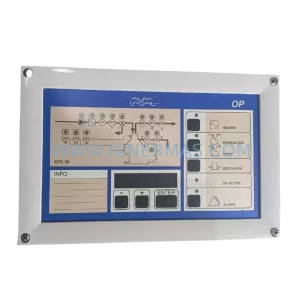
SKU: EPC500 3183062451
Alfa Laval EPC500 3183062451 Service-Ready Spare Part