Original Industrial Spare Part
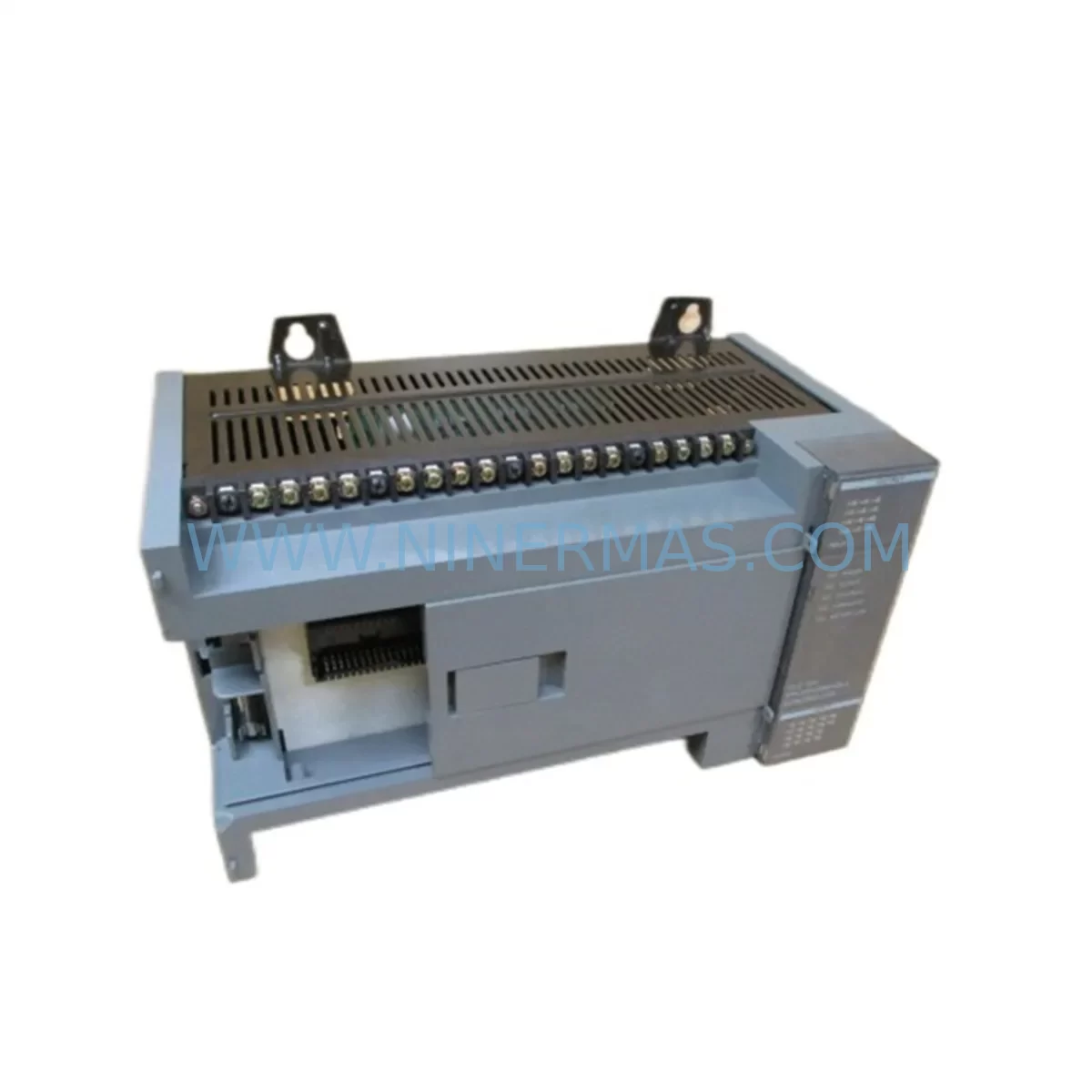
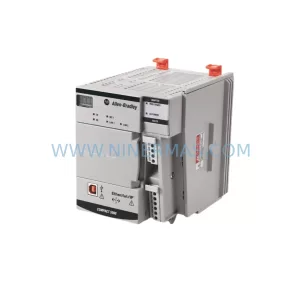
AB 1747-L30C Safety-Reliable CPU for Critical Control Sites
Verify the part, confirm the platform family, and move straight into quotation with the right commercial details.
RFQ Ready
- SKU1747-L30C
- CategorySIS Safety & Redundancy Systems
- BrandAllen-Bradley
- SupportAvailability, lead time, condition, and shipping coordination
How Buyers Usually Use This Page
- Confirm the exact part number and platform family before sending the quote request.
- Use direct email when quantity, condition, and destination are already defined internally.
- Switch to the broader brand or category archive when you need alternates nearby.
Series Navigation
Move through the most common platform families behind this part.
Product RFQ
Send this part directly for quotation.
Include quantity, required condition, destination country, and target delivery timing. Current reference: AB 1747-L30C Safety-Reliable CPU for Critical Control Sites with SKU 1747-L30C.
AB 1747-L30C Safety-Reliable CPU for Critical Control Sites
The Allen-Bradley 1747-L30C is a Series C CPU module for the SLC 500 programmable logic controller platform — one of the most widely deployed control architectures in continuous manufacturing, utilities, and process-critical industries. Designed to deliver consistent, uninterrupted control logic execution, the 1747-L30C is engineered to maintain reliable operation in environments where control interruption, signal drift, or unexpected shutdowns carry serious safety and operational consequences.
At NINERMAS, every 1747-L30C unit is sourced from verified supply channels, subjected to pre-shipment functional testing, and backed by a 12-month warranty. Whether you are replacing a failed CPU in an active production line or building a spare inventory strategy for aging SLC 500 infrastructure, the 1747-L30C provides the control continuity your facility demands.
Safety Reliability Table
| Parameter | Specification / Detail |
|---|---|
| SKU / Part Number | 1747-L30C |
| Brand / Manufacturer | Allen-Bradley (Rockwell Automation) |
| Series | SLC 500 Series C |
| Module Type | CPU / Processor Module |
| Memory | 4K Words User Program Memory |
| I/O Capacity | Up to 960 I/O points (with expansion) |
| Communication Port | RS-232 DH-485 compatible |
| Operating Temperature | 0°C to 60°C (32°F to 140°F) |
| Humidity Tolerance | 5% to 95% non-condensing |
| EMI / Noise Immunity | Designed for industrial electromagnetic environments |
| Mounting | SLC 500 modular chassis (1746 series) |
| Safety Relevance | Hardened for continuous-duty and interlock-critical applications |
| Warranty | 12 Months — NINERMAS Quality Guarantee |
| Pre-Shipment Testing | Full functional verification before dispatch |
| Stock Availability | In stock — ready for immediate shipment |
Control Cabinet Risk Reduction Strategy
In critical control cabinets, the 1747-L30C CPU does not operate in isolation. Its reliability is directly tied to the quality and condition of every component sharing the same chassis and power distribution network. When deploying or replacing the 1747-L30C, engineers should evaluate the full control cabinet ecosystem to eliminate compounding failure risks.
The 1746-P2 power supply module is the most common companion to the 1747-L30C in SLC 500 modular chassis configurations. Power supply degradation is a leading cause of CPU resets and logic faults in aging control cabinets — replacing the 1746-P2 alongside the CPU during a planned maintenance window significantly reduces the risk of nuisance trips and unplanned downtime. For larger chassis configurations, the 1746-P4 provides higher current capacity and is recommended when I/O expansion modules are densely populated.
The chassis itself — typically a 1746-A4, 1746-A7, or 1746-A13 depending on slot count — should be inspected for backplane connector wear, corrosion, and mechanical damage. A compromised backplane can introduce intermittent communication faults between the CPU and I/O modules that are difficult to diagnose under live production conditions.
On the I/O side, digital input modules such as the 1746-IB16 and digital output modules such as the 1746-OB16 are frequently paired with the 1747-L30C in discrete control applications. In environments with high electromagnetic interference — such as those near variable frequency drives, large motor starters, or welding equipment — analog I/O modules like the 1746-NI4 may exhibit signal drift if shielding and grounding practices are not maintained. Verifying signal integrity across all analog channels before and after a CPU replacement is a critical commissioning step.
For facilities that rely on DH-485 network communication, the 1747-AIC Advanced Interface Converter is essential for linking the 1747-L30C to multi-drop DH-485 networks. Communication link integrity should be verified after any CPU swap, as address conflicts or baud rate mismatches can cause network-wide disruptions in multi-node architectures. Where DeviceNet or ControlNet integration is required, scanner modules must be re-initialized following CPU replacement to restore network mapping.
Programming and firmware verification require a compatible interface cable — the 1747-UIC USB-to-DH-485 interface cable is the standard tool for connecting RSLogix 500 programming software to the 1747-L30C. Before going live after a CPU replacement, engineers should upload the existing program from backup, verify all rung logic, confirm I/O forcing is cleared, and perform a controlled test cycle to validate interlock behavior.
Signal isolation is another risk factor in high-noise environments. Installing signal isolators or surge protection devices on critical analog input channels protects the CPU and I/O modules from voltage transients caused by lightning, motor switching, or ground loops — all of which can cause latent damage that manifests as intermittent faults weeks after the initial event.
Critical Industrial Safety Applications
The 1747-L30C has a proven deployment history across industries where control system failure carries consequences beyond production loss. In petrochemical and refinery operations, SLC 500 systems running on 1747-L30C CPUs manage pump sequencing, valve control, and emergency shutdown interlock logic. The CPU’s deterministic scan cycle behavior is essential for maintaining interlock response times within safety-critical tolerances.
In electric power generation and distribution facilities, the 1747-L30C is used in auxiliary control systems for cooling, lubrication, and fuel handling — applications where a control fault can cascade into equipment damage or forced outage. Its tolerance for wide temperature ranges and resistance to conducted electrical noise make it suitable for switchgear rooms and substation environments.
In mining and mineral processing, the 1747-L30C controls conveyor systems, crusher interlocks, and slurry pump stations — environments characterized by heavy vibration, dust ingress, and high ambient temperatures. Proper enclosure selection (NEMA 12 or IP54 minimum) combined with a well-maintained 1747-L30C CPU provides the operational stability these sites require.
Water and wastewater treatment facilities rely on SLC 500 platforms for pump station control, chemical dosing, and SCADA integration. The 1747-L30C’s DH-485 communication capability allows it to interface with SCADA systems and HMI panels — such as PanelView terminals — for remote monitoring of critical process variables. In these applications, maintaining a spare 1747-L30C on-site is standard practice to minimize recovery time following an unplanned failure.
In port and material handling operations, the 1747-L30C manages crane control logic, conveyor routing, and load interlock systems. The ability to quickly restore control logic from a verified program backup after a CPU replacement is critical to minimizing cargo handling disruption.
Safety and Quality FAQ
Q1: What warranty does NINERMAS provide for the 1747-L30C?
Every 1747-L30C supplied by NINERMAS is covered by a 12-month warranty from the date of shipment. If the unit fails under normal operating conditions within the warranty period, NINERMAS will provide a replacement or repair at no additional cost.
Q2: How is the 1747-L30C tested before shipment?
Each unit undergoes pre-shipment functional verification to confirm power-up behavior, communication port operation, and module recognition. Units that do not pass testing are not dispatched. Test records are available upon request for quality-critical procurement processes.
Q3: Is the 1747-L30C compatible with existing SLC 500 chassis and I/O modules?
Yes. The 1747-L30C is fully compatible with the 1746 series modular chassis and all standard SLC 500 I/O modules. It is also compatible with RSLogix 500 programming software. Customers migrating from Series A or Series B CPUs should verify program file compatibility and confirm that any Series-specific features are addressed before going live.
Q4: Can NINERMAS support long-term supply for the 1747-L30C?
Yes. NINERMAS maintains inventory of the 1747-L30C and related SLC 500 components to support customers with ongoing spare parts programs, planned maintenance schedules, and emergency replacement needs. Contact our team to discuss volume pricing and reserved stock arrangements.
| Product Series | SLC 500 |
|---|---|
| Country of Origin | US |
Catalog Continuation
More Allen-Bradley modules in the catalog.
Use the brand lane to compare nearby part numbers, platform-adjacent modules, and other inquiry-ready listings before sending your final RFQ.
Catalog Continuation
Alternative parts within SIS Safety & Redundancy Systems.
Stay inside the same system family when you need substitutes, adjacent modules, or a broader shortlist for procurement review.