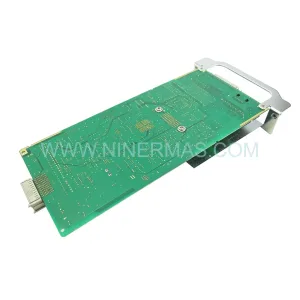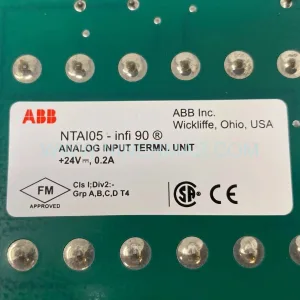
Original Industrial Spare Part
Kinway 8667H00226 Retrofit-Compatible Module for Legacy Systems
Verify the part, confirm the platform family, and move straight into quotation with the right commercial details.
RFQ Ready
- SKU8667H00226 JPN1-0PL4-P5M6-9667-1WR1
- CategoryPLC & Industrial Automation Modules
- BrandKinway
- SupportAvailability, lead time, condition, and shipping coordination
How Buyers Usually Use This Page
- Confirm the exact part number and platform family before sending the quote request.
- Use direct email when quantity, condition, and destination are already defined internally.
- Switch to the broader brand or category archive when you need alternates nearby.
Series Navigation
Move through the most common platform families behind this part.
Product RFQ
Send this part directly for quotation.
Include quantity, required condition, destination country, and target delivery timing. Current reference: Kinway 8667H00226 Retrofit-Compatible Module for Legacy Systems with SKU 8667H00226 JPN1-0PL4-P5M6-9667-1WR1.
Kinway 8667H00226 Retrofit-Compatible Module for Legacy Systems: Seamless Upgrade for Aging Industrial Control Infrastructure
The Kinway 8667H00226 (JPN1-0PL4-P5M6-9667-1WR1) is a retrofit-ready industrial control module engineered specifically to address the growing challenge of maintaining and modernizing legacy automation systems. As production lines built around discontinued JPN1 series platforms approach end-of-life, maintenance engineers and system integrators face mounting pressure to source verified replacement components that preserve existing program logic, minimize downtime, and extend the operational lifespan of installed control cabinets. The 8667H00226 is designed to meet that demand directly — offering a drop-in compatible upgrade path without requiring full system redesign.
This module is stocked and pre-shipment tested at our warehouse, backed by a 12-month warranty, and available for immediate dispatch to global destinations. Whether you are managing a single-machine retrofit or a multi-line control cabinet upgrade across a manufacturing facility, the 8667H00226 provides the reliability and compatibility assurance that critical automation environments require.
Upgrade Compatibility Table
| Parameter | Legacy JPN1 Reference | 8667H00226 Specification | Retrofit Notes |
|---|---|---|---|
| Backplane Interface | JPN1-BP08 / JPN1-BP16 | Compatible — same slot pitch and connector pinout | No backplane replacement required in most installations |
| Power Supply Requirement | 24 VDC via JPN1-PSU-24V | 24 VDC nominal (18–30 VDC range) | Verify existing PSU capacity before installation; add JPN1-PSU-24V-R if load budget is marginal |
| Communication Protocol | Proprietary JPN1 bus / RS-485 | JPN1 bus + optional Ethernet via JPN1-COM-ETH adapter | Ethernet migration supported; existing RS-485 wiring retained |
| Module Address | DIP switch or software-assigned | Software-assigned via JPN1-CPU01 configuration tool | Re-assign address in PLC project file before first scan |
| I/O Compatibility | JPN1-DI16 / JPN1-DO16 / JPN1-AI08 | Full I/O bus compatibility confirmed | No I/O rewiring required; terminal block layout unchanged |
| HMI Integration | JPN1-HMI-7 (7-inch panel) | Tag-compatible; no screen redraw required | Verify tag names in HMI project match updated PLC variable table |
| Installation Footprint | Standard JPN1 single-slot | Single-slot — identical DIN rail and panel mount dimensions | No cabinet modification required |
| Program Compatibility | JPN1 Ladder / FBD projects | Full compatibility with existing project files | Upload original program backup before replacement; validate all rungs post-swap |
| Pre-Shipment Testing | — | 100% functional test performed | Test report available on request |
| Warranty | — | 12 months from date of shipment | Covers manufacturing defects; excludes physical damage |
Retrofit Planning for Existing Automation Systems
A successful retrofit of the Kinway 8667H00226 into an existing JPN1-series control system begins well before the module arrives on site. Experienced maintenance engineers know that the physical swap is only one element of a broader migration process that must account for power budgets, terminal wiring, communication links, program integrity, and HMI screen consistency.
Start by auditing the existing control cabinet. Confirm that the installed JPN1-PSU-24V power supply has sufficient current headroom to support the 8667H00226 alongside other active modules such as the JPN1-DI16 digital input card, JPN1-DO16 digital output card, and JPN1-AI08 analog input module. If the power budget is tight — a common situation in cabinets that have been expanded incrementally over years — consider adding a supplementary JPN1-PSU-24V-R redundant power supply before proceeding with the module swap.
Next, photograph and document all terminal block wiring connected to the module being replaced. The JPN1 series uses a consistent terminal block layout across generations, so in most cases the 8667H00226 can be wired directly from the existing documentation. However, field conditions vary: wire labels may have faded, and undocumented field modifications are common in long-running installations. Take the time to verify each signal before powering up.
For systems that have been running on the legacy RS-485 communication bus, the 8667H00226 supports the existing protocol natively. If your migration roadmap includes a future move to Ethernet-based communication, the optional JPN1-COM-ETH communication module can be added to the same backplane — either the JPN1-BP08 (8-slot) or JPN1-BP16 (16-slot) — without disrupting the existing RS-485 network during the transition period. This phased approach allows production to continue while the new communication infrastructure is validated in parallel.
Before removing the legacy module, use the JPN1-CBL-USB programming cable to connect to the JPN1-CPU01 main controller and create a full backup of the current PLC project. Store this backup in at least two locations. After installing the 8667H00226 and reassigning the module address through the CPU configuration tool, restore the program and perform a complete I/O force test to confirm that all field signals are reading and writing correctly. Pay particular attention to analog channels served by the JPN1-AI08 — scaling parameters and filter settings must be verified against the original configuration.
Finally, validate the HMI layer. If the facility uses a JPN1-HMI-7 operator panel, open the HMI project and confirm that all tag bindings referencing the replaced module are resolving correctly. In most cases, because the 8667H00226 maintains tag-level compatibility with the JPN1 series, no screen modifications are required. However, if the original module had custom function blocks or library elements, verify that these are present in the restored project before returning the line to production. For installations using 4-channel signal isolators such as the JPN1-ISO-4CH between field instruments and the control system, confirm that isolator output ranges still match the module’s input specifications after the swap.
Downtime Control During System Migration
Minimizing unplanned downtime is the primary concern for any maintenance team undertaking a control system retrofit. The 8667H00226 is designed to support a structured, low-risk migration approach that keeps production interruption to an absolute minimum.
The recommended practice is to schedule the physical module swap during a planned maintenance window — ideally a shift changeover or scheduled preventive maintenance stop. Because the 8667H00226 is dimensionally identical to the legacy JPN1 module it replaces, the mechanical swap itself typically takes under 15 minutes. The majority of the migration time is spent on pre-swap preparation: program backup, terminal documentation, and power budget verification — all of which can be completed while the line is still running.
Once the module is installed and the program is restored, perform a controlled startup sequence: energize the control cabinet, allow the JPN1-CPU01 to complete its initialization scan, and monitor the diagnostic LEDs on the 8667H00226 for any fault indications before enabling field outputs. If the system includes safety interlocks or emergency stop circuits, verify these independently before resuming automatic operation.
For facilities that cannot tolerate any unplanned interruption, consider maintaining a pre-configured spare 8667H00226 on the shelf — pre-addressed and pre-tested — so that in the event of an unexpected module failure, the swap can be completed in minutes rather than hours. Our warehouse maintains standing inventory of the 8667H00226 with typical lead times of 3–7 business days for standard orders, and same-day dispatch available for urgent requirements.
Retrofit Support FAQ
Q1: Is the 8667H00226 a direct drop-in replacement for the original JPN1-0PL4-P5M6-9667-1WR1 module?
Yes. The 8667H00226 is designed as a form-fit-function compatible replacement for the JPN1-0PL4-P5M6-9667-1WR1. It uses the same backplane connector, occupies the same single-slot footprint, and is compatible with existing JPN1 series PLC project files. No hardware modifications to the cabinet or backplane are required in standard installations.
Q2: What commissioning steps are required after installing the 8667H00226?
After physical installation, you will need to: (1) assign the module address via the JPN1-CPU01 configuration tool using the JPN1-CBL-USB programming cable; (2) restore the PLC program from your pre-swap backup; (3) perform an I/O force test to verify all field signals; and (4) validate HMI tag bindings on the JPN1-HMI-7 or equivalent operator panel. Full commissioning typically takes 30–90 minutes depending on system complexity.
Q3: Has the 8667H00226 been tested before shipment, and what warranty is provided?
Every 8667H00226 unit undergoes a 100% functional pre-shipment test at our facility. A test report is available on request. The module is covered by a 12-month warranty from the date of shipment, covering manufacturing defects. Warranty claims are processed with a target response time of 48 hours, and replacement units are dispatched from stock to minimize your downtime.
Q4: What is the typical lead time, and do you maintain ongoing inventory?
We maintain dedicated stock of the 8667H00226 to support urgent maintenance and planned retrofit projects. Standard orders are dispatched within 1–3 business days. For large-quantity or long-term supply agreements, we offer reserved inventory arrangements to guarantee availability over your project timeline. Contact our team to discuss your specific requirements.
| Product Series | Legacy |
|---|
Catalog Continuation
Alternative parts within PLC & Industrial Automation Modules.
Stay inside the same system family when you need substitutes, adjacent modules, or a broader shortlist for procurement review.