Original Industrial Spare Part
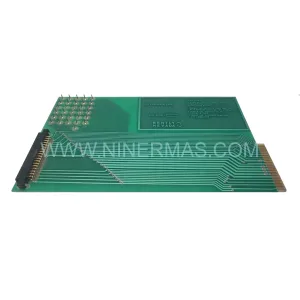
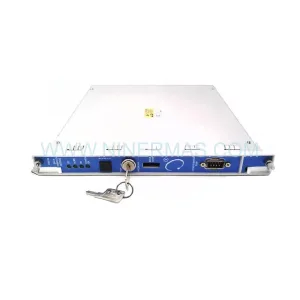
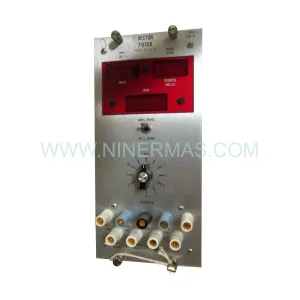
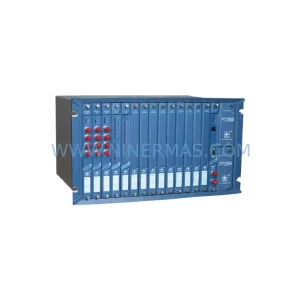
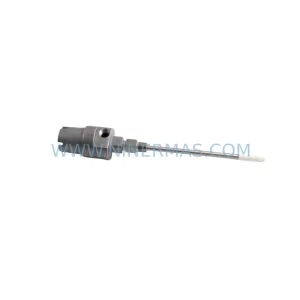
ProvibTech PT2060/10 Retrofit-Compatible Proximity Module
Verify the part, confirm the platform family, and move straight into quotation with the right commercial details.
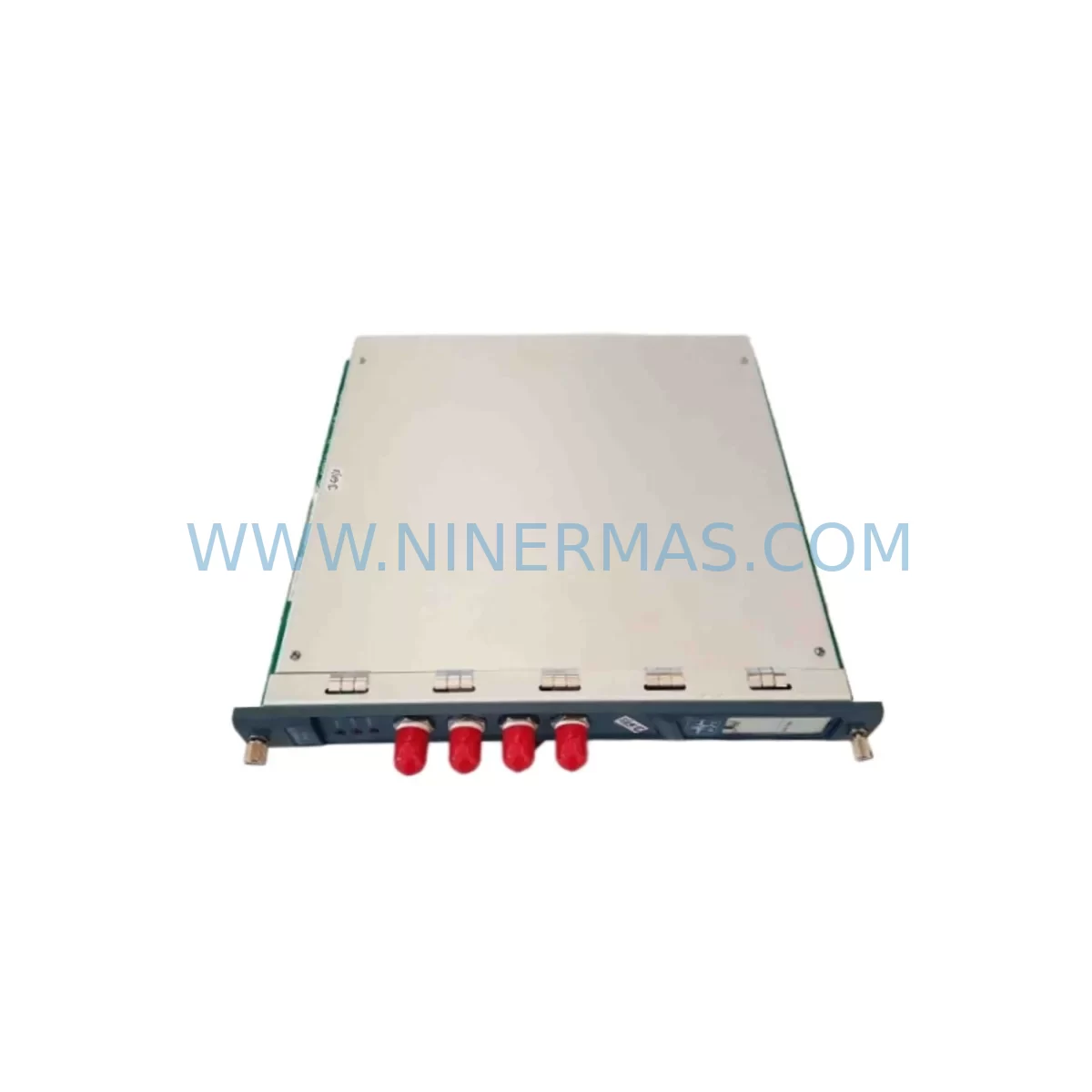
RFQ Ready
- SKUPT2060/10
- CategoryTSI & Rotating Machinery Monitoring
- BrandProvibTech
- SupportAvailability, lead time, condition, and shipping coordination
How Buyers Usually Use This Page
- Confirm the exact part number and platform family before sending the quote request.
- Use direct email when quantity, condition, and destination are already defined internally.
- Switch to the broader brand or category archive when you need alternates nearby.
Series Navigation
Move through the most common platform families behind this part.
Product RFQ
Send this part directly for quotation.
Include quantity, required condition, destination country, and target delivery timing. Current reference: ProvibTech PT2060/10 Retrofit-Compatible Proximity Module with SKU PT2060/10.
ProvibTech PT2060/10 Retrofit-Compatible Proximity Module for Legacy Systems
The ProvibTech PT2060/10 is a proximity module engineered for industrial vibration monitoring applications, widely deployed in rotating machinery protection systems across power generation, petrochemical, and heavy manufacturing facilities. As legacy PT2060 series installations approach end-of-life or require expansion, the PT2060/10 serves as the authoritative retrofit-compatible replacement module, enabling plant engineers and maintenance teams to extend system service life without committing to a full platform migration. NINERMAS maintains verified in-stock inventory of the PT2060/10 with a 12-month warranty on every unit shipped, supporting both emergency breakdown replacements and planned outage upgrades.
The PT2060/10 proximity module interfaces directly with eddy-current proximity probes and extension cables to deliver continuous shaft displacement and radial vibration signals to the monitoring rack. In retrofit scenarios, the module is commonly installed alongside the PT2060/20 signal conditioner and PT2060/30 power supply module within the same PT2060 series rack chassis, preserving the original backplane wiring and minimizing re-engineering effort. Before installation, engineers must confirm the existing rack slot assignment, verify the 24 VDC or 18–30 VDC supply rail capacity, and check that the probe gap voltage is within the –10 VDC to –18 VDC linear range specified for the PT2060/10 input circuit.
Terminal wiring compatibility is a critical checkpoint during any PT2060/10 retrofit. The module uses a standard 9-pin terminal block arrangement for probe positive, probe negative, and shield connections. When replacing an older proximity input card from a different manufacturer or an earlier ProvibTech generation, technicians should map the existing field cable terminations against the PT2060/10 terminal diagram before powering the rack. Incorrect shield grounding at the junction box or at the rack terminal can introduce noise that masks real vibration events or triggers nuisance trips on the connected DCS or safety instrumented system.
Upgrade Compatibility Table
| Parameter | PT2060/10 Specification | Retrofit / Replacement Notes |
|---|---|---|
| Input Signal | Eddy-current proximity probe, –10 to –18 VDC gap range | Verify probe gap voltage before power-up; re-gap if replacing probe driver |
| Power Supply | 24 VDC nominal (18–30 VDC range) | Confirm PT2060/30 or equivalent PSU rail capacity; add load margin for additional modules |
| Rack / Backplane | PT2060 series rack chassis, standard backplane connector | Compatible with existing PT2060 rack; confirm slot address DIP switch setting matches system configuration |
| Output Signal | 4–20 mA and buffered voltage output | Map output wiring to DCS analog input card; verify loop impedance within spec |
| Communication | Hardwired analog; no fieldbus protocol required | No protocol migration needed; compatible with existing 4–20 mA DCS input channels |
| Alarm / Trip Relay | Configurable alert and danger relay outputs | Re-verify relay setpoints in monitoring software after module swap; do not assume setpoints are retained |
| Installation Space | Single-slot module, standard PT2060 rack form factor | No additional panel space required for like-for-like slot replacement |
| Commissioning | Gap voltage adjustment, setpoint verification, loop calibration | Perform full loop check and trip test before returning machine to service |
| Warranty | 12-Month Warranty — all PT2060/10 units shipped by NINERMAS are covered for 12 months from delivery date | |
Retrofit Planning for Existing Automation Systems
A successful PT2060/10 retrofit begins well before the maintenance window opens. The first step is a rack audit: document every occupied slot in the PT2060 chassis, record the module type, firmware revision where applicable, and the field cable tag number connected to each terminal. This audit prevents wiring errors during the swap and provides a baseline for post-installation verification. In systems where the PT2060 rack shares a control cabinet with a PLC or DCS — such as a Siemens S7-300 CPU or an Allen-Bradley ControlLogix chassis — the proximity module’s analog output wiring must be traced back to the specific analog input card channel to confirm the engineering unit scaling has not drifted.
Power budget verification is non-negotiable. The PT2060/30 power supply module has a defined maximum load current for the rack bus. Adding a replacement PT2060/10 to a rack that is already near capacity — particularly in systems that have been expanded with additional PT2060/20 signal conditioner cards or PT2060/40 I/O interface modules — can push the supply into thermal derating. Calculate the total module current draw before the outage and confirm headroom of at least 20% above the measured load.
For facilities migrating from older vibration monitoring platforms to the PT2060 series, the transition often involves parallel operation during a commissioning period. The new PT2060/10 proximity module can be installed in a spare rack slot and wired to a T-junction on the existing probe cable, allowing engineers to compare readings between the legacy channel and the new module before cutting over. This approach is particularly valuable when the legacy system feeds a safety instrumented function, as it allows the SIS logic to remain active on the proven channel while the replacement is validated. During this period, the PT2060/10 output should be connected to a spare DCS analog input and monitored through the HMI historian to confirm signal quality and alarm threshold alignment.
HMI screen updates are frequently overlooked in proximity module retrofits. If the existing operator interface displays channel-specific diagnostic data — such as gap voltage, peak-to-peak amplitude, or 1X/2X vibration vectors from a companion PT2060/50 vector filter card — the HMI tag database must be updated to reflect any changes in channel addressing or scaling introduced by the new module. Failure to update HMI tags can result in operators seeing stale or incorrectly scaled data, which undermines the value of the upgrade. Coordinate with the control system integrator to update both the DCS configuration and the HMI graphics before the system is returned to normal operation.
Communication link integrity should also be verified where the PT2060 rack connects to a plant asset management system via a serial or Ethernet gateway. Some installations use a ProvibTech communication interface module to forward vibration data to a SCADA historian or condition monitoring platform. After replacing the PT2060/10, confirm that the gateway is still polling the correct rack address and that the data quality flags in the historian show valid readings within the expected engineering unit range.
Downtime Control During System Migration
Minimizing unplanned downtime is the primary driver behind stocking retrofit-compatible modules like the PT2060/10. When a proximity channel fails on a critical machine train — a compressor, turbine, or pump protected by a vibration trip — the monitoring system may force a machine shutdown or, worse, continue running with a bypassed channel that provides no protection. Having a verified replacement PT2060/10 on the shelf eliminates the lead time risk associated with ordering from the original manufacturer, which for discontinued or slow-moving modules can extend to weeks or months.
To protect the original program logic during a module swap, document the existing relay setpoints, time delays, and any custom scaling factors configured in the monitoring rack before removing the failed module. Many PT2060 series installations store setpoint data in non-volatile memory within the individual module, meaning that a replacement unit will revert to factory defaults and must be reconfigured on-site. Prepare a commissioning checklist that covers gap voltage measurement, alert and danger setpoint entry, relay output verification, and a witnessed trip test before the machine is restarted.
Field continuity during the swap can be maintained by temporarily bypassing the affected channel in the DCS or SIS logic — with appropriate management of change documentation and operator awareness — while the physical replacement is completed. The bypass should be time-limited and removed immediately after the PT2060/10 is commissioned and the trip test is passed. This approach keeps the machine running on the remaining protection channels while the failed module is replaced, reducing the production impact of the maintenance event to the minimum time required for physical installation and commissioning rather than the full machine shutdown duration.
NINERMAS ships PT2060/10 units with pre-shipment functional testing completed. Each module is powered, the input circuit is exercised across the specified gap voltage range, and the analog output is verified against the calibration curve before packaging. This factory acceptance test reduces the risk of receiving a non-functional replacement and shortens the on-site commissioning time, which is critical when the maintenance window is measured in hours rather than days.
Retrofit Support FAQ
Q: Is the PT2060/10 a direct drop-in replacement for older proximity input modules in the PT2060 rack?
A: Yes, the PT2060/10 is designed for slot-compatible installation in the PT2060 series rack chassis. However, relay setpoints and any custom scaling configurations stored in the original module are not transferred automatically. A full recommissioning procedure — including gap voltage verification, setpoint entry, and trip test — is required after installation.
Q: What wiring changes are needed when replacing a proximity module from a different manufacturer?
A: Terminal pin assignments vary between manufacturers. Before installation, compare the field cable termination scheme of the existing module against the PT2060/10 terminal diagram. Pay particular attention to shield grounding practice: the PT2060/10 requires the cable shield to be grounded at the rack terminal only, with the field end left floating, to prevent ground loop interference.
Q: Can the PT2060/10 be used in a system that is being migrated to a newer vibration monitoring platform?
A: Yes. The PT2060/10 is well-suited for phased migration strategies where the existing PT2060 rack remains in service on non-critical channels while a new platform is commissioned on critical machine trains. The module’s standard 4–20 mA output is compatible with virtually all DCS analog input cards, making it straightforward to maintain parallel monitoring during the transition period.
Q: What does the 12-month warranty cover, and how does NINERMAS handle warranty claims?
A: All PT2060/10 units supplied by NINERMAS carry a 12-month warranty from the delivery date, covering manufacturing defects and functional failures under normal operating conditions. In the event of a warranty claim, contact NINERMAS with the order reference and a description of the failure mode. NINERMAS will arrange a replacement shipment or repair, depending on the nature of the defect, with the objective of minimizing disruption to your maintenance schedule.
| Product Series | Other series |
|---|
Catalog Continuation
More ProvibTech modules in the catalog.
Use the brand lane to compare nearby part numbers, platform-adjacent modules, and other inquiry-ready listings before sending your final RFQ.
SKU: TM0180-A08-B00-C10-D05
PROVIBTECH TM0180-A08-B00-C10-D05 Retrofit Extension Cable
SKU: TM0180-A08-B13-C20-D10
PROVIBTECH TM0180-A08-B13-C20-D10 Retrofit Proximity Probe
SKU: TM0180-A08-B00-C12-D10
PROVIBTECH TM0180-A08-B00-C12-D10 Service-Ready Spare Part
Catalog Continuation
Alternative parts within TSI & Rotating Machinery Monitoring.
Stay inside the same system family when you need substitutes, adjacent modules, or a broader shortlist for procurement review.
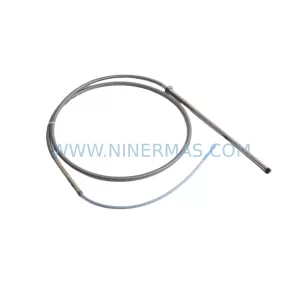
SKU: 330194-13-20-10-00
Bently Nevada 330194-13-20-10-00 Safety-Reliable Monitor for Critical Control
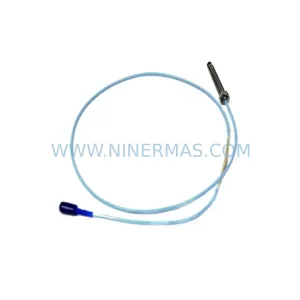
SKU: 330701-00-40-10-11-05
Bently Nevada 330701-00-40-10-11-05 Safety Vibration Monitor
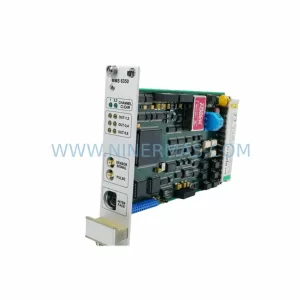
SKU: 21000-33-05-00-035-03-02
Bently Nevada 21000-33-05-00-035-03-02 Safety Relay