Original Industrial Spare Part
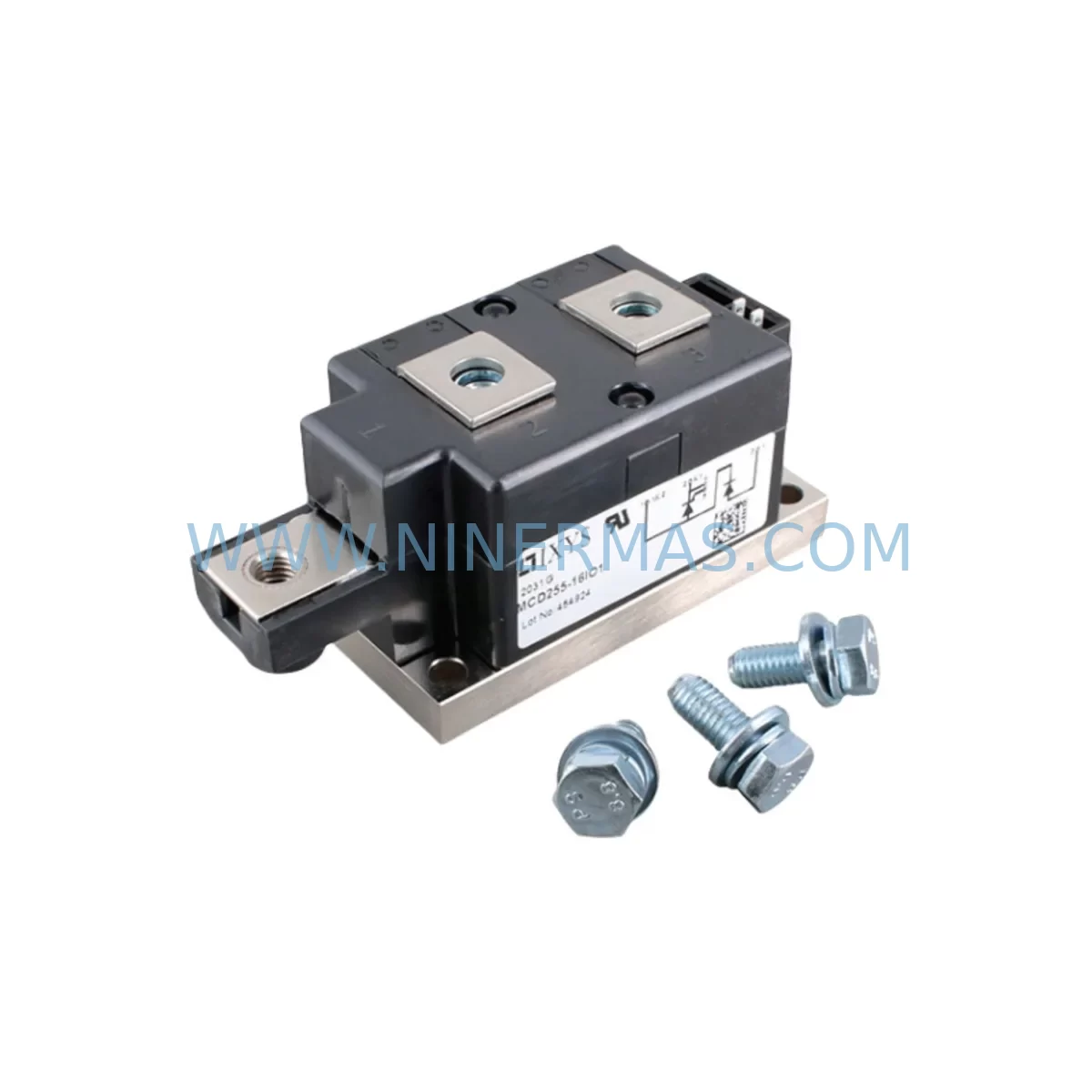
IXYX MCD255-16IO1 Service-Ready Spare Part for Industrial Maintenance
Verify the part, confirm the platform family, and move straight into quotation with the right commercial details.
RFQ Ready
- SKUMCD255-16IO1
- CategoryPLC & Industrial Automation Modules
- BrandIXYX
- SupportAvailability, lead time, condition, and shipping coordination
How Buyers Usually Use This Page
- Confirm the exact part number and platform family before sending the quote request.
- Use direct email when quantity, condition, and destination are already defined internally.
- Switch to the broader brand or category archive when you need alternates nearby.
Series Navigation
Move through the most common platform families behind this part.
Product RFQ
Send this part directly for quotation.
Include quantity, required condition, destination country, and target delivery timing. Current reference: IXYX MCD255-16IO1 Service-Ready Spare Part for Industrial Maintenance with SKU MCD255-16IO1.
IXYX MCD255-16IO1 Service-Ready Spare Part for Industrial Maintenance
The IXYX MCD255-16IO1 is a high-voltage thyristor/diode combination power module rated at 1600V, designed for demanding industrial power conversion and motor drive applications. In legacy drive systems, soft-starters, and rectifier bridges where this module has reached end-of-life or shows signs of thermal degradation, unplanned downtime can cascade rapidly across an entire production line. Sourcing a verified, original-specification MCD255-16IO1 as a service-ready spare is the single most effective measure a maintenance engineer can take to compress mean time to repair (MTTR) and restore controlled power flow without redesigning the power stage.
NINERMAS stocks the MCD255-16IO1 as an original-grade spare, pre-tested under load conditions before dispatch, and backed by a 12-month warranty covering manufacturing defects and parametric conformance. Each unit ships with full traceability documentation, enabling procurement engineers to satisfy incoming inspection requirements and IEC-compliant maintenance records.
Spare Maintenance Table
| Parameter | Specification / Detail |
|---|---|
| Part Number / SKU | MCD255-16IO1 |
| Brand | IXYX (IXYS) |
| Module Type | Thyristor / Diode Combination Module |
| Repetitive Peak Voltage (VRRM / VDRM) | 1600 V |
| Average On-State Current (IT(AV)) | 255 A |
| Package / Housing | Industry-standard flat-base power module (compatible footprint) |
| Mounting | Screw-mount to heatsink; thermal compound required |
| Gate Trigger Current (IGT) | Typ. 150 mA (thyristor section) |
| Operating Junction Temperature | –40 °C to +125 °C |
| Isolation Voltage | 3000 V RMS (base to terminal) |
| Typical Applications | AC motor soft-starters, DC drive rectifier bridges, UPS front-ends, industrial power supplies |
| Compatibility | Direct replacement for IXYS MCD255-16IO1; cross-compatible with equivalent 255A/1600V flat-base modules in same circuit topology |
| Origin | Germany (IXYS / Littelfuse manufacturing lineage) |
| Condition | Original, new — pre-tested before shipment |
| Warranty | 12 Months — manufacturing defects and parametric conformance |
| Lead Time | In-stock units ship within 2–5 business days; long-term supply available |
Maintenance Planning for Continuous Operation
When a maintenance or procurement engineer schedules replacement of the MCD255-16IO1, the surrounding power circuit deserves equal scrutiny. Thyristor/diode modules of this class operate within a tightly coupled electrical environment, and a single failed component often stresses adjacent parts beyond their rated limits.
Begin with the gate drive board and its associated pulse transformer or optocoupler driver. If the MCD255-16IO1 failed due to a misfiring event, the gate drive circuitry may have sustained overvoltage stress. Inspect and, where possible, replace the gate resistors and snubber capacitors mounted directly on the power board. The RC snubber network — typically a series resistor and film capacitor across each thyristor — absorbs dV/dt transients; aged snubber capacitors are a common root cause of nuisance firing and module degradation.
The DC bus fuses and semiconductor fuses (such as SIBA or Bussmann ultra-rapid fuses rated for the 255A current class) must be verified for continuity and replaced if they show any signs of thermal discoloration or have operated during the fault event. Semiconductor fuses are single-use protective devices and should be treated as consumables in any corrective maintenance kit.
Inspect the heatsink and thermal interface. The MCD255-16IO1 dissipates significant power at full load; a degraded thermal pad or dried thermal compound will cause junction temperatures to exceed safe limits within hours of restart. Clean the heatsink contact surface, apply fresh thermal compound, and verify that the cooling fan or liquid cooling circuit is fully operational. If the system uses a thermistor or PT100 temperature sensor embedded in the heatsink, confirm its calibration and wiring integrity.
On the AC input side, check the line reactor or AC choke for insulation resistance and inductance value. Line reactors protect the rectifier bridge from supply-side voltage spikes and limit di/dt through the thyristors during commutation. A degraded reactor increases stress on the MCD255-16IO1 and its sister modules in the bridge stack.
For systems using a firing board or SCR controller card — common in older Siemens SIMOREG, ABB DCS800, or Eurotherm 590 DC drive platforms — verify that the synchronisation signal, ramp timing, and alpha-angle control outputs are within specification. A drifted firing angle can cause asymmetric current sharing between thyristors in a six-pulse bridge, leading to premature failure of individual modules even when the MCD255-16IO1 itself is new.
Do not overlook the DC output contactor and field supply module in DC motor drive applications. Contactor contact wear causes arcing that reflects back into the power stage. The field supply — often a separate single-phase rectifier module such as an MDD or MDO series device — should be inspected for output ripple and diode integrity at the same service interval.
Finally, review the control system interface: the PLC or DCS analog output card driving the speed reference, the encoder or tachogenerator feedback module, and any I/O terminal blocks carrying enable, fault-reset, and run signals. Loose terminal connections in the control wiring are a disproportionate source of intermittent faults that are misdiagnosed as power module failures. A thorough torque-check of all terminal screws in the control cabinet, combined with insulation resistance testing of the motor armature circuit, completes a professional corrective maintenance cycle.
Site Replacement Workflow
Step 1 — Isolation and lockout/tagout (LOTO): De-energise the drive, discharge the DC bus capacitors to below 50V (verify with a calibrated meter), and apply LOTO devices to the incoming supply isolator. Allow the heatsink to cool to ambient temperature before handling the module.
Step 2 — Documentation: Photograph the existing wiring, gate connections, and busbar arrangement before removal. Record the module’s position in the bridge stack (e.g., positive thyristor, negative diode, phase U/V/W) to ensure the MCD255-16IO1 replacement is installed in the correct orientation.
Step 3 — Module removal: Disconnect the gate and cathode leads, then remove the anode and cathode busbars. Unscrew the module mounting bolts in a cross pattern to avoid warping the heatsink contact surface. Lift the module clear and inspect the heatsink for scoring or corrosion.
Step 4 — Surface preparation and installation: Clean the heatsink contact area with isopropyl alcohol. Apply a thin, uniform layer of thermal compound. Position the new MCD255-16IO1, align the mounting holes, and torque the bolts to the manufacturer’s specification (typically 4–6 Nm for this module class) in a cross pattern.
Step 5 — Reconnection and pre-power checks: Reconnect busbars and gate leads. Verify gate-cathode resistance with a multimeter (expect 10–50 Ω for the thyristor section; open circuit for the diode section). Confirm isolation resistance between the module base and all terminals exceeds 10 MΩ at 500V DC.
Step 6 — Commissioning: Re-energise at reduced load. Monitor heatsink temperature, DC bus voltage ripple, and output current waveform symmetry during the first 30 minutes of operation. Log all parameters for the maintenance record. A symmetric six-pulse ripple pattern on the DC bus confirms correct firing of all thyristors in the bridge.
This workflow applies equally when upgrading from an obsolete equivalent module to the MCD255-16IO1, ensuring system compatibility is maintained without modifications to the gate drive or control wiring.
Spare Parts Support FAQ
Q1: How do I confirm the MCD255-16IO1 is compatible with my existing drive system?
The MCD255-16IO1 is a standard flat-base 255A/1600V thyristor-diode module. Compatibility is confirmed by matching three parameters: peak voltage rating (1600V), average current rating (255A), and physical footprint (mounting hole pattern and terminal positions). If your existing module carries a different suffix (e.g., IO2, IO3) or a competitor’s part number with equivalent ratings, contact our technical team with your drive model and existing module markings — we will cross-reference and confirm before shipment.
Q2: What testing is performed before shipment?
Every MCD255-16IO1 unit is tested for forward voltage drop (VT), gate trigger current (IGT), holding current (IH), and reverse leakage current (IRRM/IDRM) prior to dispatch. Test results are available on request. Units that do not meet original IXYS datasheet parameters are quarantined and not shipped. This pre-shipment verification eliminates the risk of installing a marginal module into a critical drive system.
Q3: Can you support long-term supply for annual maintenance programmes?
Yes. NINERMAS maintains buffer stock of the MCD255-16IO1 and can support blanket purchase orders for 12- or 24-month supply agreements. This is particularly valuable for facilities operating legacy DC drive systems where the OEM has discontinued the part. Long-term supply agreements include fixed pricing, reserved stock allocation, and priority dispatch — reducing procurement risk for planned annual shutdowns and predictive maintenance schedules.
Q4: What does the 12-month warranty cover?
The 12-month warranty covers manufacturing defects, parametric non-conformance to the original IXYS datasheet, and early-life failure under normal operating conditions. It does not cover damage resulting from incorrect installation, overvoltage events beyond the 1600V rating, or operation without adequate thermal management. In the event of a warranty claim, NINERMAS will arrange collection, inspection, and replacement dispatch within 5 business days of claim confirmation.
| Product Series | Other series |
|---|
Catalog Continuation
Alternative parts within PLC & Industrial Automation Modules.
Stay inside the same system family when you need substitutes, adjacent modules, or a broader shortlist for procurement review.
SKU: TTLM10-11 ELVIF-F 3895-120321-21 TTLD14-12 WCIF-L 3881-020032-11 TTLM11-11 W/TIF-L 3895-120322-21
TEL 3895-120321-21 Service-Ready Spare for Industrial Maintenance
SKU: KR6 00-204-935 00-204-551
KUKA KR6 00-204-935 00-204-551 Retrofit-Compatible Signal Cable for Legacy Systems