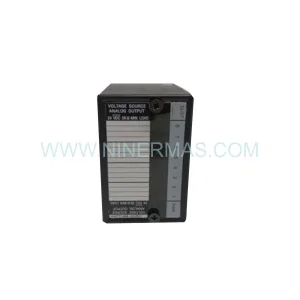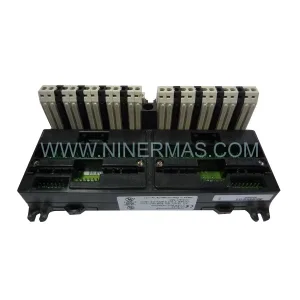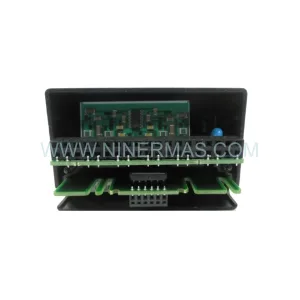
Original Industrial Spare Part
KUKA 033.56.84.10C/10D Retrofit-Compatible Gearbox for Legacy Systems
Verify the part, confirm the platform family, and move straight into quotation with the right commercial details.
RFQ Ready
- SKU033.56.84.10C 033.56.84.10D
- CategoryPLC & Industrial Automation Modules
- BrandKUKA
- SupportAvailability, lead time, condition, and shipping coordination
How Buyers Usually Use This Page
- Confirm the exact part number and platform family before sending the quote request.
- Use direct email when quantity, condition, and destination are already defined internally.
- Switch to the broader brand or category archive when you need alternates nearby.
Series Navigation
Move through the most common platform families behind this part.
Product RFQ
Send this part directly for quotation.
Include quantity, required condition, destination country, and target delivery timing. Current reference: KUKA 033.56.84.10C/10D Retrofit-Compatible Gearbox for Legacy Systems with SKU 033.56.84.10C 033.56.84.10D.
KUKA 033.56.84.10C/10D Retrofit-Compatible Gearbox Module for Legacy Robot Systems
The KUKA 033.56.84.10C and 033.56.84.10D are ruggedized gearbox modules engineered for demanding industrial environments and designed to serve as direct retrofit replacements within aging KUKA robot arm platforms. As KUKA’s legacy KR series robot fleets approach end-of-service milestones, maintenance engineers and automation integrators increasingly rely on verified OEM-equivalent spare parts to extend operational life, defer full system replacement, and maintain production continuity without costly downtime. These gearbox modules address precisely that need — providing a mechanically and dimensionally compatible solution for facilities operating legacy KR 6, KR 16, KR 30, and related articulated robot platforms where the original axis gearbox has worn, seized, or failed.
Sourced through NINERMAS COMPANY LIMITED’s established industrial supply network, each unit undergoes pre-shipment functional verification and is backed by a 12-month warranty covering manufacturing defects and performance conformance. Stock availability is maintained to support urgent replacement scenarios, with expedited dispatch options for critical production environments.
Upgrade Compatibility Table
| Parameter | 033.56.84.10C | 033.56.84.10D |
|---|---|---|
| Compatible Robot Series | KUKA KR 6, KR 16, KR C2-era platforms | KUKA KR 16, KR 30, KR C2/C4 transition platforms |
| Axis Application | Axis 2 / Axis 3 (primary load-bearing) | Axis 2 / Axis 3 (upgraded torque rating) |
| Mounting Interface | Standard KUKA flange pattern — direct bolt-on | Standard KUKA flange pattern — direct bolt-on |
| Lubrication | Pre-filled; verify grease type per KRC maintenance manual | Pre-filled; verify grease type per KRC maintenance manual |
| Communication Compatibility | Mechanical only — no embedded electronics | Mechanical only — no embedded electronics |
| Installation Space | Confirm arm housing clearance before installation | Confirm arm housing clearance before installation |
| Retrofit Recommendation | Direct replacement; re-zero axis after installation | Direct replacement; re-zero axis after installation |
| Commissioning Requirement | Mastering via KUKA smartPAD / KRC controller required | Mastering via KUKA smartPAD / KRC controller required |
| Warranty | 12 months from shipment date — manufacturing defects & performance | |
Retrofit Planning for Existing Automation Systems
Replacing a gearbox module on a KUKA robot arm is a structured mechanical and software process that demands careful preparation to avoid secondary failures and extended downtime. Before removing the failed unit, engineers should document the current axis mastering data stored in the KRC2 or KRC4 controller — this data governs the robot’s positional reference and must be restored after the new gearbox is seated. The KUKA smartPAD teach pendant provides direct access to mastering menus, and a reference measurement tool such as the KUKA Electronic Mastering Device (EMD) or a dial gauge fixture should be on hand for re-zeroing.
During disassembly, it is critical to support the robot arm mechanically — particularly at Axis 2 and Axis 3 — to prevent uncontrolled movement under gravity load. Facilities should verify that the KRC controller’s safety circuit is engaged and that the motor brake on the relevant axis is confirmed active before any fastener is loosened. The servo motor connected to the gearbox input shaft — typically a KUKA-matched AC servo motor from the 1FK or 1FT series in older platforms — should be disconnected at the motor connector and the resolver cable before the gearbox is unbolted from the arm casting.
When fitting the 033.56.84.10C or 033.56.84.10D, confirm that the mating flange surfaces are clean and free of burrs. Apply the specified torque values from the KUKA KR series maintenance documentation to all mounting fasteners. Grease ports should be inspected and the pre-filled lubricant verified against the robot’s maintenance schedule — in many KR C2-era platforms, Optigear Synthetic RO 150 or equivalent is specified, and mixing incompatible grease types can accelerate wear in the new unit.
For facilities running integrated production lines, the gearbox replacement window should be coordinated with upstream and downstream equipment — including conveyor PLCs, vision systems, and safety light curtains — to ensure the robot’s absence from the cell does not trigger fault states in adjacent Siemens S7-300 or S7-1500 controllers managing the line. Where the robot communicates via PROFINET or DeviceNet to a central SCADA or DCS, the network node should be placed in a safe, acknowledged-offline state before work begins to prevent watchdog alarms from propagating to the control room.
After mechanical installation, the axis mastering sequence is performed through the KRC controller’s startup menu. For robots equipped with a KUKA KR C4 controller, the mastering wizard guides the technician through each axis sequentially. Older KRC2 systems require manual entry of mastering offsets. Once mastering is complete, a slow-speed test cycle — typically at 10–20% of programmed velocity — should be run through the full working envelope to confirm smooth motion, absence of backlash noise, and correct positional repeatability. Load cells or a calibration payload matching the robot’s rated capacity can be used to verify torque transmission under representative conditions before returning the cell to production.
Facilities managing multiple robot arms of the same model — a common scenario in automotive body shops and electronics assembly lines — should consider holding one 033.56.84.10C and one 033.56.84.10D as on-site critical spares. Given the lead times associated with OEM gearbox procurement through standard channels, having a verified replacement unit on the shelf can reduce unplanned downtime from days to hours. NINERMAS maintains buffer stock of both variants to support emergency dispatch requirements.
Downtime Control During System Migration
Minimizing production interruption during a gearbox replacement requires a pre-planned maintenance window with all materials, tools, and personnel confirmed before the robot is taken offline. The replacement procedure for the 033.56.84.10C or 033.56.84.10D typically falls within a 4–8 hour window for experienced technicians, assuming no secondary damage to the arm casting, motor shaft, or adjacent wiring harness. Facilities should prepare a rollback plan: if the new gearbox cannot be commissioned within the planned window, the original unit — even if degraded — may need to be temporarily reinstalled to restore partial production capability.
Protecting the original program logic stored in the KRC controller is non-negotiable. Before any hardware work begins, a full backup of the robot program, system configuration, and safety parameters should be exported to a USB drive or network share. KUKA’s WorkVisual software provides a structured project backup function for KRC4 systems, while KRC2 systems use the controller’s internal archive function. This backup preserves not only the motion programs but also the tool and base coordinate frames, load data, and software limit switch settings that define the robot’s safe operating envelope.
Where the robot is part of a synchronized multi-robot cell — for example, coordinated spot welding with a second KUKA arm or a collaborative pick-and-place arrangement — the cell controller’s interlock logic must be reviewed to ensure the offline robot’s absence does not cause the partner robot to enter an undefined state. In cells managed by a Siemens S7 safety PLC or a Pilz PNOZ safety relay, the relevant robot-present input signal should be jumpered or acknowledged in the safety program before work begins, and restored and re-validated before the cell is returned to automatic mode.
Post-installation, a structured commissioning checklist should cover: axis mastering verification, brake test on the replaced axis, slow-speed program run, full-speed dry cycle, payload test, and sign-off by the responsible automation engineer. Documentation of the replacement — including the serial number of the installed 033.56.84.10C or 033.56.84.10D, the date, technician name, and mastering values — should be entered into the facility’s maintenance management system to support future warranty claims and spare parts lifecycle planning.
Retrofit Support FAQ
Q1: Is the 033.56.84.10D a direct drop-in replacement for the 033.56.84.10C?
The 10C and 10D variants share the same mounting flange pattern and overall envelope dimensions, making them mechanically interchangeable in most KR series arm configurations. However, the 10D carries a revised internal gear ratio specification suited to higher-torque axis applications. Before substituting one variant for the other, confirm the axis load data and rated torque requirements in the robot’s technical datasheet. NINERMAS can provide variant selection guidance based on your robot model and axis number.
Q2: What commissioning steps are required after installation?
After mechanical installation and torque verification of all fasteners, the axis must be re-mastered using the KUKA smartPAD or KRC controller mastering menu. For KRC4 systems, the Electronic Mastering Device (EMD) is the recommended tool. For KRC2 systems, a dial gauge or reference notch method is used. Following mastering, run a slow-speed test cycle through the full axis range, verify positional repeatability, and confirm absence of abnormal noise or vibration before returning to production speed.
Q3: Does NINERMAS provide pre-shipment testing for these gearbox modules?
Yes. Each 033.56.84.10C and 033.56.84.10D unit dispatched by NINERMAS undergoes pre-shipment inspection covering dimensional conformance, grease fill verification, input/output shaft rotation check, and visual inspection for casting defects or surface damage. Units are packaged in protective foam-lined crating to prevent transit damage. A 12-month warranty from the shipment date covers manufacturing defects and performance non-conformance under normal operating conditions.
Q4: What is the typical lead time and stock availability?
NINERMAS maintains buffer stock of both the 033.56.84.10C and 033.56.84.10D to support urgent replacement requirements. Standard dispatch is within 3–5 business days for in-stock units. For bulk orders or scheduled maintenance programs requiring multiple units, contact our sales team to confirm availability and arrange priority allocation. Emergency dispatch options are available for critical production environments — contact sale@ninermas.com or call +0086 187 5021 5667 to discuss your timeline.
| Product Series | Legacy |
|---|---|
| Country of Origin | DE |
Catalog Continuation
More KUKA modules in the catalog.
Use the brand lane to compare nearby part numbers, platform-adjacent modules, and other inquiry-ready listings before sending your final RFQ.
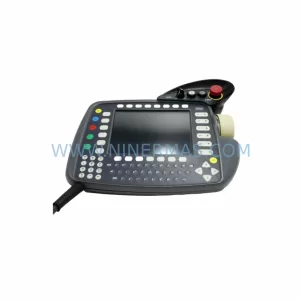
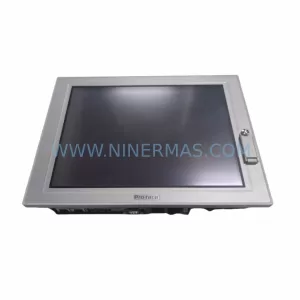
SKU: PFXPP160EA55T00N00
KUKA PFXPP160EA55T00N00 Retrofit-Compatible Teach Pendant for Legacy Systems
Catalog Continuation
Alternative parts within PLC & Industrial Automation Modules.
Stay inside the same system family when you need substitutes, adjacent modules, or a broader shortlist for procurement review.
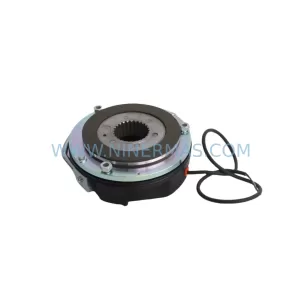
SKU: BFK458-25 (400 N.M) 180VDC
Lenze BFK458-25 400NM 180VDC Service-Ready Spare Part
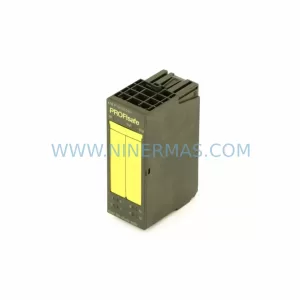
SKU: 6ES7138-4CF03-0AB0
Siemens 6ES7138-4CF03-0AB0 Service-Ready Spare Part for Industrial Maintenance