Original Industrial Spare Part
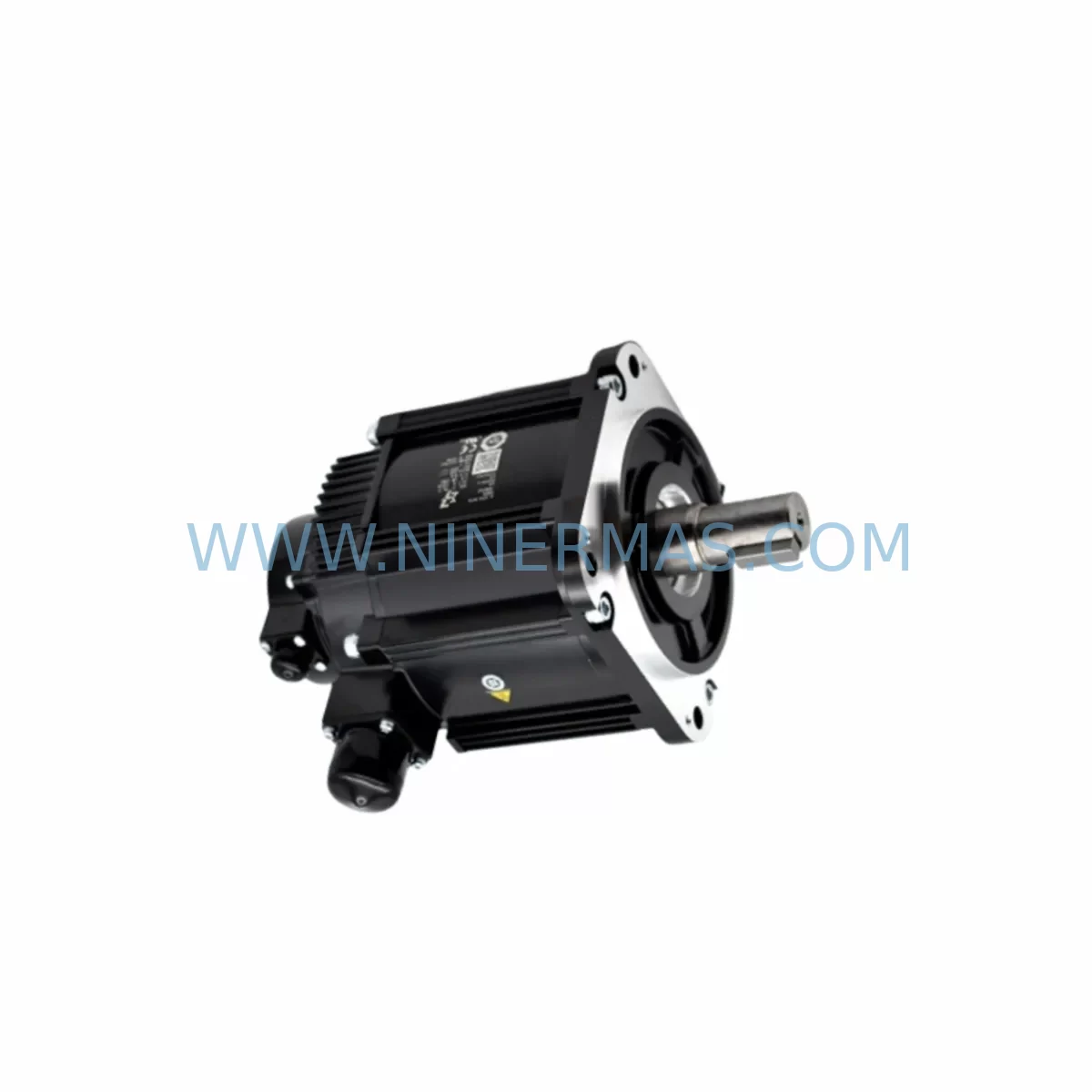
Yaskawa SGM7G-44APK-YR11 Retrofit-Compatible Servo Motor for Legacy Systems
Verify the part, confirm the platform family, and move straight into quotation with the right commercial details.
RFQ Ready
- SKUSGM7G-44APK-YR11
- CategoryPLC & Industrial Automation Modules
- BrandYASKAWA
- SupportAvailability, lead time, condition, and shipping coordination
How Buyers Usually Use This Page
- Confirm the exact part number and platform family before sending the quote request.
- Use direct email when quantity, condition, and destination are already defined internally.
- Switch to the broader brand or category archive when you need alternates nearby.
Series Navigation
Move through the most common platform families behind this part.
Product RFQ
Send this part directly for quotation.
Include quantity, required condition, destination country, and target delivery timing. Current reference: Yaskawa SGM7G-44APK-YR11 Retrofit-Compatible Servo Motor for Legacy Systems with SKU SGM7G-44APK-YR11.
Yaskawa SGM7G-44APK-YR11 Retrofit-Compatible Servo Motor for Legacy Systems
The Yaskawa SGM7G-44APK-YR11 is a high-performance AC servo motor from the Sigma-7 (Σ-7) series, engineered for demanding industrial automation environments. As legacy servo systems reach end-of-life and original spare parts become increasingly scarce, the SGM7G-44APK-YR11 serves as a proven retrofit-compatible replacement for aging Sigma-II and Sigma-V servo motors deployed across CNC machining centers, packaging lines, injection molding machines, and precision assembly systems. With a rated output of 4.4 kW and a medium-inertia rotor design, this motor delivers the torque density and dynamic response required for high-cycle retrofit applications where downtime must be minimized and control continuity preserved.
When planning a servo retrofit using the SGM7G-44APK-YR11, engineers must verify several critical compatibility parameters before committing to installation. Power supply capacity at the control cabinet level must be confirmed against the motor’s rated current draw and the corresponding SGDV-series or SGDV-7S series servo drive requirements. Terminal wiring must be cross-referenced between the legacy motor connector pinout and the Sigma-7 encoder cable standard — particularly for the serial encoder (23-bit absolute) versus the older incremental encoder used in Sigma-II installations. Backplane interface compatibility between the existing SERVOPACK and the new drive must be validated, especially in multi-axis rack configurations where the SGDV-7W or SGDV-7R drives share a common DC bus. Module addressing and axis parameter mapping within the motion controller — whether a Yaskawa MP3300, MP2600, or a third-party Mitsubishi Q-series or Siemens S7-300 PLC — must be reconfigured to reflect the new encoder resolution and inertia ratio. Program logic compatibility, particularly for homing sequences, torque limit registers, and electronic gear ratio settings, must be reviewed and updated in the servo parameter editor before the first test run.
Upgrade Compatibility Table
| Parameter | Legacy (Sigma-II / Sigma-V) | SGM7G-44APK-YR11 (Sigma-7) |
|---|---|---|
| Rated Output | 3.0–4.0 kW (varies by model) | 4.4 kW |
| Encoder Type | Incremental (13/17-bit) | Serial Absolute (23-bit) |
| Mounting Interface | IEC B5 / B14 flange | IEC B5 / B14 flange (compatible) |
| Communication Protocol | Analog ±10V / Pulse Train | MECHATROLINK-III / Analog / Pulse |
| Servo Drive Compatibility | SGDV, SGDH series | SGDV-7S, SGDV-7W series |
| Installation Space | Standard frame size | Same frame — confirm shaft key and coupling |
| Replacement Recommendation | Direct retrofit with parameter re-tuning; encoder cable replacement required | |
| Commissioning Focus | Inertia ratio, gain tuning, homing offset, electronic gear ratio | |
| Warranty | — | 12-Month Warranty |
Retrofit Planning for Existing Automation Systems
A successful retrofit using the SGM7G-44APK-YR11 begins with a thorough audit of the existing control architecture. In most legacy installations, the servo motor is paired with a SGDV or SGDH SERVOPACK mounted inside a control cabinet alongside a 24 VDC power supply module, a regenerative resistor unit, and a safety relay module. Before removal of the old motor, the maintenance team should document all parameter settings from the existing SERVOPACK using SigmaWin+ or a compatible parameter backup tool, preserving the electronic gear ratio, position loop gain, speed loop gain, and torque limit values as a baseline for the new drive configuration.
The SGM7G-44APK-YR11 is designed to pair with the SGDV-7S series SERVOPACK, which supports MECHATROLINK-III communication for integration into Yaskawa MP-series motion controllers or compatible third-party PLCs. In systems where the existing communication backbone uses MECHATROLINK-II, a protocol migration step is required — the motion controller’s network card and station address assignments must be updated, and the HMI screen data blocks referencing axis status words may need to be remapped. For installations using a Mitsubishi Q172DSCPU or a Siemens S7-315T motion CPU, the servo drive interface module and the corresponding function block library must be verified for compatibility with the new SERVOPACK’s command interface.
I/O expansion requirements should also be assessed during the planning phase. If the legacy system relied on discrete I/O signals routed through a terminal block module or a remote I/O unit for servo ready, alarm, and brake control signals, these wiring paths must be preserved or re-terminated to match the CN1 connector pinout of the new SGDV-7S drive. In multi-axis systems, the shared DC bus configuration between adjacent SGDV-7W drives must be reviewed to ensure the bus capacitance and regenerative energy balance remain within specification after the motor swap. Signal isolators may be required at the interface between the new drive’s analog monitor outputs and legacy data acquisition systems that expect 0–10 V signals rather than the ±10 V differential outputs of the Sigma-7 platform.
For systems where the SGM7G-44APK-YR11 replaces a motor connected to a Yaskawa DR2 or DR1 series drive, a programming cable such as the JZRCR-YPP01-1 or a USB-to-serial adapter with SigmaWin+ is required to upload the new parameter set and perform the initial autotuning sequence. The absolute encoder battery backup unit must also be installed if the application requires position retention across power cycles — a common requirement in gantry systems, rotary indexers, and multi-axis coordinate positioning tables.
Downtime Control During System Migration
Minimizing production downtime during a servo motor retrofit requires a structured pre-commissioning strategy. Before the scheduled maintenance window, the replacement SGM7G-44APK-YR11 should be bench-tested with the target SGDV-7S SERVOPACK using a pre-loaded parameter file derived from the legacy system’s documented settings. This pre-validation step confirms that the motor runs correctly, the encoder communication is stable, and the drive’s protective functions — including overcurrent, overspeed, and encoder error detection — are operating within expected thresholds.
During the physical swap, the original program logic in the motion controller should remain untouched until the new motor is mechanically installed and the encoder cable is connected. The brake circuit should be verified before releasing the motor shaft, particularly in vertical axis applications where gravity load is present. Once the new motor is powered, the homing sequence should be executed with reduced speed limits to confirm that the zero-position offset matches the original machine reference. If the HMI displays axis position data, the screen values should be cross-checked against the physical machine position before returning the axis to automatic mode.
Post-installation, a short production trial run at reduced feed rate allows the maintenance team to monitor the SERVOPACK’s load ratio, regenerative energy level, and position error under real cutting or handling conditions. Any deviation from the baseline parameter values documented before the swap should be investigated before full-speed production resumes. With proper pre-staging, parameter backup, and a structured commissioning checklist, most SGM7G-44APK-YR11 retrofit installations can be completed within a single planned maintenance shift, keeping unplanned downtime to zero.
Retrofit Support FAQ
Q1: Can the SGM7G-44APK-YR11 directly replace a Sigma-V servo motor of similar output rating?
In most cases, yes — the flange dimensions and shaft specifications are compatible across Sigma-series generations. However, the encoder cable must be replaced to match the 23-bit serial encoder interface of the Sigma-7 platform, and the SERVOPACK must be upgraded to a SGDV-7S or equivalent Sigma-7 drive. Parameter re-tuning is required after installation.
Q2: What commissioning steps are required after installing the SGM7G-44APK-YR11?
After mechanical installation and wiring, connect SigmaWin+ via USB or RS-232 to load the parameter file, execute the encoder origin setting, perform one-parameter autotuning with the actual load attached, and verify the electronic gear ratio against the machine’s lead screw or gear ratio specification. Confirm alarm-free operation across the full speed and torque range before returning to production.
Q3: Is the SGM7G-44APK-YR11 available from stock with a warranty?
Yes. NINERMAS maintains inventory of the SGM7G-44APK-YR11 for immediate shipment. Each unit is supplied with a 12-month warranty covering manufacturing defects and is tested prior to dispatch. Contact our team at sale@ninermas.com or +0086 187 5021 5667 to confirm current stock availability and lead time.
Q4: What should I check if the drive reports an encoder error after installation?
First verify that the encoder cable shield is properly grounded at the drive end and that the cable routing does not run parallel to high-voltage power cables. Confirm that the absolute encoder battery (if used) is connected and charged. Check the CN2 connector seating on both the motor and drive ends. If the error persists, use SigmaWin+ to read the encoder diagnostic data and confirm that the serial communication is establishing correctly at startup.
| Product Series | Legacy |
|---|---|
| Country of Origin | JP |
Catalog Continuation
More YASKAWA modules in the catalog.
Use the brand lane to compare nearby part numbers, platform-adjacent modules, and other inquiry-ready listings before sending your final RFQ.
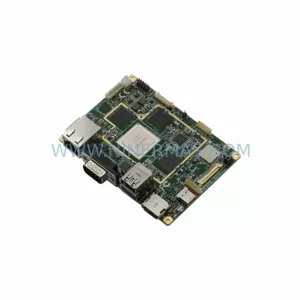
SKU: YRK01B-1E DX100CPUJZNC-YRK01B-1E JANCD-ASF30-1E 50999-2922R07 CPU50999-2922R07
Yaskawa YRK01B-1E Retrofit-Compatible Servo Board for Legacy Systems
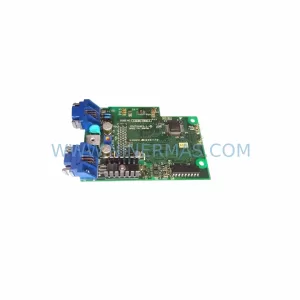
SKU: YPHT31033-1-1 73600-A0101
Yaskawa YPHT31033-1-1 Retrofit-Compatible Gate Driver for Legacy Systems
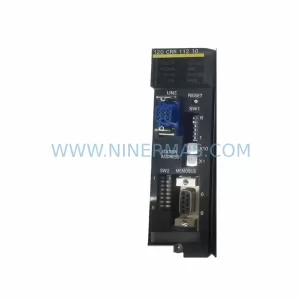
SKU: JAMSC-120CRR11210
Yaskawa JAMSC-120CRR11210 Retrofit-Compatible I/O Module for Legacy Systems
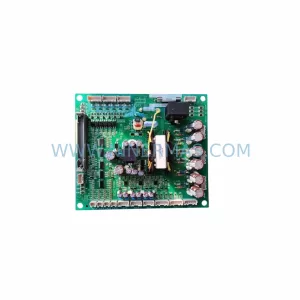
SKU: YPCT31394-1A YPZT31308
YASKAWA YPCT31394-1A YPZT31308 Retrofit-Compatible Control Card for Legacy Systems
Catalog Continuation
Alternative parts within PLC & Industrial Automation Modules.
Stay inside the same system family when you need substitutes, adjacent modules, or a broader shortlist for procurement review.
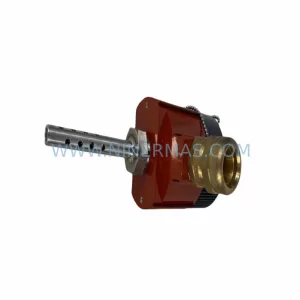
SKU: TRY/PRG/4-20MA/10-30DC
MOORE TRY/PRG/4-20MA/10-30DC Service-Ready Spare Part
SKU: 5085-404901-11 12INCH 2910-202413-12 404200XRMPD2H14 7-249717
TEL 5085-404901-11 Service-Ready Spare Part for Industrial Maintenance
SKU: DIP011 05-058-011
SIGMATEK DIP011 05-058-011 Service-Ready Spare Part