Original Industrial Spare Part
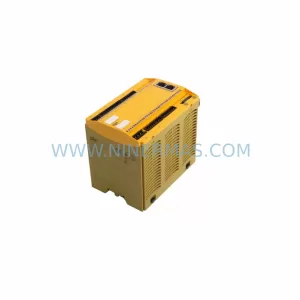
Pilz 777080 PNOZ X11P Retrofit-Compatible Safety Relay
Verify the part, confirm the platform family, and move straight into quotation with the right commercial details.
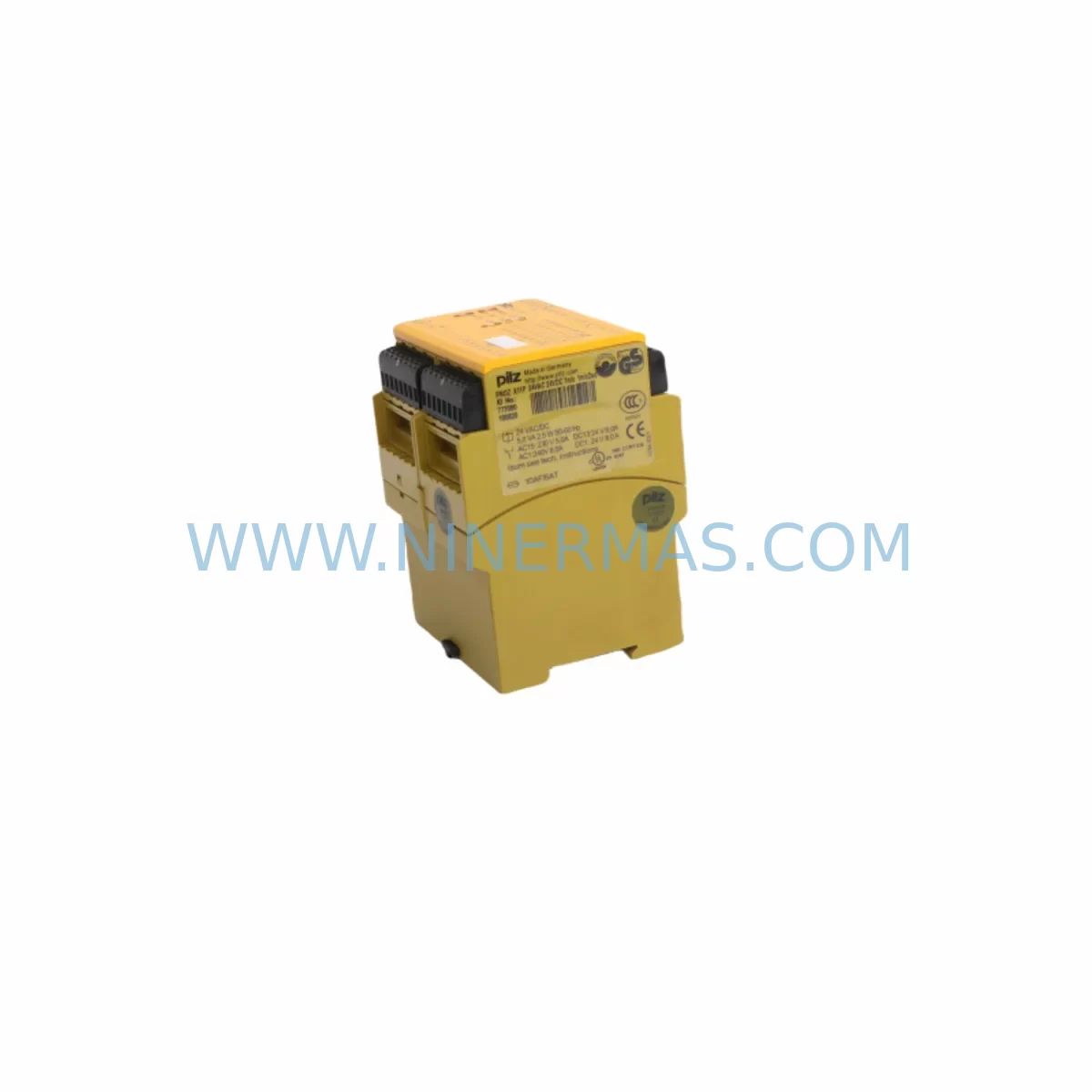
RFQ Ready
- SKU777080 PNOZ X11P
- CategorySIS Safety & Redundancy Systems
- BrandPILZ
- SupportAvailability, lead time, condition, and shipping coordination
How Buyers Usually Use This Page
- Confirm the exact part number and platform family before sending the quote request.
- Use direct email when quantity, condition, and destination are already defined internally.
- Switch to the broader brand or category archive when you need alternates nearby.
Series Navigation
Move through the most common platform families behind this part.
Product RFQ
Send this part directly for quotation.
Include quantity, required condition, destination country, and target delivery timing. Current reference: Pilz 777080 PNOZ X11P Retrofit-Compatible Safety Relay with SKU 777080 PNOZ X11P.
Pilz 777080 PNOZ X11P Retrofit-Compatible Safety Relay: Legacy System Compatibility and Smooth Upgrade Path
The Pilz 777080 PNOZ X11P is a hardwired safety relay module designed for emergency stop, safety gate, and two-hand control monitoring in industrial automation environments. As legacy PNOZ Classic and PNOZ X series installations reach end-of-life or face discontinued spare parts availability, the PNOZ X11P remains one of the most sought-after retrofit-compatible replacements for aging safety circuits across discrete manufacturing, process control, and machine safety applications. With 12-month warranty coverage, pre-shipment functional testing, and confirmed in-stock supply, this unit supports both immediate breakdown recovery and planned lifecycle extension programs.
The PNOZ X11P operates on 24 VDC supply voltage and provides three safety output contacts (3 NO) plus one auxiliary contact (1 NC), making it directly interchangeable with a wide range of legacy safety relay positions in existing control cabinets. Its DIN rail mounting profile and standard terminal pitch ensure that panel space and wiring layouts from original installations can be preserved with minimal modification during retrofit.
Upgrade Compatibility Table
| Parameter | PNOZ X11P (777080) | Retrofit Notes |
|---|---|---|
| Supply Voltage | 24 VDC | Verify existing PSU output; compatible with SITOP PSU100S and Phoenix Contact QUINT series |
| Safety Outputs | 3 NO + 1 NC | Match terminal assignments A1/A2, S11–S34 to original wiring diagram before reconnection |
| Safety Category | Cat. 4 / PLe / SIL 3 | Confirm existing machine risk assessment still valid post-replacement |
| Mounting | 35 mm DIN Rail | No panel modification required for standard DIN rail cabinets |
| Terminal Type | Screw terminals | Re-use existing ferrule-terminated conductors; check torque spec (0.5–0.6 Nm) |
| Communication | Hardwired (no fieldbus) | No protocol migration required; compatible with existing E-stop loop wiring |
| Replacement for | PNOZ X11, PNOZ 11, legacy PNOZ Classic | Verify output contact count and reset logic (manual vs. automatic) before substitution |
| Commissioning | Power-on self-test | Perform functional test of all E-stop channels and safety gate inputs after installation |
| Warranty | 12 Months | Covers manufacturing defects; pre-shipment tested and documented |
Retrofit Planning for Existing Automation Systems
When integrating the PNOZ X11P into an existing safety architecture, the retrofit scope typically extends beyond the relay itself. In most legacy machine safety panels, the PNOZ X11P sits alongside a 24 VDC power supply module — commonly a Phoenix Contact QUINT-PS or a Siemens SITOP PSU100S — which must be verified for adequate current capacity after adding or replacing safety relay loads. If the original power budget was calculated for an older PNOZ Classic unit with different inrush characteristics, a load audit is recommended before energizing the upgraded panel.
Terminal block layout is a critical checkpoint. Many legacy installations use Weidmüller WDU or Phoenix Contact UK series terminal blocks, and the PNOZ X11P’s screw terminal pitch is compatible with standard 2.5 mm² conductor cross-sections used in most European-standard control cabinets. Before disconnecting the original relay, photograph and document all terminal assignments — particularly the S11, S12, S21, S22 input channels and the 13/14, 23/24, 33/34 output contacts — to ensure accurate re-termination.
For installations where the PNOZ X11P monitors safety gates or light curtains, the input device wiring must be confirmed against the new relay’s input circuit requirements. Devices such as Sick C4000 safety light curtains or Schmersal AZM 200 safety switches are commonly found in these applications and are fully compatible with the PNOZ X11P’s dual-channel input architecture. If the original installation used a PNOZ m B0 base unit or a PNOZmulti modular safety controller, the hardwired PNOZ X11P can serve as a standalone replacement for individual safety functions that were previously handled by expansion modules such as the PNOZ m EF 4DI or PNOZ m EF 4DO.
In control cabinets where space is constrained, the PNOZ X11P’s compact 45 mm width profile allows it to be installed in the same slot as most predecessor models without requiring panel re-layout. Where adjacent components include Pilz PDP67 decentralized I/O modules or PNOZ s series time-delay safety relays, the installation sequence should account for DIN rail segment continuity and PE bonding strip integrity.
For systems that previously relied on a PNOZ X7 or PNOZ X9 in a multi-relay safety chain, the PNOZ X11P’s higher output contact count (3 NO) provides additional flexibility for controlling multiple downstream contactors — such as Schneider Electric LC1D or ABB AF series contactors — without requiring an additional relay stage. This is particularly valuable in retrofit projects where the original design used relay cascading to achieve the required number of switched outputs.
Downtime Control During System Migration
Minimizing production downtime during a safety relay replacement requires a structured pre-outage preparation process. Before the scheduled maintenance window, the replacement PNOZ X11P should be bench-tested against the original wiring diagram using a portable 24 VDC test supply and a continuity tester to verify all output contacts operate correctly across both the energized and de-energized states. This pre-commissioning step — which is included as part of our pre-shipment testing protocol — eliminates the risk of discovering a defective unit after the original relay has already been removed from the panel.
During the outage, the recommended sequence is: isolate the safety circuit at the upstream MCB or fuse, photograph all terminal connections, remove the original relay, install the PNOZ X11P on the DIN rail, re-terminate all conductors in the documented order, and restore power. The PNOZ X11P’s LED status indicators (power-on, output status, and fault) provide immediate visual confirmation of correct operation without requiring a laptop or programming tool — a significant advantage over configurable safety controllers that require software validation after every hardware change.
For facilities operating continuous production lines where even a brief safety circuit outage must be coordinated with production scheduling, the PNOZ X11P’s hardwired architecture means there is no firmware to update, no configuration to download, and no safety function validation software required. The replacement process can typically be completed within a 30–60 minute maintenance window, making it compatible with standard shift-change or planned preventive maintenance intervals. Original PLC program logic, HMI screen configurations, and SCADA alarm mappings remain entirely unaffected by the relay replacement, as the PNOZ X11P interfaces only at the hardwired I/O level.
Retrofit Support FAQ
Q1: Is the Pilz 777080 PNOZ X11P a direct drop-in replacement for the PNOZ X11 or PNOZ 11?
The PNOZ X11P shares the same terminal layout and output contact configuration as the PNOZ X11, making it functionally interchangeable in most applications. The “P” suffix denotes an enhanced version with additional diagnostic features. Always verify the supply voltage, reset mode (manual/automatic), and output contact ratings against your original wiring diagram before substitution.
Q2: What pre-shipment testing is performed on the PNOZ X11P before dispatch?
Each unit undergoes functional verification of all input channels and output contacts under rated 24 VDC supply conditions. Output contact continuity, reset circuit operation, and LED indicator function are confirmed before packaging. A test record is available upon request. All units are covered by a 12-month warranty from the date of shipment.
Q3: Can the PNOZ X11P be used with two-hand control devices or only emergency stop circuits?
The PNOZ X11P is approved for emergency stop monitoring, safety gate monitoring, and two-hand control applications in accordance with EN ISO 13849-1 (Cat. 4, PLe) and IEC 62061 (SIL 3). Confirm the specific application wiring diagram in the Pilz datasheet for your intended use case before installation.
Q4: What is the lead time and stock availability for the 777080 PNOZ X11P?
We maintain in-stock inventory of the PNOZ X11P to support both emergency breakdown replacement and planned retrofit programs. Standard orders ship within 1–3 business days. For bulk procurement or long-term supply agreements supporting lifecycle extension programs, contact our sales team to discuss committed stock arrangements and volume pricing.
| Product Series | Other series |
|---|---|
| Country of Origin | DE |
Catalog Continuation
More PILZ modules in the catalog.
Use the brand lane to compare nearby part numbers, platform-adjacent modules, and other inquiry-ready listings before sending your final RFQ.
SKU: 773540 PNOZ ml1p
PILZ 773540 PNOZ ml1p Safety-Reliable Relay for Critical Control
SKU: 773103 PNOZ m1p ETH
PILZ 773103 PNOZ m1p ETH Service-Ready Spare Part for Industrial Maintenance
Catalog Continuation
Alternative parts within SIS Safety & Redundancy Systems.
Stay inside the same system family when you need substitutes, adjacent modules, or a broader shortlist for procurement review.