If you have ever stood in a central control room at a massive petrochemical refinery or a nuclear power station, you know the weight of the name “Yokogawa.” It is a brand synonymous with a specific kind of Japanese engineering precision—a “silent force” that handles thousands of safety-critical PID loops without a stutter. But as we move into the second half of 2026, the silence of the control room is being broken by the increasing complexity of the Vnet/IP security landscape and the steady march of the CENTUM VP R7 modernization cycle.
As an expert with 20 years in the DCS trenches, I have watched the evolution from the legacy CENTUM CS 3000 to the current CENTUM VP platform. I have seen plants run on the same Yokogawa hardware for twenty-five years with zero downtime—a feat that is almost unheard of with other brands. However, in 2026, “reliability” is being redefined. It is no longer just about MTBF (Mean Time Between Failure); it is about “Security Resilience.” Today, we are going to talk about how to manage your Yokogawa CENTUM VP infrastructure in light of the latest Vnet/IP vulnerabilities and why your spare parts strategy is now your first line of defense.
Decoding the 2026 Vnet/IP Security Reality (YSAR-26-0002)
In early 2026, Yokogawa issued security advisory YSAR-26-0002, followed by a critical update in late April regarding vulnerabilities in the Vnet/IP interface package. For those unfamiliar, Vnet/IP is the high-speed control network that connects your Human Interface Stations (HIS) to your Field Control Stations (FCS). It is the nervous system of your DCS. A vulnerability here isn’t just a software bug; it is a potential path for an attacker to manipulate process data or cause a system-wide denial-of-service (DoS).
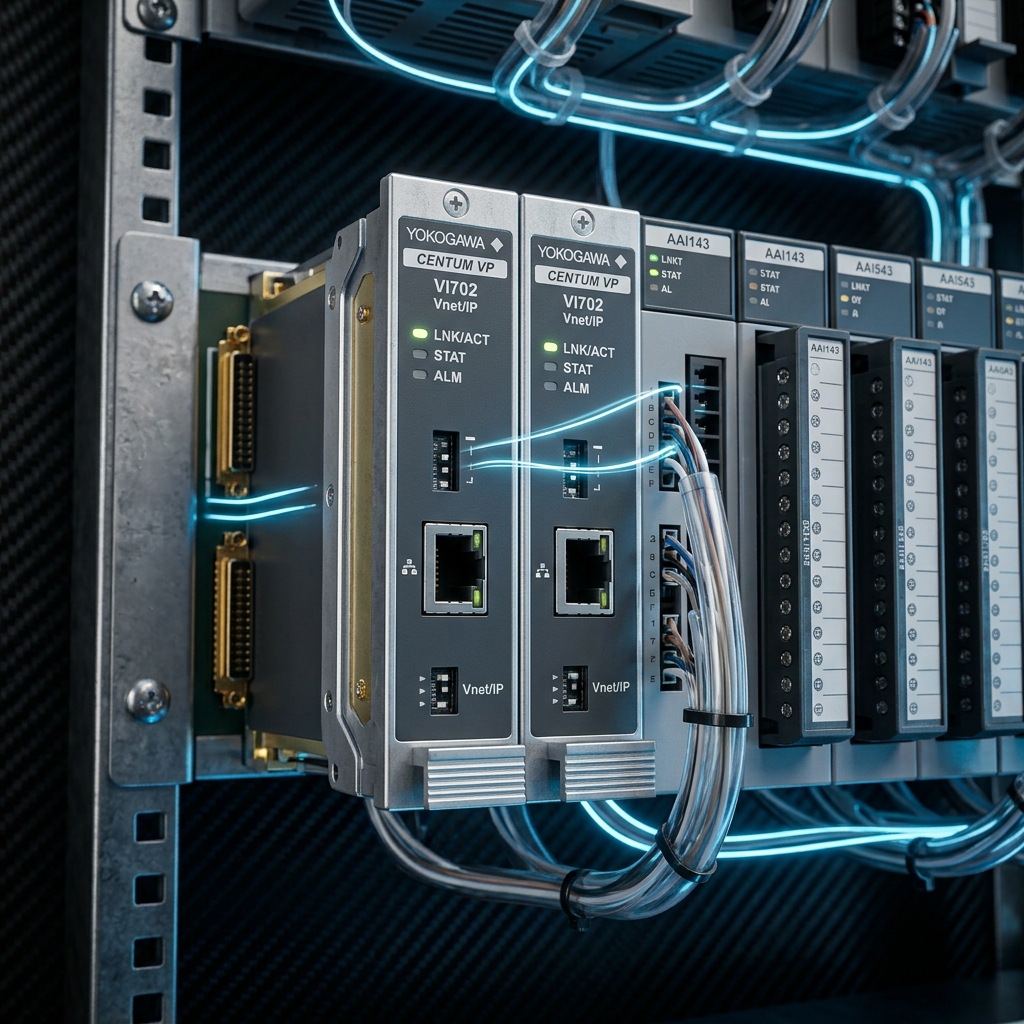
For the maintenance engineer, this advisory is a wake-up call. It highlights that the “isolation” of the control network is no longer a sufficient defense. When you are auditing your Yokogawa racks in 2026, you must look beyond the software patches. You need to ensure that your interface modules, such as the Yokogawa AIP521 Vnet/IP Interface, are running the correct, authenticated firmware revisions. More importantly, you must verify that any replacement module in your emergency inventory is a factory-sealed, original component. In a world of sophisticated supply chain attacks, a “gray market” communication card is a security backdoor you cannot afford to open.
The Retrofit Bridge: Managing the EC401 and ESB Nodes
Many of my clients are currently operating in a “Hybrid State”—using CENTUM VP R6 or R7 software to manage older FIO (Field I/O) hardware. This is a pragmatic way to modernize without the astronomical cost of a “rip-and-replace” project. Central to this strategy is the ESB Bus, which relies on modules like the Yokogawa EC401-50 Bus Coupler to bridge the gap between legacy and modern control segments.
The EC401 is a workhorse, but as a peer who has managed dozens of DCS shutdowns, I can tell you that these couplers are often the most overlooked part of the maintenance cycle. In 2026, the increased data throughput from modern N-IO integrations and higher-resolution diagnostics is putting unprecedented stress on these older ESB nodes. If your Yokogawa ANB10D Node Units are reaching their 15th or 20th year of service, you are managing a ticking clock. Proactive replacement of node units and couplers is no longer just “good practice”—it is a necessity for preventing the kind of intermittent communication dropouts that lead to unplanned turbine trips or chemical spills.
Sourcing the “Silent Sentinel”: AAI543 and SDV144 Integrity
When you get down to the signal layer, the Yokogawa philosophy of “Redundant Everything” is what provides that legendary uptime. Modules like the Yokogawa AAI543-H50 Analog Output Module and the Yokogawa SDV144-S53 Digital Input Module are the silent sentinels that handle your most critical process loops. But in 2026, the secondary market for these modules is flooded with “refurbished” units that have been pulled from decommissioned plants in high-corrosion environments.
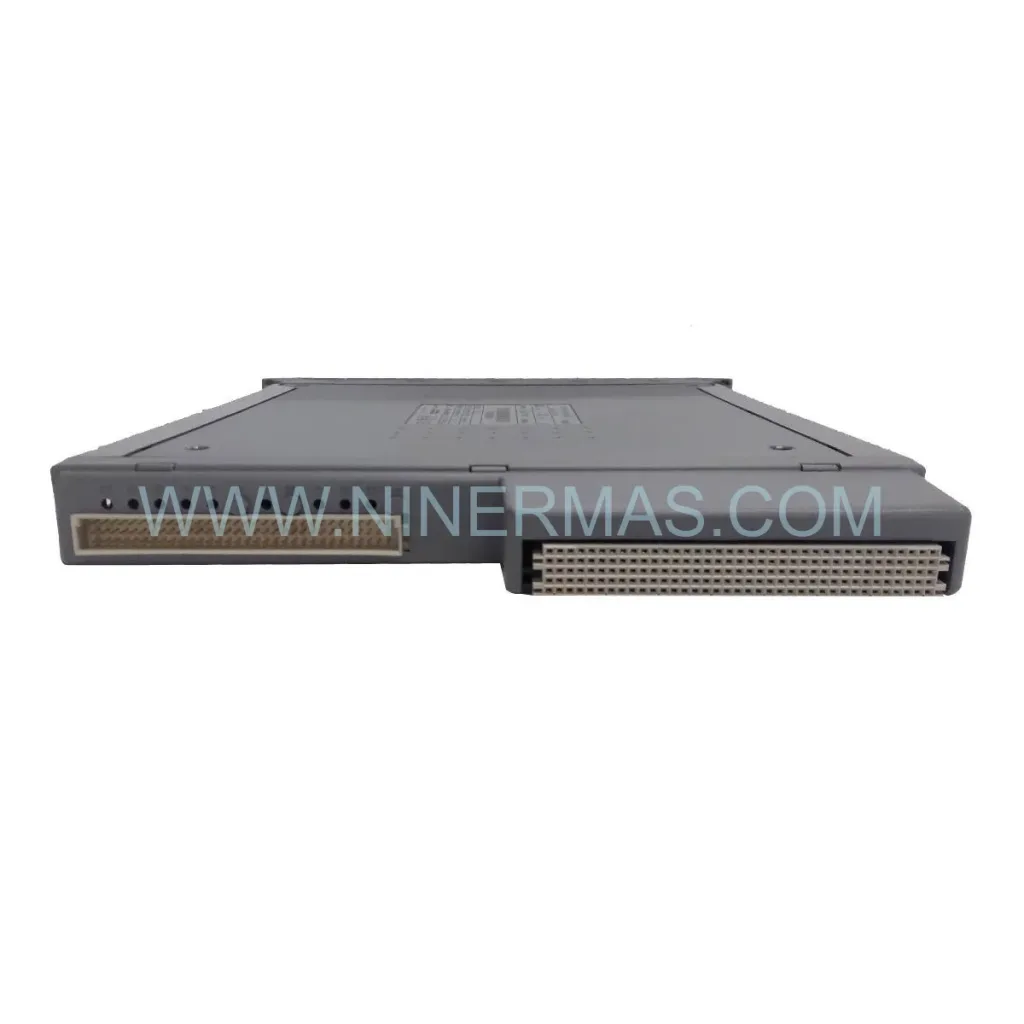
I have seen I/O packs that look pristine on the outside but show significant trace corrosion under a microscope—damage that leads to “ghost signals” or delayed responses. In a mission-critical DCS environment, a digital input module for a Safety Instrumented System (SIS) like the ProSafe-RS must be 100% original. At NINERMAS, we focus on providing original Yokogawa spare parts because we know that a 1% failure rate in a safety loop is 1% too high. Whether you are sourcing a 32-channel Yokogawa ARM55T relay board or a complex pulse input card, your hardware provenance is your operational insurance.
The 2026 Roadmap: Audit, Patch, and Stock
So, how do you handle a Yokogawa system in this new era? First, perform a physical hardware audit. Don’t just trust the asset list in your software; open the cabinets and check the revision codes on your AIP521 and EC401 modules. Second, map your critical “Single Points of Failure.” If a single ESB Bus Node unit (ANB10D) failure would take down a critical section of your plant, that is where your next spare part purchase should go.
Finally, stop the “reactive” maintenance cycle. In 2026, the supply chain for high-end DCS modules is more stable than in 2022, but lead times for specific high-density I/O can still stretch to weeks or months. Building a local inventory of “Original New” spares today is the only way to ensure that the silent force of your Yokogawa system remains silent and safe for the next twenty years.
Frequently Asked Questions
1. Can I use CENTUM VP R7 software with my existing RIO/FIO hardware?
Yes, Yokogawa’s “Vnet/IP” and ESB Bus architecture allow for significant backward compatibility. However, to leverage the latest security features and the full throughput of R7, you may need to upgrade your interface modules like the AIP521.
2. What is the impact of the YSAR-26-0003 hardcoded password vulnerability?
This vulnerability (February 2026) could allow an attacker with network access to gain administrative control over certain CENTUM components. Yokogawa has released patches, but the long-term solution involves moving toward the more secure authentication protocols found in the R7 release.
3. Why should I prioritize “Original New” over “Certified Refurbished” for Yokogawa parts?
DCS hardware like the AAI543 is built with high-precision analog components that degrade over time when exposed to industrial heat and humidity. A refurbished card may pass a basic power-on test but fail during a critical high-speed process event.
4. How do I transition my legacy Modbus networks to the modern CENTUM VP architecture?
The most efficient path is using high-density communication modules like the ALF111 for Foundation Fieldbus or specific Modbus-to-Vnet/IP gateways. Ensure your communication modules are part of a redundant pair to maintain DCS-level availability.
Protect Your Yokogawa Infrastructure with NINERMAS
Navigating the complexity of a Yokogawa modernization requires a partner who understands the technical nuances of the CENTUM platform. Whether you are patching a Vnet/IP security gap or securing your ESB Bus Node inventory, NINERMAS provides the original, verified spares you need to stay safe and productive. Contact our technical team today to audit your Yokogawa spares and protect your facility against 2026’s emerging threats.
© 2026 NINERMAS. All rights reserved. Official Website: https://NINERMAS.com Inquiry: sale@NINERMAS.com | WhatsApp/Tel: +86 187 5021 5667
Next Step
Move the research into a cleaner RFQ.
Send the part number, quantity, condition expectation, destination, and timing details so the sourcing team can reply with better availability and lead-time context.