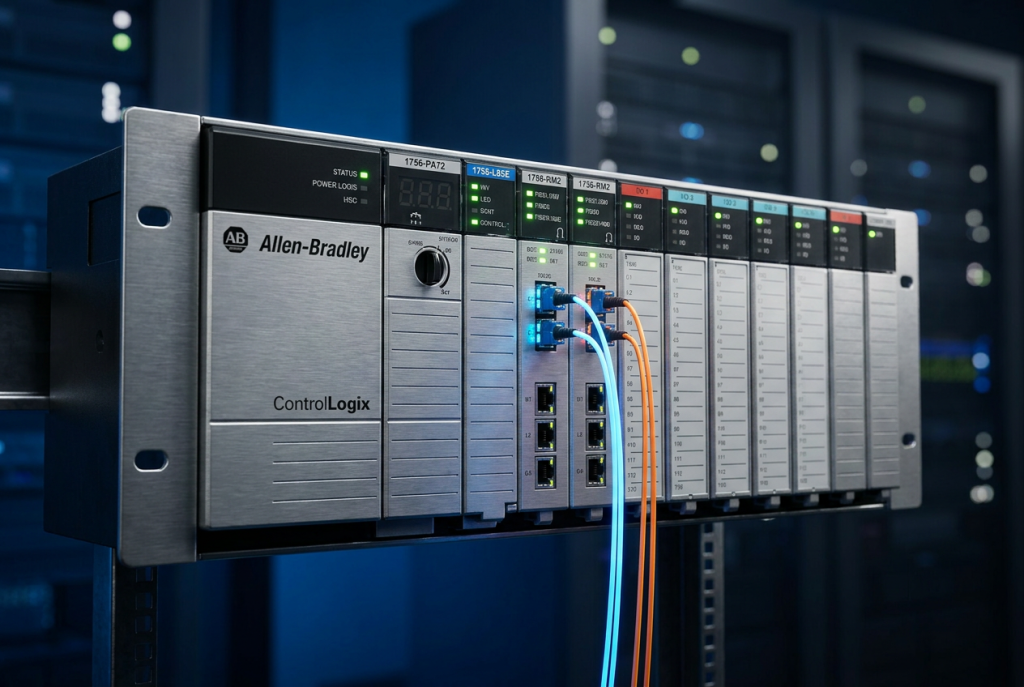
In the rapid-fire world of industrial digital transformation, June 2026 has already marked a significant shift in how the industry’s heavyweights are positioning their defense strategies. Just this week, on June 9, 2026, Rockwell Automation announced a major expansion of its SecureOT portfolio, introducing new cybersecurity assessments and managed service capabilities designed to help manufacturers “operationalize” their security. While the industry buzz is focused on cloud-based analytics and proactive remote monitoring, for those of us who have spent 20 years in the trenches of the plant floor, these headlines trigger a very different, more pragmatic question: What happens to the millions of “Classic” racks that can’t be easily “managed” by a remote service?
As an advisor to maintenance and reliability teams across the globe, I’ve seen this cycle before. Every time a major vendor pushes for “Security-as-a-Service,” the subtext is often an accelerated push toward hardware obsolescence. But in a 24/7 process environment, “modernization” isn’t always an option—reliability is. Today, I want to discuss why the physical integrity of your Allen-Bradley (Rockwell) hardware remains your first and most critical line of defense, even in the age of managed OT security.
The Rockwell SecureOT Expansion: A Double-Edged Sword
Rockwell’s recent move to enhance its SecureOT portfolio is undeniably a step forward for the industry. By offering continuous asset discovery and threat detection as a managed service, they are addressing a massive skills gap in the OT space. However, for a maintenance manager running a fleet of 1756-L6x or early 1756-L7x processors, these services can sometimes feel like a high-tech layer applied over a vulnerable foundation.
Many legacy ControlLogix systems were designed long before “CIP Security” or encrypted communication was a standard. While a managed service might detect a threat, it cannot prevent a firmware-level vulnerability in a module that lacks the processing power to handle modern encryption. This is where the “Hardware Buffer” strategy comes into play. In 2026, securing your plant isn’t just about software; it’s about ensuring every node in your rack is a high-integrity, original component that behaves exactly as the system engineering intended.
The “Hardware Buffer” Strategy for 2026
When software-defined security reaches its limit, the physical health of your hardware takes center stage. A “Managed Service” can do very little to mitigate a failure caused by an aging power supply or a degrading communication bridge. In fact, more aggressive security polling—common in modern OT monitoring—can actually accelerate the failure of mature electronics by increasing the duty cycle of the communication processors.
To build a truly resilient system in 2026, I recommend focusing on three core hardware pillars:
- Verify the Power Foundation: A noisy or fluctuating power rail is the silent killer of PLC logic. Standardizing on original modules like the Allen-Bradley 1756-PA75 AC Power Supply ensures that your processors aren’t fighting internal electrical stress while you’re trying to defend against external cyber threats.
- Secure the Communication Path: In the ControlLogix 1756 ecosystem, your Ethernet and ControlNet bridges are the gatekeepers. If these modules are unverified or refurbished “grey market” units, you are introducing a black box into your security architecture. Always source factory-sealed original units to ensure firmware provenance.
- Isolate Legacy “islands”: For systems like the Allen-Bradley SLC 500, which may never support modern security protocols, the strategy shifts from “monitoring” to “fortification.” Keep these systems isolated and maintain a deep stock of high-integrity spares to ensure that when a failure does occur, it is a simple hardware swap rather than a security-compromised disaster.
Why “Original New” Hardware is a Security Requirement
In my two decades of experience, the biggest risk to a plant’s integrity isn’t always a hacker—it’s unverified hardware. In 2026, the market is flooded with “refurbished” modules that may have been subjected to improper storage or non-OEM component repairs. From a security standpoint, a refurbished module is a risk. You have no way of knowing if the hardware has been modified or if its thermal history has compromised its long-term stability.
This is why NINERMAS focuses exclusively on 100% Original and Brand New components. When you insert a module like the Allen-Bradley 1756-OF4/A Analog Output into your rack, you need to know it meets the exact factory impedance and shielding specifications. Anything less isn’t just a maintenance risk—it’s a system integrity risk.
Pragmatic Sourcing in an Era of “Managed” Obsolescence
The push toward managed services often comes with a subtle nudge to retire “Mature” products. But for most of us, the ROI of a full DCS or PLC rip-and-replace isn’t there yet. Our goal is to extend the life of our existing assets with confidence. By building a strategic reserve of factory-sealed Rockwell modules, you are effectively buying yourself Lifecycle Sovereignty. You decide when to upgrade, not the vendor’s managed service schedule.
Frequently Asked Questions (FAQ)
1. Does Rockwell’s SecureOT expansion cover older SLC 500 or PLC-5 systems?
While some asset discovery tools can identify these legacy nodes, modern “Managed Security” features like threat detection and active response are primarily optimized for Logix-based platforms (v28+ firmware). For older systems, hardware isolation and a robust spares pool remain the primary reliability strategy.
2. Can I use modern managed switches with legacy Allen-Bradley racks?
Yes, and it is highly recommended. Using a modern managed switch to segment a legacy rack can provide a significant security boost. However, ensure that the switch’s IGMP snooping and multicast settings are properly configured for older EtherNet/IP implementations to avoid overloading the legacy modules.
3. How do I verify the authenticity of an Allen-Bradley module in 2026?
Authentic modules should always arrive in original, factory-sealed anti-static packaging with intact security labels. At NINERMAS, we verify the provenance of every module we source to ensure it is 100% Original New. Avoid modules that show signs of previous installation or have unverified firmware versions.
4. Is the 1756-PA75 power supply still in production?
The 1756-PA75 is a mature but widely used standard in the ControlLogix lineup. While Rockwell may prioritize newer, high-efficiency models for new project designs, the 1756-PA75 remains the workhorse for the installed base. We maintain active stock of these Original New units to support existing rack architectures.
Copyright & Disclaimer: © 2026 NINERMAS COMPANY LIMITED. All rights reserved. Official Website: https://ninermas.com Inquiry: sale@ninermas.com | WhatsApp/Tel: +86 187 5021 5667. This article is for technical reference only. All brand names are trademarks of their respective owners. NINERMAS is an independent supplier of industrial automation spare parts and is not an authorized partner of Rockwell Automation.
Need High-Integrity Rockwell Spares? Explore our Allen-Bradley (Rockwell) Collection or Request a Quote today for verified pricing and availability on ControlLogix, SLC 500, and PLC-5 modules.
Next Step
Move the research into a cleaner RFQ.
Send the part number, quantity, condition expectation, destination, and timing details so the sourcing team can reply with better availability and lead-time context.