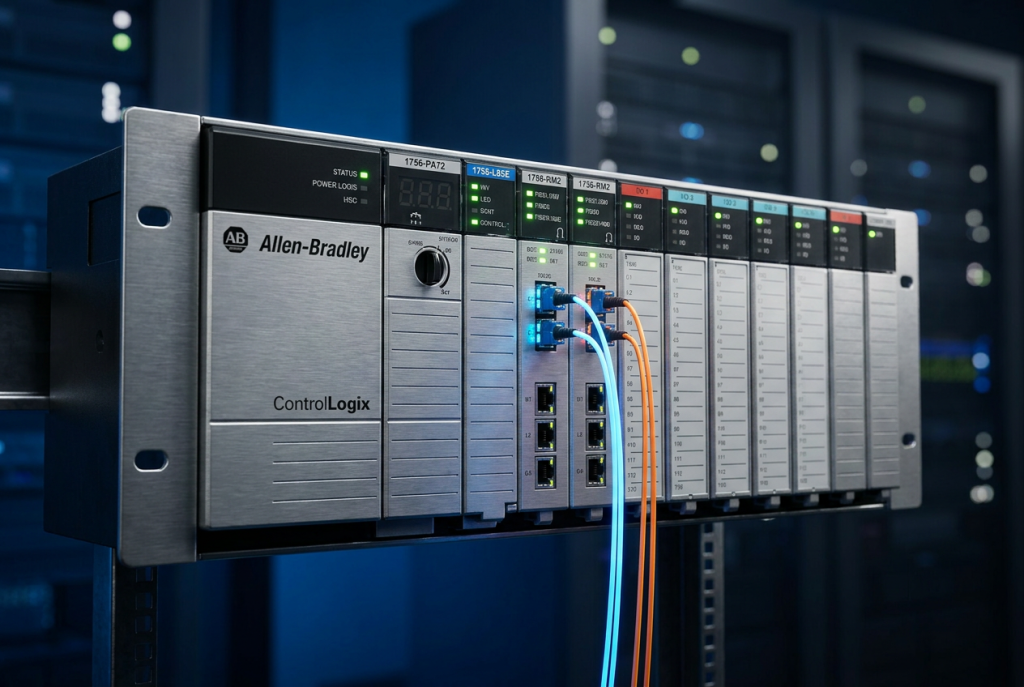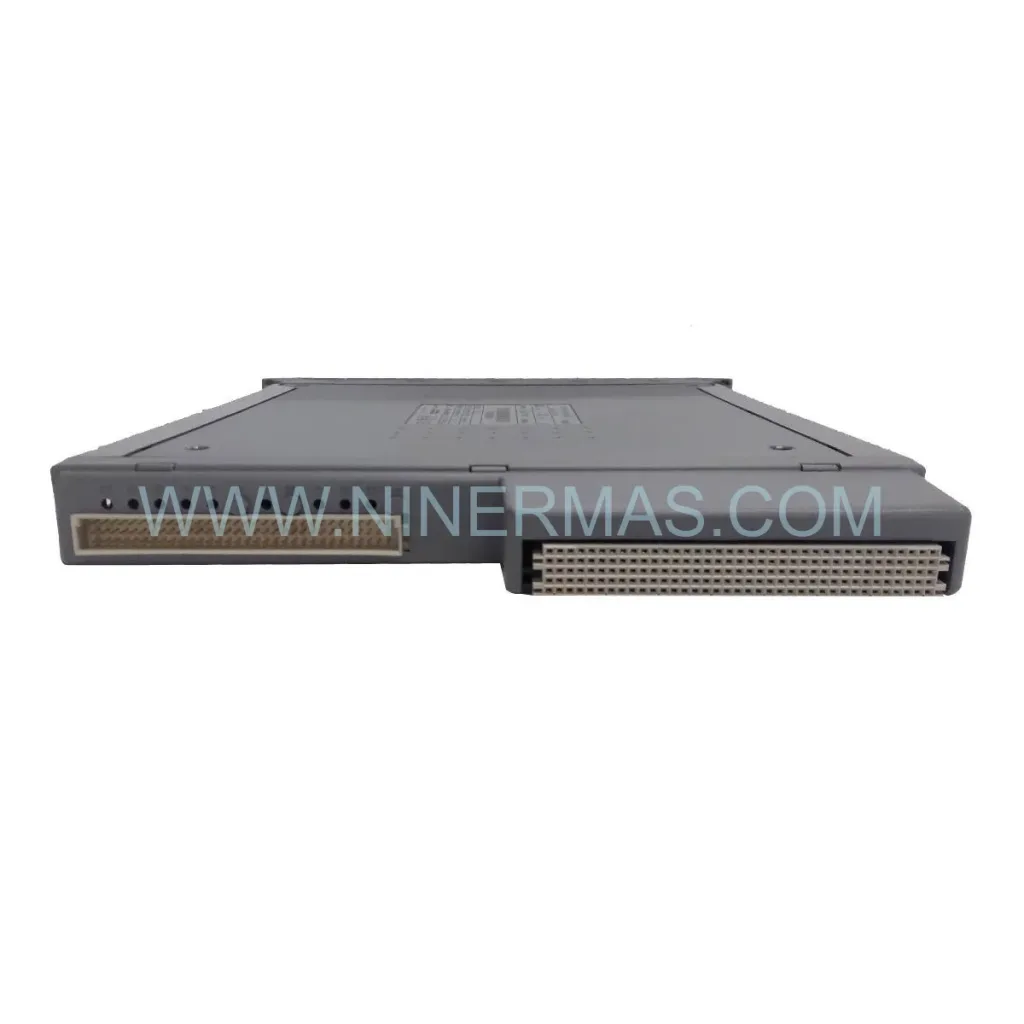
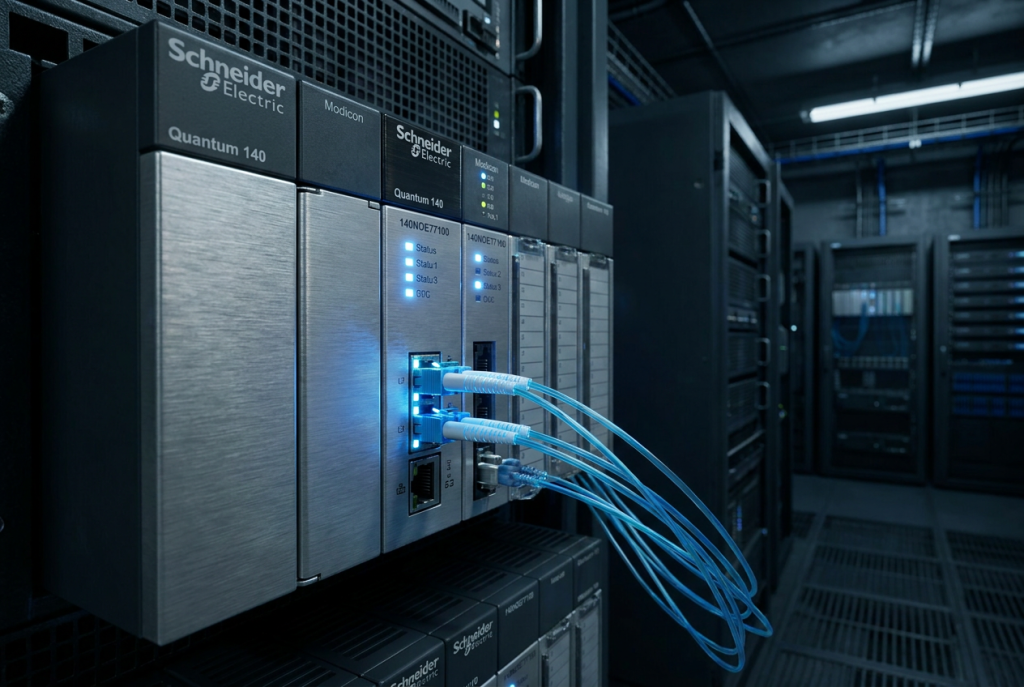
In the world of industrial control systems, the Schneider Electric Modicon name is synonymous with the birth of the PLC itself. From the rugged 984 series to the sophisticated M580 PACs of today, Modicon has been the nervous system for millions of factory floors. However, as we enter June 2026, a new set of challenges has emerged for the Schneider ecosystem. On June 4, the Cybersecurity and Infrastructure Security Agency (CISA) released advisory ICSA-26-157-01, detailing critical vulnerabilities in the web servers of Modicon M340 and M580 controllers. For a maintenance engineer, this isn’t just a “software patch” notification—it is a signal to re-evaluate your entire lifecycle strategy, especially if you are still bridging the gap between legacy Quantum hardware and the latest Unity-based systems.
As someone who has spent over two decades commissioning and troubleshooting Modicon racks, I have seen the transition from local serial debugging to the highly connected, Ethernet-integrated architectures we use today. While this connectivity has revolutionized data access, it has also expanded the attack surface. The June 4 advisory highlights an improper access control issue that could allow a remote attacker to gain unauthorized access to the controller’s web server. In a process environment, unauthorized access to the HMI or diagnostics of a PAC is a catastrophic risk. But today, I want to look beyond the immediate CVE and discuss the broader implications for those of us responsible for keeping these systems running.
The CISA ICSA-26-157-01 Advisory: What You Need to Know
The core of the issue lies in the web server component integrated into many modern Schneider Electric (Modicon) controllers. Specifically, the M340 and M580 platforms, which utilize the X80 I/O architecture, are affected. If an attacker can reach the controller’s management IP, they may be able to bypass certain security checks. Schneider Electric has already begun rolling out firmware updates to address this, and as always, my first piece of advice is to isolate your control network. If your PLC web server is reachable from the corporate LAN, you are already behind the curve on industrial security.
However, for many of my peers in the field, the “upgrade cycle” isn’t as simple as clicking a firmware update. In many plants, the M340 or M580 is just one part of a heterogeneous environment that still includes a heavy presence of Modicon Quantum (140 series) hardware. When a new vulnerability hits the modern platform, it often triggers a management-level discussion about “accelerated migration.” But as we know, migrating a full DCS or high-density PLC rack isn’t a weekend job. It’s a multi-year capital project. This is where the strategy of hardware integrity becomes your best friend.
The “Modernization Pressure” vs. The Reality of Legacy Spare Parts
Every time a high-profile security advisory like ICSA-26-157-01 is published, the pressure to retire legacy systems increases. The argument is simple: newer systems are “secure by design.” But for the reliability engineer on the ground, the “new” system is often where the most complex software bugs reside (as we saw with recent HMI crashes in other brands). The Modicon Quantum 140CPU43412U, for instance, may be an older design, but its failure modes are well-understood, its logic is battle-tested, and in many ways, its relative simplicity makes it easier to air-gap than a fully converged IIoT controller.
In 2026, we are seeing a “Sourcing Paradox.” While the factory pushes for the latest M580 architecture, the lead times for certain high-density I/O or specialized communication modules remain volatile. This makes your local stock of Modicon Quantum spare parts more valuable than ever. If you aren’t ready to move to the M580 drop-adapter architecture today, you must ensure that your existing Quantum backplanes and processors are supported by a “Strategic Reserve” of factory-sealed spares.
Strategic Advice for Modicon Maintenance in 2026
Whether you are managing a fleet of M580s or keeping a legacy Quantum system alive, here are the pragmatic steps I recommend based on the current industry climate:
- Implement Defense-in-Depth for Web Servers: For your M340 and M580 racks, disable the HTTP/HTTPS server if it isn’t strictly required for operation. If you must use it for diagnostics, ensure it is behind a VPN and restricted by IP-based access control lists (ACLs).
- Audit Your “Bridge” Components: Many plants use the Schneider BMECRA31210 EIO Drop Adapter to allow M580 controllers to talk to X80 I/O. These communication “bridges” are often overlooked in security audits but are critical for both data integrity and system uptime.
- Verify Your Spare Part Condition: In 2026, the market is flooded with “refurbished” modules that may have degraded capacitors or outdated firmware. For critical control loops, only source Original New modules. A Modicon 140ACO02000 Analog Output that has been sitting in a humid warehouse for five years is a failure waiting to happen.
- Standardize Your “Unity” Environment: Ensure that your engineering workstation is running the latest version of EcoStruxure Control Expert (formerly Unity Pro). Outdated programming software can sometimes introduce misconfigurations that leave ports open on the controller.
The NINERMAS Approach to Schneider Lifecycle Support
Our philosophy at NINERMAS is that you decide the lifecycle of your plant, not the manufacturer’s EOL schedule. While we support the latest M580 hardware, our core strength lies in providing the high-integrity spare parts that allow you to maintain your “Legacy Gold” systems. When CISA advisories highlight the risks of modern connectivity, it reinforces the value of having a stable, well-maintained hardware foundation that doesn’t require constant, high-risk internet-facing updates.
Frequently Asked Questions (FAQ)
1. Does the ICSA-26-157-01 vulnerability affect older Modicon Quantum processors?
The specific CISA advisory focuses on the modern web server implementations in the M340 and M580 series. However, legacy Quantum processors with Ethernet Coprocessors (NOE modules) have their own set of legacy vulnerabilities. The best defense for all Modicon hardware is strict network isolation.
2. Can I use M580 controllers with my existing Quantum I/O?
Yes, Schneider Electric provides migration paths that allow an M580 to act as the head-end for legacy Quantum I/O drops. This “partial migration” is a common way to address security at the CPU level while preserving your investment in field wiring and I/O modules.
3. How do I identify the firmware version on my Modicon M340?
You can verify the firmware version through the EcoStruxure Control Expert software or by accessing the controller’s diagnostic webpage (provided it is securely accessed). Always cross-reference your version with the Schneider Electric MySchneider portal for the latest security patches.
4. Why is NINERMAS focusing on “Original New” spares in 2026?
As systems age, the risk of “infant mortality” in used or poorly stored electronics increases. By providing factory-sealed, original Schneider Electric spare parts, we ensure that your maintenance intervention doesn’t accidentally introduce a new point of failure into the system.
Copyright & Disclaimer: © 2026 NINERMAS. All rights reserved. Official Website: https://NINERMAS.com Inquiry: sale@NINERMAS.com | WhatsApp/Tel: +86 187 5021 5667. This article is for technical reference only. NINERMAS is an independent distributor and is not an authorized partner of Schneider Electric.
Need High-Integrity Schneider Spares? Explore our Schneider Electric (Modicon) collection or Request a Quote today for verified pricing and availability on Modicon Quantum, M340, and M580 modules.
Next Step
Move the research into a cleaner RFQ.
Send the part number, quantity, condition expectation, destination, and timing details so the sourcing team can reply with better availability and lead-time context.