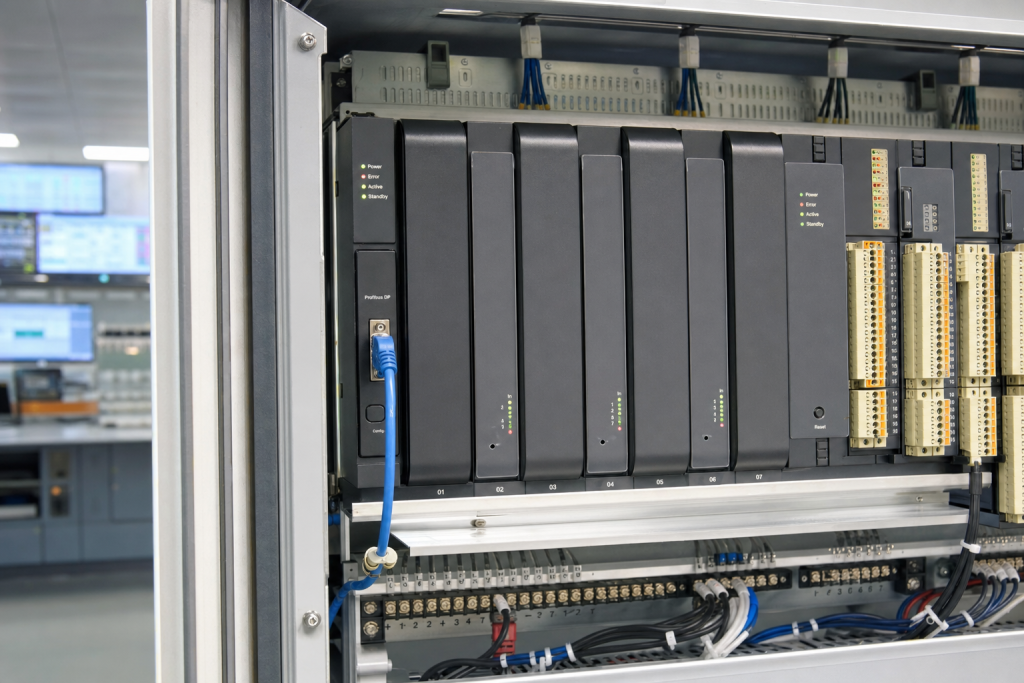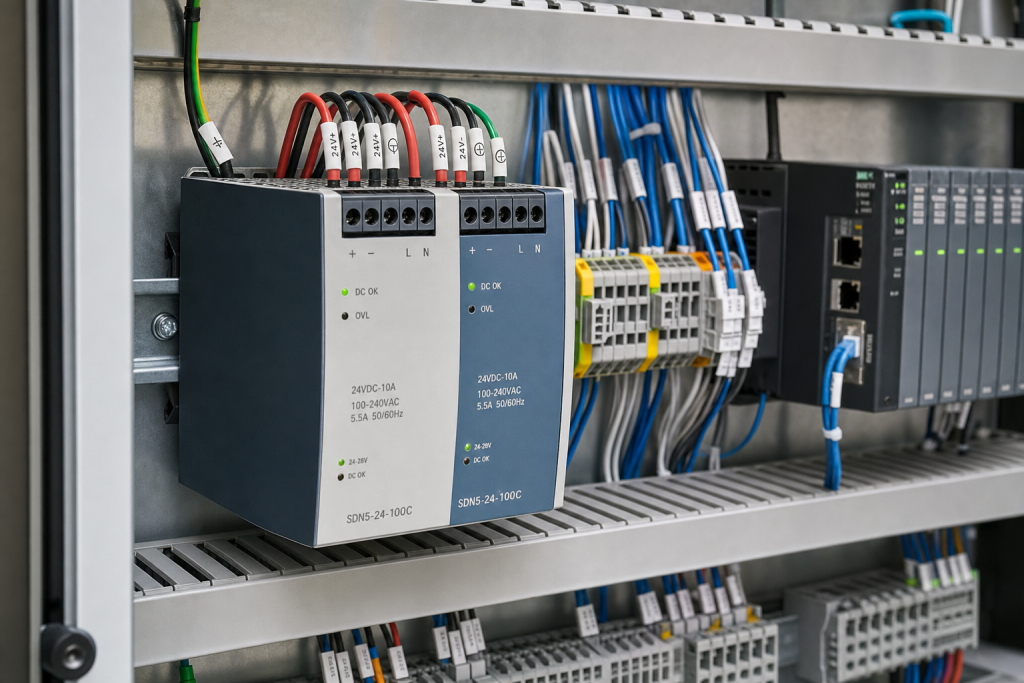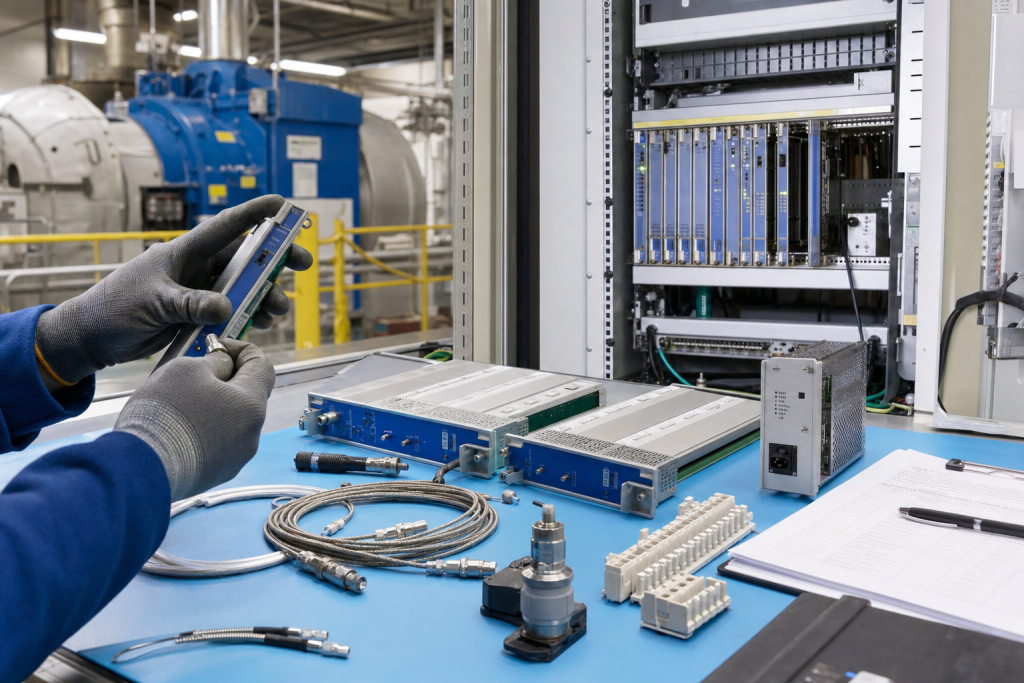
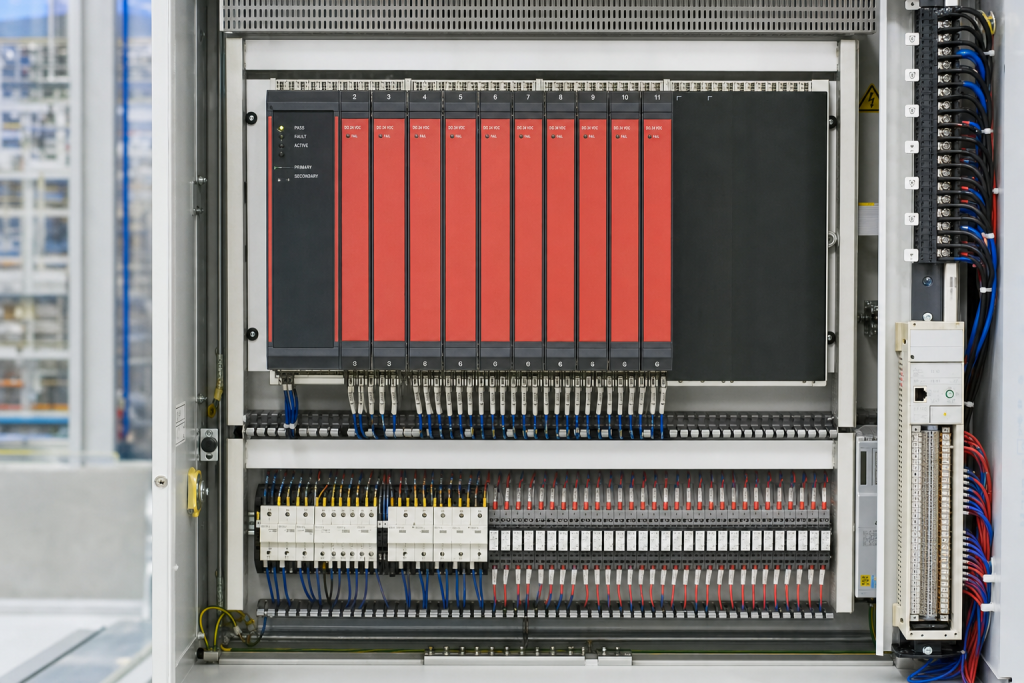
A safety output module is not just another digital output card. It may sit inside a shutdown or protection function where the channel, terminal arrangement, proof-test record, and approved logic all matter. When a module fails, a quick model search can produce a visually similar item while leaving the real safety evidence unresolved.
NINERMAS readers need a practical way to source SIS spares without confusing catalog availability with safety approval. A useful record connects the Triconex or equivalent module to its system role, field wiring, voting arrangement, proof-test history, and engineering owner.
Identify the safety function first
Record whether the module drives a shutdown valve, alarm, interlock, permissive, trip relay, or another safety function. Include the chassis, slot, channel count, terminal assembly, field voltage, and whether outputs are de-energize-to-trip or energized for normal operation.
The live Triconex 3708E safety output module is a catalog reference for a structured RFQ. It does not replace comparison with the installed label, system revision, terminal wiring, and approved safety documentation.
Photograph the module label, chassis position, terminal block, fuses or interposing relays, field wiring, and cabinet context. Record the safe state and the operational consequence of the channel before removing the failed item.
Keep proof-test evidence with the spare record
A safety module may be physically correct and still require proof-test planning, logic review, or a controlled return-to-service procedure. Record the last proof test, outstanding findings, bypass status, and the person who owns safety approval.
If a Honeywell or other safety output module is being considered as a replacement path, compare system architecture, diagnostics, wiring, certification basis, and logic engineering. A cross-platform substitute is a project decision, not a normal spare exchange.
Separate exact spare, repair exchange, bench item, and migration candidate in the RFQ. The buyer should know whether the quote is for hardware only or includes testing, documentation, and engineering support.
Acceptance must prove the safety path
After replacement, verify terminal mapping, output behavior, diagnostics, interposing devices, safe state, alarm path, and the approved proof-test or functional-test steps. A module that powers up is not automatically an accepted safety function.
Use clear status labels: exact replacement, proof-test pending, engineering review required, bench-only, or approved for service. This prevents a conditional item from being pulled into a live SIS intervention without the required review.
Keep the label, wiring photos, test record, approved change reference, and final receiving evidence together. That record makes the next emergency response faster and more defensible.
Build the RFQ around the installed function
A useful spare request begins with the installed function, not only a familiar brand name. State what the device does, where it sits, what it connects to, and what failure would stop or blind the process. Then add the exact label, revision, connector view, power information, accessory scope, condition requirement, destination, and required date. This gives procurement and engineering the same starting point.
Separate an exact replacement from a possible substitute, repair exchange, bench item, and migration candidate. These options may all be commercially useful, but they do not carry the same approval burden. An exact spare may support a short outage window. A substitute may need wiring changes, parameter review, software work, or a production trial before it can be counted as recovery stock.
The product references in this article are live catalog examples, not permission to skip engineering checks. Compare the product page with the installed label and the plant record. If a suffix, connector, voltage, protocol, firmware family, or mechanical interface differs, keep the item conditional until the responsible engineer closes that gap.
Receiving inspection should repeat the evidence used for the RFQ. Photograph the received label, packaging, connectors, terminals, mounting features, and included accessories. Record what was checked and what remains unknown. A clean-looking item is not automatically a field-ready spare, and an item that powers up is not automatically accepted by the control or protection function.
Keep the approved catalog and RFQ reference with the maintenance record, but do not let a catalog title replace the installed evidence. The useful record is the combination of model, function, interface, condition, test requirement, and decision owner.
Review the spare before the maintenance window, not only after a failure. Confirm that the item is still physically present, that packaging and accessories are intact, that the backup or test procedure is available, and that the responsible engineer is still named.
When a substitute is considered, write down the exact gap it is intended to close and the evidence needed to approve it. This may include a drawing comparison, firmware review, bench test, dimensional check, protection test, communication test, or production trial.
The final decision should be visible to stores, procurement, maintenance, and operations. Use plain status labels such as exact replacement, approved substitute, repair exchange, bench-only, or engineering review required.
FAQ
What must be matched on a Triconex 3708E spare?
Match system family, chassis and slot role, channel arrangement, terminal assembly, field voltage, output behavior, diagnostics, and safety documentation.
Can another safety output module be used?
Only after architecture, wiring, logic, diagnostics, certification basis, testing, and engineering approval are reviewed.
What should be included in the RFQ?
Send module labels, chassis position, terminal photos, field function, safe state, condition preference, test needs, and deadline.
Is a power-up test enough?
No. The approved functional or proof-test procedure must demonstrate the intended safety path.
Send NINERMAS the safety module label, chassis photos, terminal wiring, safety function, and outage deadline. We can help structure a traceable SIS spare RFQ.
A useful record also states what the supplier cannot determine from a catalog page. Unknown firmware, missing drawings, unclear terminal scope, incomplete accessories, and untested condition should be written as open items so the quote remains honest and the plant has a short list of questions to close before the equipment is needed.
Use the same evidence at receiving that was used during selection. Compare the actual label and interface with the approved request, then save received-item photos with the work order. This helps maintenance, procurement, and stores learn from every replacement instead of starting the next RFQ from a blank screen.
© 2026 NINERMAS. All rights reserved. Official Website: https://NINERMAS.com Inquiry: sale@NINERMAS.com | WhatsApp/Tel: +86 187 5021 5667
Next Step
Move the research into a cleaner RFQ.
Send the part number, quantity, condition expectation, destination, and timing details so the sourcing team can reply with better availability and lead-time context.