Original Industrial Spare Part
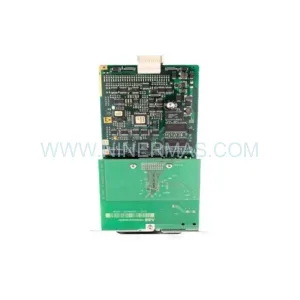
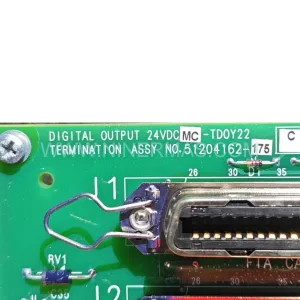
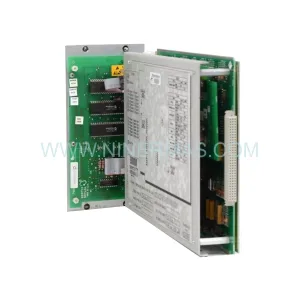
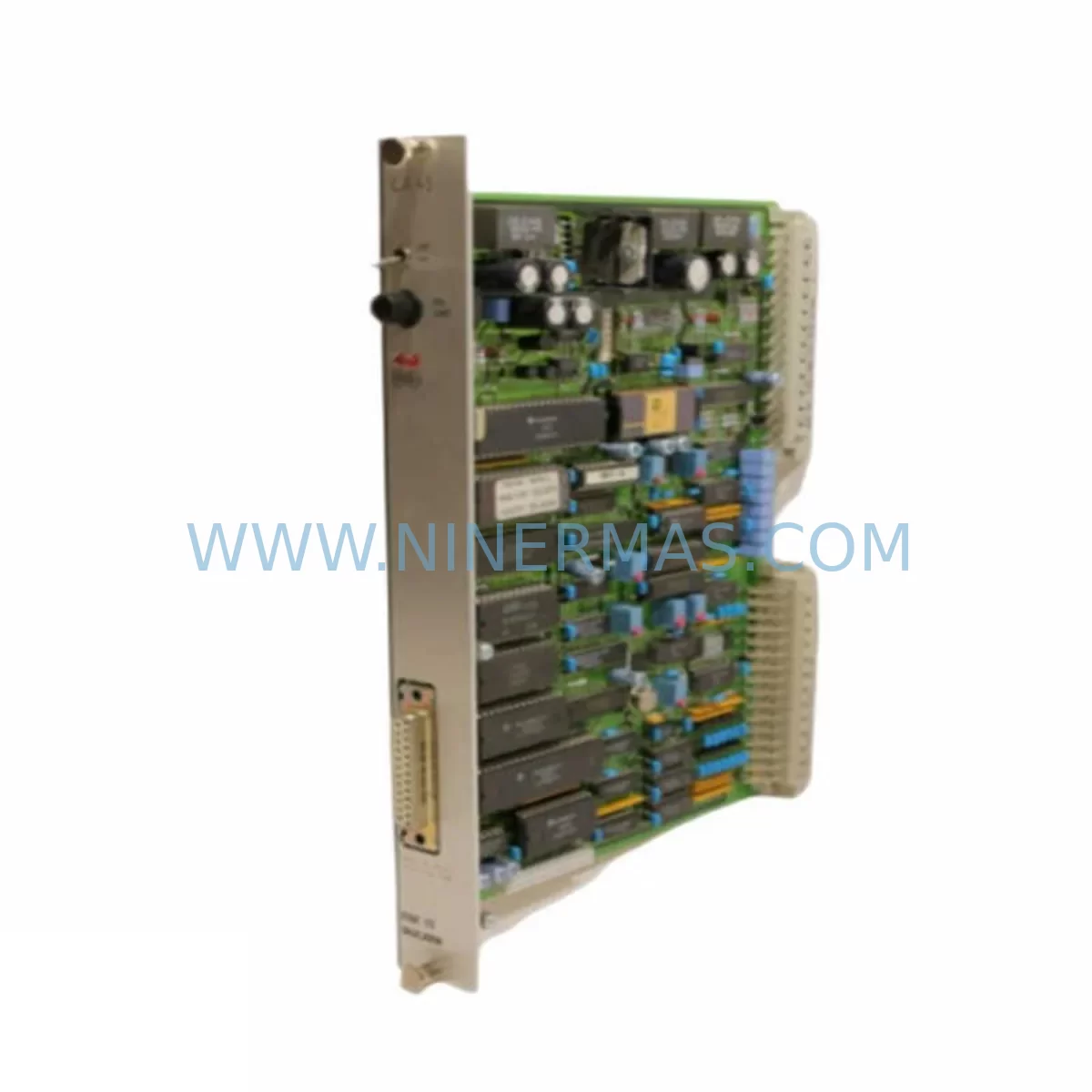
Sulzer RM11 Retrofit-Compatible Control Board for Legacy Systems
Verify the part, confirm the platform family, and move straight into quotation with the right commercial details.
RFQ Ready
- SKUControl board
- CategoryPLC & Industrial Automation Modules
- BrandSulzer
- SupportAvailability, lead time, condition, and shipping coordination
How Buyers Usually Use This Page
- Confirm the exact part number and platform family before sending the quote request.
- Use direct email when quantity, condition, and destination are already defined internally.
- Switch to the broader brand or category archive when you need alternates nearby.
Series Navigation
Move through the most common platform families behind this part.
Product RFQ
Send this part directly for quotation.
Include quantity, required condition, destination country, and target delivery timing. Current reference: Sulzer RM11 Retrofit-Compatible Control Board for Legacy Systems with SKU Control board.
Sulzer RM11 Retrofit-Compatible Control Board for Legacy Systems
The Sulzer RM11 ruggedized control board module is engineered for seamless integration into aging automation infrastructures where reliability, continuity, and minimal downtime are non-negotiable. As industrial facilities face the challenge of maintaining legacy control systems — many of which were commissioned decades ago — the RM11 provides a proven, field-compatible replacement path that preserves existing wiring, backplane interfaces, and program logic without requiring a full system overhaul.
Designed to operate in harsh environments including high-vibration, high-humidity, and wide-temperature-range installations, the RM11 is a direct candidate for facilities running obsolete or end-of-life control architectures. Whether you are managing a pump station, compressor control cabinet, turbine governor system, or process automation rack, the RM11 delivers the ruggedized performance required for continuous industrial operation.
All units supplied by NINERMAS are pre-shipment tested under load conditions, verified for signal integrity, and shipped with full documentation. A 12-month warranty is included on every unit, backed by our long-term spare parts supply program.
Upgrade Compatibility Table
| Parameter | Details |
|---|---|
| Module Designation | Sulzer RM11 |
| Module Type | Ruggedized Control Board |
| Typical Application | Turbine governor, pump control, compressor automation, process control cabinet |
| Backplane Interface | Compatible with Sulzer legacy rack and backplane configurations; verify slot pitch and connector type before installation |
| Power Supply Requirement | Confirm input voltage rail (typically 24 VDC or 48 VDC) against existing PSU capacity before swap |
| Terminal Wiring | Retain original field wiring; verify terminal block pitch and signal type (analog/digital) match RM11 I/O specification |
| Communication Compatibility | Verify protocol compatibility (RS-232, RS-485, or proprietary Sulzer bus) with existing HMI and SCADA links |
| Installation Space | Confirm rack slot dimensions; RM11 form factor is ruggedized — check clearance for heat dissipation |
| Replacement Recommendation | Direct replacement for failed or end-of-life RM11 boards; functional verification recommended post-installation |
| Commissioning Notes | Re-load program parameters, verify I/O mapping, confirm HMI tag alignment before returning to service |
| Warranty | 12 months from date of shipment — all units pre-shipment tested |
Retrofit Planning for Existing Automation Systems
Replacing a control board in a live automation environment requires careful pre-planning across multiple system layers. Before removing the failed RM11, engineers should document the existing terminal wiring layout, photograph all connector positions, and record the current program parameters stored in the controller memory. If the system uses a dedicated Sulzer power supply module feeding the control rack, verify that the PSU output capacity is sufficient for the replacement board — some aging PSUs may have derated output over time and may need replacement alongside the control board.
The backplane connecting the RM11 to adjacent I/O modules and communication interfaces must be inspected for corrosion, bent pins, or cracked PCB traces — common failure points in systems that have operated for 10–20 years. If the rack also houses analog input modules or digital output modules from the same Sulzer control platform, confirm that the module addressing scheme is preserved after the board swap, as some legacy systems use hardware DIP switches or jumper settings to define module addresses.
Communication links between the RM11 and upstream SCADA or DCS systems — often running over RS-485 serial interfaces or proprietary fieldbus protocols — must be re-verified after replacement. If the facility is also planning a broader migration toward modern protocols such as Modbus TCP or PROFIBUS DP, the RM11 replacement window is an ideal time to introduce a protocol converter or communication gateway module in parallel, allowing the legacy control logic to remain intact while the new communication layer is validated.
For systems that include a Sulzer HMI panel or operator interface terminal connected to the RM11, confirm that all tag mappings and alarm setpoints remain correctly linked after the board replacement. HMI screens referencing specific register addresses may require re-validation if the replacement board uses a slightly different memory map. Similarly, if the control cabinet includes signal isolator modules between field instruments and the RM11 input channels, verify that the isolation barrier ratings and signal ranges remain compatible.
Where the RM11 is part of a larger turbine or compressor governor system, the retrofit plan should also account for speed sensor inputs, actuator output signals, and any safety relay modules wired in series with the control board outputs. These safety interlocks must be temporarily bypassed under controlled conditions during the swap and re-verified before the machine is returned to service. A programming cable and laptop with the appropriate Sulzer configuration software should be on-site during commissioning to allow immediate parameter reload and functional testing.
Downtime Control During System Migration
Minimizing production downtime during a control board replacement is a primary concern for maintenance teams. The most effective approach is to pre-stage the replacement RM11 unit with all known parameters loaded before the maintenance window begins. Where the original program backup exists, reload it to the new board in a bench environment and verify basic I/O response before the unit is installed in the field.
For critical processes where even a brief interruption is unacceptable, consider implementing a hot-standby or redundant control arrangement using a secondary control path — even a temporary manual bypass panel — to maintain process continuity during the swap. This is particularly important in pump stations, compressor trains, and turbine governor applications where a sudden loss of control can trigger safety shutdowns or process upsets.
Once the RM11 is installed, a structured commissioning sequence should be followed: power-up verification, I/O loop checks, communication link confirmation, HMI display validation, and finally a controlled process restart under supervision. Keeping the original failed board on-site during initial operation provides a reference for parameter comparison and allows rapid rollback if unexpected behavior is observed. NINERMAS recommends a minimum 2-hour supervised run period after any control board replacement before returning the system to unattended operation.
All RM11 units supplied by NINERMAS are pre-shipment tested and include a test report. This reduces the risk of receiving a non-functional unit and shortens the on-site commissioning time. With in-stock availability and same-week dispatch capability, NINERMAS supports emergency replacement scenarios where extended downtime is not an option.
Retrofit Support FAQ
Q1: Is the Sulzer RM11 a direct drop-in replacement for the original board?
The RM11 is designed as a form-fit-functional replacement for the original Sulzer control board of the same designation. However, customers should verify the exact revision level and hardware configuration of the board being replaced, as minor hardware revisions may affect terminal pinout or firmware compatibility. NINERMAS technical support can assist with cross-referencing your existing board’s serial number and revision markings.
Q2: What commissioning steps are required after installing the RM11?
After physical installation, the following steps are recommended: (1) verify power supply voltage and polarity at the board connector; (2) reload the program parameters using the Sulzer configuration tool; (3) perform an I/O loop check on all analog and digital channels; (4) confirm communication link status with the SCADA or HMI system; (5) conduct a supervised process restart and monitor for alarms or unexpected outputs during the first operating cycle.
Q3: Does NINERMAS test the RM11 before shipment?
Yes. All RM11 units are pre-shipment tested under simulated operating conditions. A test report is included with each shipment. Units that do not pass functional verification are not dispatched. This pre-shipment testing protocol is part of our quality assurance process and supports the 12-month warranty coverage provided on every unit.
Q4: What is the lead time and warranty coverage for the Sulzer RM11?
In-stock units are typically dispatched within 3–5 business days. For urgent requirements, expedited dispatch can be arranged — contact our sales team directly. All units carry a 12-month warranty from the date of shipment, covering manufacturing defects and functional failures under normal operating conditions. Long-term supply agreements and inventory reservation programs are available for customers requiring ongoing spare parts support.
| Product Series | Legacy |
|---|
Catalog Continuation
Alternative parts within PLC & Industrial Automation Modules.
Stay inside the same system family when you need substitutes, adjacent modules, or a broader shortlist for procurement review.
SKU: SCE906A2-002-01 SCE906A200201
Pacific Scientific SCE906A2-002-01 Retrofit Servo Amplifier
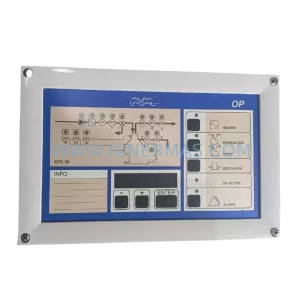
SKU: EPC500 3183062451
Alfa Laval EPC500 3183062451 Service-Ready Spare Part