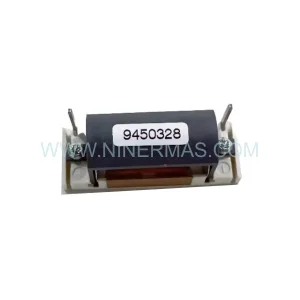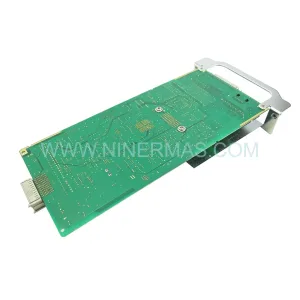
Original Industrial Spare Part
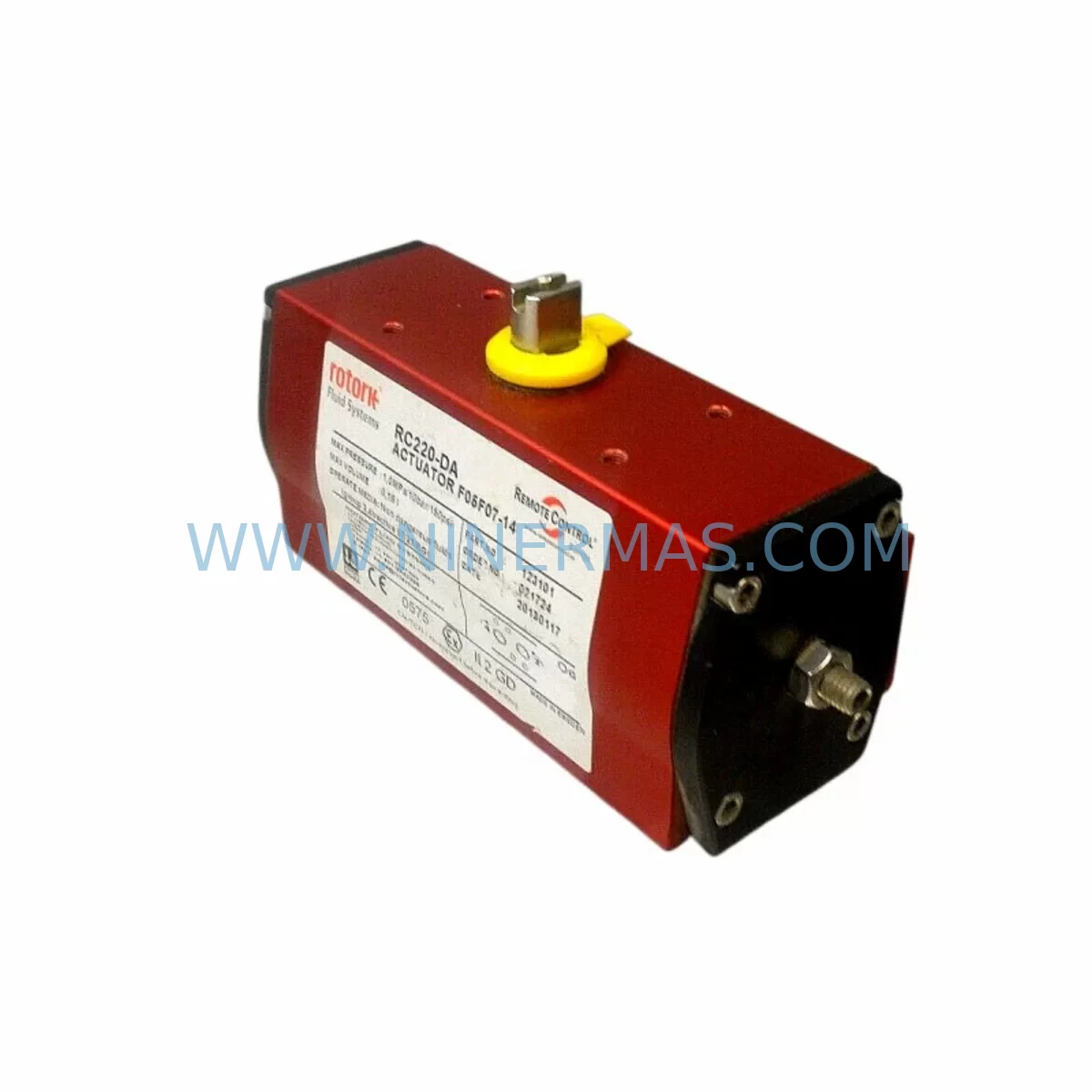
ROTORK RC220-SR087 Retrofit-Compatible Actuator for Legacy Systems
Verify the part, confirm the platform family, and move straight into quotation with the right commercial details.
RFQ Ready
- SKURC220-SR087 ACTUATOR F05F07-14
- CategoryPLC & Industrial Automation Modules
- BrandRotork
- SupportAvailability, lead time, condition, and shipping coordination
How Buyers Usually Use This Page
- Confirm the exact part number and platform family before sending the quote request.
- Use direct email when quantity, condition, and destination are already defined internally.
- Switch to the broader brand or category archive when you need alternates nearby.
Series Navigation
Move through the most common platform families behind this part.
Product RFQ
Send this part directly for quotation.
Include quantity, required condition, destination country, and target delivery timing. Current reference: ROTORK RC220-SR087 Retrofit-Compatible Actuator for Legacy Systems with SKU RC220-SR087 ACTUATOR F05F07-14.
ROTORK RC220-SR087 Retrofit-Compatible Actuator for Legacy Systems
The ROTORK RC220-SR087 Actuator with F05F07-14 flange interface is a proven retrofit-compatible solution engineered for engineers and procurement teams managing aging RC Series valve automation systems. Whether you are replacing a discontinued RC220 unit on a legacy pipeline control skid, upgrading a control cabinet that still relies on older ROTORK RC Series actuators, or extending the operational life of a plant that cannot afford a full system overhaul, this actuator delivers a reliable, drop-in-compatible upgrade path with minimal downtime and maximum compatibility assurance.
NINERMAS maintains verified in-stock inventory of the RC220-SR087 with F05F07-14 mounting flange, backed by a 12-month warranty on all spare parts. Each unit is pre-tested before shipment to confirm torque output, limit switch calibration, and electrical interface integrity — giving your maintenance team confidence before the unit ever reaches the field.
Upgrade Compatibility Table
| Parameter | RC220-SR087 (This Unit) | Retrofit Notes |
|---|---|---|
| Flange Interface | F05 / F07 (ISO 5211), 14mm drive | Confirm valve stem adapter; F05/F07 dual-pattern covers most legacy RC Series installations |
| Mounting Compatibility | ISO 5211 F05 / F07 | Verify bracket orientation and bolt-circle dimensions against existing valve yoke |
| Electrical Interface | Standard RC Series terminal block layout | Cross-reference existing wiring diagram; terminal numbering may differ from pre-2005 RC units |
| Communication Compatibility | Hardwired I/O (4–20 mA / discrete) | For HART or Modbus RTU integration, confirm positioner module compatibility (e.g., ROTORK Pakscan or IQ Series interface) |
| Power Supply Requirement | Confirm nameplate voltage (AC/DC) | Verify existing panel power supply capacity; check against ROTORK RC Series power budget |
| Replacement Recommendation | Direct replacement for RC220 variants with SR087 spring return | SR087 spring return torque must match valve break-to-open / break-to-close requirements |
| Commissioning Focus | Limit switch setting, torque switch calibration, travel stop adjustment | Use ROTORK RC Series commissioning guide; confirm open/close travel before energising |
| Warranty | 12 Months — All NINERMAS spare parts carry a 12-month warranty from date of shipment | |
Retrofit Planning for Existing Automation Systems
Successful integration of the RC220-SR087 into a legacy automation environment requires a structured pre-installation review. Before removing the existing actuator, your engineering team should document the current wiring schedule from the local junction box back to the motor control centre (MCC) or DCS marshalling cabinet. Pay particular attention to the discrete I/O assignments — open limit, closed limit, torque trip, and remote/local status signals — as these map directly to the terminal block on the replacement unit.
Power supply capacity is a frequent oversight in actuator retrofit projects. The RC220-SR087 draws inrush current during motor start; confirm that the existing 24 VDC or 110/240 VAC power supply module in the control cabinet can sustain the peak load without triggering overcurrent protection. In multi-actuator panels, this is especially critical where a shared rail feeds several RC Series units simultaneously.
Backplane and rack considerations apply when the RC220-SR087 is part of a broader control cabinet upgrade. If the cabinet also houses a ROTORK Pakscan P2 master station or a third-party PLC rack — such as a Siemens S7-300 with ET 200M distributed I/O or an Allen-Bradley ControlLogix chassis with 1756-IB16 digital input modules — verify that the actuator’s hardwired signals are correctly mapped to the I/O module addresses before modifying the PLC program. Incorrect address mapping is one of the leading causes of extended commissioning time during actuator replacement projects.
For sites that have migrated or are planning to migrate from legacy serial protocols to Ethernet-based architectures, the RC220-SR087’s hardwired interface can be bridged through a protocol converter or remote I/O gateway — for example, a Moxa NPort or a Pepperl+Fuchs remote I/O module — allowing the actuator to remain in service while the broader SCADA or DCS platform is upgraded. This approach is particularly valuable in phased modernisation programmes where full actuator replacement is deferred to a later capital cycle.
HMI faceplate updates are often overlooked during actuator swaps. If your site uses a Siemens WinCC, Wonderware InTouch, or Ignition SCADA platform, confirm that the valve symbol on the relevant P&ID screen correctly reflects the new actuator’s feedback signals. A mismatch between the physical limit switch state and the HMI display can create operator confusion and potential safety incidents during the first post-commissioning operational cycle.
Installation space must be verified before ordering. The RC220-SR087 with F05F07-14 flange has defined envelope dimensions; confirm clearance for handwheel operation, conduit entry, and local indicator visibility. In congested valve galleries or skid-mounted assemblies, even a small increase in actuator body length can conflict with adjacent pipework or cable trays. Where space is constrained, consider whether a ROTORK RC Series quarter-turn bracket kit or an alternative mounting orientation resolves the conflict without requiring pipework modification.
Signal isolation is recommended when the RC220-SR087 is installed in environments with high electrical noise — for example, adjacent to variable frequency drives (VFDs) or large motor starters. A signal isolator or loop-powered isolator inserted in the 4–20 mA position feedback loop protects both the actuator positioner and the DCS analogue input card from ground loops and induced noise, reducing nuisance trips and improving control loop stability.
Programming cable access should be confirmed prior to installation. ROTORK RC Series actuators are configured using a dedicated ROTORK Bluetooth Setting Tool or infrared setting tool, depending on the unit generation. Ensure the relevant tool is available on-site before the maintenance window begins, as limit switch and torque switch settings cannot be finalised without it.
Downtime Control During System Migration
Minimising plant downtime during an actuator replacement is a primary concern for any operations team. The RC220-SR087 is designed to support a structured hot-swap methodology: with the valve in the manually-isolated position and the process confirmed safe, the existing actuator can be unbolted, the replacement unit fitted, and preliminary limit switch settings applied within a single maintenance shift — provided all pre-installation checks have been completed in advance.
Protecting the original PLC or DCS program logic is non-negotiable. Before any wiring changes are made, take a full backup of the controller program — including function block diagrams, ladder logic, and any associated HMI tag databases. If the replacement actuator introduces any change to the I/O signal naming convention or address structure, update the program offline and perform a simulation check before downloading to the live controller. This prevents inadvertent changes to interlock logic that may affect other field devices sharing the same controller.
Maintaining field control continuity during the transition is achievable through careful sequencing. Where the process permits, place the affected control loop in manual mode at the DCS or SCADA level before disconnecting the actuator. This prevents the controller from issuing spurious open/close commands during the wiring changeover. Once the replacement unit is wired and limit switches are set, restore the loop to automatic mode only after a full functional test — open command, close command, and position feedback verification — has been completed and signed off by the responsible engineer.
Retrofit risk is further reduced by NINERMAS’s pre-shipment testing protocol. Every RC220-SR087 unit is bench-tested for torque output, limit switch operation, and electrical continuity before despatch. This eliminates the risk of receiving a defective unit and having to extend the maintenance window while a replacement is sourced. Combined with the 12-month warranty and dedicated after-sales support, NINERMAS provides the supply chain reliability that legacy system operators depend on.
Retrofit Support FAQ
Q1: Is the RC220-SR087 a direct drop-in replacement for my existing RC220 actuator?
In most cases, yes — provided your existing installation uses an F05 or F07 ISO 5211 flange with a 14mm drive. Confirm the spring return torque rating (SR087) matches your valve’s break-to-open and break-to-close torque requirements. If your existing unit has a different spring return specification, contact NINERMAS to confirm the correct SR variant for your application.
Q2: What wiring checks should I perform before installation?
Compare the terminal block layout of the RC220-SR087 against your existing wiring schedule. Key signals to verify include: open limit (OL), close limit (CL), torque trip open (TTO), torque trip close (TTC), motor supply, and any 4–20 mA position feedback wiring. If your installation uses a ROTORK Pakscan loop or other fieldbus, confirm the positioner module compatibility separately.
Q3: Does NINERMAS perform pre-shipment testing on the RC220-SR087?
Yes. Every unit shipped by NINERMAS is bench-tested for torque output, limit switch calibration, and electrical interface integrity before despatch. A test record is available on request. All units are covered by a 12-month warranty from the date of shipment.
Q4: What is the typical lead time and stock availability?
NINERMAS maintains in-stock inventory of the RC220-SR087 to support urgent maintenance and planned retrofit programmes. Standard lead time for in-stock units is 3–7 business days for international shipment. For large-volume or long-term spare parts programme requirements, contact our sales team to discuss stock commitment and priority allocation.
| Product Series | Legacy |
|---|
Catalog Continuation
More Rotork modules in the catalog.
Use the brand lane to compare nearby part numbers, platform-adjacent modules, and other inquiry-ready listings before sending your final RFQ.
Catalog Continuation
Alternative parts within PLC & Industrial Automation Modules.
Stay inside the same system family when you need substitutes, adjacent modules, or a broader shortlist for procurement review.
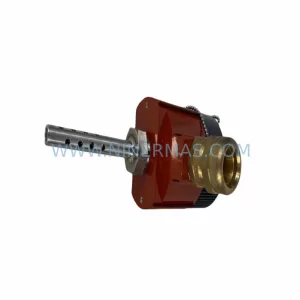
SKU: TRY/PRG/4-20MA/10-30DC
MOORE TRY/PRG/4-20MA/10-30DC Service-Ready Spare Part
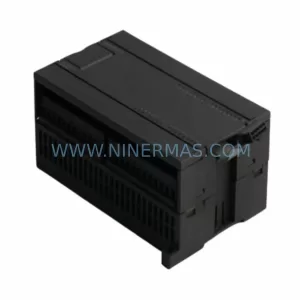
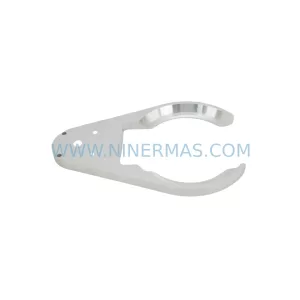
SKU: 5085-404901-11 12INCH 2910-202413-12 404200XRMPD2H14 7-249717
TEL 5085-404901-11 Service-Ready Spare Part for Industrial Maintenance
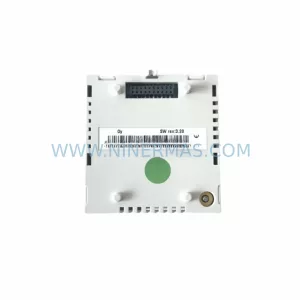
SKU: DIP011 05-058-011
SIGMATEK DIP011 05-058-011 Service-Ready Spare Part