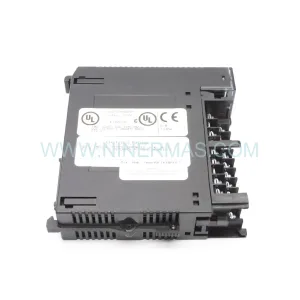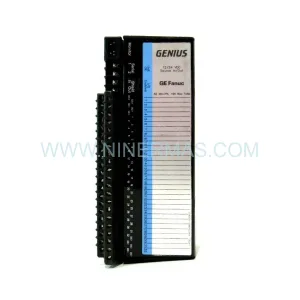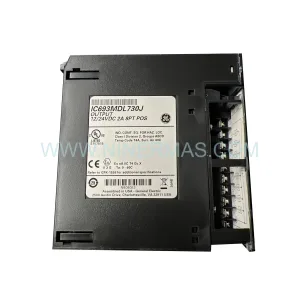
Original Industrial Spare Part
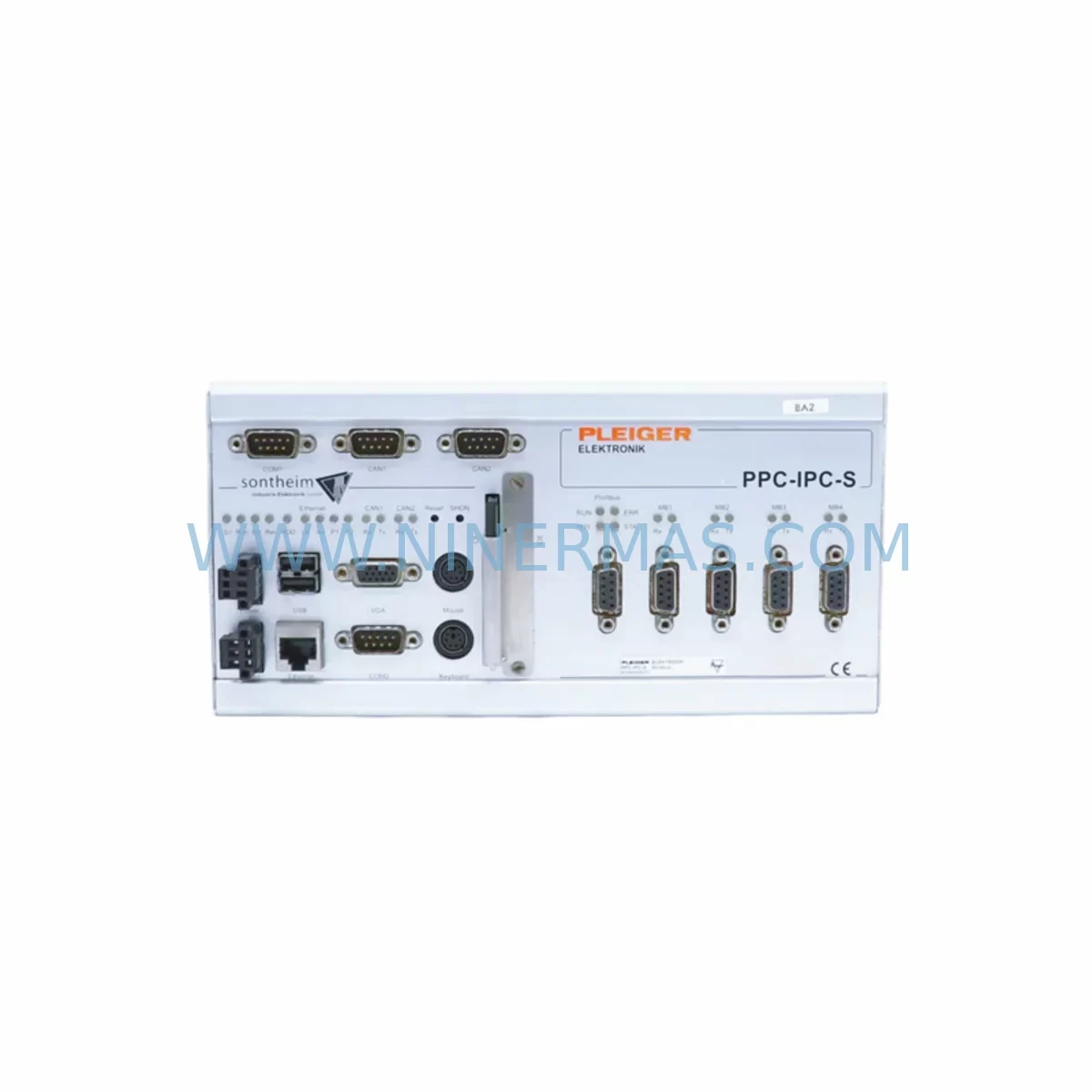
PLEIGER PPC-IPC-S2 Retrofit-Compatible PC Control Module
Verify the part, confirm the platform family, and move straight into quotation with the right commercial details.
RFQ Ready
- SKUPPC-IPC-S2
- CategoryPLC & Industrial Automation Modules
- BrandPLEIGER
- SupportAvailability, lead time, condition, and shipping coordination
How Buyers Usually Use This Page
- Confirm the exact part number and platform family before sending the quote request.
- Use direct email when quantity, condition, and destination are already defined internally.
- Switch to the broader brand or category archive when you need alternates nearby.
Series Navigation
Move through the most common platform families behind this part.
Product RFQ
Send this part directly for quotation.
Include quantity, required condition, destination country, and target delivery timing. Current reference: PLEIGER PPC-IPC-S2 Retrofit-Compatible PC Control Module with SKU PPC-IPC-S2.
PLEIGER PPC-IPC-S2 Retrofit-Compatible PC Control Module: Seamless Legacy System Modernization
The PLEIGER PPC-IPC-S2 is a ruggedized, PC-based control module engineered for demanding industrial environments where conventional computing hardware cannot survive. Designed to operate reliably across wide temperature ranges, high-vibration conditions, and electrically noisy plant floors, the PPC-IPC-S2 serves as a direct retrofit solution for aging control architectures that rely on obsolete embedded controllers, legacy panel PCs, or discontinued industrial computers. For maintenance engineers and system integrators managing long-lifecycle automation assets, this module provides a technically sound migration path that preserves existing program logic, minimizes downtime, and extends the operational life of the surrounding control infrastructure.
PLEIGER’s PPC-IPC-S2 is particularly well-suited for replacement scenarios involving discontinued ruggedized PCs and embedded controllers from legacy platforms. When the original control hardware reaches end-of-life or spare parts become unavailable, the PPC-IPC-S2 offers a compatible form factor and interface set that reduces the scope of panel modifications. Its industrial-grade construction — including fanless thermal management, wide-input power supply compatibility, and sealed I/O connectors — makes it appropriate for control cabinets in process plants, offshore installations, marine automation systems, and heavy manufacturing lines where PLEIGER products have historically been deployed.
Upgrade Compatibility Table
| Parameter | Details |
|---|---|
| SKU / Model | PPC-IPC-S2 |
| Brand / Series | PLEIGER / PPC Series |
| Module Type | Ruggedized PC-Based Industrial Control Module |
| Typical Replacement Target | Legacy embedded controllers, discontinued panel PCs, obsolete ruggedized IPC units |
| Power Supply Input | Wide-range DC input (verify 24 VDC rail capacity in existing cabinet before installation) |
| Communication Interfaces | Serial (RS-232/RS-485), Ethernet; confirm protocol compatibility with existing SCADA/HMI links |
| I/O Connectivity | Verify terminal block pinout against legacy wiring diagrams; adapter harnesses may be required |
| Mounting / Installation Space | DIN rail or panel mount; confirm cutout dimensions and depth clearance in existing enclosure |
| OS / Software Compatibility | Confirm runtime environment compatibility with existing application software and HMI screens |
| Retrofit Recommendation | Backup all PLC/controller programs and HMI projects before hardware swap |
| Commissioning Focus | Power-on sequence, I/O address mapping, communication link verification, HMI screen validation |
| Warranty | 12-Month Warranty — covers manufacturing defects; pre-shipment functional testing included |
Retrofit Planning for Existing Automation Systems
A successful retrofit using the PLEIGER PPC-IPC-S2 begins well before the physical hardware swap. The planning phase must account for every interface point between the control module and the surrounding system. In most legacy installations, the control PC interfaces with a combination of discrete I/O modules, analog signal conditioners, and serial communication links that connect to field instruments, actuators, and supervisory systems. Before removing the original unit, engineers should document all terminal block wiring, capture the I/O address map, and export a full backup of the application program.
On the power supply side, the existing 24 VDC rail must be assessed for adequate current capacity to support the PPC-IPC-S2 alongside any co-located modules. In cabinets where a legacy power supply module is already operating near its rated output, a replacement or supplementary power supply unit should be sourced in advance. Similarly, if the control cabinet houses a backplane or rack assembly with proprietary bus connectors, the physical interface between the PPC-IPC-S2 and any adjacent I/O expansion modules must be verified for mechanical and electrical compatibility.
Communication protocol migration is frequently the most complex aspect of a legacy PC controller replacement. Many older systems rely on proprietary serial protocols or early Modbus RTU implementations over RS-232 links. The PPC-IPC-S2’s serial and Ethernet interfaces support standard industrial protocols, but the application software running on the module must be configured to match the baud rate, parity, stop bits, and device addressing of the connected field devices. Where the legacy system used a dedicated communication module or protocol converter to bridge between the control PC and a fieldbus network — such as PROFIBUS DP, DeviceNet, or FOUNDATION Fieldbus — that gateway device must remain in service or be replaced with an equivalent unit during the migration.
HMI screen compatibility is another critical checkpoint. If the plant uses a standalone operator panel or a SCADA workstation that communicates directly with the legacy control PC via a proprietary driver, the HMI project may require reconfiguration to establish a new communication link with the PPC-IPC-S2. In some cases, the HMI software vendor provides a migration utility; in others, individual tag bindings must be remapped manually. Signal isolators and loop-powered transmitters connected to analog input channels should also be verified against the new module’s input impedance and signal range specifications to avoid calibration drift after the swap.
For installations where the legacy controller manages safety-related interlocks or emergency shutdown sequences, the retrofit plan must include a formal functional safety review. Any hardwired safety relay circuits, safety-rated I/O modules, or SIL-rated logic solvers that interface with the control PC must be tested independently after the PPC-IPC-S2 is installed to confirm that all safety functions remain intact. Programming cables and configuration software compatible with the PPC-IPC-S2 should be prepared in advance so that on-site parameter adjustments can be made without delay during the commissioning window.
Downtime Control During System Migration
Minimizing production interruption during a control module replacement requires a structured approach to pre-staging, execution, and verification. The most effective strategy is to complete as much preparation work as possible while the legacy system remains in service. This includes pre-loading the application software onto the PPC-IPC-S2, pre-configuring all communication parameters, and preparing labeled wiring harnesses that match the terminal layout of the existing cabinet.
On the day of the physical swap, the sequence should begin with a controlled shutdown of the process, followed by isolation of the control cabinet from field power. The legacy control module should be removed only after all terminal connections have been photographed and documented. The PPC-IPC-S2 should be installed, wired, and powered up in a defined sequence that allows each subsystem — power, I/O, communications, and application software — to be verified independently before the process is restarted.
To protect the original program logic, a verified backup copy of the application software should be stored on a separate medium and kept accessible throughout the commissioning period. If the PPC-IPC-S2 is being introduced into a system that previously used a different runtime environment, a parallel test run on a bench setup is strongly recommended before the live cutover. This approach allows engineers to identify any incompatibilities in I/O addressing, timer behavior, or communication timing without exposing the production line to risk.
Where process continuity is critical and a cold cutover is not acceptable, a phased migration strategy may be appropriate. In this approach, the PPC-IPC-S2 is installed alongside the legacy controller in a shadow mode, receiving the same input signals and executing the same logic in parallel, while the legacy unit remains in control. Once the outputs of both systems have been verified to match under normal operating conditions, the cutover can be made with confidence. This method is particularly valuable in continuous process industries where even brief interruptions carry significant cost or safety implications.
All retrofit work performed using the PLEIGER PPC-IPC-S2 supplied by NINERMAS is backed by a 12-month warranty covering manufacturing defects. Each unit undergoes pre-shipment functional testing to confirm operational integrity before dispatch, reducing the risk of commissioning delays caused by hardware faults.
Retrofit Support FAQ
Q1: Is the PLEIGER PPC-IPC-S2 a direct drop-in replacement for my existing legacy control PC?
The PPC-IPC-S2 is designed as a retrofit-compatible replacement for ruggedized PC-based controllers in similar application classes. However, direct drop-in compatibility depends on the specific legacy unit being replaced. Customers should verify mounting dimensions, power input requirements, I/O connector types, and communication interface specifications against the original hardware before ordering. NINERMAS technical support can assist with compatibility assessment based on the legacy model number and application details.
Q2: What commissioning steps are required after installing the PPC-IPC-S2?
After physical installation and wiring, commissioning typically involves: (1) verifying the 24 VDC power supply output under load; (2) confirming I/O channel assignments match the application program’s address map; (3) establishing and testing all serial and Ethernet communication links; (4) validating HMI screen data exchange; and (5) performing a functional test of all control outputs under simulated or live process conditions. A full commissioning checklist is recommended for safety-critical applications.
Q3: Does NINERMAS provide pre-shipment testing for the PPC-IPC-S2?
Yes. All PLEIGER PPC-IPC-S2 units supplied by NINERMAS undergo pre-shipment functional testing to verify power-on operation, I/O functionality, and communication interface integrity. Test records are available upon request. Units are shipped with protective packaging suitable for international freight. The 12-month warranty period begins from the date of shipment.
Q4: What is the lead time and stock availability for the PPC-IPC-S2?
NINERMAS maintains inventory of PLEIGER PPC-IPC-S2 modules to support urgent retrofit and breakdown replacement requirements. Standard lead time for in-stock units is 3–7 business days for international shipments. For projects requiring multiple units or long-term supply commitments, NINERMAS offers stock reservation programs to guarantee availability over extended project timelines. Contact sale@ninermas.com or +0086 187 5021 5667 for current stock status and pricing.
| Product Series | Other series |
|---|---|
| Country of Origin | US |
Catalog Continuation
More PLEIGER modules in the catalog.
Use the brand lane to compare nearby part numbers, platform-adjacent modules, and other inquiry-ready listings before sending your final RFQ.
Catalog Continuation
Alternative parts within PLC & Industrial Automation Modules.
Stay inside the same system family when you need substitutes, adjacent modules, or a broader shortlist for procurement review.
SKU: MPP1500D 6FC5303-1AF30-0AA0
Siemens MPP1500D 6FC5303-1AF30-0AA0 Retrofit Operator Panel
SKU: 6SL3224-0BE31-5UA0
Siemens 6SL3224-0BE31-5UA0 Service-Ready Spare Part