Original Industrial Spare Part
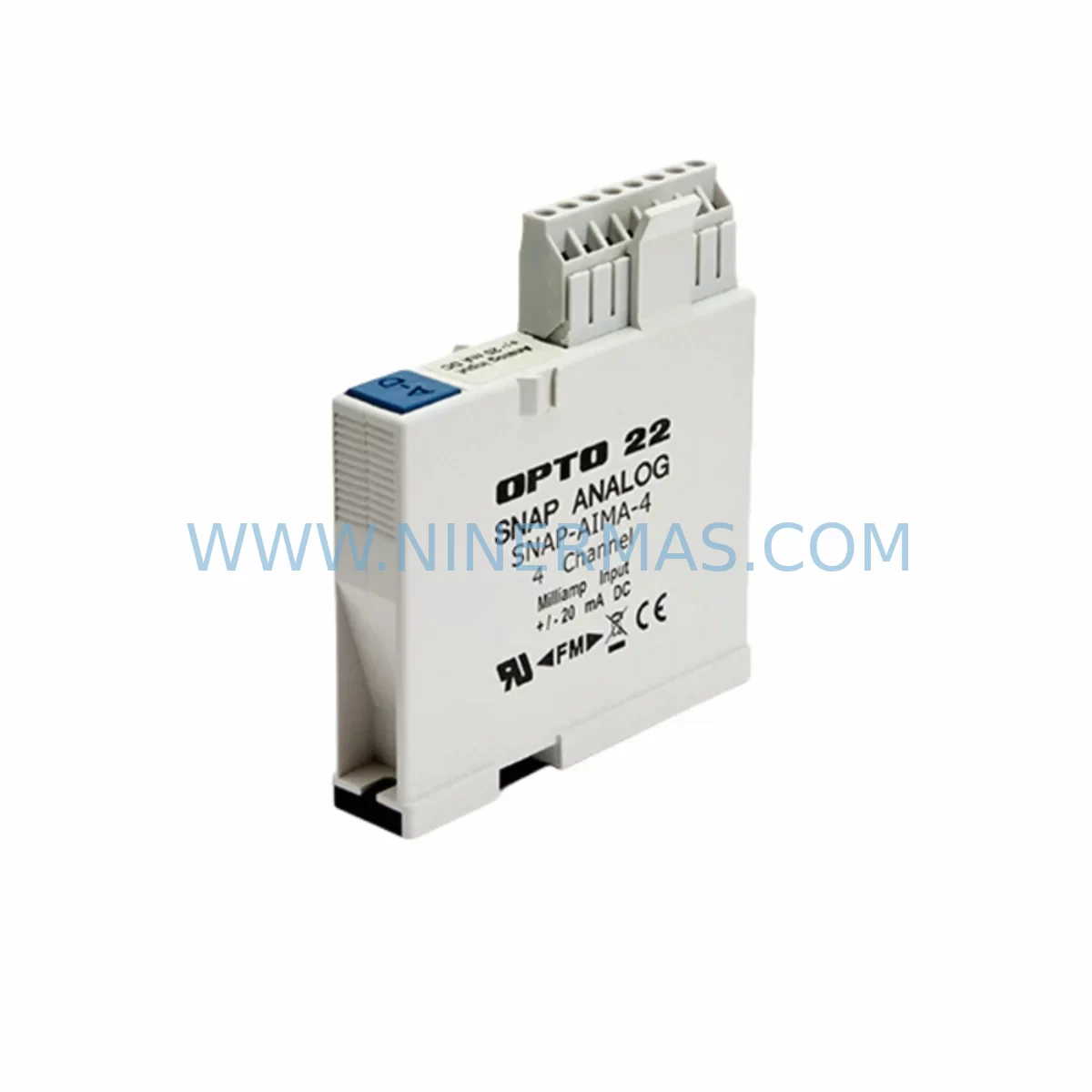
OPTO22 SNAP-AIMA-4 Service-Ready Spare Part for Industrial Maintenance
Verify the part, confirm the platform family, and move straight into quotation with the right commercial details.
RFQ Ready
- SKUSNAP-AIMA-4
- CategoryDCS Distributed Control Systems
- BrandOPTO22
- SupportAvailability, lead time, condition, and shipping coordination
How Buyers Usually Use This Page
- Confirm the exact part number and platform family before sending the quote request.
- Use direct email when quantity, condition, and destination are already defined internally.
- Switch to the broader brand or category archive when you need alternates nearby.
Series Navigation
Move through the most common platform families behind this part.
Product RFQ
Send this part directly for quotation.
Include quantity, required condition, destination country, and target delivery timing. Current reference: OPTO22 SNAP-AIMA-4 Service-Ready Spare Part for Industrial Maintenance with SKU SNAP-AIMA-4.
OPTO22 SNAP-AIMA-4 Service-Ready Spare Part for Industrial Maintenance
The OPTO22 SNAP-AIMA-4 is a 4-channel analog input module designed for the OPTO22 SNAP Series distributed I/O platform. As a critical signal acquisition component in process control and factory automation environments, the SNAP-AIMA-4 accepts milliamp (mA) analog signals from field transmitters and delivers accurate, real-time process data to the host controller. When this module fails or degrades, the consequences are immediate: loss of process visibility, unplanned downtime, and potential safety risk. Maintaining a verified service-ready spare on the shelf is the most reliable strategy for rapid restoration of control system integrity.
At NINERMAS, every SNAP-AIMA-4 unit is sourced as an original OPTO22 component, subject to pre-shipment functional verification, and backed by a 12-month warranty. We support maintenance engineers and procurement teams across processing, utilities, oil & gas, water treatment, and discrete manufacturing industries who depend on fast, reliable spare parts supply for aging SNAP Series control architectures.
Spare Maintenance Table
| Parameter | Specification / Detail |
|---|---|
| Part Number | SNAP-AIMA-4 |
| Manufacturer | OPTO22 |
| Series | SNAP Series Distributed I/O |
| Module Type | 4-Channel Analog Input Module |
| Input Signal Type | 4–20 mA (current loop) |
| Number of Channels | 4 independent analog input channels |
| Resolution | 12-bit analog-to-digital conversion |
| Compatible Brains / Controllers | SNAP-LCE, SNAP-ENET-RTC, SNAP-PAC-R1, SNAP-PAC-R2, SNAP-PAC-S1, SNAP-PAC-EB1, SNAP-PAC-EB2 |
| Mounting | SNAP mounting rack (standard SNAP backplane) |
| Operating Temperature | 0°C to 70°C |
| Application Environment | Industrial process control, SCADA, DCS integration, factory automation |
| Maintenance Recommendation | Replace on signal drift, channel failure, or as part of scheduled 3–5 year module refresh |
| Country of Origin | United States |
| Warranty | 12 Months — NINERMAS Quality Assurance |
| Pre-Shipment Testing | Functional verification performed before dispatch |
| Availability | In-stock; long-term supply program available |
Maintenance Planning for Continuous Operation
The SNAP-AIMA-4 sits at the heart of analog signal acquisition in SNAP-based control cabinets. When planning a replacement or conducting a scheduled cabinet inspection, maintenance engineers should treat the SNAP-AIMA-4 as part of a broader I/O health review — not an isolated swap. Signal integrity across the entire analog loop depends on the condition of multiple interconnected components.
Begin by verifying the SNAP Series backplane or mounting rack for corrosion, bent connector pins, or mechanical damage that could cause intermittent contact with the replacement module. A faulty rack will cause a new SNAP-AIMA-4 to exhibit the same symptoms as the failed unit. Next, inspect the SNAP brain or network controller — such as the SNAP-PAC-R1 or SNAP-ENET-RTC — to confirm firmware compatibility and that the brain itself is not the root cause of the analog channel fault.
Field wiring connected to the SNAP-AIMA-4 should be checked for loop integrity. Confirm that 4–20 mA transmitters on the process side are delivering correct signals before the new module is commissioned. Faulty transmitters or broken shielded signal cables are a common source of misdiagnosed module failures. Inspect terminal blocks and field wiring terminations for loose connections, oxidation, or moisture ingress — particularly in humid or outdoor-adjacent cabinet environments.
If the SNAP-AIMA-4 is installed in a cabinet alongside SNAP analog output modules (such as the SNAP-AOMA-4 or SNAP-AOA-23) or SNAP digital I/O modules, verify that the shared backplane power supply is within specification. An undersized or aging SNAP power supply module (e.g., SNAP-PS5 or SNAP-PS24) can cause erratic analog readings across all channels. Measure supply rail voltage under load before and after module replacement.
For systems integrated with SCADA or DCS platforms, confirm that the SNAP communication module or Ethernet brain is correctly mapping the new module’s channel addresses. Configuration mismatches after a hot-swap can result in incorrect tag assignments or missing process values in the historian. Where signal isolators are used between field transmitters and the SNAP rack, inspect isolator output calibration — a drifted isolator will corrupt readings even from a healthy SNAP-AIMA-4.
Procurement teams building annual spare parts lists for SNAP-based systems should consider stocking the SNAP-AIMA-4 alongside complementary modules: SNAP-AOMA-4 (analog output), SNAP-IDC5 (digital input), SNAP-OAC5 (digital output), and the relevant SNAP brain module for the installed controller generation. A balanced spare parts kit reduces mean time to repair (MTTR) and eliminates the risk of a single unavailable component extending a shutdown.
Site Replacement Workflow
Step 1 — Isolate and document: Before removing the SNAP-AIMA-4, record all channel tag assignments, engineering unit ranges, and current process values from the SCADA or PAC controller. Take a photograph of the wiring terminations for reference during reinstallation.
Step 2 — Power-down procedure: Follow site lock-out/tag-out (LOTO) procedures. The SNAP Series supports hot-swap in some configurations, but for analog input modules carrying live process signals, a controlled shutdown of the affected I/O segment is recommended to prevent signal transients from propagating to the control loop.
Step 3 — Module removal: Disconnect field wiring from the module’s terminal connections. Release the module from the SNAP mounting rack by pressing the retention latch and sliding the module clear. Inspect the rack connector for damage before inserting the replacement SNAP-AIMA-4.
Step 4 — Install replacement: Seat the new SNAP-AIMA-4 firmly into the rack slot. Reconnect field wiring according to the documented termination reference. Verify that shielding is correctly grounded at a single point to prevent ground loops.
Step 5 — Commission and verify: Restore power and confirm that the PAC controller or SNAP brain recognizes the module. Apply a known reference signal (e.g., a calibrated 4 mA and 20 mA source) to each channel and verify that the controller reads the correct engineering unit values. Document the commissioning result and update the maintenance log.
This workflow applies equally to emergency replacements during unplanned downtime and to planned module swaps during scheduled maintenance windows. The NINERMAS SNAP-AIMA-4 is pre-tested and ready for immediate installation, minimizing the time between receipt and system restoration.
Spare Parts Support FAQ
Q1: Is the NINERMAS SNAP-AIMA-4 an original OPTO22 component?
Yes. NINERMAS supplies original OPTO22 SNAP-AIMA-4 modules. Each unit is sourced through verified supply channels and undergoes pre-shipment functional testing to confirm analog input performance across all four channels before dispatch.
Q2: What warranty coverage is provided, and what does it include?
All SNAP-AIMA-4 units supplied by NINERMAS are covered by a 12-month warranty from the date of shipment. The warranty covers manufacturing defects and functional failures under normal operating conditions. Our team provides technical support for installation and commissioning queries throughout the warranty period.
Q3: Can NINERMAS support long-term or recurring supply of the SNAP-AIMA-4?
Yes. NINERMAS offers long-term spare parts supply programs for customers with ongoing maintenance requirements. If your facility operates multiple SNAP-based control systems or requires annual replenishment of I/O module spares, contact our team to discuss a scheduled supply arrangement that aligns with your maintenance calendar.
Q4: How do I confirm compatibility before ordering?
The SNAP-AIMA-4 is compatible with all standard OPTO22 SNAP mounting racks and SNAP brain/controller modules. To confirm compatibility with your specific installed system — including PAC controller generation, firmware version, and rack configuration — send your system details to sale@ninermas.com. Our technical team will verify compatibility and advise on any configuration considerations before shipment.
| Product Series | Other series |
|---|
Catalog Continuation
More OPTO22 modules in the catalog.
Use the brand lane to compare nearby part numbers, platform-adjacent modules, and other inquiry-ready listings before sending your final RFQ.
Catalog Continuation
Alternative parts within DCS Distributed Control Systems.
Stay inside the same system family when you need substitutes, adjacent modules, or a broader shortlist for procurement review.