Original Industrial Spare Part
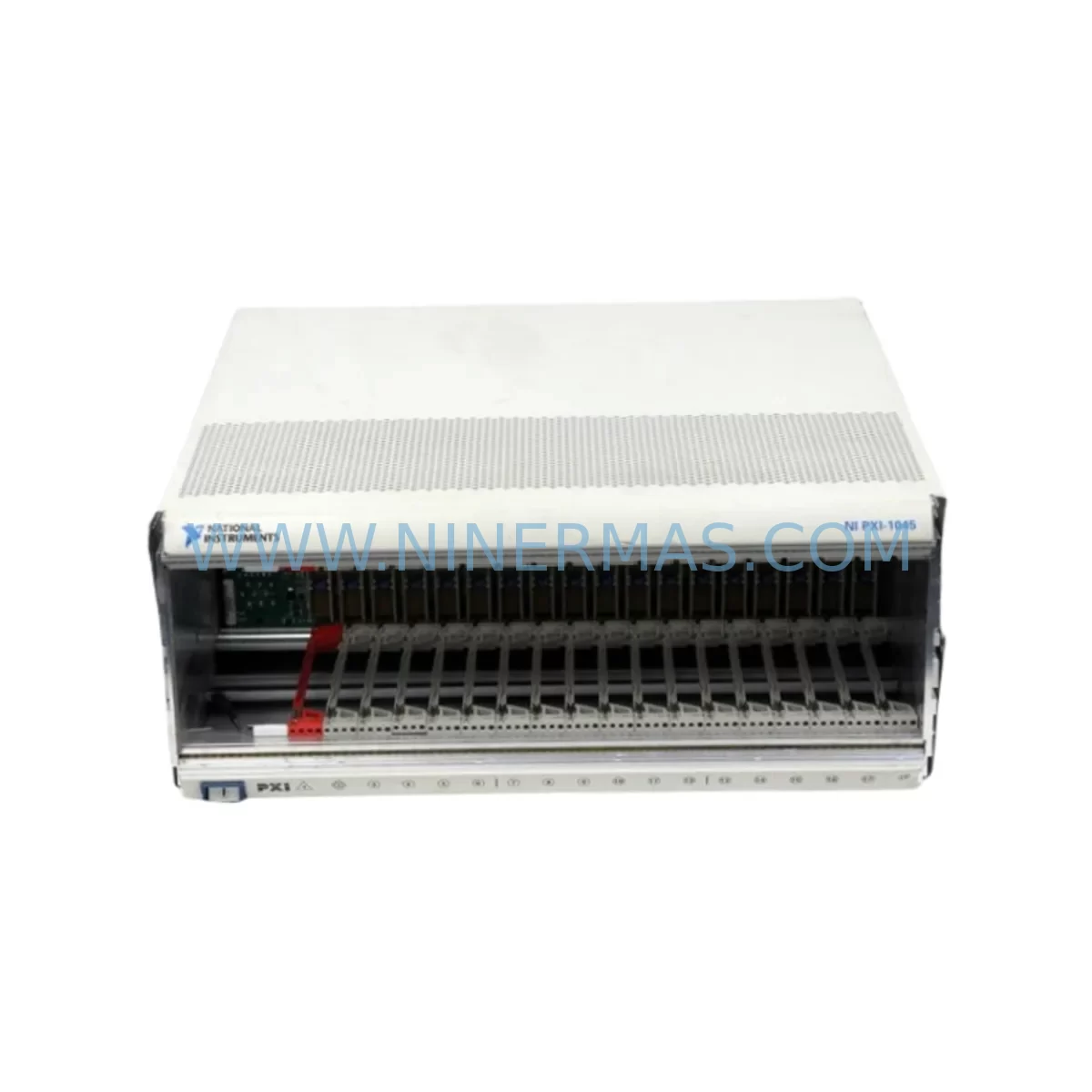
NI PXI-1045 Retrofit-Compatible PXI Chassis for Legacy Systems
Verify the part, confirm the platform family, and move straight into quotation with the right commercial details.
RFQ Ready
- SKUPXI-1045
- CategorySIS Safety & Redundancy Systems
- BrandNational Instruments
- SupportAvailability, lead time, condition, and shipping coordination
How Buyers Usually Use This Page
- Confirm the exact part number and platform family before sending the quote request.
- Use direct email when quantity, condition, and destination are already defined internally.
- Switch to the broader brand or category archive when you need alternates nearby.
Series Navigation
Move through the most common platform families behind this part.
Product RFQ
Send this part directly for quotation.
Include quantity, required condition, destination country, and target delivery timing. Current reference: NI PXI-1045 Retrofit-Compatible PXI Chassis for Legacy Systems with SKU PXI-1045.
NI PXI-1045 Retrofit-Compatible PXI Chassis for Legacy Systems
The NI PXI-1045 is a 14-slot, 8U PXI chassis manufactured by National Instruments (NI), designed for high-channel-count test, measurement, and industrial automation applications. As legacy PXI platforms age and original spare parts become increasingly difficult to source, the PXI-1045 has emerged as a critical retrofit component for engineers tasked with modernizing existing rack-based control and data acquisition systems without full platform replacement.
Whether you are extending the operational life of a legacy NI PXI-1000B or NI PXI-1042 installation, migrating from a discontinued chassis to a higher-slot-count platform, or consolidating multiple smaller chassis into a single unified backplane, the PXI-1045 provides a structurally compatible, electrically sound upgrade path. Its 14 peripheral slots, integrated 10 MHz reference clock, and star trigger bus make it directly compatible with the majority of NI PXI instrument modules currently deployed in the field.
Upgrade Compatibility Table
| Parameter | NI PXI-1045 (This Unit) | NI PXI-1042 (Legacy) | NI PXI-1000B (Legacy) |
|---|---|---|---|
| Peripheral Slots | 14 | 8 | 8 |
| Form Factor | 8U Rackmount | 4U Rackmount | 4U Rackmount |
| System Controller Slot | Slot 1 (PXI-8xxx compatible) | Slot 1 | Slot 1 |
| Backplane Bus | PXI (PCI-based) | PXI (PCI-based) | PXI (PCI-based) |
| Reference Clock | 10 MHz integrated | 10 MHz integrated | 10 MHz integrated |
| Star Trigger Bus | Yes | Yes | Yes |
| Power Supply | Integrated AC (auto-ranging) | Integrated AC | Integrated AC |
| Cooling | Forced-air, front-to-back | Forced-air | Forced-air |
| Module Compatibility | All NI PXI instrument modules | All NI PXI instrument modules | All NI PXI instrument modules |
| Installation Space | 8U rack space required | 4U rack space required | 4U rack space required |
| Retrofit Recommendation | Direct upgrade target | Upgrade to PXI-1045 for slot expansion | Upgrade to PXI-1045 for slot expansion |
| Commissioning Focus | Slot address reassignment, trigger routing verification | — | — |
| Warranty | 12 Months | OEM warranty expired | OEM warranty expired |
Retrofit Planning for Existing Automation Systems
Integrating the NI PXI-1045 into an existing automation or test infrastructure requires careful pre-migration planning across several interdependent subsystems. The chassis itself is only one element of a broader upgrade that typically involves the system controller, instrument modules, cabling, software configuration, and operator interface.
The most common retrofit scenario involves replacing a legacy NI PXI-1042 or NI PXI-1000B chassis that has reached end-of-service life. In these cases, the existing NI PXI-8196 or NI PXI-8110 embedded controller can often be reused in Slot 1 of the PXI-1045 without modification, provided the controller’s PXI interface is confirmed compatible with the new backplane revision. Engineers should verify the controller’s BIOS version and NI-DAQmx driver compatibility before committing to the chassis swap.
On the I/O side, modules such as the NI PXI-6251 multifunction DAQ, NI PXI-6514 digital I/O, and NI PXI-4461 dynamic signal acquisition module are physically and electrically compatible with the PXI-1045 backplane. However, slot addressing must be re-verified after migration: any LabVIEW or TestStand application that references modules by chassis slot number will require a configuration update in NI MAX (Measurement & Automation Explorer) to reflect the new slot assignments in the expanded 14-slot environment.
For systems that include NI PXI-2530 switching modules or NI PXI-5122 digitizers, the trigger routing paths defined in the original system must be re-mapped to the PXI-1045’s star trigger and PXI trigger bus lines. This is particularly important in multi-chassis synchronization setups where the NI PXI-6653 timing and synchronization module is used to distribute clocks and triggers across the backplane.
Rack space is a critical physical constraint. The PXI-1045 occupies 8U of rack height, compared to the 4U of the PXI-1042. Before installation, confirm that the control cabinet or 19-inch rack has sufficient vertical clearance, adequate front-to-back depth for cable management, and appropriate power distribution capacity. The chassis power supply draws up to 850 W at full module load; the rack PDU and upstream circuit breaker must be rated accordingly.
For systems that include an NI HMI-7904 or third-party operator panel connected via Ethernet or serial link, the HMI communication configuration should be validated post-migration to confirm that IP addressing, OPC server tag paths, and screen navigation logic remain intact after the chassis and controller relocation.
Downtime Control During System Migration
Minimizing production downtime during a PXI chassis migration is achievable with structured pre-migration preparation. The recommended approach is to perform all software configuration changes — including NI MAX device renaming, slot address updates, and LabVIEW project resource remapping — on a parallel engineering workstation before the physical chassis swap takes place on the production line.
A full image backup of the embedded controller’s operating system and application partition should be captured using NI System Image Utility or a compatible disk imaging tool prior to any hardware removal. This ensures that if the migration encounters an unexpected compatibility issue, the original system can be restored to service within the backup recovery window rather than requiring a full software rebuild.
During the physical swap, label all module positions, cable connections, and terminal block assignments before removal. The PXI-1045’s 14-slot layout means that modules previously occupying slots 2–8 in a legacy chassis may be redistributed across slots 2–15, and any hardcoded slot references in the application code must be updated accordingly. Use NI MAX’s device alias feature to abstract slot-specific references where possible, reducing the risk of application-layer errors after the migration.
Post-installation commissioning should include a full I/O loop check, trigger bus continuity verification, reference clock lock confirmation, and a controlled test run of the application under supervised conditions before returning the system to autonomous production operation. Pre-shipment functional testing of the PXI-1045 chassis is performed prior to dispatch, covering power supply output verification, backplane signal integrity, and cooling system operation — reducing the risk of field failures during the commissioning window.
With proper preparation, most PXI-1045 chassis migrations can be completed within a planned maintenance window of four to eight hours, including physical installation, software reconfiguration, I/O verification, and supervised trial operation.
Retrofit Support FAQ
Q1: Is the NI PXI-1045 a direct drop-in replacement for the NI PXI-1042 or NI PXI-1000B?
The PXI-1045 is backplane-compatible with all standard NI PXI instrument modules used in the PXI-1042 and PXI-1000B. However, it is not a physical form-factor drop-in: the PXI-1045 is an 8U chassis versus the 4U of the legacy units. Rack space, cable lengths, and mounting hardware must be assessed before installation. All existing PXI modules, including DAQ, switching, timing, and digitizer cards, will operate in the PXI-1045 without modification to the module hardware itself.
Q2: What commissioning steps are required after installing the PXI-1045 in a legacy system?
After physical installation, the primary commissioning steps are: (1) update device slot assignments in NI MAX; (2) verify trigger bus routing and reference clock lock; (3) update any slot-specific references in LabVIEW, TestStand, or third-party SCADA/HMI applications; (4) perform a full I/O loop check; and (5) conduct a supervised trial run before returning to production. For systems using the NI PXI-6653 for multi-chassis synchronization, trigger re-mapping is an additional required step.
Q3: Does this unit come with a warranty, and has it been tested before shipment?
Yes. Every NI PXI-1045 unit supplied by NINERMAS is covered by a 12-month warranty from the date of shipment. Each unit undergoes pre-shipment functional testing covering power supply output, backplane signal integrity, and cooling system operation before dispatch. In-stock units are available for prompt shipment, and inventory availability can be confirmed by contacting our sales team directly.
Q4: Can the PXI-1045 support mixed-generation NI PXI modules from different product series?
Yes. The PXI-1045 backplane is compatible with the full range of NI PXI instrument modules regardless of their original release generation, provided they conform to the PXI-1 specification. Modules from the NI PXI-6000 DAQ series, NI PXI-5000 RF and digitizer series, NI PXI-2000 switching series, and NI PXI-4000 signal conditioning series can all be installed and operated simultaneously within the 14-slot chassis, subject to the total power budget of the integrated power supply.
| Product Series | Legacy |
|---|
Catalog Continuation
More National Instruments modules in the catalog.
Use the brand lane to compare nearby part numbers, platform-adjacent modules, and other inquiry-ready listings before sending your final RFQ.
SKU: M8777/153-09-B615A2E1
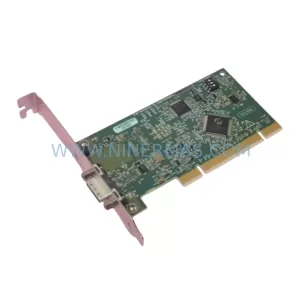
NI M8777/153-09-B615A2E1 Safety-Reliable Video Capture for Critical Sites
Catalog Continuation
Alternative parts within SIS Safety & Redundancy Systems.
Stay inside the same system family when you need substitutes, adjacent modules, or a broader shortlist for procurement review.
SKU: GCP-32AN 1A 2A 3A 4A 5A 7A 10A 15A 20A 25A 30A
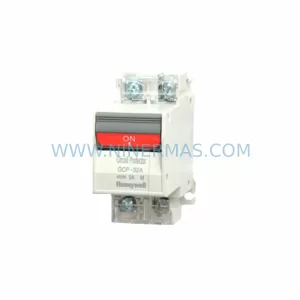
Honeywell GCP-32AN Safety-Reliable Power Supply for Critical Sites
SKU: ACS880-01-04A8-5
ABB ACS880-01-04A8-5 Safety-Reliable VFD for Critical Control