Original Industrial Spare Part
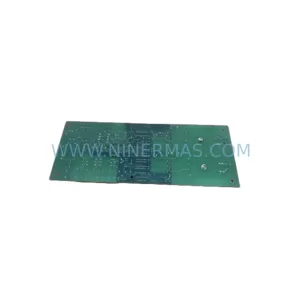
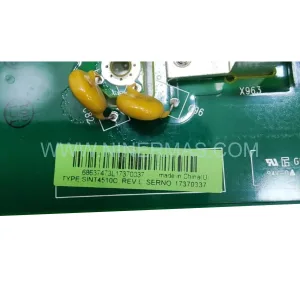
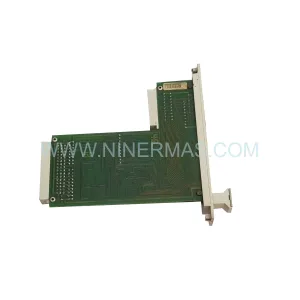
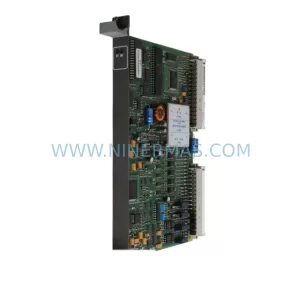
Honeywell 51202971-500 Retrofit I/O Module for Legacy TDC 3000
Verify the part, confirm the platform family, and move straight into quotation with the right commercial details.
RFQ Ready
- SKU51202971-500/51202971-501/51202971-502
- CategoryDCS Distributed Control Systems
- BrandHoneywell
- SupportAvailability, lead time, condition, and shipping coordination
How Buyers Usually Use This Page
- Confirm the exact part number and platform family before sending the quote request.
- Use direct email when quantity, condition, and destination are already defined internally.
- Switch to the broader brand or category archive when you need alternates nearby.
Series Navigation
Move through the most common platform families behind this part.
Product RFQ
Send this part directly for quotation.
Include quantity, required condition, destination country, and target delivery timing. Current reference: Honeywell 51202971-500 Retrofit I/O Module for Legacy TDC 3000 with SKU 51202971-500/51202971-501/51202971-502.
Honeywell 51202971-500 Retrofit I/O Module for Legacy TDC 3000: Seamless Compatibility and Smooth Upgrade
The Honeywell 51202971-500, along with its variant part numbers 51202971-501 and 51202971-502, is a field-proven I/O module originally designed for the Honeywell TDC 3000 distributed control system and fully compatible with the Experion PKS migration architecture. As legacy TDC 3000 installations approach end-of-life and original spare parts become increasingly scarce, this module remains one of the most sought-after retrofit components for plants seeking to extend operational continuity without committing to a full platform overhaul.
Whether your facility is managing a phased migration from TDC 3000 to Experion PKS, consolidating I/O racks, or simply maintaining uptime on a critical process loop, the 51202971-500 provides the electrical and logical compatibility required to keep your control system running. NINERMAS maintains verified inventory of this module and ships with full functional testing and a 12-month warranty.
Upgrade Compatibility Table
| Parameter | Details |
|---|---|
| Part Numbers | 51202971-500 / 51202971-501 / 51202971-502 |
| Platform Compatibility | Honeywell TDC 3000, Experion PKS (migration path) |
| Module Type | I/O Module (Analog / Digital — confirm channel type per suffix) |
| Backplane Interface | TDC 3000 standard card cage backplane; verify slot addressing before installation |
| Communication Protocol | Honeywell proprietary LCN / UCN bus; confirm node address with existing network map |
| Power Supply Requirement | Supplied via backplane; verify card cage PSU capacity before hot-swap |
| Terminal Wiring | Screw-terminal field wiring; confirm marshalling cabinet layout and signal range |
| Installation Space | Standard TDC 3000 card slot; measure available rack space before ordering |
| Replacement Recommendation | Direct drop-in for same suffix; cross-suffix requires engineering review |
| Commissioning Focus | Module address configuration, I/O channel calibration, HMI tag re-mapping |
| Warranty | 12 Months — covers functional failure under normal operating conditions |
Retrofit Planning for Existing Automation Systems
Replacing the 51202971-500 in an active TDC 3000 installation requires a structured approach that accounts for the interdependencies across the control architecture. Before the module is physically swapped, engineers must audit the existing card cage configuration, confirm the backplane slot assignment, and verify that the replacement module’s suffix matches the original — since the -500, -501, and -502 variants may differ in channel count or signal type.
Power budget verification is a critical first step. The TDC 3000 card cage relies on a shared power supply module — often a Honeywell 51195156-100 or equivalent PSU — and adding or replacing I/O cards without checking available headroom can cause voltage instability across the rack. Once power capacity is confirmed, attention shifts to the field wiring terminations. The marshalling cabinet layout must be reviewed to ensure that existing cable runs and terminal block assignments align with the replacement module’s pinout.
On the network side, the 51202971-500 communicates over Honeywell’s Local Control Network (LCN) or Universal Control Network (UCN), depending on the system generation. If the plant is in the process of migrating toward Experion PKS, the replacement module may need to coexist with a C300 controller or an EPKS server node during the transition period. In such cases, a Honeywell CNI (Control Network Interface) module or a Series C I/O Link module may be required to bridge legacy and modern network segments.
For facilities also managing I/O expansion — adding new measurement points to an existing loop — the 51202971-500 can be paired with additional analog input modules or digital output modules within the same card cage, provided slot availability and backplane addressing allow it. Plants running Honeywell’s Universal Station or GUS operator consoles should also verify that HMI display pages referencing the replaced module’s tag addresses are updated to reflect any channel remapping performed during installation.
Where communication protocol migration is part of the project scope — for example, transitioning from LCN-based I/O to FOUNDATION Fieldbus or HART-enabled smart field devices — a signal isolator or protocol converter may be needed at the marshalling level to maintain signal integrity. Programming cable access to the system’s History Module or AM (Application Module) may also be required to back up and restore control strategies before and after the module swap.
Downtime Control During System Migration
Minimizing unplanned downtime during a TDC 3000 I/O module replacement is achievable with disciplined pre-work. The most effective strategy is to complete all configuration, address mapping, and wiring verification offline — using a bench test setup or a shadow rack — before the scheduled maintenance window begins. This allows the physical swap to be completed within a single shift, with the replacement 51202971-500 pre-configured and ready for immediate insertion.
Before removing the original module, the existing control strategy should be exported from the Application Module and stored in a secure backup location. If the plant uses Honeywell’s Control Builder or a legacy TDC 3000 engineering workstation, the program logic, PID tuning parameters, and alarm setpoints associated with the affected I/O channels must all be documented. This ensures that if the replacement module requires re-addressing or recalibration, the original logic can be restored without relying on operator memory or informal records.
During the cutover, field devices connected to the module — transmitters, control valves, or discrete sensors — should be placed in manual mode or bypassed at the DCS level to prevent spurious outputs from affecting the process. Once the replacement module is seated and powered, a channel-by-channel loop check should be performed to verify signal continuity, correct engineering unit scaling, and proper alarm response before returning the loop to automatic control.
For plants where continuous operation is non-negotiable, a parallel redundancy approach — where a second module is installed in a redundant slot and synchronized before the primary is removed — can reduce the effective cutover time to near zero. This approach requires that the card cage has a spare slot available and that the system’s redundancy management software recognizes the new module without requiring a full controller restart.
Retrofit Support FAQ
Q1: Can the 51202971-501 or 51202971-502 directly replace the 51202971-500?
The three suffix variants share the same form factor and backplane interface, but may differ in channel configuration or signal range. A direct cross-suffix substitution should be validated against the original system documentation or Honeywell’s product compatibility matrix before installation. NINERMAS can provide pre-shipment technical confirmation upon request.
Q2: What commissioning steps are required after installing the replacement module?
After physical installation, the module address must be confirmed against the existing network map. I/O channels should be calibrated to match the original signal ranges, and HMI tag assignments should be verified in the operator console. A full loop check — from field device to DCS display — is recommended before returning the loop to automatic control.
Q3: Is the module tested before shipment, and what does the warranty cover?
All modules supplied by NINERMAS undergo functional testing prior to dispatch. The 12-month warranty covers failure under normal operating conditions and excludes damage caused by incorrect installation, overvoltage, or environmental factors outside the module’s rated specifications. Warranty claims are supported with direct technical assistance.
Q4: What is the typical lead time, and do you maintain stock?
NINERMAS maintains verified inventory of the 51202971-500 series and can typically ship within 3–5 business days. For urgent requirements or large-quantity orders, contact our team directly to confirm availability and arrange expedited dispatch.
| Product Series | TDC 3000 |
|---|---|
| Country of Origin | US |
Catalog Continuation
Likely TDC 2000/3000 platform matches.
These parts are closer to the same platform family signaled by the current SKU and title, so buyers can validate continuity before sending a final RFQ.
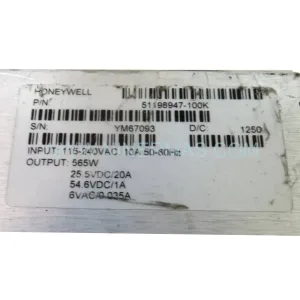
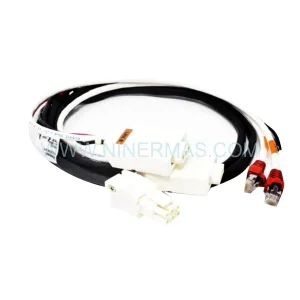
Catalog Continuation
Nearby part numbers around 51202971.
Use this lane when the buyer is comparing adjacent model numbers, revision-near items, or closely related spare variants within the same brand family.
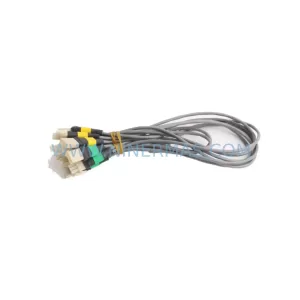
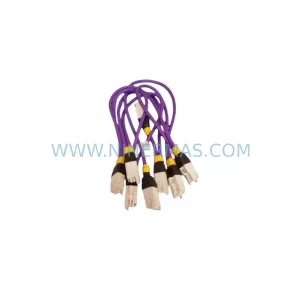
SKU: 51202971-510、51202971-511、51202971-512
Honeywell 51202971-510 Service-Ready Spare Part for Industrial Maintenance
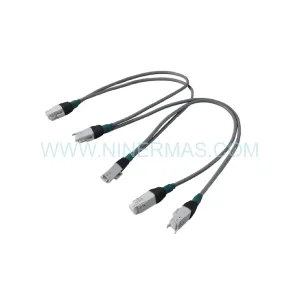
SKU: 51202971-102 51202971-112
Honeywell 51202971-102 Safety-Reliable IO Link Cable for Control
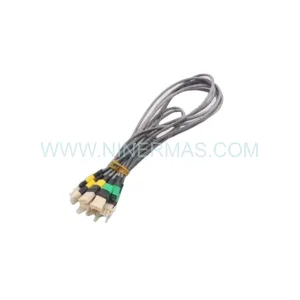
SKU: 51202971-101 REV.D
Honeywell 51202971-101 REV D Battery Backup Module — TDC 3000 DCS
Catalog Continuation
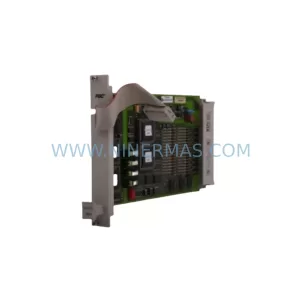
More Honeywell modules in the catalog.
Use the brand lane to compare nearby part numbers, platform-adjacent modules, and other inquiry-ready listings before sending your final RFQ.
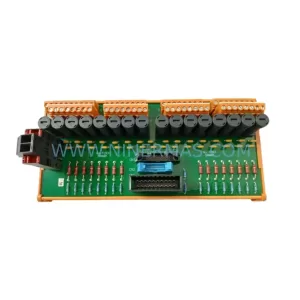
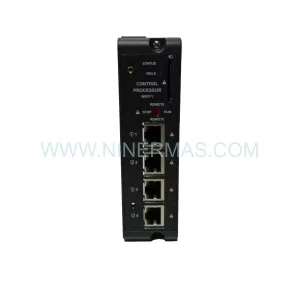
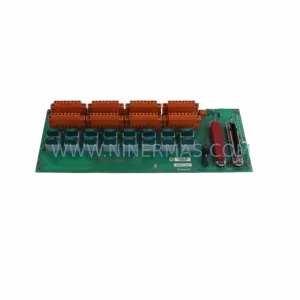
Catalog Continuation
Alternative parts within DCS Distributed Control Systems.
Stay inside the same system family when you need substitutes, adjacent modules, or a broader shortlist for procurement review.
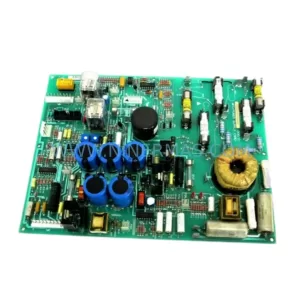
SKU: 531X111PSHARG1
GE 531X111PSHARG1 Retrofit-Compatible MCF Power Supply
SKU: GJR2392700R1210 83SR07F-E
ABB GJR2392700R1210 83SR07F-E Service-Ready Spare Part