Original Industrial Spare Part
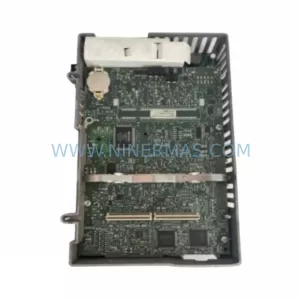
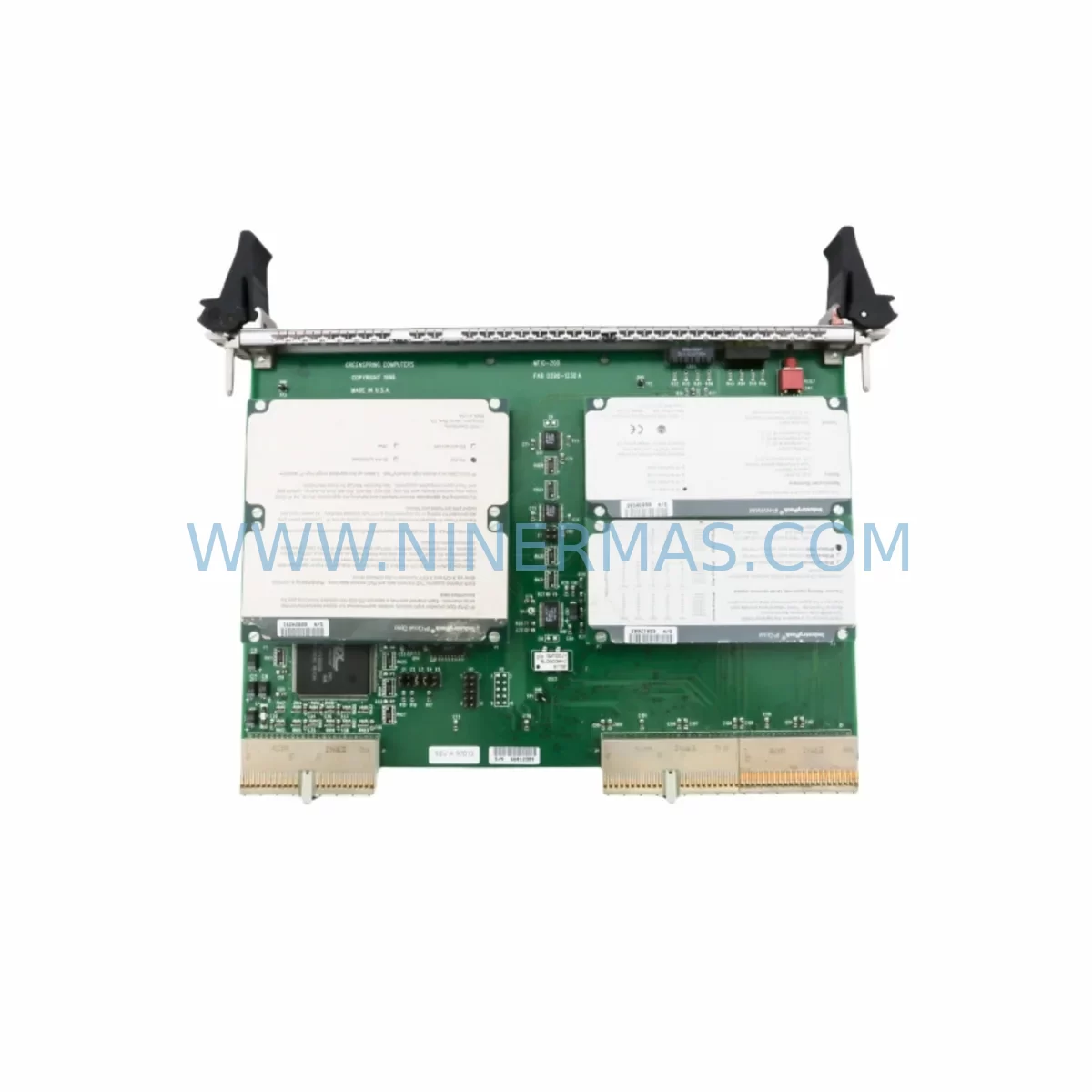
Greenspring MFIO-200-0021-42777 Retrofit Octal 485 for Legacy
Verify the part, confirm the platform family, and move straight into quotation with the right commercial details.
RFQ Ready
- SKUCPCI-200 W/ IP-OCTAL 485 MFIO-200 CPCI-200 W/ IP-OPTO INTERRUPTER MFIO-200 0021-42777
- CategoryPLC & Industrial Automation Modules
- BrandGreenspring
- SupportAvailability, lead time, condition, and shipping coordination
How Buyers Usually Use This Page
- Confirm the exact part number and platform family before sending the quote request.
- Use direct email when quantity, condition, and destination are already defined internally.
- Switch to the broader brand or category archive when you need alternates nearby.
Series Navigation
Move through the most common platform families behind this part.
Product RFQ
Send this part directly for quotation.
Include quantity, required condition, destination country, and target delivery timing. Current reference: Greenspring MFIO-200-0021-42777 Retrofit Octal 485 for Legacy with SKU CPCI-200 W/ IP-OCTAL 485 MFIO-200 CPCI-200 W/ IP-OPTO INTERRUPTER MFIO-200 0021-42777.
Greenspring MFIO-200-0021-42777 Retrofit Octal 485 for Legacy Systems
The Greenspring MFIO-200-0021-42777, also referenced under the CPCI-200 IP-OCTAL 485 platform, is an octal-port RS-485 serial communication module designed for CompactPCI (CPCI) chassis environments. As industrial facilities face the end-of-life of legacy serial communication infrastructure, this module has become a critical retrofit component for engineers tasked with modernizing distributed control systems, SCADA networks, and multi-drop serial bus architectures without replacing the entire control cabinet. NINERMAS maintains verified stock of the MFIO-200-0021-42777 with a 12-month warranty and mandatory pre-shipment functional testing, supporting customers across energy, petrochemical, automotive, and discrete manufacturing sectors.
The CPCI-200 platform from Greenspring was widely deployed in the late 1990s and 2000s as a mezzanine-based I/O expansion solution for CompactPCI host controllers. The IP-OCTAL 485 variant provides eight independent RS-485 serial ports via an Industry Pack (IP) mezzanine carrier, making it suitable for multi-drop Modbus RTU networks, legacy DCS field device polling, and serial-linked HMI communication. When the original module fails or reaches end-of-life, the MFIO-200-0021-42777 serves as the verified replacement, preserving the existing wiring harness, terminal block assignments, and software driver configuration without requiring a full system redesign.
Upgrade Compatibility Table
| Parameter | Legacy Reference | MFIO-200-0021-42777 Specification | Retrofit Notes |
|---|---|---|---|
| Form Factor | CompactPCI IP Mezzanine | Industry Pack (IP) Module on CPCI-200 Carrier | Verify carrier slot compatibility before installation |
| Serial Interface | RS-485 Octal (8-port) | RS-485 / RS-422 selectable per port | Confirm termination resistor settings match legacy wiring |
| Communication Protocol | Modbus RTU, proprietary serial | Modbus RTU, ASCII, custom baud rate support | Validate baud rate, parity, and stop-bit settings in host driver |
| Backplane Interface | CompactPCI 32-bit / 33 MHz | CompactPCI 32-bit / 33 MHz | No backplane modification required for direct replacement |
| Power Requirement | +5 VDC via IP carrier | +5 VDC via CPCI-200 carrier | Confirm carrier power budget before adding module |
| Installation Space | Single IP slot on carrier | Single IP slot on CPCI-200 carrier | Measure available IP slots in chassis before ordering |
| Driver Compatibility | VxWorks, Linux, Windows legacy drivers | Compatible with Greenspring IP-OCTAL driver set | Retain original driver configuration; update firmware if required |
| Commissioning Focus | Port address mapping, IRQ assignment | Same address map as original IP-OCTAL 485 | Verify module base address in BIOS/FPGA configuration |
| Warranty | N/A (end-of-life) | 12 Months from shipment date | Includes pre-shipment functional test report |
Retrofit Planning for Existing Automation Systems
Replacing the MFIO-200-0021-42777 within an operational control system requires a structured approach that accounts for the interdependencies between the serial communication module and the surrounding hardware. In a typical CompactPCI chassis, the CPCI-200 carrier card occupies one or more 3U or 6U slots, hosting up to two IP mezzanine modules. Engineers must first audit the chassis backplane to confirm available IP slots and verify that the CPCI-200 carrier itself is functional before attributing communication failures to the IP-OCTAL 485 module.
Power budget verification is a mandatory first step. The CPCI-200 carrier draws power from the CompactPCI backplane’s +5 VDC rail, and adding or replacing an IP module changes the total current draw. In systems where a Greenspring CPCI-200-IP-QUAD-422 or a CPCI-200-IP-OCTAL-232 module occupies the adjacent IP slot, the combined current consumption must remain within the carrier’s rated limit. If the chassis power supply — often a Schroff or Elma CompactPCI power module — is already operating near capacity, a power audit must precede any hardware swap.
Terminal block and wiring verification is equally critical. The RS-485 field wiring connected to the MFIO-200-0021-42777 typically terminates at a rear transition module (RTM) or a front-panel DB-9 / DB-25 breakout. Before removing the legacy module, engineers should document the pin assignments for all eight ports, including the signal ground references and any hardware flow control lines. In multi-drop RS-485 networks, the termination resistors at the bus endpoints must remain in place during the module swap to prevent signal reflections that could corrupt data on adjacent field devices such as Modbus RTU flow meters, valve positioners, or remote I/O stations.
Module address configuration is another area requiring careful attention. The CPCI-200 platform uses hardware jumpers or software registers to assign the base I/O address and interrupt request (IRQ) line for each IP module. When replacing the MFIO-200-0021-42777, the replacement module must be configured to match the original address map. Failure to do so will cause the host controller — whether a Greenspring CPCI-200-CPU single-board computer or a third-party CompactPCI processor blade — to fail to enumerate the serial ports, resulting in communication loss across all eight RS-485 channels.
In systems where the serial ports feed data to an HMI panel — such as a Siemens TP or MP series touch panel, or a legacy Wonderware InTouch workstation — the HMI communication driver must be validated after the module replacement. The driver’s COM port assignments, baud rate settings, and polling intervals should be confirmed against the original commissioning documentation. If the original documentation is unavailable, a serial port analyzer connected to one of the RS-485 ports can capture the live traffic profile from the field devices, allowing the engineer to reconstruct the correct driver configuration.
For systems that also include a Greenspring CPCI-200-IP-UNIDIG digital I/O module or a CPCI-200-IP-16ADC analog input module in the same chassis, the retrofit plan must account for the shared backplane interrupt structure. Adding or replacing any IP module can affect the IRQ arbitration for adjacent modules, particularly in older BIOS implementations that do not support dynamic IRQ reassignment. A full chassis power cycle and BIOS re-enumeration sequence should be included in the commissioning plan.
Signal isolation is recommended for RS-485 networks that span long cable runs or cross electrical noise boundaries. A DIN-rail mounted RS-485 signal isolator — such as those from Phoenix Contact or Weidmuller — installed between the MFIO-200-0021-42777 output and the field cable provides galvanic isolation that protects the module from ground loop currents and transient voltage spikes common in industrial environments. This is particularly important in petrochemical and energy facilities where the field wiring may run adjacent to high-voltage power cables.
Programming cable access may be required if the host controller’s firmware needs to be updated after the module replacement. A Greenspring-compatible JTAG or serial programming cable, connected to the SBC’s debug port, allows engineers to update the FPGA configuration or bootloader without removing the board from the chassis. This capability is essential for maintaining the original program logic and ensuring that the control system resumes normal operation without requiring a full software reload.
Downtime Control During System Migration
Minimizing unplanned downtime during the replacement of the MFIO-200-0021-42777 requires a pre-staged approach that prepares all replacement hardware, configuration data, and test procedures before the maintenance window begins. NINERMAS recommends requesting a pre-shipment test report for the replacement module, which confirms that all eight RS-485 ports have been verified for correct signal levels, baud rate accuracy, and loopback communication prior to dispatch. This eliminates the risk of receiving a non-functional module and discovering the fault only after the legacy unit has been removed from the chassis.
The original program logic stored in the host controller’s non-volatile memory should be backed up before any hardware changes are made. In CompactPCI systems running VxWorks or a real-time Linux kernel, the application image and configuration files should be copied to a removable storage device or a network share accessible from the engineering workstation. This backup ensures that if the module replacement triggers an unexpected system fault, the control system can be restored to its last known good state without requiring a full software rebuild.
During the physical swap, the chassis should be powered down in a controlled sequence that follows the system’s documented shutdown procedure. Field devices connected to the RS-485 network should be placed in a safe state — typically by enabling their local control fallback mode — before the communication link is interrupted. This prevents field devices from entering an undefined state due to loss of the polling signal from the host controller.
After the MFIO-200-0021-42777 is installed and the chassis is powered up, a structured commissioning sequence should verify each of the eight RS-485 ports in turn. A portable RS-485 test device or a laptop with a USB-to-RS-485 adapter can be used to send and receive test frames on each port, confirming correct signal polarity, termination, and baud rate before the field devices are reconnected. This port-by-port verification approach isolates any wiring or configuration issues to a specific port, reducing the time required to diagnose and resolve faults during the commissioning phase.
NINERMAS maintains reserved inventory of the MFIO-200-0021-42777 to support emergency replacement scenarios where the maintenance window is measured in hours rather than days. Customers with critical production lines or continuous process operations are encouraged to establish a long-term supply agreement that reserves a defined quantity of modules for immediate dispatch, eliminating the lead time uncertainty associated with sourcing discontinued CompactPCI components from the open market.
Retrofit Support FAQ
Q1: Is the MFIO-200-0021-42777 a direct drop-in replacement for the original Greenspring IP-OCTAL 485 module?
A: Yes. The MFIO-200-0021-42777 is the Greenspring part number for the IP-OCTAL 485 mezzanine module mounted on the CPCI-200 carrier. It is designed to occupy the same IP slot, use the same address map, and connect to the same field wiring as the original unit. No chassis modification or software driver change is required for a direct replacement, provided the host controller’s IP module address configuration is preserved.
Q2: What pre-shipment testing does NINERMAS perform on the MFIO-200-0021-42777?
A: Each unit undergoes a functional test that verifies all eight RS-485 ports for correct signal levels, loopback communication at multiple baud rates, and power consumption within specification. A test report is available upon request and accompanies the shipment. The 12-month warranty covers defects in materials and workmanship from the date of shipment.
Q3: Can the MFIO-200-0021-42777 support RS-422 as well as RS-485?
A: The IP-OCTAL 485 hardware supports both RS-485 and RS-422 signaling, selectable on a per-port basis via software register or hardware jumper depending on the firmware version. Engineers should confirm the signaling mode required by their field devices before configuring the replacement module, as incorrect mode selection will prevent communication even if the physical wiring is correct.
Q4: What is the lead time for the MFIO-200-0021-42777, and does NINERMAS offer reserved stock programs?
A: NINERMAS maintains verified stock of the MFIO-200-0021-42777 for immediate dispatch. For customers with ongoing maintenance requirements, a reserved stock program is available that commits a defined quantity of modules to a specific customer account, ensuring availability for emergency replacements without standard lead time delays. Contact sale@ninermas.com or +0086 187 5021 5667 to discuss stock reservation terms.
| Product Series | Other series |
|---|
Catalog Continuation
Alternative parts within PLC & Industrial Automation Modules.
Stay inside the same system family when you need substitutes, adjacent modules, or a broader shortlist for procurement review.
SKU: DX100DX200 jZRCR-YPP01-1 JZRCR-YPP21-1 SRDA-SDB95A01A-E 10Y-06A DC-24V
Yaskawa JZRCR-YPP01-1 Retrofit-Compatible Pendant for Legacy Systems