Original Industrial Spare Part
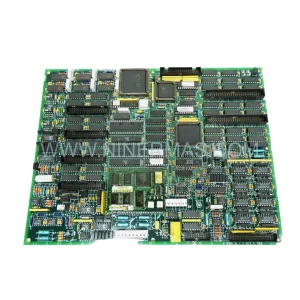
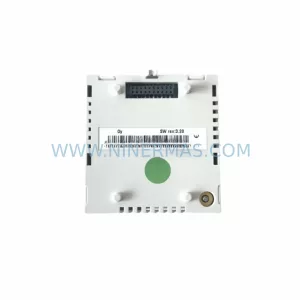
GE DS200TCQBG1BBC Retrofit-Compatible RST Overflow Module
Verify the part, confirm the platform family, and move straight into quotation with the right commercial details.
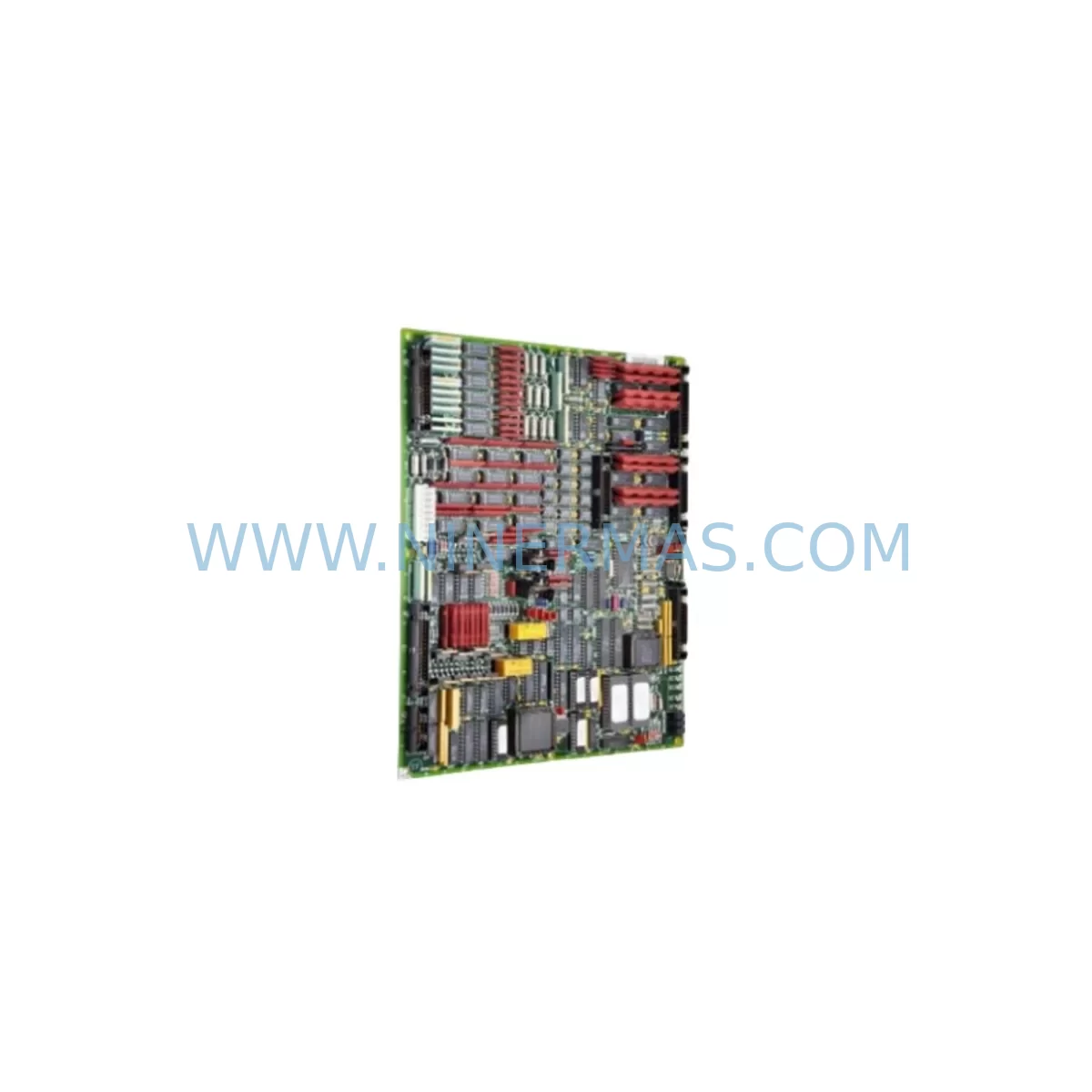
RFQ Ready
- SKUDS200TCQBG1BBC
- CategoryPLC & Industrial Automation Modules
- BrandGE
- SupportAvailability, lead time, condition, and shipping coordination
How Buyers Usually Use This Page
- Confirm the exact part number and platform family before sending the quote request.
- Use direct email when quantity, condition, and destination are already defined internally.
- Switch to the broader brand or category archive when you need alternates nearby.
Series Navigation
Move through the most common platform families behind this part.
Product RFQ
Send this part directly for quotation.
Include quantity, required condition, destination country, and target delivery timing. Current reference: GE DS200TCQBG1BBC Retrofit-Compatible RST Overflow Module with SKU DS200TCQBG1BBC.
GE DS200TCQBG1BBC Retrofit-Compatible RST Overflow Module for Legacy Turbine Control Systems
The GE DS200TCQBG1BBC is a ruggedized RST (Redundant Signal Termination) Overflow Module designed for deployment within GE Mark V turbine control platforms. As original equipment reaches end-of-life and spare parts become increasingly scarce, the DS200TCQBG1BBC serves as a critical retrofit component for engineers tasked with extending the operational lifespan of legacy gas turbine, steam turbine, and combined-cycle power generation control systems. This module supports smooth migration from aging Mark V architectures toward more maintainable configurations without requiring full panel replacement or DCS overhaul.
Each unit is pre-tested prior to shipment, backed by a 12-month warranty, and sourced from verified inventory channels to ensure consistent availability for planned maintenance windows and emergency replacement scenarios alike.
Upgrade Compatibility Table
| Parameter | DS200TCQBG1BBC Specification | Retrofit Notes |
|---|---|---|
| Module Type | RST Overflow / Signal Termination | Direct replacement for same-series TCQB variants |
| Platform Compatibility | GE Mark V Turbine Control | Verify backplane slot assignment before installation |
| Communication Protocol | Mark V internal IONET / serial bus | No protocol conversion required for same-generation swap |
| Power Supply Requirement | +5 VDC / +15 VDC via backplane | Confirm PSVO or PSVB power module output capacity |
| Mounting / Form Factor | Mark V standard card cage | Verify rack slot clearance and card guide alignment |
| Terminal Wiring | Termination via TCQB terminal board | Cross-reference existing field wiring to terminal block layout |
| Installation Space | Single slot, Mark V card cage | Confirm no adjacent card interference |
| Commissioning Requirement | I/O address configuration via toolbox | Backup existing configuration before card swap |
| Warranty | 12 Months | Covered from date of shipment; pre-shipment tested |
Retrofit Planning for Existing Automation Systems
When planning a retrofit around the DS200TCQBG1BBC, engineers must account for the broader ecosystem of interconnected Mark V hardware. The module interfaces directly with the TCQB terminal board, which routes field signals from thermocouples, RTDs, and discrete I/O points into the Mark V core processor. Before initiating a card swap, it is essential to document all active signal assignments on the terminal board and verify that the replacement module’s firmware revision is compatible with the existing Mark V software baseline.
Power integrity is a foundational concern. The DS200TCQBG1BBC draws regulated voltage from the backplane, supplied by the PSVO or PSVB power supply modules. If the existing power modules are aging or operating near capacity — particularly in panels that have been expanded with additional I/O cards such as the DS200IOCBG1B or DS200DSPCH1A — a power budget review is mandatory before adding or replacing any card in the rack.
Signal isolation is another key consideration. In legacy installations where the DS200TCQBG1BBC handles overflow signals from high-density I/O configurations, engineers may need to verify that signal isolators or barrier modules upstream of the terminal board are still within calibration. Replacing the overflow module without auditing the signal chain can introduce ground loops or reference voltage offsets that affect turbine protection logic.
For systems undergoing broader migration — for example, transitioning from Mark V to Mark VIe — the DS200TCQBG1BBC may serve as an interim component during a phased cutover. In such scenarios, the module continues to support legacy I/O termination while new Mark VIe I/O packs such as the IS200IOCIH1B are installed in parallel. This parallel architecture allows engineers to validate new signal paths against existing Mark V readings before committing to a full cutover, significantly reducing the risk of undetected wiring errors.
Communication continuity is equally important. The Mark V IONET serial bus that connects the DS200TCQBG1BBC to the core processor must remain stable throughout the retrofit. Any interruption to the IONET link — caused by improper card seating, damaged backplane connectors, or incorrect termination resistor settings — will trigger a system fault and may initiate an unplanned turbine trip. Engineers should use the Mark V diagnostic toolbox to verify IONET link status before and after the card replacement.
HMI screen validation is a frequently overlooked step. After replacing the DS200TCQBG1BBC, operators should confirm that all associated signal tags are displaying correctly on the GE Cimplicity or iFIX HMI screens. Tag mapping errors introduced during the replacement process can cause misleading readings on turbine exhaust temperature, vibration, or speed channels — all of which are critical for safe turbine operation.
Finally, installation space must be confirmed before ordering. The DS200TCQBG1BBC occupies a single slot in the Mark V card cage. In densely populated panels, adjacent cards such as the DS200TCRAG1A or DS200TCPSG1A may restrict airflow or card insertion. A physical site survey of the control cabinet is recommended as part of the pre-retrofit checklist.
Downtime Control During System Migration
Minimizing downtime during a DS200TCQBG1BBC replacement requires disciplined pre-work. The most effective approach is to perform a full configuration backup using the Mark V toolbox software before any hardware is disturbed. This backup captures I/O assignments, alarm setpoints, control constants, and IONET node addresses — all of which must be restored or verified after the new card is seated.
Where operational schedules permit, a cold swap during a planned outage window is strongly preferred over a hot swap. Although the Mark V architecture supports some degree of online card replacement in redundant configurations, the DS200TCQBG1BBC handles overflow signal termination that may not be fully redundant in all panel configurations. Attempting a live replacement without confirming redundancy status risks dropping active signals and triggering protective shutdowns.
To protect original program logic, engineers should export the current Mark V application program and store it on an isolated engineering workstation before beginning the retrofit. If the replacement card requires firmware initialization, the toolbox download procedure must be completed in the correct sequence — hardware initialization first, followed by application program download, and finally I/O calibration verification.
Field control continuity can be maintained during brief outage windows by placing affected control loops in manual mode at the DCS or HMI level before the card is removed. This prevents automatic control actions from responding to the temporary loss of input signals during the swap. Once the DS200TCQBG1BBC is reseated and I/O signals are confirmed stable, loops can be returned to automatic control in a controlled sequence.
Post-installation commissioning should include a point-by-point I/O verification against the original signal list, a review of all active alarms for unexpected new faults, and a confirmation that IONET communication is stable across all nodes. A pre-shipment functional test is performed on every DS200TCQBG1BBC unit before dispatch, reducing the probability of DOA failures and shortening on-site commissioning time.
Retrofit Support FAQ
Q1: Is the DS200TCQBG1BBC a direct drop-in replacement for other TCQB-series cards?
A: The DS200TCQBG1BBC is compatible with other TCQB-series overflow modules within the GE Mark V platform, provided the firmware revision and hardware suffix are verified against the existing panel configuration. Minor suffix differences (e.g., BBC vs. BBB) may reflect PCB revision changes that do not affect functional compatibility, but this should be confirmed against the Mark V panel drawing before installation.
Q2: What wiring checks are required before installing the DS200TCQBG1BBC?
A: Prior to installation, verify all field wiring connections at the TCQB terminal board, confirm shield grounding continuity, and check that no terminal screws are loose or corroded. Cross-reference the existing wiring against the panel’s as-built drawings to ensure no signal reassignments have occurred since the original installation.
Q3: Does the DS200TCQBG1BBC come with a warranty, and is pre-shipment testing performed?
A: Yes. Every DS200TCQBG1BBC unit is functionally tested prior to shipment and is covered by a 12-month warranty from the date of dispatch. In the event of a confirmed hardware defect within the warranty period, a replacement unit will be arranged through our standard RMA process.
Q4: What is the typical lead time and inventory availability?
A: The DS200TCQBG1BBC is maintained in stock to support both planned maintenance and emergency replacement requirements. Standard lead time for in-stock units is 1–3 business days for international shipments. For urgent requirements, expedited dispatch options are available — contact our sales team directly to confirm current stock levels and shipping timelines.
| Product Series | Mark V |
|---|---|
| Country of Origin | US |
Catalog Continuation
Nearby part numbers around DS200TCQ.
Use this lane when the buyer is comparing adjacent model numbers, revision-near items, or closely related spare variants within the same brand family.
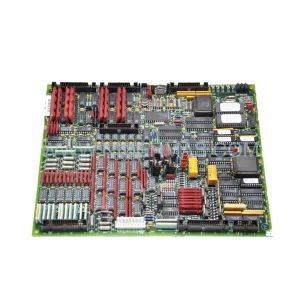
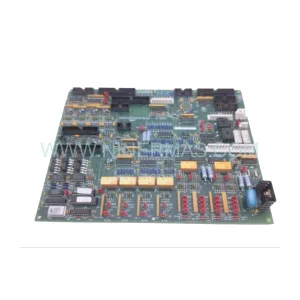
SKU: DS200TCQBG1AGB
GE DS200TCQBG1AGB Retrofit-Compatible Analog I/O Module
SKU: DS200TCQAG1AFC
GE DS200TCQAG1AFC Safety-Reliable Analog I/O for Mark V
Catalog Continuation
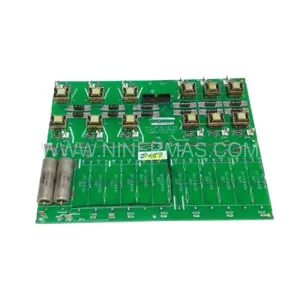
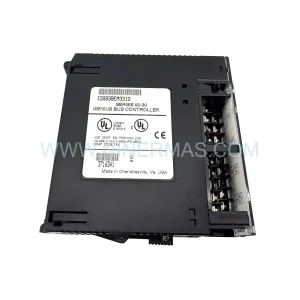
More GE modules in the catalog.
Use the brand lane to compare nearby part numbers, platform-adjacent modules, and other inquiry-ready listings before sending your final RFQ.
Catalog Continuation
Alternative parts within PLC & Industrial Automation Modules.
Stay inside the same system family when you need substitutes, adjacent modules, or a broader shortlist for procurement review.
SKU: TRY/PRG/4-20MA/10-30DC
MOORE TRY/PRG/4-20MA/10-30DC Service-Ready Spare Part
SKU: 5085-404901-11 12INCH 2910-202413-12 404200XRMPD2H14 7-249717
TEL 5085-404901-11 Service-Ready Spare Part for Industrial Maintenance
SKU: DIP011 05-058-011
SIGMATEK DIP011 05-058-011 Service-Ready Spare Part