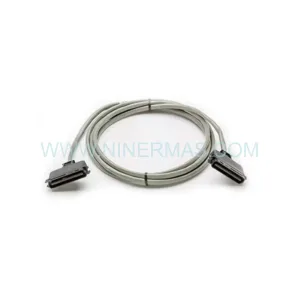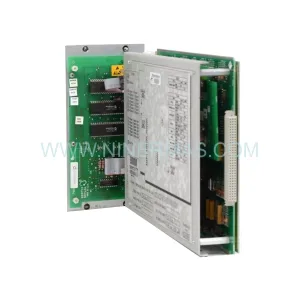
Original Industrial Spare Part
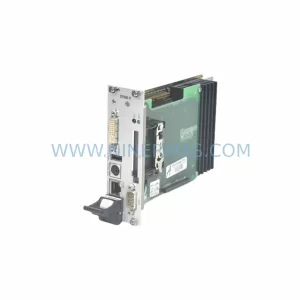
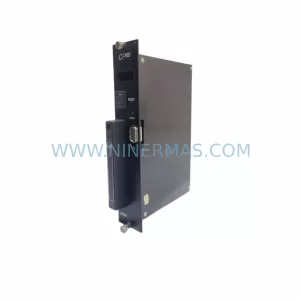
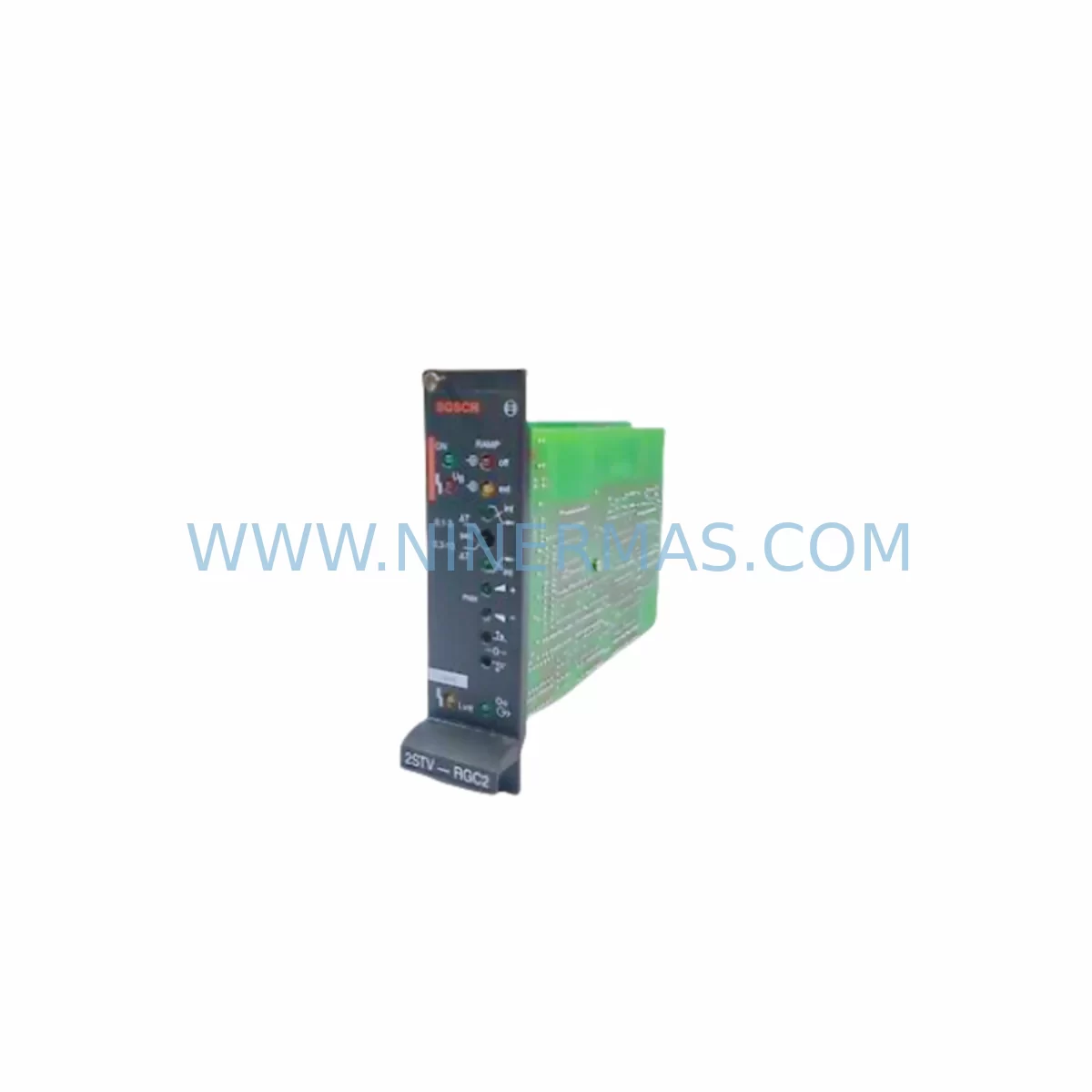
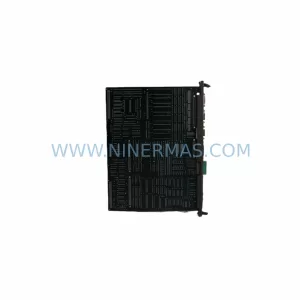
BOSCH RKP-PQ Retrofit-Compatible Amplifier Card for Legacy Systems
Verify the part, confirm the platform family, and move straight into quotation with the right commercial details.
RFQ Ready
- SKURKP-PQ
- CategoryPLC & Industrial Automation Modules
- BrandBosch
- SupportAvailability, lead time, condition, and shipping coordination
How Buyers Usually Use This Page
- Confirm the exact part number and platform family before sending the quote request.
- Use direct email when quantity, condition, and destination are already defined internally.
- Switch to the broader brand or category archive when you need alternates nearby.
Series Navigation
Move through the most common platform families behind this part.
Product RFQ
Send this part directly for quotation.
Include quantity, required condition, destination country, and target delivery timing. Current reference: BOSCH RKP-PQ Retrofit-Compatible Amplifier Card for Legacy Systems with SKU RKP-PQ.
BOSCH RKP-PQ Retrofit-Compatible Amplifier Card for Legacy Systems
The BOSCH RKP-PQ is a precision amplifier card engineered for hydraulic proportional valve control within legacy BOSCH Rexroth automation platforms. As industrial facilities worldwide continue to operate aging control architectures built around BOSCH PQ-series electronics, the RKP-PQ remains a critical spare component for maintaining system continuity, avoiding unplanned downtime, and deferring costly full-system overhauls. NINERMAS maintains verified stock of the RKP-PQ with a 12-month warranty, pre-shipment functional testing, and global logistics support to serve retrofit engineers and maintenance teams across manufacturing, press, injection molding, and heavy industrial sectors.
The RKP-PQ amplifier card is designed to interface directly with BOSCH proportional hydraulic valves, providing precise current regulation and signal conditioning between the PLC output stage and the valve solenoid. In legacy systems where the original BOSCH Rexroth controller rack — often housing modules such as the VT-VSPA1 or VT-VSPA2 proportional amplifier series — has reached end-of-life, the RKP-PQ serves as a direct retrofit candidate, preserving existing wiring harnesses, terminal block layouts, and DIN rail mounting configurations without requiring panel redesign.
When planning a retrofit around the RKP-PQ, engineers must first audit the existing control cabinet for power supply compatibility. The card typically operates on a regulated ±15 VDC or 24 VDC bus depending on the rack configuration. If the original BOSCH PSU module or third-party DIN rail power supply is undersized or degraded, it must be replaced or supplemented before the amplifier card is commissioned. Failure to verify supply rail stability is one of the most common causes of erratic valve response during post-retrofit commissioning.
Terminal wiring adaptation is the next critical step. Legacy BOSCH control cabinets frequently use proprietary connector formats or screw-terminal backplanes. When migrating to a replacement RKP-PQ, technicians should document the existing enable signal, setpoint input (typically 0–10 V or ±10 V analog), ramp time settings, and dither frequency parameters before removal. These values must be re-entered or re-calibrated on the replacement card. In systems where the setpoint originates from a SIEMENS S7-300 or S7-400 analog output module — such as the SM 332 or SM 331 — signal scaling and output range must be confirmed to match the RKP-PQ input specification.
Backplane and rack interface compatibility is particularly important in multi-slot BOSCH Rexroth control racks. The RKP-PQ must be seated in the correct slot position, and the rack’s internal bus addressing must be verified against the original configuration. In systems that also house BOSCH VT-HACD axis controller cards or VT-SR2 safety relay modules, slot reassignment can cause address conflicts that manifest as valve fault codes or communication errors on the HMI. Always back up the PLC program and HMI screen configuration before beginning physical card replacement.
For facilities running BOSCH CC220 or CC300 CNC controllers with integrated hydraulic axis management, the RKP-PQ retrofit must be coordinated with the CNC parameter set. Axis gain, following error tolerance, and hydraulic pressure limits are stored in the CNC controller and may require re-tuning after the amplifier card is replaced, particularly if the original card had been manually trimmed over years of operation. Engage a qualified BOSCH Rexroth service technician or use the BOSCH IndraWorks commissioning software to verify axis response curves post-installation.
Communication protocol migration is less of a concern for the RKP-PQ itself — as an analog amplifier card, it does not participate in fieldbus communication — but the broader retrofit context often involves simultaneous migration of adjacent digital I/O modules, safety PLCs, or HMI panels. If the retrofit scope includes replacing a BOSCH BTA operator panel or upgrading to a modern Rexroth IndraControl VPP HMI, screen layouts and alarm mappings must be rebuilt to reflect the new hardware topology. Ensure that all hydraulic fault signals previously wired to the RKP-PQ’s fault output relay are correctly mapped to the new HMI alarm system.
Installation space confirmation is essential in dense control cabinets. The RKP-PQ occupies a standard Eurocard or proprietary BOSCH rack slot. Before ordering, confirm the available slot count in the existing rack and whether adjacent modules — such as BOSCH VT-SWMA servo amplifier cards or VT-DFP digital fieldbus processor modules — will remain in place. If the rack itself is damaged or obsolete, NINERMAS can advise on compatible replacement rack assemblies that accept the RKP-PQ and associated PQ-series cards.
Every RKP-PQ unit shipped by NINERMAS undergoes pre-shipment electrical testing, including power-on verification, enable signal response, and output current linearity check. Units are packaged in anti-static ESD-safe materials with individual serial number documentation. A 12-month warranty covers manufacturing defects and functional failure under normal operating conditions. Expedited shipping is available for emergency breakdown situations, with same-day dispatch for in-stock units.
Upgrade Compatibility Table
| Parameter | Details |
|---|---|
| SKU / Part Number | RKP-PQ |
| Brand | BOSCH / BOSCH Rexroth |
| Series | PQ Series Proportional Amplifier |
| Function | Hydraulic proportional valve amplifier card |
| Typical Supply Voltage | ±15 VDC / 24 VDC (rack-dependent) |
| Signal Input | 0–10 V or ±10 V analog setpoint |
| Mounting | BOSCH Rexroth proprietary rack / Eurocard slot |
| Compatible Controllers | BOSCH CC220, CC300, S7-300/400 analog output stages |
| Replacement For | Discontinued BOSCH PQ-series amplifier cards |
| Communication | Analog (no fieldbus); compatible with adjacent VT-DFP modules |
| Installation Requirement | Correct rack slot, verified power rail, re-calibration of ramp/dither |
| Commissioning Tool | BOSCH IndraWorks or equivalent parameterization software |
| Pre-Shipment Test | Power-on, enable signal, output current linearity |
| Warranty | 12 months from date of shipment |
| Origin | Germany |
Retrofit Planning for Existing Automation Systems
A successful RKP-PQ retrofit begins with a structured audit of the existing control architecture. In a typical legacy BOSCH hydraulic press or injection molding machine, the control cabinet may house a combination of the RKP-PQ amplifier card, a BOSCH VT-VSPA2 proportional amplifier, one or more VT-HACD hydraulic axis controller cards, a VT-SR2 safety relay module, and a BOSCH PSU 24V power supply module. Each of these components must be individually assessed for remaining service life before committing to a partial retrofit strategy.
If the retrofit scope expands to include I/O modernization, engineers frequently integrate SIEMENS ET 200SP distributed I/O or Beckhoff EK1100 EtherCAT coupler modules alongside the retained BOSCH amplifier cards. In these hybrid architectures, signal isolation between the new digital I/O bus and the legacy analog amplifier inputs is critical — signal isolators or analog signal conditioners (such as those from the Phoenix Contact MINI Analog series) are commonly inserted at the terminal strip to prevent ground loop interference and protect the RKP-PQ input stage.
For systems where the original BOSCH BTA operator panel is being replaced with a modern touchscreen HMI, the hydraulic fault relay output of the RKP-PQ must be re-wired to a digital input on the new PLC or safety controller. This wiring adaptation is straightforward but must be documented in the updated electrical schematic before commissioning sign-off. If a BOSCH VT-DFP digital fieldbus processor is present in the rack, its configuration must also be reviewed to ensure it does not conflict with the replacement RKP-PQ’s slot addressing.
Spare parts lifecycle planning is strongly recommended for facilities with multiple machines sharing the same BOSCH PQ-series platform. Procuring a buffer stock of RKP-PQ cards — alongside compatible VT-SWMA servo amplifier cards and BOSCH rack backplane assemblies — reduces mean time to repair (MTTR) and protects against supply chain disruptions for discontinued components. NINERMAS offers long-term supply agreements and consignment stock programs for high-volume industrial customers.
Downtime Control During System Migration
Minimizing production downtime during an RKP-PQ replacement requires disciplined pre-work. Before the maintenance window opens, the replacement card should be bench-tested with a known-good power supply and a signal generator to verify output current response. All original parameter values — ramp-up time, ramp-down time, dither amplitude, dither frequency, and enable logic polarity — should be recorded from the outgoing card using the BOSCH parameterization interface or manually from the card’s onboard potentiometer settings.
During the swap, the PLC program should remain loaded and the HMI should remain powered where safe to do so, allowing the operator to monitor system status and confirm valve response immediately after the new card is enabled. In systems with a BOSCH CC300 CNC controller, the hydraulic axis parameters stored in the CNC should be exported and backed up before any hardware change. If the machine uses a SIEMENS S7-400 CPU as the master controller, the program block responsible for hydraulic axis enable and fault reset should be identified in advance so that the commissioning engineer can trigger a controlled restart sequence without manual intervention at the panel.
Post-installation, the first valve movement should be performed at reduced setpoint (typically 10–20% of full command) to verify direction, linearity, and absence of oscillation before returning to full production parameters. Document the commissioning result, including supply voltage measurements, output current readings, and valve response time, as part of the machine’s maintenance record. This documentation supports warranty claims and future retrofit planning.
Retrofit Support FAQ
Q1: Is the BOSCH RKP-PQ a direct drop-in replacement for the original card in my machine?
In most cases, yes. The RKP-PQ is designed to fit the original BOSCH rack slot and maintain the same terminal wiring layout. However, minor differences in potentiometer labeling or ramp range between production batches may require re-calibration during commissioning. NINERMAS recommends verifying the card revision against your machine’s electrical documentation before installation.
Q2: What pre-shipment testing does NINERMAS perform on the RKP-PQ?
Each unit undergoes power-on verification, enable signal response testing, and output current linearity measurement across the full setpoint range. Units that do not meet specification are quarantined and not shipped. A test report is available upon request for critical applications.
Q3: Can the RKP-PQ be used with a SIEMENS S7 PLC analog output instead of the original BOSCH controller?
Yes, provided the analog output signal range (0–10 V or ±10 V) and source impedance are compatible with the RKP-PQ input specification. Signal scaling must be configured in the S7 program to match the valve’s full-stroke command range. A signal isolator is recommended if the PLC and amplifier card share different ground references.
Q4: What does the 12-month warranty cover?
The warranty covers manufacturing defects and functional failure under normal operating conditions from the date of shipment. It does not cover damage resulting from incorrect installation, overvoltage, reverse polarity, or unauthorized modification. NINERMAS provides RMA support and replacement dispatch within 5 business days for valid warranty claims.
| Product Series | Legacy |
|---|
Catalog Continuation
More Bosch modules in the catalog.
Use the brand lane to compare nearby part numbers, platform-adjacent modules, and other inquiry-ready listings before sending your final RFQ.
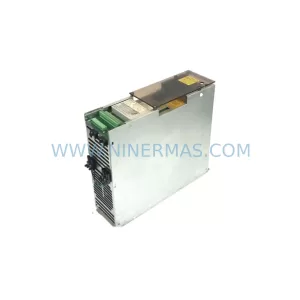
SKU: TDM1.2-50-300-W1
Bosch TDM1.2-50-300-W1 Safety-Reliable DC Drive for Critical Control
SKU: D-64711 1070068007-102
BOSCH D-64711 1070068007-102 Service-Ready Spare Part for Industrial Maintenance
Catalog Continuation
Alternative parts within PLC & Industrial Automation Modules.
Stay inside the same system family when you need substitutes, adjacent modules, or a broader shortlist for procurement review.