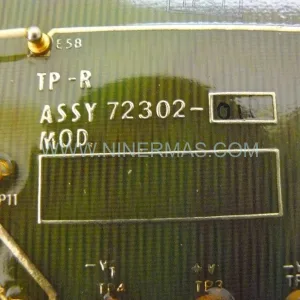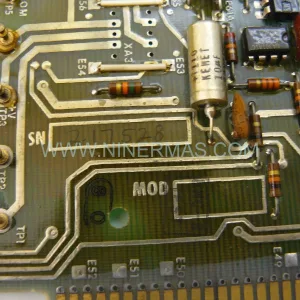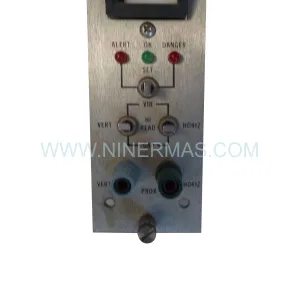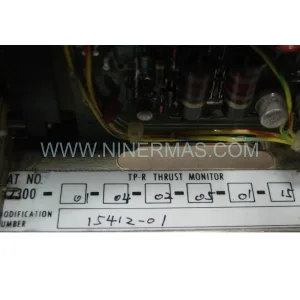
Original Industrial Spare Part
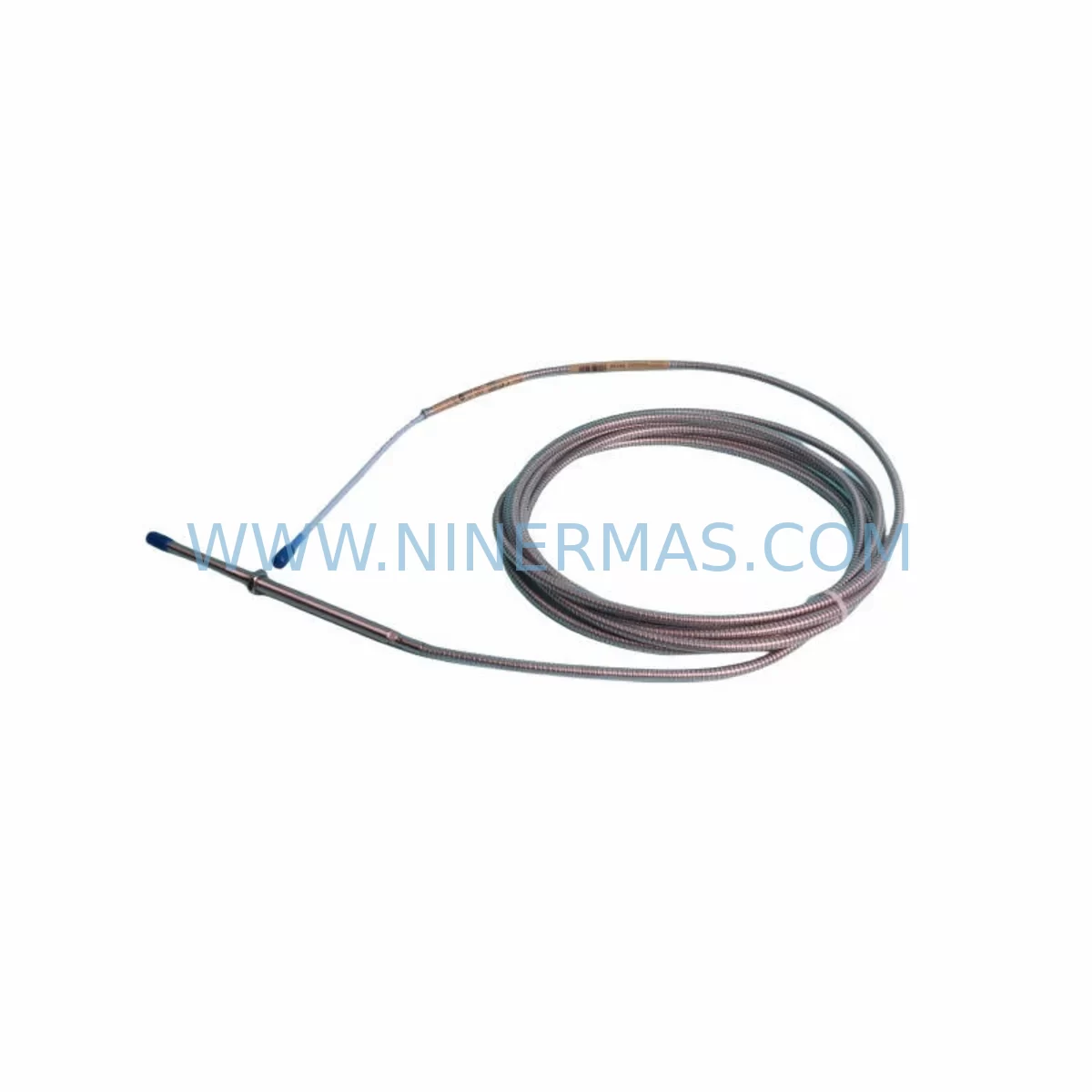
Bently Nevada 330104-09-20-10-01-00 Retrofit-Compatible Proximity Transducer
Verify the part, confirm the platform family, and move straight into quotation with the right commercial details.
RFQ Ready
- SKU330104-09-20-10-01-00
- CategoryTSI & Rotating Machinery Monitoring
- BrandBently Nevada
- SupportAvailability, lead time, condition, and shipping coordination
How Buyers Usually Use This Page
- Confirm the exact part number and platform family before sending the quote request.
- Use direct email when quantity, condition, and destination are already defined internally.
- Switch to the broader brand or category archive when you need alternates nearby.
Series Navigation
Move through the most common platform families behind this part.
Product RFQ
Send this part directly for quotation.
Include quantity, required condition, destination country, and target delivery timing. Current reference: Bently Nevada 330104-09-20-10-01-00 Retrofit-Compatible Proximity Transducer with SKU 330104-09-20-10-01-00.
Bently Nevada 330104-09-20-10-01-00 Retrofit-Compatible Proximity Transducer for Legacy Systems
The Bently Nevada 330104-09-20-10-01-00 is an 8 mm proximity transducer designed for use within the Bently Nevada 3300 Series proximity transducer system — one of the most widely deployed vibration and position monitoring platforms in rotating machinery applications across power generation, oil & gas, petrochemical, and heavy industrial environments. As the 3300 Series approaches end-of-life and spare parts become increasingly scarce, plant engineers and reliability teams are actively seeking retrofit-compatible replacements that preserve existing wiring infrastructure, maintain signal integrity, and avoid costly full-system overhauls.
This unit is a direct retrofit solution for facilities operating legacy 3300 Series installations. It is engineered to match the original electrical and mechanical specifications of the 330104-09-20-10-01-00, enabling drop-in replacement without requiring changes to existing conduit runs, junction boxes, or monitor rack configurations. The transducer operates with a standard -24 VDC bias voltage and delivers a sensitivity of 200 mV/mil (7.87 V/mm), fully compatible with the signal conditioning requirements of the 3300 XL 8 mm Proximity Transducer System and associated extension cables such as the 330130 series.
When planning a retrofit around the 330104-09-20-10-01-00, engineers must verify several critical parameters before committing to installation. Power supply capacity at the local control cabinet must be confirmed — the transducer system draws from the same -24 VDC rail shared with other field instruments, and adding replacement units to an aging power distribution module such as the 3300 XL Power Supply may require load recalculation. Terminal wiring at the field junction box should be inspected for insulation degradation, particularly in high-temperature or high-vibration zones where cable jackets on the 330130-080-00-00 extension cable may have hardened or cracked over years of service.
Backplane interface compatibility is another key consideration. The 330104-09-20-10-01-00 connects through the 3300 XL monitor rack, and the rack’s I/O slot assignments must be verified against the existing machine train configuration. If the replacement is being installed alongside a migration from an older 3300/16 monitor to a newer 3500/42M Proximitor Monitor, the channel mapping and OK relay logic will need to be re-verified in the System 1 Evolution software or equivalent condition monitoring platform. Failure to align the monitor’s gap voltage thresholds with the new transducer’s calibration range is one of the most common commissioning errors during 3300-to-3500 Series migrations.
For facilities undertaking a broader control system modernization — for example, migrating from a legacy DCS to a modern distributed I/O architecture — the 330104-09-20-10-01-00 can continue to serve as the field sensing element while the signal is re-routed through a 3500/20 Rack Interface Module or interfaced with a third-party vibration monitoring card via a 4–20 mA output converter. This approach allows the plant to preserve the existing sensor infrastructure while upgrading the data acquisition and alarming layer, significantly reducing the scope of field work and minimizing production downtime during the transition.
Upgrade Compatibility Table
| Parameter | 330104-09-20-10-01-00 (This Unit) | Retrofit / Upgrade Notes |
|---|---|---|
| Probe Diameter | 8 mm | Matches standard 3300 XL 8 mm mounting holes; no re-boring required |
| Sensitivity | 200 mV/mil (7.87 V/mm) | Compatible with 3300 XL and 3500/42M monitor input ranges |
| Bias Voltage | -24 VDC nominal | Verify existing power rail capacity before installation |
| Extension Cable | 330130 Series (5 m standard) | Inspect insulation; replace if aged or cracked |
| Monitor Compatibility | 3300 XL, 3500/42M | Re-verify gap voltage thresholds after swap |
| Communication Protocol | Analog (4–20 mA / voltage output) | Adaptable to Modbus RTU or PROFIBUS via signal converter |
| Installation Space | Standard 3300 Series probe boss | Confirm clearance for cable routing and connector access |
| Replacement Path | Direct drop-in for 330104-09-20-10-01-00 | No firmware changes required for same-series swap |
| Commissioning | Gap setting, OK relay check, trend baseline | Use System 1 Evolution or portable calibrator for verification |
| Warranty | 12-Month Warranty — covers manufacturing defects and functional failure under normal operating conditions | |
Retrofit Planning for Existing Automation Systems
A successful retrofit centered on the 330104-09-20-10-01-00 requires a structured approach that accounts for every layer of the existing automation architecture. At the field level, the transducer itself is only one component in a measurement chain that includes the 330130 extension cable, the Proximitor sensor (such as the 330180-X1-05 or 330190-080-01-CN), and the monitor rack. Each of these elements must be assessed for compatibility and condition before the replacement unit is installed.
At the control cabinet level, the 3300 XL monitor rack — typically a 3300/16 or 3300/20 chassis — houses the signal conditioning electronics and communicates alarm and trip signals to the plant DCS or safety system. If the rack itself is being retained during the retrofit, the existing I/O wiring to the DCS marshalling panel can generally be preserved, provided the terminal block assignments are documented before any work begins. For facilities using a Honeywell Experion PKS or Emerson DeltaV as the host DCS, the vibration monitor’s 4–20 mA outputs or relay contacts will need to be re-verified against the existing I/O module configuration after the transducer swap.
Where the retrofit scope extends to replacing the monitor rack itself — for example, upgrading from a 3300/16 to a 3500 Series rack — the installation space in the control cabinet must be carefully measured. The 3500 rack occupies a different panel footprint than the 3300 chassis, and cable management for the 330130 extension cables must be re-routed accordingly. In some installations, a 3500/20 Rack Interface Module is added to provide Ethernet connectivity for remote monitoring via System 1 Evolution, which also requires a network drop to the cabinet and firewall rule updates if the plant operates a segmented OT network.
For facilities that have already migrated their primary control to a modern PLC platform — such as a Rockwell Automation ControlLogix or Siemens S7-400 — the 330104-09-20-10-01-00 can be integrated as a field sensor feeding into a dedicated vibration I/O module or a third-party signal conditioner. In this configuration, the analog output from the Proximitor is wired to a high-density analog input module, and the vibration data is processed within the PLC’s ladder logic or function block program. HMI screens on a FactoryTalk View SE or WinCC flexible platform will need to be updated to reflect the new tag addresses and engineering unit scaling for the vibration channels.
Signal isolation is another consideration in mixed-architecture retrofits. Where the 330104-09-20-10-01-00 shares a common ground reference with other field instruments, a signal isolator or loop-powered isolator module should be inserted in the signal path to prevent ground loops that can introduce noise into the vibration measurement. This is particularly important in older facilities where the original cable shielding may be compromised or where the grounding scheme does not meet current IEC 61000 EMC standards.
Downtime Control During System Migration
Minimizing production downtime during a proximity transducer replacement is a primary concern for plant operations teams, particularly in continuous-process industries where even a brief unplanned shutdown can result in significant revenue loss. The 330104-09-20-10-01-00 retrofit is designed to support a rapid swap procedure that, when properly planned, can be completed during a scheduled maintenance window without requiring a full machine train shutdown.
The recommended approach is to prepare the replacement transducer, extension cable, and any required connector adapters in advance, with all components bench-tested and gap-set to the nominal air gap specification before the maintenance window begins. The existing Proximitor sensor output should be trended in System 1 Evolution or the plant historian for at least two weeks prior to the swap, establishing a baseline that can be used to verify correct installation after the replacement unit is commissioned.
During the swap, the monitor channel should be placed in bypass mode — using the 3300 XL or 3500 Series monitor’s front-panel bypass function — to prevent spurious trip signals from reaching the machine protection system while the transducer is disconnected. The original program logic in the DCS or safety PLC does not need to be modified for a same-series transducer replacement, as the signal characteristics and scaling remain identical. Once the new 330104-09-20-10-01-00 is installed and the gap voltage is confirmed within the OK range, the bypass is released and the channel is returned to normal monitoring service.
For migrations that involve replacing the monitor rack in addition to the transducer, a parallel installation strategy is recommended where the new 3500 Series rack is wired and configured while the existing 3300 rack remains in service. The cutover is then performed as a single, coordinated switch during a planned outage, with the new rack’s OK relay outputs pre-wired to the DCS I/O but held in a de-energized state until the cutover is confirmed. This approach eliminates the risk of extended downtime caused by unexpected commissioning issues and allows the engineering team to validate the new configuration against the original trend data before committing to the switch.
Retrofit Support FAQ
Q: Is the 330104-09-20-10-01-00 a direct replacement for the original Bently Nevada part?
A: Yes. This unit is manufactured to match the original 330104-09-20-10-01-00 specifications, including probe diameter, sensitivity, bias voltage, and connector type. It is a drop-in replacement for the 3300 XL 8 mm Proximity Transducer System and does not require any modifications to existing mounting hardware, extension cables, or monitor rack wiring.
Q: What commissioning steps are required after installation?
A: After installation, the air gap between the probe tip and the target shaft must be set to the nominal gap voltage specified for the machine train — typically between -10 VDC and -18 VDC for most 3300 Series applications. The monitor channel’s OK limits should be verified, and a short-term vibration trend should be recorded to confirm that the new transducer’s output matches the pre-replacement baseline. If the installation involves a 3500 Series monitor, the channel configuration in the 3500 Rack Configuration Software should also be reviewed.
Q: Does this unit ship with a warranty, and what does it cover?
A: Yes. All units are supplied with a 12-month warranty covering manufacturing defects and functional failure under normal operating conditions. Each unit undergoes pre-shipment functional testing to verify sensitivity, bias voltage output, and OK relay behavior before dispatch. Warranty claims are supported by our technical team at sale@ninermas.com.
Q: What is the typical lead time, and do you maintain stock?
A: We maintain inventory of the 330104-09-20-10-01-00 to support urgent replacement requirements. Standard orders are dispatched within 1–3 business days. For large-quantity orders or scheduled maintenance programs requiring multiple units, please contact our team in advance to confirm stock availability and arrange priority allocation.
| Product Series | 3300 Series |
|---|---|
| Country of Origin | US |
Catalog Continuation
More Bently Nevada modules in the catalog.
Use the brand lane to compare nearby part numbers, platform-adjacent modules, and other inquiry-ready listings before sending your final RFQ.
SKU: 21000-00-00-00-250-03-02
Bently Nevada 21000-00-00-00-250-03-02 Spare Part
SKU: 330910-00-06-10-02-05
Bently Nevada 330910-00-06-10-02-05 Safety-Reliable Proximity Module
SKU: 330854-040-25-00
Bently Nevada 330854-040-25-00 Service-Ready Spare Part
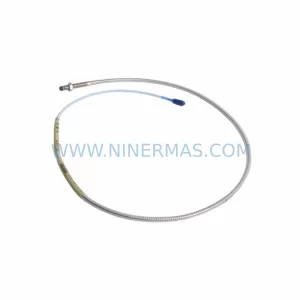
SKU: 330104-05-10-50-02-RU
Bently Nevada 330104-05-10-50-02-RU Retrofit-Compatible Proximity Transducer
Catalog Continuation
Alternative parts within TSI & Rotating Machinery Monitoring.
Stay inside the same system family when you need substitutes, adjacent modules, or a broader shortlist for procurement review.
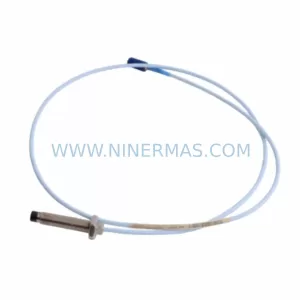
SKU: 330703-000-060-10-02-CN
Bently Nevada 330703-000-060-10-02-CN Retrofit Proximitor
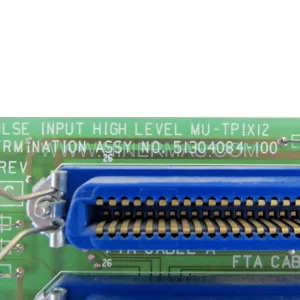
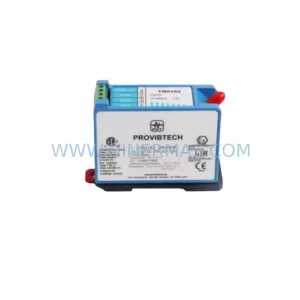
SKU: TM0182-A50-B01-C00
PROVIBTECH TM0182-A50-B01-C00 Retrofit Vibration Monitor