Honeywell TDC 3000 systems still appear in plants where the control strategy is stable, the process risk is high, and migration cannot be treated as a weekend project. The weakness is often not the whole DCS. It is a board, cable, power item, operator station dependency, or backup record that nobody has checked since the last turnaround.
For NINERMAS readers, Honeywell TDC 3000 spare planning is a lifecycle job, not a shopping list. A board that looks correct may still carry revision, firmware, cabinet, termination, or restore questions. The goal is to turn a legacy DCS risk into a documented spare position before the plant is forced to decide under downtime pressure.
Start with the board role, not only the part number
Record where the board sits, what process area it supports, whether it is tied to a redundant path, and what happens if it cannot be restored quickly. The same board family can carry different business risk depending on unit criticality, local bypass options, and the time needed to prove the loop after replacement.
Keep this evidence with broader platform and system guides. TDC 3000 recovery involves hardware, backups, configuration ownership, cabinet accessories, and acceptance testing. Treating the board as a loose commodity misses too much of the real recovery chain.
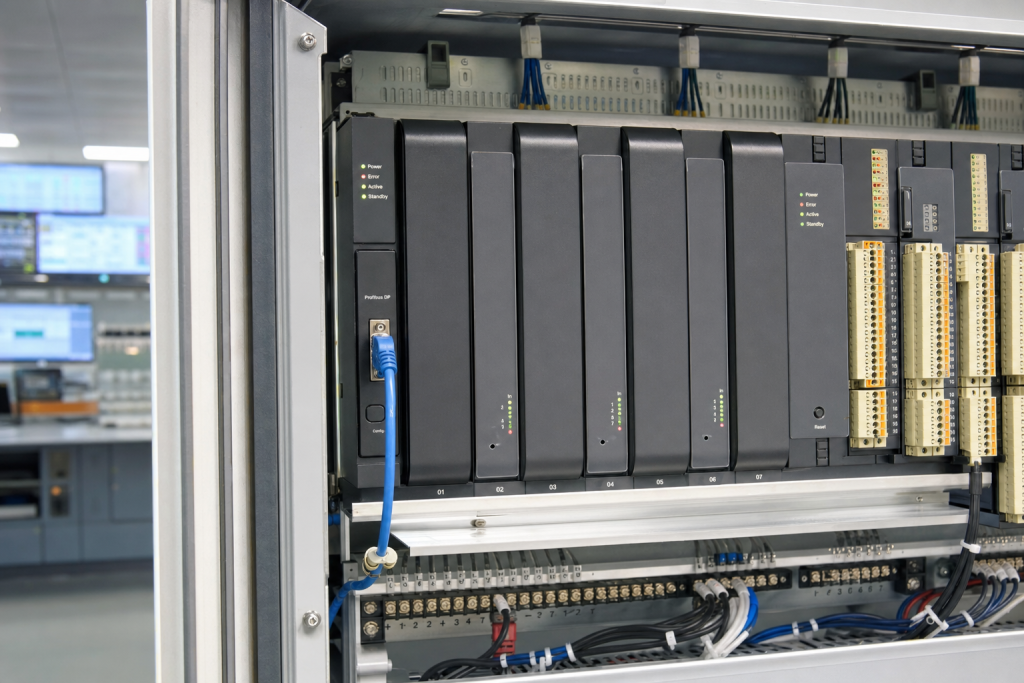
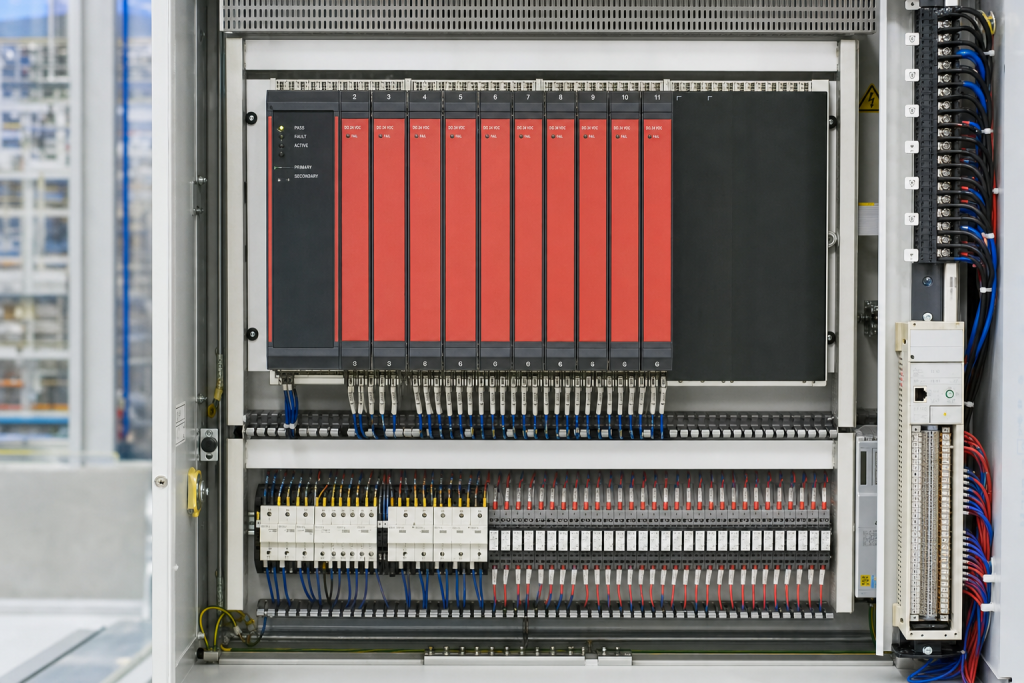
Photograph the installed board, rack, slot, cable path, connector style, label, and any spare already on the shelf. If the plant uses internal naming rather than OEM naming, include both. That small step prevents buyers and engineers from discussing two different items.
Separate shelf stock from recovery confidence
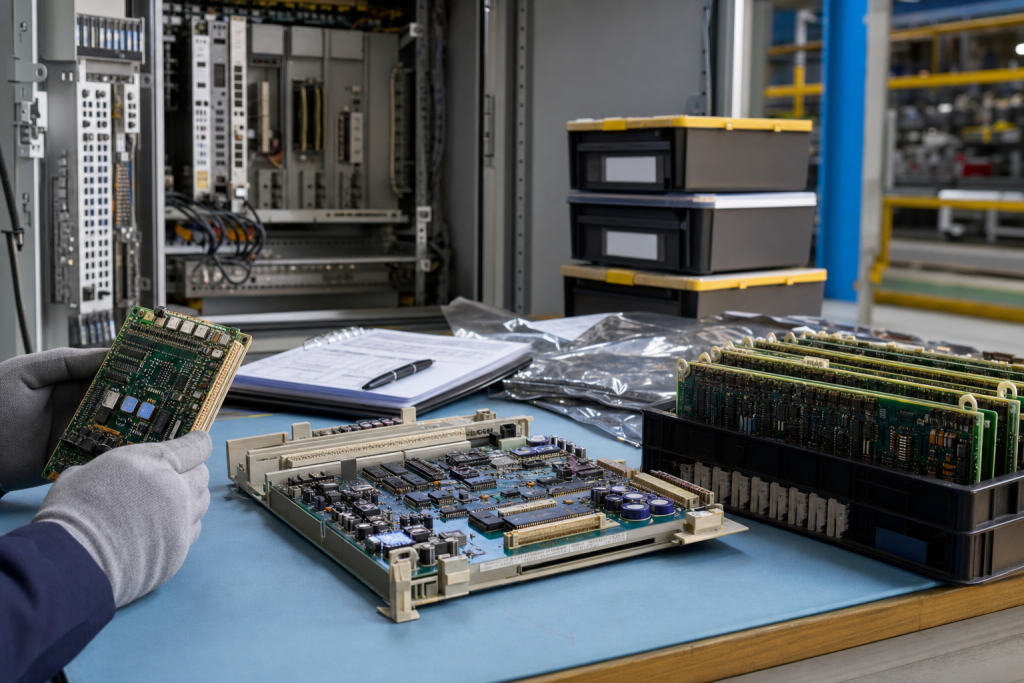
Shelf stock means a part exists. Recovery confidence means the part can be installed, restored, tested, and accepted. Older DCS environments often have shelves with uncertain boards: untested, missing labels, no known revision, or unclear history. Those boards may still be useful, but they should not be counted as exact recovery stock until inspected.
Create status labels such as ready spare, inspection required, repair candidate, bench only, and unknown. The labels help procurement understand why one quote must be exact and another can be a lower-risk test item.
For high-consequence process areas, consider pairing boards with cables, termination notes, power checks, and a named technical owner. A board alone rarely tells the whole recovery story.
Plan the replacement before the failure
Write the acceptance check while the system is healthy. Which alarms, displays, loops, or sequence steps must prove the replacement? Who signs off? Which backup record is current? Which spare can be used only after a maintenance window?
When requesting help through the request quote path, send safe photos, quantity, condition requirement, deadline, and whether substitutes or repair exchange options are acceptable.
The best TDC 3000 spare plan is boring on the day of failure. Everyone already knows the approved item, the accessory scope, the restoration owner, and the acceptance test.
Procurement checklist
A good RFQ separates immediate replacement, planned shelf stock, repair exchange, test-bench hardware, and possible substitute. Those needs should not be mixed in one vague request. Immediate replacement needs dispatch certainty and accessory completeness. Planned stock can allow more time for condition comparison. Test hardware may be useful without being approved for production. A possible substitute needs engineering review before it is compared with an exact match.
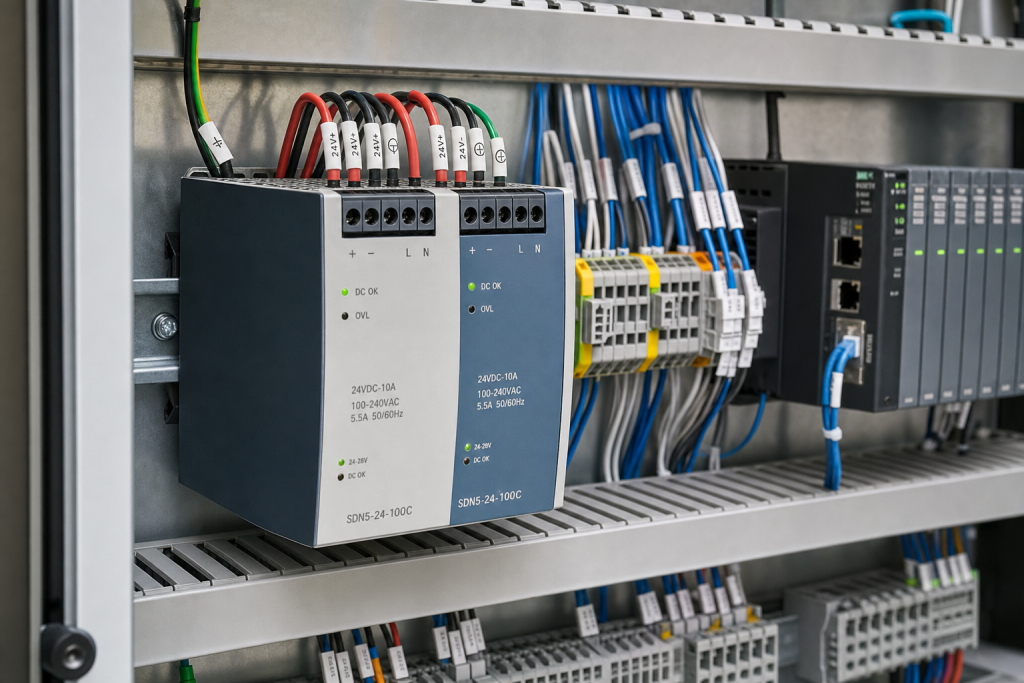
Ask for actual photos, visible labels, port views, accessory scope, condition language, warranty terms, and realistic shipment timing. Compare device-only quotes against field-ready kits carefully. A low price becomes expensive when a missing connector, terminal plug, cable, memory card, license device, power supply, mounting part, or configuration owner forces a second shipment during the maintenance window.
Receiving inspection should mirror the RFQ. Confirm model, revision, ports, power input, accessory count, packaging, visible condition, and included documents before the item enters stores. If firmware, software, backup, or approval status is unknown, mark it unknown. Clear uncertainty is safer than quiet confidence that surprises the next technician.
Keep the record useful
After the order, save the original RFQ photos, supplier photos, final quote, received-item photos, and engineering comments together. That file becomes the next buyer’s starting point. It also helps maintenance when the same platform appears in a later outage, shutdown, modernization review, or support discussion.
Use simple status labels: exact match, possible substitute, repair option, test bench only, rejected, or engineering review required. A conditional spare should not sit on the shelf pretending to be an exact replacement. Stores staff and night-shift technicians need the same clarity as the engineer who approved the quote.
Review the record after the next field repair. If a cable, backup file, license note, terminal plug, network setting, or configuration owner became the bottleneck, add that lesson to the standard kit. Spare planning improves when purchasing evidence and repair evidence are allowed to meet.
One practical habit is to attach a decision owner to every uncertain item. The owner does not need to solve the whole lifecycle problem immediately, but someone should be named for compatibility review, backup validation, substitute approval, or receiving inspection. Anonymous uncertainty is what turns a normal spare request into an emergency meeting.
The same record should also say what not to do. If a module is not approved for production, if a panel is only suitable for bench testing, or if a server image has not been restored, write that plainly. Clear limits protect the plant just as much as available stock.
FAQ
Is a used TDC 3000 board acceptable as a spare?
It can be, but only with clear condition language, label evidence, visual inspection, and a risk decision about whether it is production recovery stock or bench/test stock.
What should be photographed before requesting a quote?
Photograph the board label, rack, slot position, connectors, cable context, spare shelf item, and any accessory or termination details that affect installation.
Can a different revision work?
Sometimes, but it should be treated as conditional until engineering confirms compatibility, restore path, and acceptance checks.
What is the biggest planning mistake?
Counting an unknown shelf board as a ready spare without checking revision, condition, accessory scope, and restore ownership.
Send NINERMAS your safe TDC 3000 board photos, accessory gaps, and outage deadline. We can help organize the evidence into a practical legacy DCS spare plan.
© 2026 NINERMAS. All rights reserved. Official Website: https://NINERMAS.com Inquiry: sale@NINERMAS.com | WhatsApp/Tel: +86 187 5021 5667
Next Step
Move the research into a cleaner RFQ.
Send the part number, quantity, condition expectation, destination, and timing details so the sourcing team can reply with better availability and lead-time context.