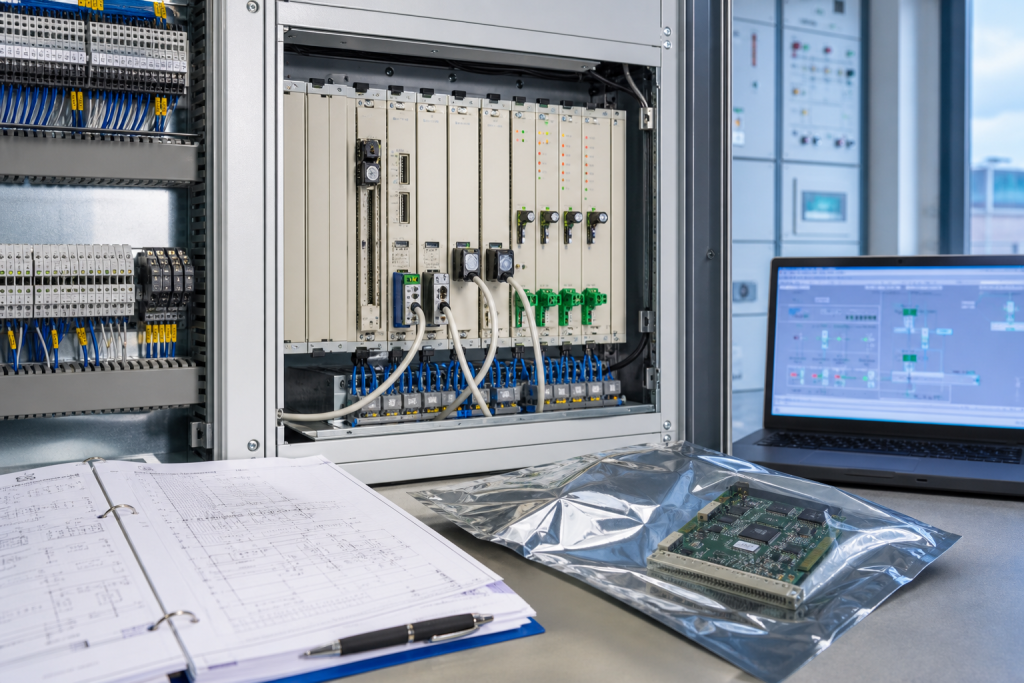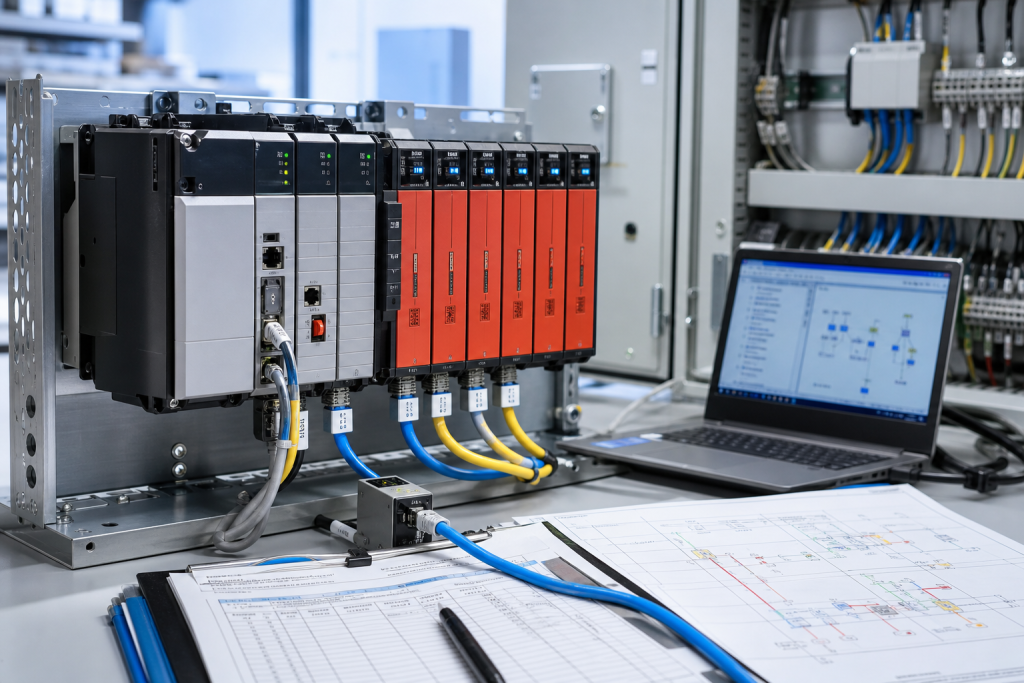

A GE RX3i modernization window is easier to plan when the plant already knows which CPU, analog output channels, backplane, firmware, and project backup can support a controlled recovery. Without that evidence, an urgent spare purchase can become a rushed migration decision.
NINERMAS readers often support PACSystems racks that still run important machines while capital projects move slowly. The practical goal is to keep production recoverable and make the modernization file stronger at the same time.
Start With The CPU And Backplane
Record the CPU order number, firmware, backplane, rack slot, power supply, communication ports, memory or project backup, fault history, and the machine or process function controlled by the rack.
The live GE IC695CPE305-ABAH PACSystems RX3i CPU is the product match when controller identity and project compatibility drive the RFQ.
Photograph CPU labels, backplane part numbers, communication cables, LED status, memory devices, and software diagnostics before the cabinet is changed.
Analog Output Channels Need Loop Evidence
A CPU may recover while a final-control loop remains unavailable because the analog output range, terminal wiring, load, or scaling was not recorded.
The related GE IC695ALG600 RX3i analog output module should be discussed by channel role, field load, and test method.
Ask suppliers to separate CPU, I/O module, backplane, and substitute options, with actual photos, condition, test scope, and unresolved firmware or configuration questions.
Acceptance Should Serve Today And Tomorrow
After replacement, verify CPU RUN state, project load, I/O diagnostics, analog output range, field response, HMI status, alarms, and controlled machine testing.
If recovery fails, review backplane seating, power, firmware, project hardware configuration, terminal wiring, output load, and field device condition before rejecting the spare.
Store photos, backup status, channel list, test readings, and modernization implications with the spare record.
Procurement Notes That Reduce Restart Risk
Send CPU labels, backplane photos, analog channel list, project-backup status, condition requirement, and modernization deadline.
A GE RX3i RFQ should state whether the goal is emergency recovery, planned stores coverage, or migration-window risk reduction.
For substitutes, require review of firmware, backplane fit, I/O range, project compatibility, and rollback path.
The useful spare request is a technical record, not just a purchasing message. It should prove the installed hardware identity, the function being restored, the accessories required for installation, the acceptable condition level, and the site test that will decide whether the item is fit for service.
Mature PLC, DCS, SIS, drive, and monitoring platforms often contain several nearly identical modules across one plant. Firmware, suffix, memory, terminal base, communication option, power rating, cable type, and rack position can all change the result. Treat the family name as the beginning of the investigation, not the end.
Actual-item photographs remain one of the strongest controls. Front labels, side labels, connector faces, terminal screws, handles, keying, memory devices, cable tags, and cabinet slot position often reveal details that catalog descriptions hide.
Condition language should be plain. Factory sealed, new surplus, refurbished, repaired exchange, tested used, and untested used parts are different risk categories. Ask what was tested, what accessories are included, and which checks remain the plant responsibility.
Before ordering, agree on who owns project loading, firmware review, parameter transfer, calibration, proof testing, communication checks, and final operating approval. The supplier can confirm hardware, but the plant still owns the installed function.
Receiving inspection should repeat the RFQ evidence. Compare the approved photos with the received item, check connector damage, confirm accessory scope, document packaging condition, and decide whether the item is ready for stores, bench testing, or immediate installation.
For urgent downtime, define the fallback before the purchase order is released. If the spare fails acceptance, the plant should know whether to reinstall the old unit, try a repaired exchange, isolate a noncritical function, or move directly into a migration path.
This discipline also helps long-term lifecycle planning. Scarce offers, weak test evidence, missing accessories, repeated substitutions, or long sourcing cycles are practical signals that support modernization planning without inventing unsupported claims.
Good RFQs do not slow the job down. They reduce vague follow-up questions and help suppliers respond with exact stock, tested condition, realistic dispatch timing, and clear limitations before the maintenance window is already open.
If the spare is bought for stores rather than immediate installation, still define inspection and future testing. A stored critical spare without evidence simply postpones the uncertainty to the next outage.
Keep the evidence with the spare record after recovery. The next engineer should be able to see why the item was accepted, what limitations remained, and how the plant proved the system was safe and ready to run.
For multi-site groups, use the same evidence structure across plants but do not assume the same answer. One site may accept a repaired exchange for stores, while another needs a like-for-like tested item because the function is tied to safety, generation, or continuous production.
Ask the receiving team to preserve labels and packaging until engineering completes the first inspection. If a connector is bent, a terminal is missing, or the delivered item does not match the approved photos, the issue should be raised before the part is placed into critical inventory.
The strongest teams also record what was not verified. If firmware, project loading, calibration, communication scheduling, or field proof testing remains open, write that clearly in the spare record so nobody mistakes hardware arrival for system readiness.
FAQ
What must match on a GE RX3i CPU spare?
Match order number, firmware, backplane role, memory or project backup, communication ports, and test method.
Why include analog output evidence?
Because a recovered CPU is not enough if the final-control loop cannot move correctly.
What should procurement send?
Send labels, backplane photos, channel list, backup status, condition requirement, and deadline.
What proves recovery?
CPU RUN state, loaded project, healthy I/O, correct analog response, clear alarms, and approved machine test.
Send NINERMAS the GE RX3i labels, backplane photos, analog channel evidence, backup status, and recovery deadline. We can help prepare a practical PACSystems spare RFQ.
© 2026 NINERMAS. All rights reserved. Official Website: https://NINERMAS.com Inquiry: sale@NINERMAS.com | WhatsApp/Tel: +86 187 5021 5667
Next Step
Move the research into a cleaner RFQ.
Send the part number, quantity, condition expectation, destination, and timing details so the sourcing team can reply with better availability and lead-time context.