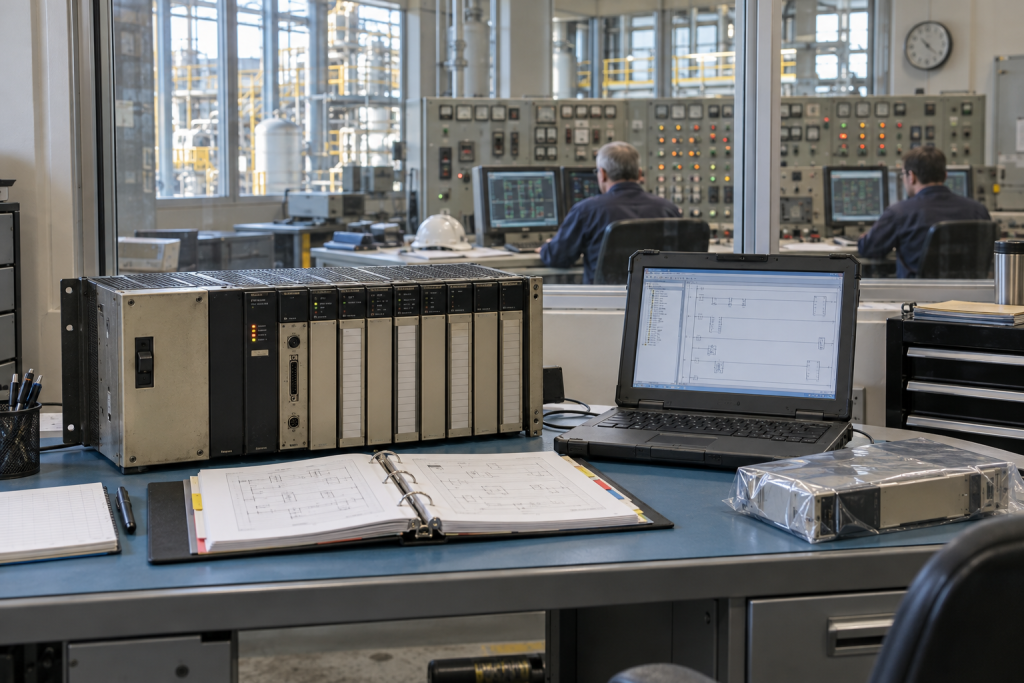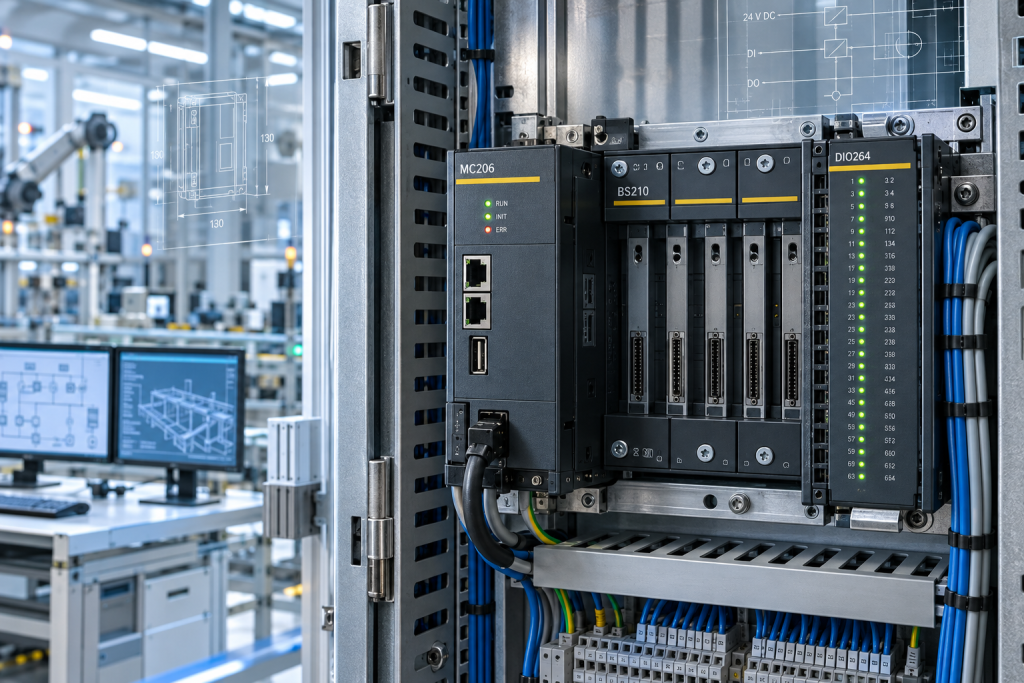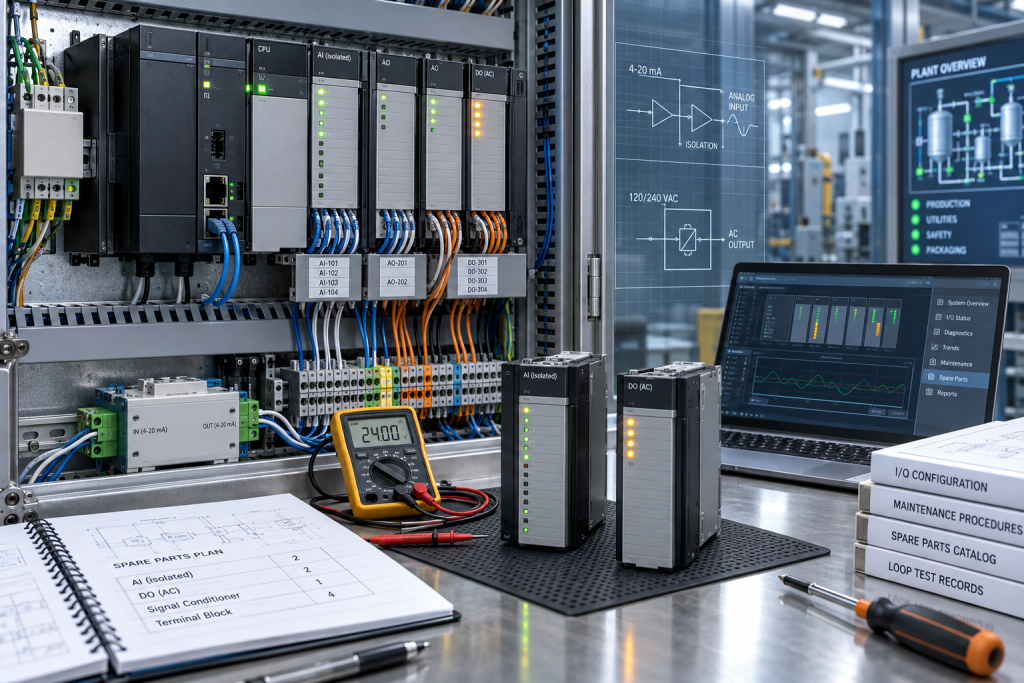
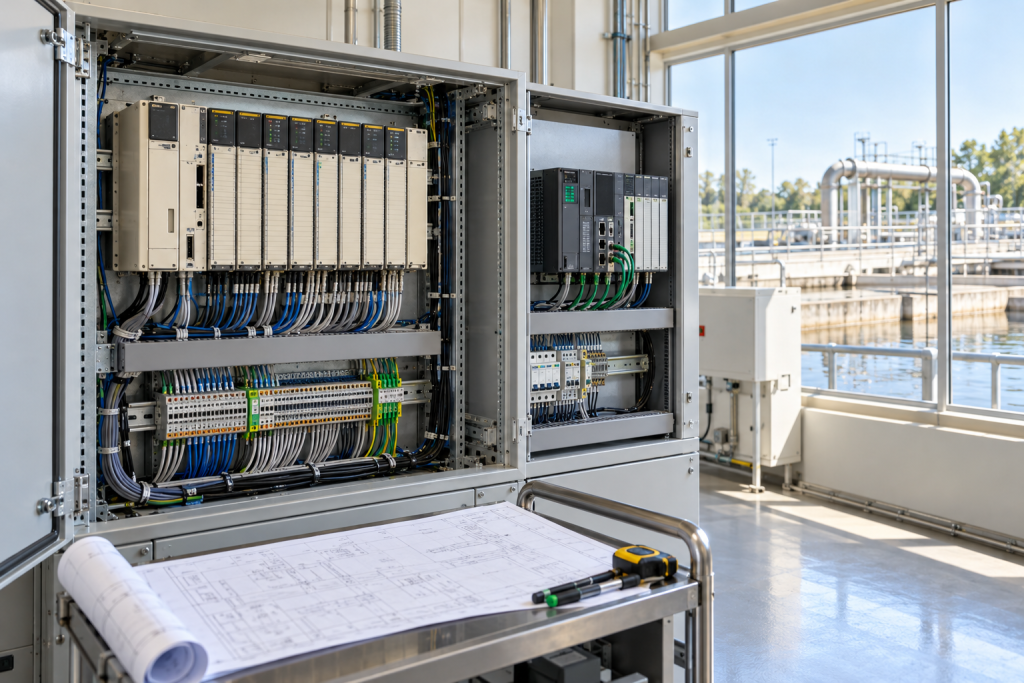
A controller migration can finish on schedule while leaving most of a plant’s spare-parts exposure untouched. The new CPU is commissioned, the engineering workstation is updated, and the project is marked complete. Several buildings away, however, the same remote racks, adapters, power supplies, and field connections are still carrying the process. That is not necessarily a poor migration. It becomes a problem when the storeroom treats the entire installation as new.
For plants considering Quantum S908 migration, the useful question is therefore not simply which controller replaces the old one. It is which failures remain recoverable only through the retained equipment. Answering that question makes a phased modernization easier to support and prevents an accounting milestone from becoming an accidental spare-stock retirement decision.
A migration path is also a maintenance boundary
Schneider Electric’s Quantum migration catalog, dated October 20, 2017, describes different modernization paths. They include replacing equipment more extensively and retaining legacy remote I/O through an appropriate migration arrangement. This is established migration guidance, not a new discontinuation announcement. Its practical value is that controller replacement and field-equipment replacement need not occur in the same shutdown.
The 140CRA31908 S908 retrofit adapter is relevant when the approved architecture uses that migration route. Its presence in a bill of materials does not mean that every installed Quantum device is compatible, or that the retained network has acquired a new service life. The project still needs the applicable architecture, firmware, configuration, and supported-module checks.
Draw the boundary explicitly. On one side put the equipment and software being replaced. On the other put every asset that remains in service. Between them identify the interfaces whose failure can interrupt multiple process areas. A single drawing showing this boundary is often more useful to maintenance than a project summary listing only new purchases.
The remote drop remains a separate recovery problem
A retained drop has its own recovery dependencies. A sound CPU and a functioning migration interface cannot compensate for a failed local rack supply, damaged connection, or unavailable drop adapter. The spare strategy must follow the actual installed references and their failure consequences, not just the platform name displayed in the control room.
For example, a site with an installed 140CRA93200 Quantum RIO drop adapter should retain that exact identity in the maintenance register. It should not merge the item with the migration adapter under a generic description such as Quantum communications spare. These references describe different roles. Neither listing establishes interchangeability or confirms suitability for an unreviewed rack arrangement.
Build the retained-equipment register by location. Record the adapter reference, installed revision where available, rack arrangement, power supply, connected process area, and the current documentation owner. Photographs help resolve uncertain labels, but they do not replace the approved configuration. Where records disagree with the cabinet, resolve the discrepancy before changing the spare quantity.
Release old stock by milestone, not by project title
Consider a hypothetical water-treatment site that migrates the central controller first and leaves several remote buildings for later outages. A procurement instruction to stop buying Quantum parts immediately would ignore those remaining buildings. Conversely, continuing to buy every historical reference indefinitely would tie up money after equipment has genuinely been removed.
A better release rule associates each spare with the last dependent asset. Keep the item eligible for replenishment while that asset remains operational and the approved risk assessment still requires coverage. Review the quantity when a process area is retired, not merely when a new CPU goes live. Record the evidence supporting disposal, transfer, or continued retention.
- Separate installed legacy demand from parts already removed during the first migration phase.
- Distinguish a tested recovery spare from an unverified board available somewhere in storage.
- Include repair turnaround and inspection time in the recovery plan without assuming supplier stock.
- Assign a named owner to review the retained list at each subsequent shutdown.
This approach also improves budget conversations. The retained parts are not evidence that modernization failed. They are the support cost of a deliberate phased architecture. Showing the remaining dependencies makes that cost visible and provides a reasoned point at which it can end.
Commission the handover, not only the controller
The handover package should distinguish normal operation from recoverability. It needs the accepted configuration, revision record, location drawings, alarm interpretation, and the approved replacement procedure for the retained equipment. A healthy process display at the end of commissioning proves less than a maintenance team may assume about those documents.
Define restoration evidence before the shutdown. The responsible engineering team should decide which offline checks, controlled tests, and process checks demonstrate that the selected migration arrangement behaves correctly. Do not improvise a live module exchange to prove a spare works. Isolation, permitted replacement methods, and process consequences remain installation-specific.
Finally, make rollback ownership explicit. If the first migration phase cannot be accepted, someone must know which preserved equipment, configuration files, and approvals are needed. A rollback plan that depends on parts already scrapped is not a usable plan.
Questions from maintenance and purchasing
Does installing an M580 controller eliminate the need for Quantum spares?
Not when Quantum equipment remains in the approved installation. Review the retained racks and interfaces individually. Reduce stock only after the dependent assets have been removed or another documented recovery strategy has been accepted.
Are 140CRA31908 and 140CRA93200 alternatives for the same job?
No such substitution should be inferred. One is being discussed here in a migration-interface context and the other as a legacy drop-adapter reference. Use the manufacturer documentation and the installed architecture to determine the exact requirement.
Can we buy one spare for every retained remote rack?
Only if the exact hardware requirements and approved compatibility support that arrangement. Similar cabinet appearance is insufficient. Different references, revisions, and process consequences may require separate coverage or additional qualification.
What should we include in a sourcing request?
Provide the full installed reference, label photographs, required condition, quantity, location role, and any revision restrictions. State whether the request supports an existing remote drop or a planned retrofit. That distinction prevents quotations for the wrong layer of the system.
For a scoped NINERMAS quotation, send the relevant adapter details and your retained-equipment boundary. We can discuss sourcing against the specified requirement; compatibility approval and commissioning remain with the responsible plant engineering team.
Image: AI-generated editorial illustration, not an exact product photograph or installation reference.
© 2026 NINERMAS. All rights reserved. Official Website: https://ninermas.com Inquiry: sale@NINERMAS.com | WhatsApp/Tel: +86 187 5021 5667
Next Step
Move the research into a cleaner RFQ.
Send the part number, quantity, condition expectation, destination, and timing details so the sourcing team can reply with better availability and lead-time context.