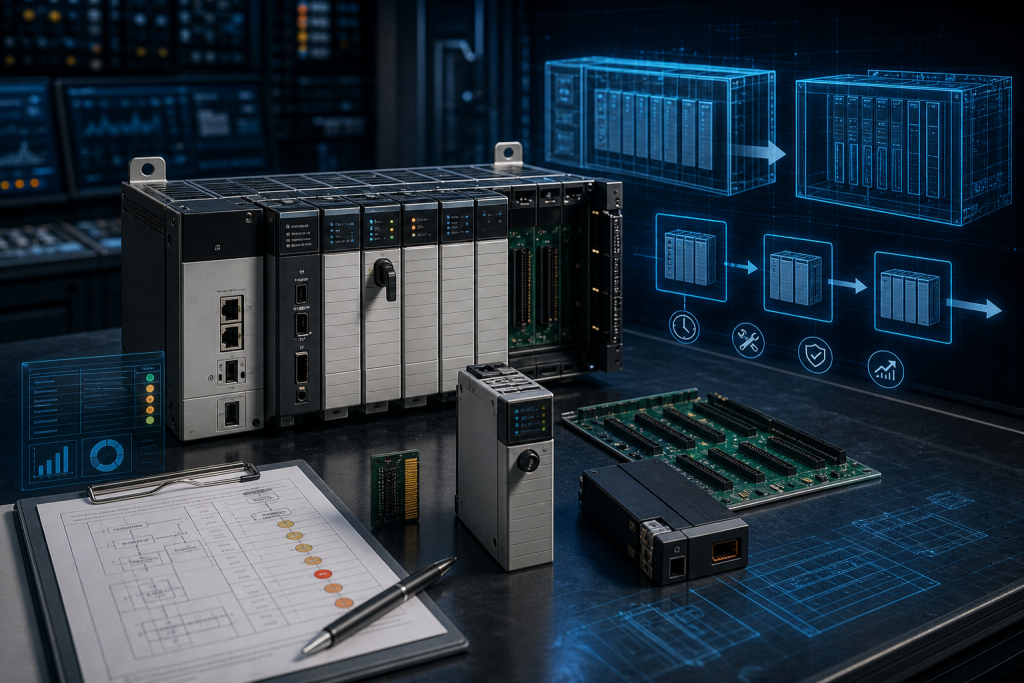
When there is no fresh 24-hour advisory that clearly beats the installed-base risk, a good maintenance team should still use the day for a lifecycle audit. For many plants in 2026, one of the highest-value checks is the Rockwell Automation ControlLogix 5560 family, especially 1756-L6x processors and the surrounding 1756 chassis ecosystem. These systems are not new, yet they still run packaging lines, batch units, utilities, conveyors, tank farms, and process skids around the world.
The risk is not that every ControlLogix 5560 controller will fail tomorrow. The risk is that a plant assumes the platform is still easy to support because it has been reliable for years. Reliability can make old hardware invisible. By the time a power event, firmware issue, battery-backed memory problem, backplane fault, or failed communication module exposes the weak point, the procurement team may discover that exact-match availability, firmware alignment, and tested replacement evidence are harder than the old store-room record suggested.
Lifecycle status should change the spare conversation
Rockwell’s lifecycle status tools are useful because they move the discussion from opinion to evidence. If a controller, communication module, or accessory is mature, discontinued, or no longer actively supported, maintenance should treat it differently from a current platform part. The plant may still choose to extend the asset, but that decision should be paired with a spare strategy, backup quality check, and migration trigger.
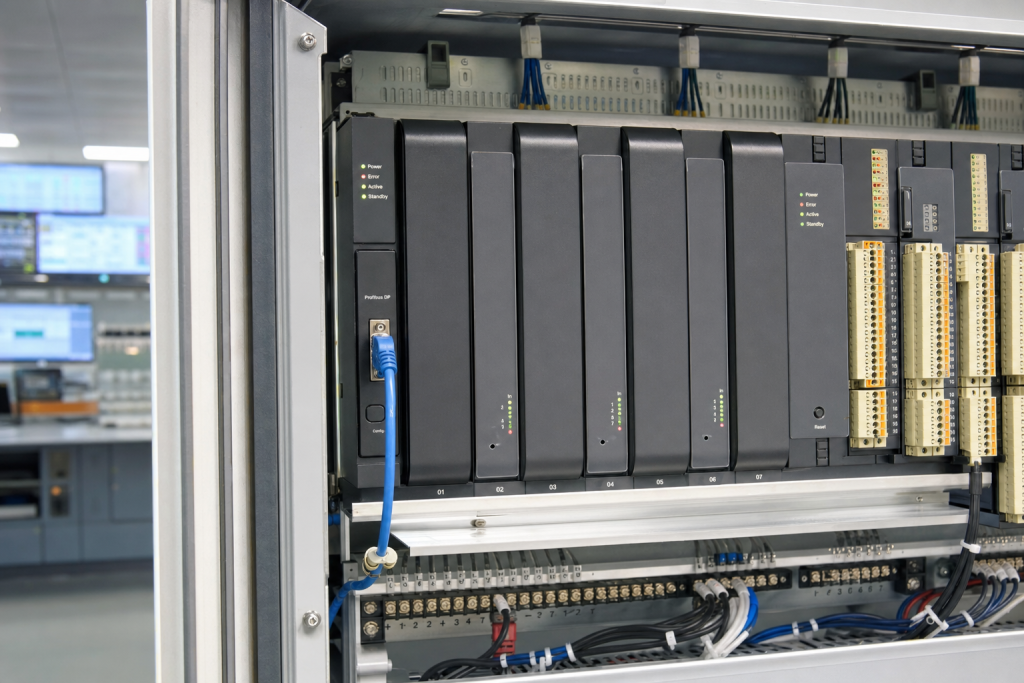
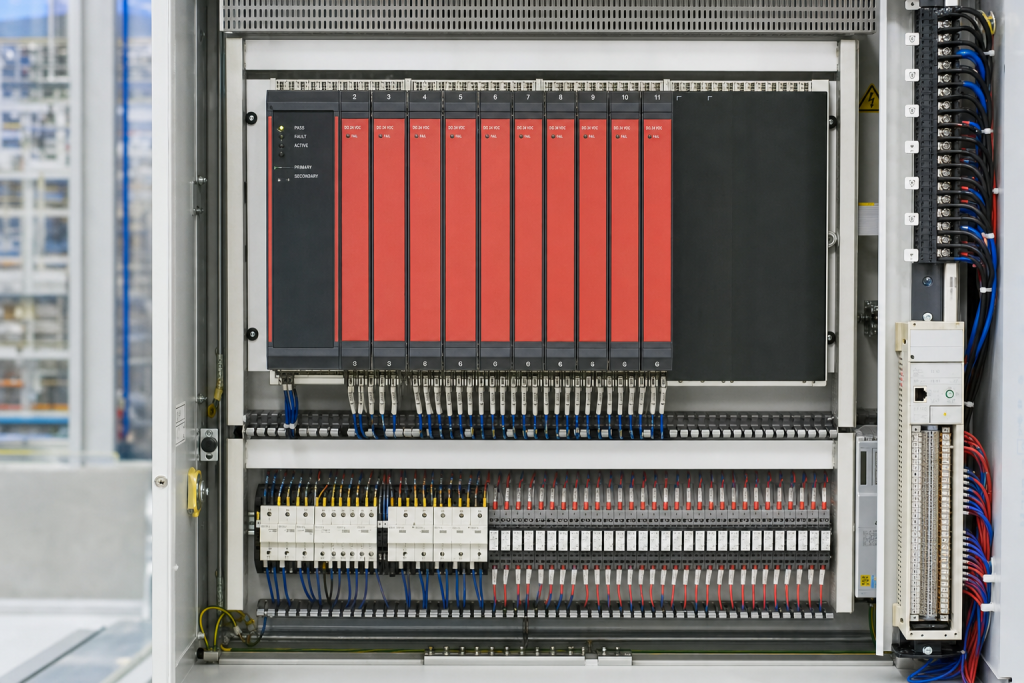
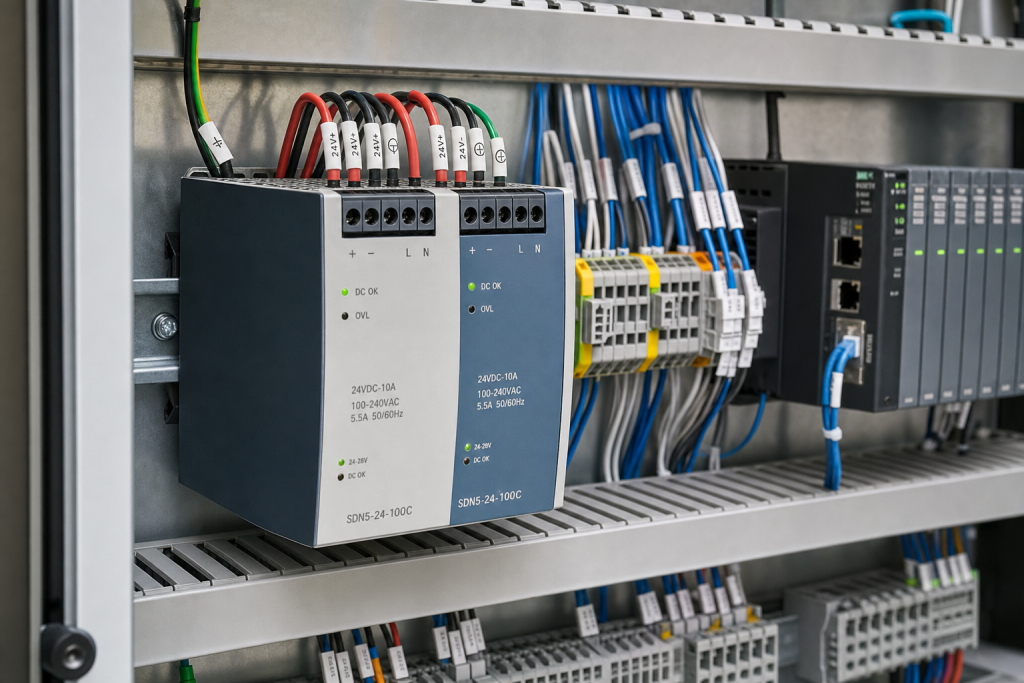
A ControlLogix 5560 audit should start with installed processor models, chassis sizes, power supplies, communication modules, specialty cards, terminal blocks, and firmware. Do not only count CPUs. A plant may have a spare processor but no compatible communication module, no matching chassis, no tested power supply, or no current project backup. A single missing support item can turn a stocked spare into shelf decoration.
NINERMAS usually links this work to real hardware evidence, such as the installed chassis and related ControlLogix parts. For example, a replacement decision around an Allen-Bradley 1756-A4/B ControlLogix chassis should include the processor, power supply, slot layout, firmware, and backplane condition, not just the chassis catalog number.
What to check before buying more L6x stock
First, confirm exact catalog numbers and series. A 1756-L61, 1756-L62, 1756-L63, 1756-L64, or 1756-L65 request should not be quoted from memory. Ask maintenance for cabinet photos, processor labels, chassis labels, module list, and firmware information from the controller properties if available. If the plant uses ControlNet, EtherNet/IP, DeviceNet, or serial communication modules, collect those details at the same time.
Second, check backup usability. A controller backup is not only an ACD file in an archive folder. It should include the correct Studio 5000 or RSLogix 5000 environment, firmware path, electronic keying notes, network configuration, produced and consumed tag dependencies, HMI references, and any safety or motion considerations. If the backup has not been opened recently, the team should test it before an emergency.
Third, review the condition expectation. Some plants need factory sealed or new surplus parts. Others can accept tested used hardware for emergency stock. Both positions can be reasonable, but they should be written in the RFQ. A procurement table that compares factory sealed, refurbished, and untested used items as if they are equal will mislead the decision maker.
When extension is practical and when migration should start
Extending a ControlLogix 5560 system can be practical when the process is stable, backups are strong, spares are available, and the plant has a defined modernization horizon. It becomes less practical when several critical modules are obsolete, firmware knowledge is limited, old communication networks are poorly documented, and replacement stock is uncertain. A plant does not need to panic, but it should name the trigger points.
Useful triggers include repeated hardware faults, inability to source exact communication modules, unsupported engineering software, missing licensed workstations, or a production change that requires capabilities the old platform cannot comfortably support. Those triggers should be discussed before the annual shutdown budget is already locked.
For buyers, the best action is to turn the lifecycle audit into an RFQ package: full model list, quantities, photos, preferred condition, acceptable alternatives, delivery country, and whether the parts are for emergency stock or a planned upgrade bridge. NINERMAS keeps similar guidance in our platform and system guides because lifecycle extension sits between engineering judgment and spare-parts availability.
Receiving inspection matters too. When a ControlLogix spare arrives, compare the series, catalog number, physical condition, connector condition, and included accessories against the RFQ. Store firmware and backup notes with the spare record. If the part is held for a shutdown, do not wait until the outage to discover that a terminal block, power supply, or communication module was missing from the kit.
FAQ
Does a discontinued ControlLogix 5560 part mean we must migrate immediately?
No. Many plants can safely extend the platform, but extension should be backed by tested spares, current backups, firmware notes, and a realistic migration trigger.
Which ControlLogix parts should be audited besides the processor?
Check chassis, power supplies, EtherNet/IP or ControlNet modules, specialty I/O, terminal blocks, memory accessories, engineering software, and HMI dependencies.
Can tested used 1756 hardware be acceptable?
Yes, if the plant allows it and the supplier provides clear condition evidence. Critical units may still require new surplus or more thoroughly tested stock.
What should I send for a ControlLogix 5560 RFQ?
Send catalog numbers, series, firmware, photos, quantity, condition requirement, destination, delivery deadline, and whether exact match or engineering-approved alternatives are allowed.
If your plant is auditing ControlLogix 5560 or 1756-L6x lifecycle risk, send NINERMAS the module photos, backup status, quantity, and required delivery window. We can help check practical spare options before a lifecycle issue becomes production downtime.
© 2026 NINERMAS. All rights reserved. Official Website: https://NINERMAS.com Inquiry: sale@NINERMAS.com | WhatsApp/Tel: +86 187 5021 5667
Next Step
Move the research into a cleaner RFQ.
Send the part number, quantity, condition expectation, destination, and timing details so the sourcing team can reply with better availability and lead-time context.