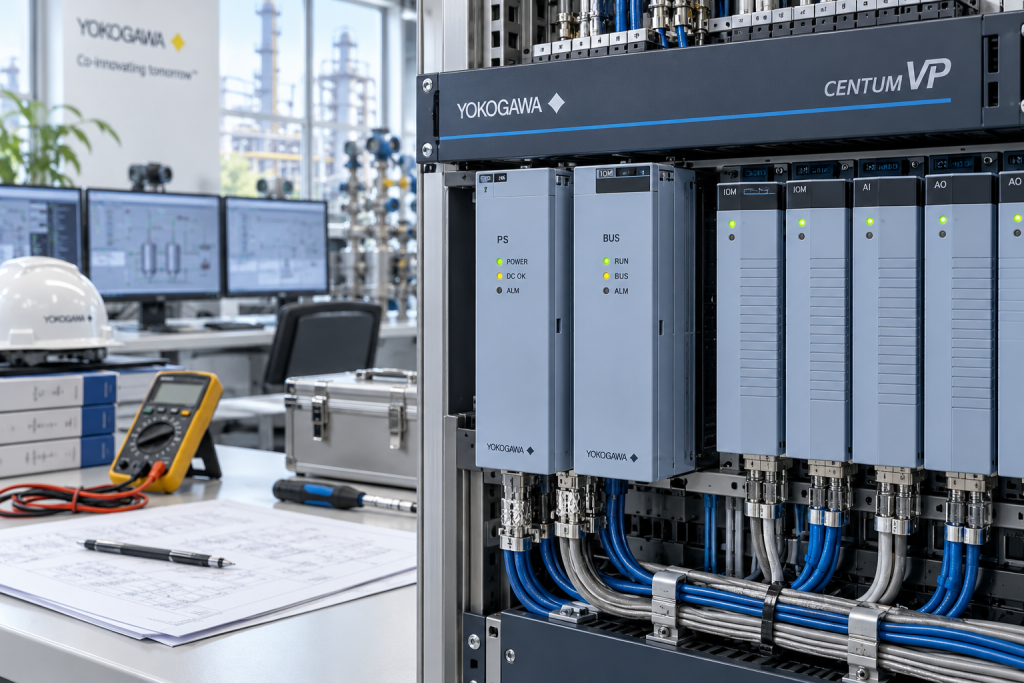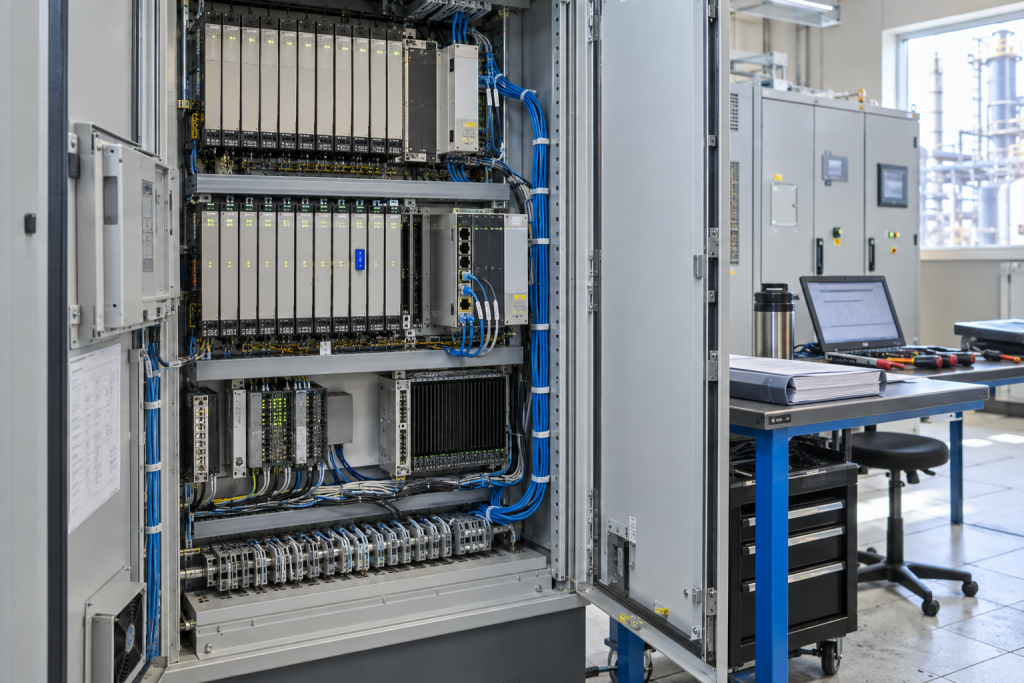

ABB System 800xA 7.0 is a useful reminder that a DCS upgrade is not a single software event. ABB has presented the release as a long-term-support step with broader platform support, extension packs, and updated security and connectivity. For a new project, that sounds like a platform decision. For a plant with cabinets installed across multiple shutdowns, it is a spare-parts and evidence decision first.
The first question is not whether 7.0 is modern. It is whether the installed base can be described well enough to make a controlled decision. A process unit may contain current and legacy nodes, older video or operator interfaces, mixed communication paths, and a store room full of parts that were purchased under incomplete descriptions. Before a quotation or migration plan is approved, maintenance and engineering need one shared view of what must remain online, what can be bridged, and what should be retired.
Start With The Installed 800xA Boundary
Draw the boundary around the process area that could be affected by one failed controller, communication node, operator station, or power module. Record the cabinet, rack, slot, node address, software baseline, firmware revision, network path, power source, and the process consequence of losing the item. Do not rely on a cabinet label alone. A replacement may carry a familiar family name while using a different connector, revision, memory option, or engineering dependency.
For each node, attach photographs of the front label, side label, backplane position, terminal arrangement, adjacent modules, and cable routing. Include a screenshot of the diagnostic condition before removal when the system is still running. This evidence gives a supplier something more useful than “800xA card needed” and gives engineering a way to compare the replacement with the failed unit.
Separate LTS Benefits From Compatibility Assumptions
A long-term-support release can improve the future maintenance position, but it does not automatically make every legacy component interchangeable. Platform support, operating-system support, controller firmware, I/O family, operator workstation, historian interface, and third-party protocol path each have their own compatibility questions. Treat the release as a decision point that opens a review, not as permission to substitute hardware without testing.
A part such as the ABB 3BHE044249R4002 GDC806 C4002 retrofit for 800xA should be evaluated against the plant’s exact installed role. Ask which legacy function it replaces, which configuration is retained, what firmware or engineering package is required, and whether the part is intended for direct recovery or an approved modernization stage. Those questions are more valuable than a generic “new or refurbished” label.
Protect The Operator And Video Layer
Operator and video modules are often treated as secondary because the controller and I/O receive most of the attention. In practice, a failed display path can delay diagnosis, hide alarms, or force operators to work from a degraded station during a critical restart. Record which screens, alarm views, trends, and process units depend on the affected module before deciding that a compatible display part is good enough.
The ABB VPM810 retrofit-compatible video module for legacy 800xA is therefore not just a screen-related purchase. The RFQ should state the operator-station role, video interfaces, resolution requirements, connected workstation or panel, installed software baseline, and the acceptance checks required after replacement. If the unit is being used as a bridge to a newer operator architecture, document that intention so it is not mistaken for a permanent like-for-like spare.
Build Two Stock Lists, Not One
Every modernization review should create a recovery list and an evolution list. The recovery list contains parts that restore the known configuration with the smallest possible change: an installed-compatible controller, video module, power unit, interface, or cable. The evolution list contains parts needed for an approved architecture change, including test hardware, engineering licenses, conversion work, network changes, and temporary bridge items.
Mixing the lists is a common source of confusion. A buyer may purchase a technically newer item that cannot be installed during an emergency because its firmware, configuration, or cabinet interface has not been qualified. Mark every stock record with its purpose, accepted condition, test evidence, storage location, and the person authorized to release it for production use.
Make The Shutdown Test Explicit
A successful power-up is not a successful DCS recovery. The test should confirm controller health, node visibility, I/O quality, operator displays, alarms, trends, time synchronization where required, historian data, and representative loop behavior. Choose checks from different process areas so that a partial communication problem cannot be mistaken for a complete recovery.
Before seating a legacy module, verify cabinet power, grounding, keying, connector condition, and the position of every switch or jumper. After the replacement is online, keep the system under observation long enough to expose intermittent link, thermal, or contact problems. Record the final firmware, serial number, configuration backup, and test result in the installed-base file.
Give Procurement A Decision-Ready RFQ
A strong 800xA RFQ includes the complete part number, revision, quantity, cabinet and rack role, photos, failure symptoms, required condition, destination, delivery date, and whether exchange or repair is acceptable. State whether the quotation must include test reports, configuration evidence, connectors, cables, or a return window. Avoid “or equivalent” unless engineering has defined the exact electrical, mechanical, firmware, and functional equivalence.
For a plant considering 7.0, ask suppliers to separate direct recovery availability from modernization alternatives. That lets the outage team protect production while the project team evaluates a longer-term path. It also creates a cleaner budget conversation because emergency risk, lifecycle risk, and approved upgrade scope are no longer hidden in one line item.
FAQ
Does 800xA 7.0 mean every legacy 800xA spare should be replaced now?
No. The release is a reason to review lifecycle, compatibility, operating-system, and security dependencies. A critical legacy spare may still be the correct short-term recovery item while a staged upgrade is engineered separately.
What evidence should be attached to an 800xA spare request?
Include the complete label, revision, rack and slot, cabinet photos, connector and cable details, failure symptoms, software and firmware baseline, process role, quantity, condition requirement, destination, and outage date.
Should retrofit-compatible hardware be used during an emergency?
Only when its interface, configuration, firmware, and acceptance test are already qualified for that role. Otherwise keep it in the evolution list and use a verified recovery path for the outage.
How can a plant avoid buying the wrong 800xA spare?
Make the installed record authoritative, require model and revision evidence in the quotation, and separate direct recovery parts from modernization parts before purchase approval.
Request a quote: Send NINERMAS the complete ABB label, cabinet and connector photos, installed software and firmware information, required condition, quantity, destination, and shutdown date. We can help turn that evidence into a focused 800xA spare-parts decision.
© 2026 NINERMAS. All rights reserved. Official Website: https://NINERMAS.com Inquiry: sale@NINERMAS.com | WhatsApp/Tel: +86 187 5021 5667
Next Step
Move the research into a cleaner RFQ.
Send the part number, quantity, condition expectation, destination, and timing details so the sourcing team can reply with better availability and lead-time context.