Original Industrial Spare Part
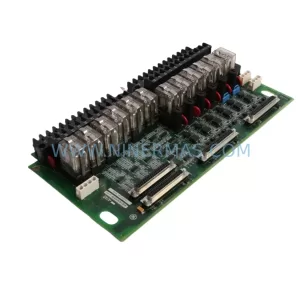
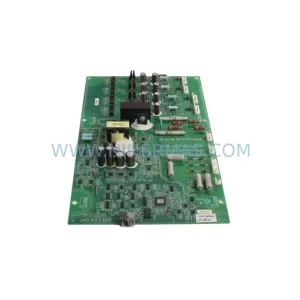
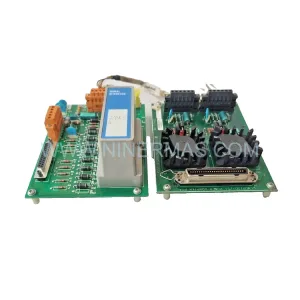
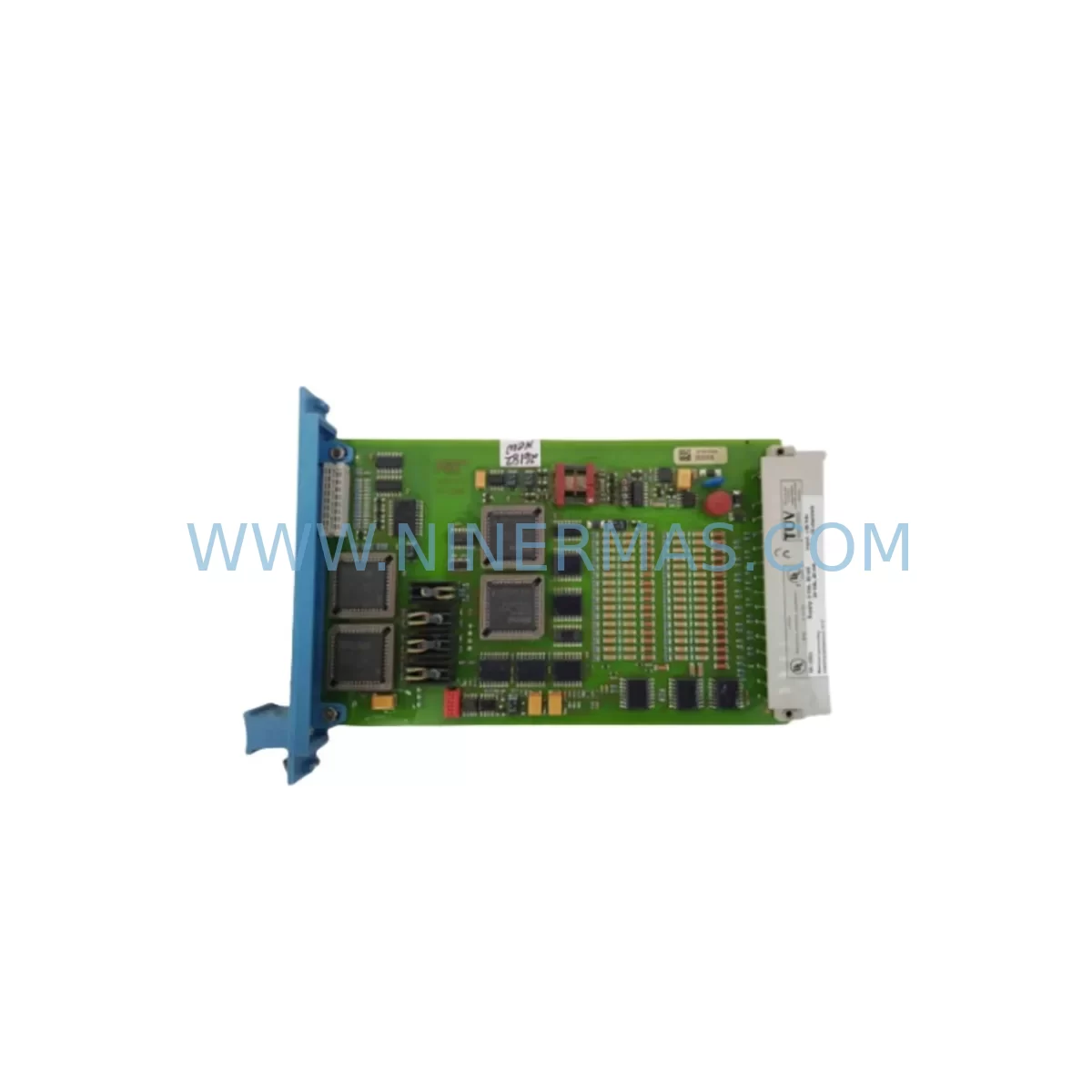
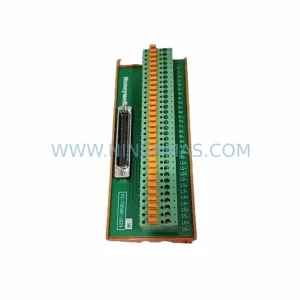
Honeywell FC-SAI-1620M V1.1 Retrofit-Compatible Safety Analog Input
Verify the part, confirm the platform family, and move straight into quotation with the right commercial details.
RFQ Ready
- SKUFC-SAI-1620M V1.1
- CategorySIS Safety & Redundancy Systems
- BrandHoneywell
- SupportAvailability, lead time, condition, and shipping coordination
How Buyers Usually Use This Page
- Confirm the exact part number and platform family before sending the quote request.
- Use direct email when quantity, condition, and destination are already defined internally.
- Switch to the broader brand or category archive when you need alternates nearby.
Series Navigation
Move through the most common platform families behind this part.
Product RFQ
Send this part directly for quotation.
Include quantity, required condition, destination country, and target delivery timing. Current reference: Honeywell FC-SAI-1620M V1.1 Retrofit-Compatible Safety Analog Input with SKU FC-SAI-1620M V1.1.
Honeywell FC-SAI-1620M V1.1 Retrofit-Compatible Safety Analog Input for Legacy Systems
The Honeywell FC-SAI-1620M V1.1 is a Safety Analog Input (SAI) module designed for use within the Honeywell Safety Manager (SM) and Fail-Safe Controller (FSC) platform — one of the most widely deployed safety instrumented systems (SIS) in the process automation industry. As legacy FSC and Safety Manager installations approach end-of-life, the FC-SAI-1620M V1.1 remains a critical retrofit-compatible spare that enables plant engineers to extend system service life, maintain SIL 2/3 certification compliance, and avoid costly full-system replacements.
This module handles 16 analog input channels with built-in signal diagnostics, making it essential for monitoring process variables such as pressure transmitters, temperature sensors, and flow signals in safety-critical loops. Its compatibility with the existing FSC backplane and rack architecture means it can be installed as a direct replacement without requiring changes to the control cabinet layout, terminal wiring, or safety logic program — a key advantage when minimizing planned shutdown windows.
NINERMAS maintains verified stock of the FC-SAI-1620M V1.1 with full functional testing prior to shipment, backed by a 12-month warranty covering hardware defects and operational failures under normal industrial conditions.
Upgrade Compatibility Table
| Parameter | FC-SAI-1620M V1.1 | Retrofit Notes |
|---|---|---|
| Module Type | Safety Analog Input, 16-channel | Direct replacement for earlier FC-SAI variants |
| Platform Compatibility | Honeywell FSC / Safety Manager | Compatible with SM backplane and rack |
| Signal Range | 4–20 mA / 0–10 V (configurable) | Verify field transmitter signal type before swap |
| Terminal Wiring | Standard FSC terminal block | No rewiring required for like-for-like replacement |
| Backplane Interface | FSC standard backplane connector | Confirm slot address assignment in SM configuration |
| Module Address | Configurable via SM engineering tool | Re-assign address if replacing a failed module mid-rack |
| Communication Protocol | Internal FSC bus | No external protocol change required |
| SIL Rating | SIL 2 / SIL 3 capable | Verify SIL loop calculation after replacement |
| Installation Space | Standard FSC single-slot module | No cabinet modification required |
| Commissioning | Online via SM engineering workstation | Perform channel-by-channel loop test post-installation |
| Warranty | 12-Month Warranty — hardware defects and operational failures under normal industrial use | |
Retrofit Planning for Existing Automation Systems
When planning a retrofit involving the FC-SAI-1620M V1.1, engineers must account for the broader FSC or Safety Manager system architecture. The module slots into the existing FSC rack — typically an FC-RACK-08 or FC-RACK-16 chassis — without requiring physical modifications to the cabinet. However, a thorough pre-replacement audit is strongly recommended.
Begin by verifying the power supply capacity of the installed FC-PSU (power supply unit). Adding or replacing analog input modules can affect the total current draw on the 24 VDC bus. If the existing FC-PSU is already near its rated output, a supplementary or replacement power supply module should be sourced alongside the FC-SAI-1620M V1.1.
Terminal wiring should be documented before removal of the failed or obsolete module. The FC-SAI-1620M V1.1 uses the standard FSC terminal block layout, so field cables from pressure transmitters, thermocouple input conditioners, or HART-enabled flow sensors can typically be reconnected without modification. However, engineers should confirm whether the existing field wiring uses shielded twisted-pair cable appropriate for analog signal integrity in the new module’s input impedance specification.
The backplane slot assignment and module address must be confirmed in the Safety Manager engineering tool (typically the FSC Engineering Workstation or SM Configuration Tool). If the FC-SAI-1620M V1.1 is replacing a module at a specific rack position, the slot address in the safety logic database must match the physical installation. Mismatched addresses will cause the FC-CPU (central processing unit) to flag a hardware fault and may trigger a safety shutdown if the system is in operational mode.
For plants running mixed I/O configurations, the FC-SAI-1620M V1.1 often coexists in the same rack with FC-SDI (Safety Digital Input), FC-SDO (Safety Digital Output), and FC-SAO (Safety Analog Output) modules. Confirming the rack population map before ordering ensures that the correct module type and quantity are procured in a single shipment, reducing the risk of a second planned outage.
Where the retrofit involves a communication protocol migration — for example, transitioning from a legacy Modbus RTU link to a PROFIBUS DP or Modbus TCP/IP interface for integration with a new DCS or SCADA platform — the FC-COM (communication module) installed in the same rack may also require an upgrade. This is a common scenario when the Safety Manager system is being integrated with a Honeywell Experion PKS or a third-party distributed control system via an OPC gateway.
HMI screen updates are another frequently overlooked element of analog input module retrofits. If the FC-SAI-1620M V1.1 replaces a module with a different channel count or signal range, the associated HMI faceplates — whether running on a Honeywell Experion Station, a standalone operator panel, or a SCADA client — must be reviewed to ensure that engineering unit scaling, alarm setpoints, and trend displays remain accurate. Failure to update HMI configuration can result in operators receiving misleading process data during the post-retrofit commissioning period.
Signal isolators or FC-compatible signal conditioners installed between field devices and the module’s terminal block should also be inspected. In older installations, passive signal isolators may have been added to address ground loop issues or to extend cable runs. These devices affect the effective input range seen by the FC-SAI-1620M V1.1 and must be accounted for during loop calibration. A programming cable (typically a standard RS-232 or USB-to-serial adapter compatible with the FSC engineering software) will be required for any online configuration changes during commissioning.
Downtime Control During System Migration
Minimizing unplanned downtime is the primary operational concern when replacing safety system components in an active process plant. The FC-SAI-1620M V1.1 supports hot-swap capability within the FSC architecture under specific conditions — consult the Honeywell FSC hardware manual and your site’s safety management of change (MOC) procedure before attempting any live replacement.
For planned replacements, the recommended approach is to schedule the swap during a routine maintenance window or a short planned shutdown. Prior to the outage, the safety logic program should be backed up from the FC-CPU to the engineering workstation. This backup preserves all I/O assignments, function block configurations, cause-and-effect matrices, and interlock logic — ensuring that the program can be restored or verified after the new module is installed.
During the replacement, field signals connected to the FC-SAI-1620M V1.1 channels should be placed in bypass or manual override at the DCS or SCADA level, where permitted by the site’s safety procedures. This prevents spurious trips from uninitialized input values during the module power-up sequence. Once the new module is seated and powered, each channel should be verified individually using a calibrated loop calibrator or HART communicator to confirm that the 4–20 mA signal is being read correctly before the bypass is lifted.
Post-installation, a full functional test of all safety loops connected to the module is required before returning the system to operational status. This includes verifying that the FC-CPU correctly reads each channel, that alarm and trip setpoints are active, and that the safety logic responds correctly to simulated process deviations. Documentation of the test results should be retained as part of the site’s SIS maintenance records to support future audits and SIL verification activities.
By sourcing the FC-SAI-1620M V1.1 from NINERMAS with pre-shipment functional testing and a 12-month warranty, plant teams can reduce the risk of receiving a defective unit and compress the overall replacement timeline — a critical factor when every hour of unplanned downtime carries significant production and safety implications.
Retrofit Support FAQ
Q1: Is the FC-SAI-1620M V1.1 a direct replacement for earlier FC-SAI module versions?
In most cases, yes. The V1.1 revision is backward-compatible with the standard FSC backplane and terminal block layout used across the Safety Manager platform. However, engineers should verify the firmware version of the FC-CPU and confirm compatibility with the specific V1.1 hardware revision using the Honeywell FSC compatibility matrix or by consulting the module’s release notes. NINERMAS can provide the module’s hardware revision documentation upon request.
Q2: What commissioning steps are required after installing the FC-SAI-1620M V1.1?
After physical installation, the module must be recognized by the FC-CPU via the SM engineering tool. Assign the correct slot address, verify channel configuration (signal type, range, and engineering units), and perform a loop test on each active channel using a calibrated signal source. Confirm that all alarm and trip setpoints are correctly loaded from the safety logic database before releasing the system from bypass.
Q3: Can the FC-SAI-1620M V1.1 be used in a system that is being migrated to a new communication protocol?
Yes. The FC-SAI-1620M V1.1 operates on the internal FSC backplane bus and is independent of the external communication protocol used by the FC-COM module. Protocol migration — for example, from Modbus RTU to PROFIBUS DP — affects the communication module and the DCS/SCADA interface layer, not the analog input module itself. The FC-SAI-1620M V1.1 will continue to function correctly during and after a communication protocol upgrade.
Q4: What does the 12-month warranty cover, and what is NINERMAS’s stock availability?
NINERMAS’s 12-month warranty covers hardware defects and operational failures under normal industrial operating conditions from the date of shipment. Each FC-SAI-1620M V1.1 unit undergoes functional testing prior to dispatch. NINERMAS maintains verified inventory of this module and can confirm current stock availability upon inquiry. For urgent requirements, expedited shipping options are available. Contact sale@ninermas.com or call +0086 187 5021 5667 for availability confirmation and lead time.
| Product Series | Safety Manager |
|---|---|
| Country of Origin | US |
Catalog Continuation
More Honeywell modules in the catalog.
Use the brand lane to compare nearby part numbers, platform-adjacent modules, and other inquiry-ready listings before sending your final RFQ.
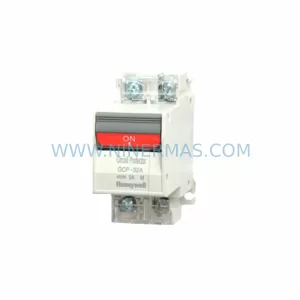
SKU: GCP-32AN 1A 2A 3A 4A 5A 7A 10A 15A 20A 25A 30A
Honeywell GCP-32AN Safety-Reliable Power Supply for Critical Sites
Catalog Continuation
Alternative parts within SIS Safety & Redundancy Systems.
Stay inside the same system family when you need substitutes, adjacent modules, or a broader shortlist for procurement review.