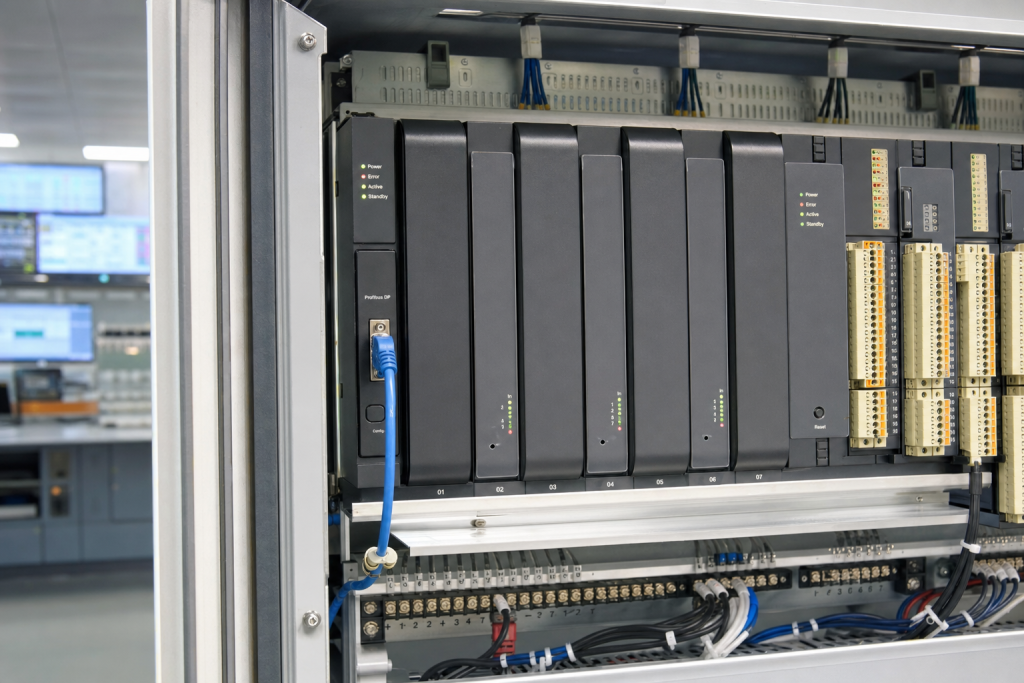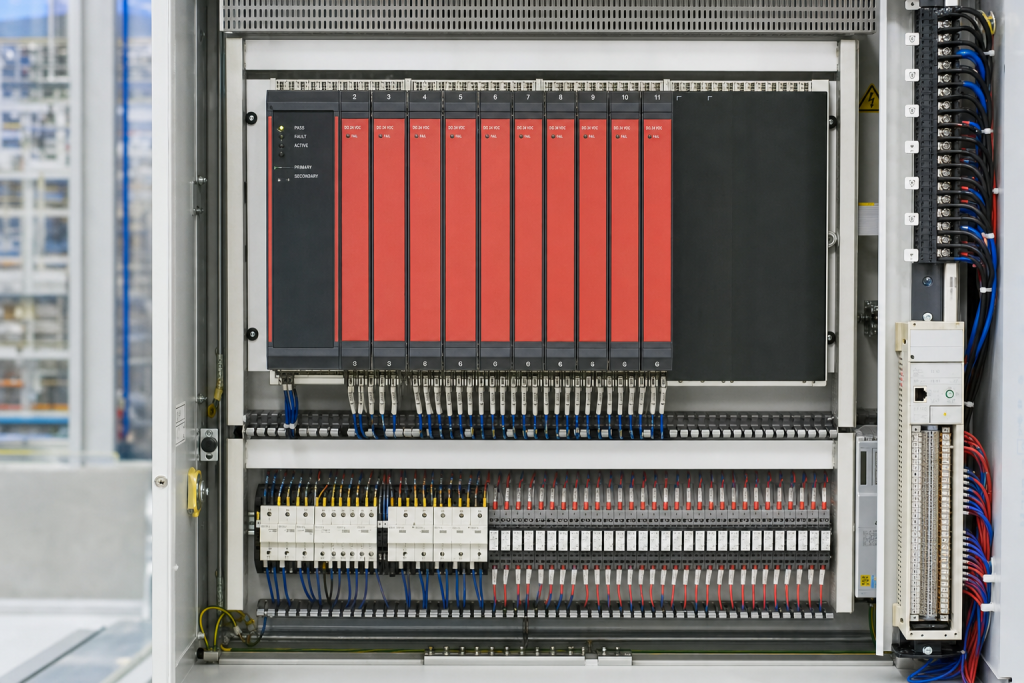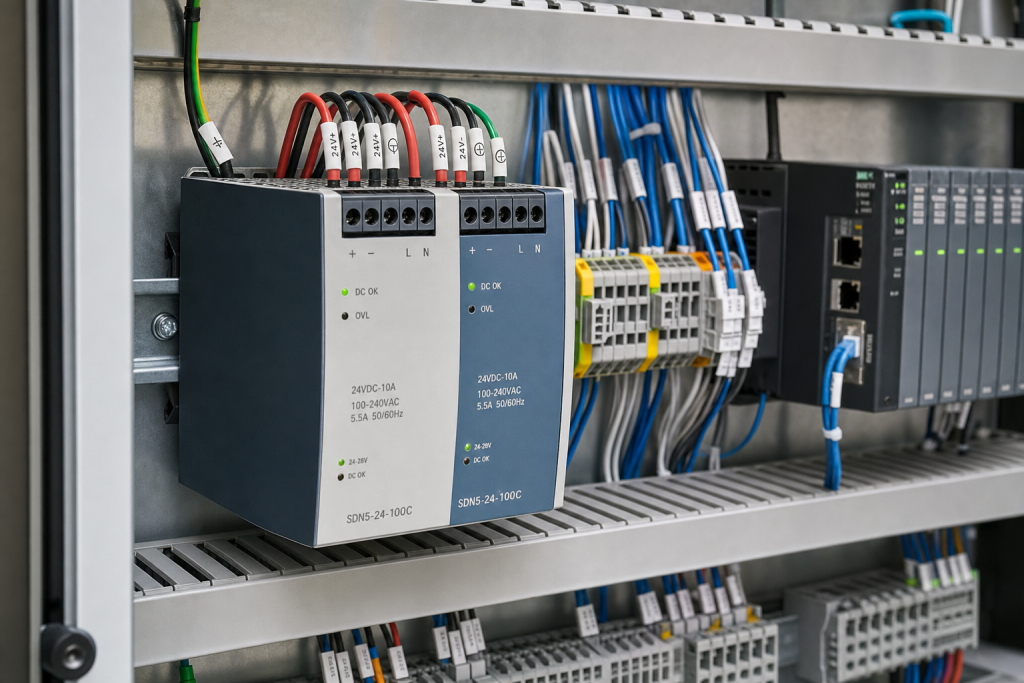

On June 18, 2026, CISA published ICSA-26-169-06 for Mitsubishi Electric MELSEC iQ-F Series FX5-ENET/IP Ethernet modules. The advisory is easy to read as another network-security item, but one detail should make maintenance and procurement teams pause: the affected FX5-ENET/IP module is listed with no fixed version planned. For compact PLC, that changes the conversation from “when do we patch?” to “how do we keep production supportable when firmware is not the exit path?”
The vulnerability is about availability. CISA describes a condition where heavy communication traffic to the Ethernet port can stop the communication function by overloading the module’s internal processing. In plant language, a network module can become the weak link between a healthy PLC program and a machine that operators can no longer supervise, interrogate, or integrate with the rest of the line.
When no firmware fix is planned, the spare becomes part of mitigation
Many engineers are used to a familiar response cycle: read the advisory, check affected versions, schedule firmware, test in a non-production rack, then roll the update during a maintenance window. That model works when the vendor publishes a corrected version and the installed base can accept it. It is less useful when the advisory points to compensating controls instead of a fixed release.
In that situation, the spare parts plan is not separate from cybersecurity. It becomes part of the practical mitigation package. Segmentation, firewall rules, trusted host lists, traffic monitoring, and remote-access control can reduce exposure. But none of those controls helps if a module fails during troubleshooting, if an OEM cabinet contains a discontinued communication option, or if the plant needs a compatible replacement before a weekend restart.
That is why the right question is not only whether the exact FX5-ENET/IP module is vulnerable. The better question is whether the site understands every compact PLC Ethernet interface that supports production, how it is connected, what replacement options exist, and how long procurement would need to source a compatible spare. The same discipline applies across other compact and modular systems in the industrial automation spare parts catalog.
Compact PLC networks are often less documented than DCS cabinets
Compact PLC systems are often delivered as part of a machine, skid, utility package, or local improvement project. The machine runs for years, the OEM engineer moves on, and the small Ethernet module becomes invisible until communications fail. That invisibility creates real sourcing risk. A spare module may require the correct hardware revision, firmware level, configuration tool, IP addressing method, and protocol behavior.
Maintenance teams should treat Ethernet adapters and communication modules as critical spares, not accessories. A failed or vulnerable communication module can stop diagnostics, recipe exchange, interlock visibility, remote troubleshooting, and production reporting. For mixed sites, review the full automation brand list and identify which families rely on small network modules rather than rack-level controllers.
What to check before the next outage window
Start with an asset walkdown. Find compact PLCs, network adapters, embedded Ethernet boards, remote I/O couplers, and small switches close to production equipment. Compare the physical cabinet with the network inventory. Most gaps appear where a line was modified quickly or where a skid was installed by an OEM with its own documentation style.
For each critical module, capture the exact catalog number, hardware revision, firmware version, installed location, connected device, IP address, protocol role, and backup file location. If the PLC communicates with an HMI, SCADA node, robot controller, weigh system, drive, or MES gateway, record that dependency too. A spare that arrives on time but cannot be commissioned because the configuration file is missing is not a spare; it is inventory with a question mark attached.
How procurement can reduce the risk
Procurement teams are often asked for “one Ethernet module” with a photo attached. That is not enough for aging control systems. A useful RFQ should include the full model, revision, condition expectation, quantity, destination, required lead time, and whether the part is intended for cybersecurity mitigation, failure replacement, or a planned retrofit.
For equipment with no fixed firmware path, ask an extra question: is the goal exact replacement, temporary bridge, or migration support? Exact replacement protects uptime when the existing machine design must remain unchanged. A temporary bridge may keep production running while engineering prepares a supported upgrade. Migration support may require stocking both the old module and the new platform’s communication hardware during the changeover period.
This is where experienced buyers avoid false savings. A low-cost module with uncertain revision history can cost more than it saves if it fails during commissioning or behaves differently on the network. For a maintenance window, the value is confidence that the module is correct, testable, and available before the outage clock starts. If your team is unsure how to frame that requirement, send the model details through a structured industrial control spare parts RFQ.
Practical spare strategy for MELSEC iQ-F and similar modules
For MELSEC iQ-F Ethernet modules and similar compact PLC communication hardware, a practical spare strategy has four layers. Keep at least one verified spare for production-critical equipment where downtime cost is high. Keep configuration exports and network settings with the maintenance record, not only on one engineer’s laptop. Identify any network controls that reduce exposure while the installed module remains in service. Finally, define the replacement decision: when will the plant continue with exact spares, and when will it move toward a supported platform?
Spare parts and modernization are not enemies. A mature site uses spares to buy time for proper engineering. When a module has no fixed firmware release planned, the spare pool should support safe operation while the reliability team builds a replacement roadmap that fits shutdown timing, validation requirements, and capital approval.
FAQ
Does “no fixed version planned” mean the module must be replaced immediately?
Not always. It means the plant should not assume a future firmware release will remove the risk. Review exposure, segmentation, operational importance, and replacement lead time. If the module supports critical production, prepare a tested spare and a longer-term lifecycle decision.
What information should maintenance collect for a compact PLC Ethernet spare?
Collect the exact catalog number, hardware revision, firmware version, current IP settings, connected network path, protocol role, configuration backup, cabinet location, and any HMI or SCADA dependencies. Photos help, but they should not replace written details.
Can network segmentation replace the need for spare modules?
No. Segmentation reduces exposure, but it does not solve physical failure, commissioning mistakes, or urgent replacement needs. The strongest plan combines network controls with verified spare hardware and clear recovery procedures.
Should procurement buy exact replacements or plan a migration?
For urgent uptime protection, exact replacements are often necessary. For long-term risk reduction, migration may be the better answer. Many plants need both: exact spares for the next outage window and a defined path toward a supportable platform.
Need help checking availability or compatibility? Send the exact part number, revision, required condition, quantity, destination, and maintenance window to NINERMAS. We can help review compact PLC spares and related control hardware before the next outage window.
© 2026 NINERMAS. All rights reserved. Official Website: https://NINERMAS.com Inquiry: sale@NINERMAS.com | WhatsApp/Tel: +86 187 5021 5667
Next Step
Move the research into a cleaner RFQ.
Send the part number, quantity, condition expectation, destination, and timing details so the sourcing team can reply with better availability and lead-time context.