Original Industrial Spare Part
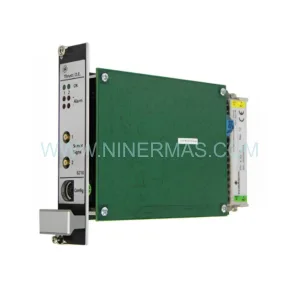
HIMA H41Q-HRS | Retrofit & System Modernization Safety Controller
Verify the part, confirm the platform family, and move straight into quotation with the right commercial details.
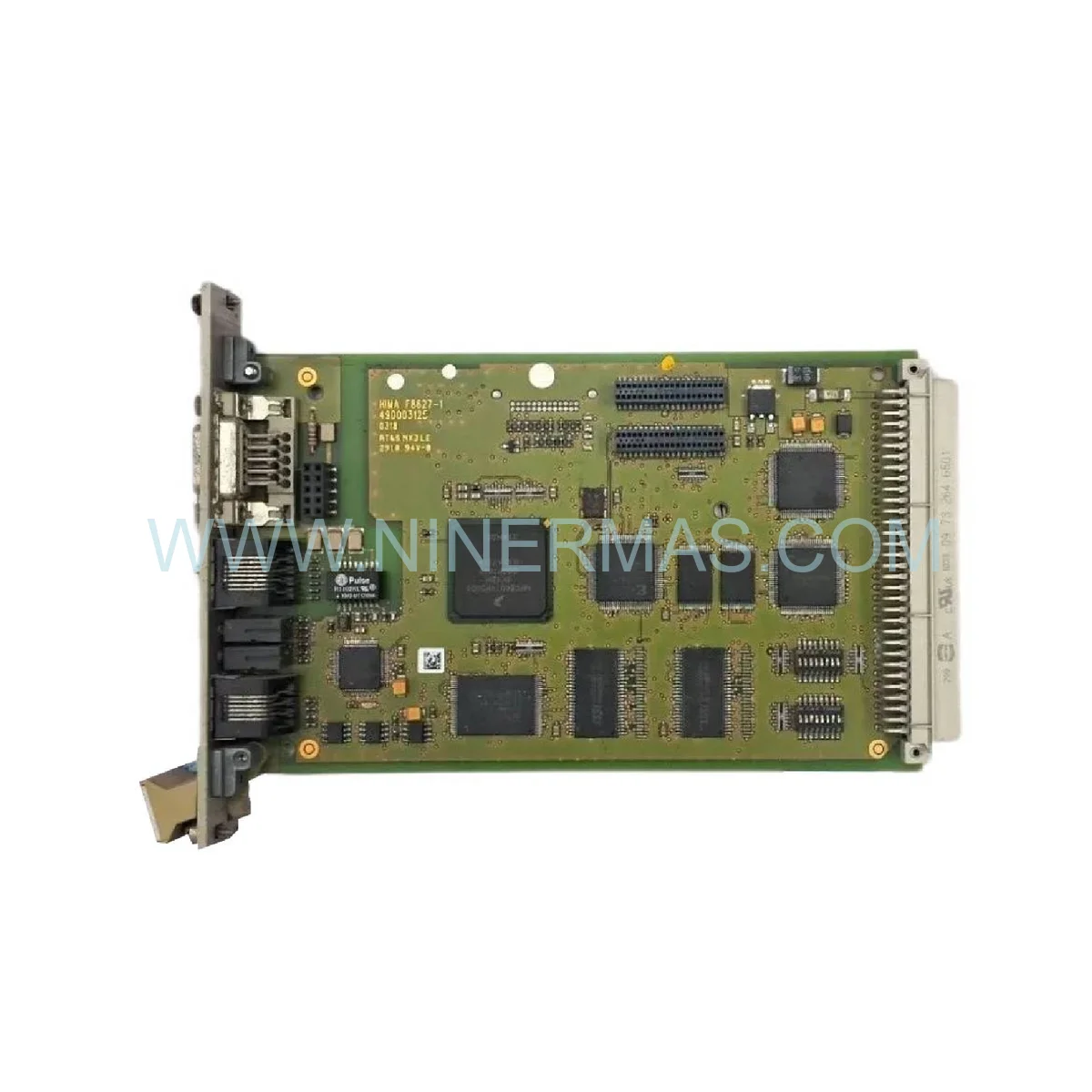
RFQ Ready
- SKUH41Q-HRS
- CategorySIS Safety & Redundancy Systems
- BrandHIMA
- SupportAvailability, lead time, condition, and shipping coordination
How Buyers Usually Use This Page
- Confirm the exact part number and platform family before sending the quote request.
- Use direct email when quantity, condition, and destination are already defined internally.
- Switch to the broader brand or category archive when you need alternates nearby.
Product RFQ
Send this part directly for quotation.
Include quantity, required condition, destination country, and target delivery timing. Current reference: HIMA H41Q-HRS | Retrofit & System Modernization Safety Controller with SKU H41Q-HRS.
HIMA H41Q-HRS – Professional Retrofit & System Upgrade Component
System Modernization & Migration Analysis
As a Retrofit Project Lead overseeing industrial control system transformations, the HIMA H41Q-HRS stands out as a cornerstone component in any serious modernization initiative. Aging safety instrumented systems (SIS) built on first- or second-generation PLCs frequently suffer from obsolete firmware, discontinued spare parts, and mounting cybersecurity vulnerabilities. Deploying the HIMA H41Q-HRS directly addresses these pain points by introducing a SIL 3-certified, Triple Modular Redundant (TMR) architecture that dramatically elevates system reliability and extends operational lifespan by a decade or more — without requiring a full greenfield rebuild.
One of the most compelling advantages of this platform in a retrofit context is its proven backward compatibility with legacy HIMA HIMatrix and H51q frameworks. Engineering teams can leverage existing I/O wiring, cabinet infrastructure, and even portions of the original application logic, dramatically compressing migration timelines. This hardware upgrade path preserves institutional knowledge embedded in legacy configurations while simultaneously unlocking modern communication protocols — PROFIBUS DP, Modbus TCP/IP, and OPC UA — that are essential for integration into contemporary DCS and SCADA environments.
From a risk and cost perspective, phased migration using the H41Q-HRS as the central upgrade node reduces total project expenditure by eliminating the need for simultaneous replacement of all field devices. Downtime windows are minimized through hot-swap module capability, and the system’s >99% diagnostic coverage ensures that any latent faults are detected and isolated before they can propagate into process upsets. The result is a seamless integration pathway that de-risks the transition from traditional control to modern industrial networks.
Upgrade Highlights & Compatibility
✅ SIL 3 Certified (IEC 61508 / IEC 61511) — Meets the highest functional safety requirements for process industries, ensuring regulatory compliance post-retrofit.
TMR 2oo3 Voting Architecture — Triple redundancy eliminates single points of failure; ideal for replacing aging 1oo2 or simplex legacy systems.
? Legacy Compatibility — Backward-compatible with HIMA HIMatrix and H51q platforms; existing field wiring and I/O layouts can be retained.
Hot-Swap All Modules — Zero-downtime component replacement during live operation, critical for continuous-process facilities.
? Modern Protocol Stack — Native PROFIBUS DP, Modbus TCP/IP, and OPC UA support enables seamless integration with new DCS layers.
Future-Proofing via IEC 62443 — Built-in cybersecurity features (encrypted comms, RBAC, audit logging) protect against evolving OT threats.
? Extended Temperature Range — -40°C to +70°C operational envelope suits harsh plant environments without additional HVAC investment.
Modernization Use Cases & Success Stories
DCS Integration — Refinery Emergency Shutdown Upgrade: A major Middle Eastern refinery operating a 15-year-old Triconex-based ESD system faced end-of-life hardware and a 6-month spare parts lead time. By migrating the safety layer to the H41Q-HRS platform, the engineering team retained all existing field instrumentation while gaining OPC UA connectivity to the new Honeywell Experion DCS. The retrofit was executed in three planned turnaround windows, achieving zero unplanned shutdowns during transition and a 40% reduction in annual maintenance costs.
TSI Modernization — Gas Turbine Protection System: A European power generation facility needed to replace an obsolete Bently Nevada 3500-series turbine supervisory instrumentation (TSI) logic solver. The H41Q-HRS was deployed as the new safety logic controller, interfacing with existing vibration and temperature transmitters via 4-20mA inputs. The <10ms response time for critical safety functions exceeded the original system’s performance, and the TMR architecture provided the redundancy level required by the updated machinery protection standard ISO 13849.
Pharmaceutical Batch Reactor Safety Upgrade: A batch chemical manufacturer required a performance enhancement to their aging safety relay-based interlock system to meet updated GAMP 5 and FDA 21 CFR Part 11 compliance. The H41Q-HRS replaced 47 discrete safety relays with a single, fully auditable SIL 3 platform, reducing panel footprint by 60% and enabling electronic batch records through OPC UA data historians.
Migration Technical Data Sheet
| Feature / Property | Upgrade Value |
|---|---|
| Full Part Number | HIMA H41Q-HRS |
| Safety Integrity Level | SIL 3 per IEC 61508 / IEC 61511 |
| Redundancy Architecture | Triple Modular Redundant (TMR), 2oo3 voting |
| Processor | Quad-core safety processors with independent watchdog circuits |
| Diagnostic Coverage | >99% with continuous self-testing |
| MTBF | >150,000 hours |
| Safety Response Time | <10ms for critical safety functions |
| Operating Temperature | -40°C to +70°C (-40°F to +158°F) |
| Communication Protocols | PROFIBUS DP, Modbus TCP/IP, OPC UA |
| Power Supply | 24VDC redundant with automatic switchover |
| Hot-Swap Capability | All modules replaceable during live operation |
| Cybersecurity Standard | IEC 62443 compliant (encrypted comms, RBAC, audit log) |
| Legacy Compatibility | HIMA HIMatrix, H51q via standardized gateways |
| Distributed I/O Range | Up to 1,000m from central controller |
| Country of Origin | Germany |
| Warranty | 12 months, factory sealed, original packaging |
Supply Chain & Deployment Support
Original & Factory Sealed: Every HIMA H41Q-HRS unit supplied through our network is sourced from authorized distribution channels, shipped in original manufacturer packaging with full factory calibration certificates and traceability documentation. No refurbished or grey-market units.
Expedited Global Logistics: We maintain strategic buffer stock to support urgent retrofit and emergency replacement scenarios. Air freight to major industrial hubs in the Middle East, Southeast Asia, Europe, and the Americas is available with typical door-to-door transit of 3-7 business days. All shipments include export documentation, HS code classification, and insurance coverage.
Technical Support for Obsolete & Legacy Hardware: Our engineering support team specializes in legacy-to-modern migration projects. We provide pre-sales compatibility assessments, bill-of-materials (BOM) reviews for retrofit projects, and post-delivery commissioning guidance. For customers managing end-of-life HIMA platforms, we offer lifecycle management consulting to develop a phased hardware upgrade roadmap aligned with planned maintenance windows.
Retrofit FAQ (Upgrade Guide)
Q1: Is the HIMA H41Q-HRS physically compatible with existing cabinet layouts designed for older HIMA systems?
A: The H41Q-HRS is engineered with a modular rack form factor that aligns with standard 19-inch cabinet installations. In most retrofit scenarios involving legacy HIMA H51q or HIMatrix racks, the mounting rail pitch and backplane connector positions allow direct chassis reuse. A dimensional comparison study should be conducted during the FEED phase to confirm exact fit, but field experience indicates that over 80% of existing enclosures can accommodate the new platform without structural modification.
Q2: How does the H41Q-HRS handle communication between the new safety layer and an existing legacy DCS that only supports older protocols like Modbus RTU or HART?
A: The H41Q-HRS supports Modbus TCP/IP natively and can communicate with legacy Modbus RTU masters through protocol conversion gateways — a standard component in any well-planned system migration. For HART-enabled field devices, the system’s analog input modules support HART pass-through, allowing asset management data to flow into the new platform without replacing transmitters. This ensures seamless integration even when the upstream DCS is not yet upgraded.
Q3: What spare part substitution options exist if the H41Q-HRS is being used to replace a competitor’s obsolete safety PLC?
A: The H41Q-HRS serves as a functional replacement for a wide range of legacy safety controllers from Triconex, Pilz, and Allen-Bradley GuardLogix platforms in terms of SIL capability and I/O density. Application logic migration requires re-engineering in HIMA’s SILworX engineering environment, but the hardware upgrade itself is straightforward. Our team can provide a cross-reference analysis mapping your existing I/O list to H41Q-HRS module types as part of the pre-sales retrofit assessment.
Q4: Can the H41Q-HRS be integrated into a partial retrofit where only the safety layer is being upgraded while the basic process control DCS remains unchanged?
A: Yes — this is in fact the most common deployment model. The H41Q-HRS operates as a fully independent safety instrumented system (SIS) that interfaces with the existing DCS via hardwired I/O or digital communication links. Functional independence between the SIS and BPCS is maintained in full compliance with IEC 61511 Clause 11.2, ensuring that the retrofit does not compromise the safety integrity of the overall system architecture.
Q5: What is the realistic project timeline for a mid-scale retrofit involving the H41Q-HRS in an operating refinery?
A: A typical mid-scale retrofit (50-200 I/O points) follows a phased approach: FEED and compatibility study (4-6 weeks), detailed engineering and FAT (8-12 weeks), site installation during a planned turnaround (5-10 days), and SAT/commissioning (3-7 days). Total elapsed time from purchase order to operational handover is typically 4-6 months, with the critical path driven by engineering rather than hardware delivery.
Q6: Does deploying the H41Q-HRS require revalidation of the entire Safety Instrumented Function (SIF) loop?
A: Per IEC 61511-1 Clause 16, any modification to a safety instrumented system requires a Management of Change (MOC) assessment and, where the SIL claim is affected, a revised PFD/PFH calculation. Because the H41Q-HRS carries SIL 3 certification with published failure rate data (FMEDA), the revalidation process is significantly streamlined compared to replacing with a non-certified platform. In most cases, only the logic solver contribution to the SIF PFD calculation needs to be updated, not the entire loop.
| Product Series | Other Modules |
|---|---|
| Country of Origin | DE |
Catalog Continuation
More HIMA modules in the catalog.
Use the brand lane to compare nearby part numbers, platform-adjacent modules, and other inquiry-ready listings before sending your final RFQ.
Catalog Continuation
Alternative parts within SIS Safety & Redundancy Systems.
Stay inside the same system family when you need substitutes, adjacent modules, or a broader shortlist for procurement review.