
Rockwell Automation announced FactoryTalk Conductor on October 21, 2026, describing an AI orchestration platform for automation engineering. Commercial availability is planned for the first quarter of 2027. For a maintenance department supporting existing ControlLogix installations, the useful question is not whether AI can produce a convincing project. It is which parts of a replacement job still require evidence from the actual equipment.
The manufacturer’s announcement describes planned integrations including Studio 5000 Logix Designer, Logix Echo, Emulate3D and FactoryTalk Optix. It does not establish support for every installed controller, firmware revision or I/O combination. Treat those compatibility questions separately. The following acceptance approach is our engineering interpretation, not a claim about Conductor’s tested capabilities.
Three different meanings of a successful test
A software check can show that a project is internally consistent. A simulation can show that a modeled sequence produces expected results. A physical acceptance test can show that the installed signal path behaves as intended under the tested conditions. Those results support one another, but they are not interchangeable. A virtual transmitter cannot reveal a loose terminal in an existing cabinet.
This distinction matters when spare hardware is introduced during a broader digital upgrade. A team may spend considerable effort validating new sequences while treating the replacement I/O as routine. Yet a channel range, terminal arrangement or field-power assumption can change the meaning of a perfectly valid value. Faster engineering makes a clearly defined hardware acceptance boundary more important, not less.
Use an analog channel to expose hidden assumptions
Consider a planned replacement involving a 1756-IF16 analog input module. The module reference is only the beginning. The acceptance record should connect the field instrument, terminal identification, configured channel, engineering units and alarm response. This is a contextual spare example, not an assertion that this module has been qualified with the newly announced software.
Before testing, define what is being proved. A signal applied at the module terminals tests a different boundary from a signal applied at the transmitter end of the cable. The former can help isolate module behavior; the latter includes more of the installed path. Neither alone proves the transmitter’s physical measurement accuracy. Writing the boundary beside each result prevents an abbreviated bench test from becoming a misleading whole-loop certificate.
A useful acceptance sheet has five columns: stimulus location, expected displayed value, permitted tolerance, expected alarm behavior and observed result. Add the test instrument identification and its calibration status. Let qualified personnel choose the actual test points from the application and approved procedures. Do not introduce signals into an operating process merely because a generated checklist suggests doing so.
An output requires evidence beyond a changing bit
For an output task, a 1756-OB16I isolated DC output module illustrates a different acceptance problem. A software command can change correctly while the intended field action never occurs. The maintenance record must distinguish command state, electrical output and confirmed machine response. Load suitability and the installation details belong to the exact module documentation and machine design.
Where the risk assessment permits, an isolated test load can establish an electrical response without operating production equipment. That result still does not certify the final actuator or its interlocks. The later site test needs a controlled transition from the temporary arrangement to the real load, with every temporary connection and force accounted for. A missing removal record is a commissioning defect even when all individual tests passed.
Make AI useful without making it the approver
The most productive starting point is often comparison work. An engineering assistant can help organize differences between an approved I/O schedule and a proposed replacement record, flag missing channel descriptions or draft a test matrix. The engineer then checks those suggestions against the actual project and installation. This is a proposed workflow, not a report that a particular platform already performs these tasks on every legacy system.
Keep generated assumptions visibly separate from observed facts. A suggested range is not a nameplate reading. An inferred terminal number is not a verified drawing reference. A software-generated pass condition should remain provisional until the responsible engineer agrees that it represents the process requirement. This separation makes review faster because the reviewer knows where uncertainty remains.
For purchasing, ask for the hardware information that will affect that review: complete catalog number, series and revision evidence, condition, included terminal hardware and the scope of any supplier test. A supplier’s generic power-on test should not be interpreted as validation of your configured application. Likewise, an attractive demonstration of new engineering software is not a reason to discard serviceable installed hardware without a maintenance case.
Close the job with a usable recovery record
The handover should let the next shift reconstruct the tested arrangement without guessing. Retain the approved project revision, the specific spare installed, test boundaries, deviations and the final operating state. A failed test also belongs in the record, together with its resolution. Removing failed observations makes the history cleaner to read but less useful for diagnosing a recurring fault.
There is a practical stopping rule: do not release a change because the simulated sequence and the physical channel each passed unrelated tests. Release it when the evidence connects the required process behavior to the final installed configuration. That connection is the maintenance value of acceptance testing, regardless of how much AI assisted the engineering work.
Questions from the maintenance team
Does the announcement mean Conductor is available now?
No. The October announcement gives a planned commercial date in early 2027. Evaluate the released product and its compatibility information when available; do not turn a roadmap into a current maintenance dependency.
Can simulation replace a physical I/O test?
It can reduce uncertainty about modeled logic, but it cannot demonstrate the condition of your field cable, connector or installed device. Define complementary tests with explicit boundaries instead of treating either method as complete proof.
Should every spare purchase trigger a full redesign?
No. A like-for-like repair and a functional change have different scopes. The plant’s change-control process should determine the review and acceptance depth, based on the exact hardware and the consequences of failure.
What should we send with a ControlLogix spare inquiry?
Send the full reference, readable revision photographs, quantity and required delivery date. Describe the channel function and whether the request covers only a module or also terminal hardware. Do not send confidential project files unnecessarily.
For a reference-specific ControlLogix quotation, contact NINERMAS with that information and the intended repair scope. We can clarify the offered hardware and supply scope before you commit; final application acceptance remains with your authorized engineering team.
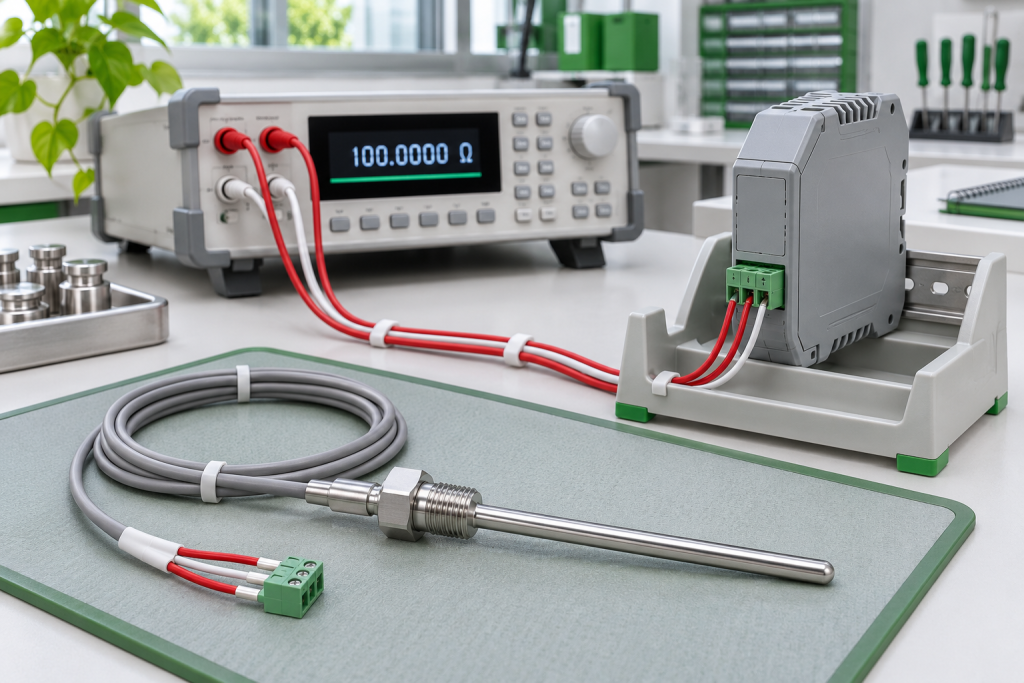
Image: AI-generated editorial illustration, not an exact product photograph or installation reference.
© 2026 NINERMAS. All rights reserved. Official Website: https://ninermas.com Inquiry: sale@NINERMAS.com | WhatsApp/Tel: +86 187 5021 5667
Next Step
Move the research into a cleaner RFQ.
Send the part number, quantity, condition expectation, destination, and timing details so the sourcing team can reply with better availability and lead-time context.